
Preclinical CRO Market Outlook: Size, Share, Trends, Growth Analysis, Competitive Landscape & Forecast, 2026-2033

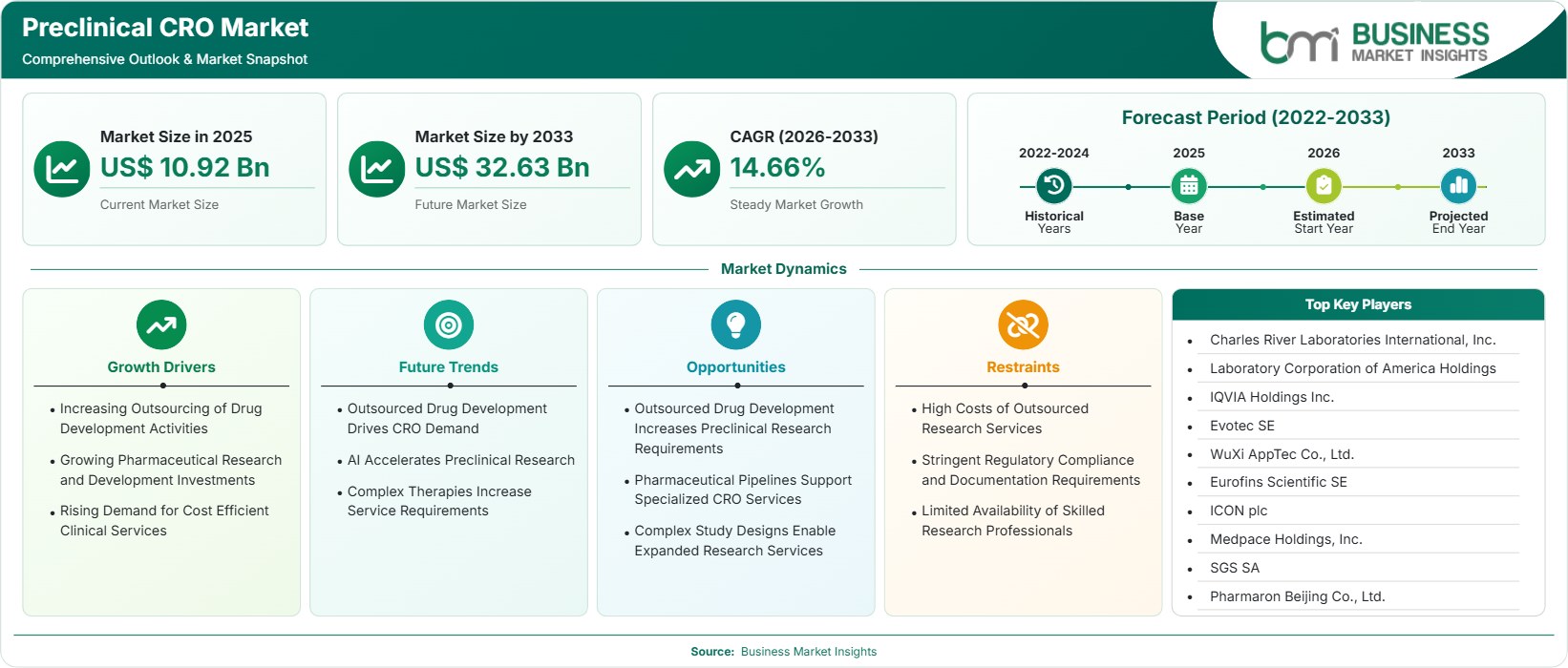
The Preclinical CRO Market size was valued at US$ 10.92 Billion in 2025 and is projected to reach US$ 32.63 Billion by 2033, growing at a CAGR of 14.66% during 2026–2033, driven by rising pharmaceutical R&D outsourcing, biologics pipelines, complex safety requirements, AI-enabled preclinical workflows, and expanding demand for specialized toxicology and bioanalytical services.

Report Coverage
  • Type: Drug Metabolism and Pharmacokinetics , Bioanalysis, Toxicology Studies, Safety Services
  • Application: Oncology, Neurology, Cardiology, Infectious Diseases, Metabolic Disorders, Others
  • End-user: Pharmaceutical & Biotechnological Companies, Academic & Research Institutes, Others
US$ 10.92 Bn Market size in 2025
US$ 32.63 Bn Market Size by 2033
14.66% CAGR, 2026 - 2033
2026-2033 Forecast Period

AI Overview

Preclinical CRO Market Summary

  • North America Region: North America holds a market share of 39%–42% in 2025, growing at a CAGR of 13.2%–14.1% during 2026–2033. Strong biopharmaceutical R&D funding, extensive outsourcing, advanced laboratory infrastructure, regulatory expertise, and increasing biologics development create sustained demand while supporting specialized service expansion and operational scalability. Brief U.S. analysis: The U.S. remains the regional anchor, supported by large drug pipelines and contract research adoption, expanding at 13.5%–14.3% CAGR.
  • Fastest Growing Region: Asia Pacific holds a Preclinical CRO Market share of 24%–27% in 2025, growing at a CAGR of 16.8%–17.8% during 2026–2033. Cost-efficient research ecosystems, rising biotechnology investments, skilled scientific workforce availability, expanding GLP-certified facilities, government incentives, and growing multinational outsourcing continue accelerating regional contract research demand across therapeutic programs.
  • Leading Segment: Toxicology Studies account for a 34%–37% share in 2025 and expand at a 14.0%–14.8% CAGR. Regulatory submission requirements, safety validation needs, increasing complexity of therapeutic modalities, and broader biologics pipelines reinforce service demand throughout early development stages globally.
  • High Growth Segment: Oncology represents a 27%–30% share in 2025 and grows at a 16.2%–17.1% CAGR. Expanding cancer pipelines, precision medicine programs, biomarker-driven research, immuno-oncology innovation, and growing investment in translational studies drive outsourced preclinical testing requirements across sponsors.
  • Key Market Opportunity: Rising adoption of alternative testing models, AI-driven drug discovery platforms, advanced bioanalytical capabilities, and integrated preclinical packages enables providers to capture high-value programs while improving development efficiency and study predictability.
  • Major Market Players: Charles River Laboratories International, Inc.; Laboratory Corporation of America Holdings; IQVIA Holdings Inc.; Evotec SE; WuXi AppTec Co., Ltd.; Eurofins Scientific SE; ICON plc; Medpace Holdings, Inc.; SGS SA; Pharmaron Beijing Co., Ltd.
Strategic Insights

Preclinical CRO Market: Strategic Insights

Preclinical CRO Market Strategic Framework
FREE PDF
Request your free sample
Request free sample
Stakeholder View

Key Takeaways

  • The value chain is becoming increasingly integrated, with providers offering discovery support, DMPK, bioanalysis, toxicology, and regulatory consulting under unified contracts.
  • Oncology, biologics, and advanced therapeutic pipelines present the strongest commercial upside due to expanding preclinical workload and increasing study complexity.
  • Digital pathology, AI-assisted data interpretation, and predictive toxicology platforms are reshaping service delivery and improving development efficiency.
  • Asia-Pacific offers a compelling investment destination through lower operating costs, skilled labor availability, and expanding GLP-compliant research infrastructure.
  • Strategic acquisitions continue expanding service portfolios, geographic reach, and specialized capabilities as competition shifts toward end-to-end outsourcing platforms.
  • Regulatory acceptance of alternative testing methods creates opportunities for differentiated service offerings and improved study productivity.
Geographic Outlook

Preclinical CRO Market Regional Highlights

North America Preclinical CRO Market

North America accounted for approximately 39%–42% of the Preclinical CRO Market share in 2025 and is projected to record a 13.2%–14.1% CAGR through 2033. The region benefits from extensive pharmaceutical R&D expenditures, advanced laboratory networks, and strong regulatory experience. High biologics development activity and increasing outsourcing support continued demand. Large sponsor presence, sophisticated research infrastructure, and investment in advanced toxicology and bioanalytical services maintain regional leadership despite increasing global competition.

  • Major pharmaceutical headquarters generate consistent outsourcing demand across toxicology, DMPK, safety pharmacology, and translational research programs.
  • Adoption of AI-enabled laboratory workflows improves study design efficiency, data interpretation capabilities, and operational scalability.
  • Growing gene therapy and cell therapy pipelines increase demand for specialized preclinical assessment services.
  • Strong venture capital funding environment supports biotechnology company formation and outsourced research spending.

US Preclinical CRO Market

The United States represents 78%–82% of regional revenue and is expected to expand at 13.5%–14.3% CAGR. Significant NIH-supported research activity, expanding biotechnology innovation, and large investigational drug pipelines continue supporting outsourced preclinical requirements. Increasing demand for integrated development partnerships and advanced safety assessment capabilities strengthens provider positioning.

  • FDA-facing development programs require comprehensive toxicology and bioanalytical support before clinical progression.
  • Biotech startups increasingly leverage external laboratories to reduce infrastructure costs and accelerate timelines.
  • Expanding precision medicine programs generate specialized pharmacokinetic and biomarker evaluation requirements.
  • Investment in non-animal alternative testing technologies continues improving research efficiency.

Europe Preclinical CRO Market

Europe held a 27%–30% share in 2025 and is forecast to grow at a 13.0%–13.9% CAGR in the Preclinical CRO Market. Germany and the United Kingdom remain leading revenue contributors, while Ireland and Eastern European markets exhibit higher expansion rates. Strong academic-commercial collaboration, biologics research expertise, and regulatory quality standards support outsourcing demand. Sustainability initiatives and advanced laboratory capabilities further strengthen regional competitiveness.

  • Germany leads through robust pharmaceutical manufacturing and translational research infrastructure.
  • The United Kingdom benefits from biotechnology innovation clusters and strong contract research capabilities.
  • Ireland demonstrates accelerated growth through favorable investment conditions and pharmaceutical presence.
  • Demand for specialized biologics testing supports high-value service adoption.
  • Academic-industry partnerships generate early-stage development opportunities.

Asia Pacific Preclinical CRO Market

The Asia Pacific region held a 24%-27% market share in 2025 and is expected to experience the highest CAGR, at 16.8%-17.8%. China dominates regional revenues, whereas India has some of the fastest-growing rates. The presence of developing biotechnology communities, effective regulations, an abundance of scientific talent, and low costs contribute to outsourcing by foreign companies. Additionally, homegrown drug innovation drives the demand for research services.

  • China maintains leadership through extensive laboratory capacity and integrated outsourcing ecosystems.
  • India benefits from cost competitiveness, scientific expertise, and expanding research infrastructure.
  • South Korea strengthens its position through biotechnology investment and advanced therapeutic development.
  • Singapore continues attracting regional headquarters and innovation-focused research programs.
  • Increased multinational collaboration broadens access to global development projects.

Rest of World Preclinical CRO Market

The Rest of World region represented an 8%–10% share in 2025 and is projected to expand at 14.5%–15.4% CAGR. Brazil leads South and Central America through pharmaceutical sector development and contract research demand.

Middle East and Africa Preclinical CRO market remains smaller but increasingly attractive due to healthcare investment and research capability expansion. Regional modernization initiatives support outsourcing opportunities and broader participation in global drug development activities.

  • Brazil remains the primary regional market with expanding pharmaceutical development activity.
  • Saudi Arabia supports research growth through healthcare diversification and life-science investments.
  • South Africa contributes through established research capabilities and academic collaboration.
  • International partnerships improve laboratory standards and technology transfer.
  • Demand for localized regulatory support encourages specialized service development.
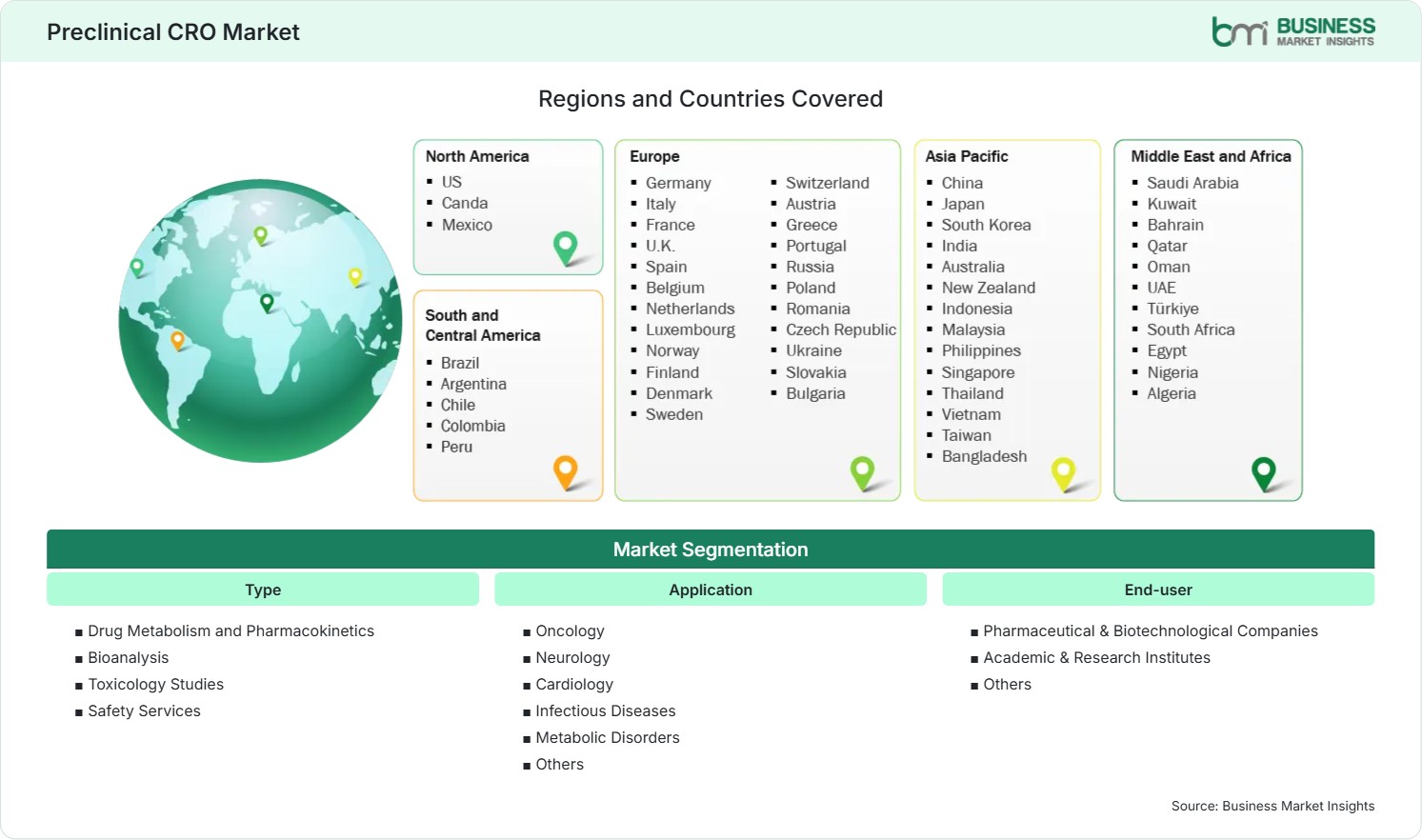
Global Market Geography
FREE PDF
Request your free sample
Request free sample
Segment Analysis

Preclinical CRO Market Segmentation

Type

Type drove crucial service revenue generation, with the Toxicology Studies segment holding the largest share 34%-37% and a CAGR of 14.0%-14.8%. The scope of the Preclinical CRO Market has been continuously widening, as sponsors need integrated services that include metabolic, pharmacokinetic, bioanalytic, and safety assessments of therapy modalities, as well as regulatory submissions.

  • Drug Metabolism and Pharmacokinetics (DMPK): Essential for understanding absorption, distribution, metabolism, and elimination characteristics, supporting candidate selection and reducing downstream development risks.
  • Bioanalysis: Advanced analytical methods enable precise quantification of compounds and biomarkers, supporting pharmacokinetic interpretation and regulatory data requirements.
  • Toxicology Studies: Regulatory-driven safety evaluations remain crucial for investigational submissions, driving persistent outsourcing among drug developers.
  • Safety Services: Specialized assessment capabilities support risk identification, safety pharmacology testing, and regulatory compliance across therapeutic programs.

Application

Applications are becoming increasingly driven by complex pipelines. Oncology accounts for 27%-30% of market share and has a CAGR of 16.2%-17.1%. The Preclinical CRO Market trends indicate a growing need for biomarker and translational studies, and precision medicine testing, supporting innovative treatment development.

  • Oncology: Growing immunotherapy and targeted therapy pipelines require extensive efficacy, toxicology, and translational evaluation.
  • Neurology: Rising research into neurodegenerative disorders increases demand for complex disease-model testing services.
  • Cardiology: Cardiovascular safety assessments and efficacy studies continue supporting consistent outsourcing activity.
  • Infectious Diseases: Emerging pathogens and antimicrobial development sustain steady requirements for nonclinical research.
  • Metabolic Disorders: Increasing obesity and diabetes research reinforces demand for pharmacology and safety assessment services.

End-user

The Pharmaceutical & Biotechnological Companies accounted for 62%–66% of the market share in 2025 and are anticipated to grow at a 14.8%–15.6% CAGR. Factors such as expanded pipelines, a focus on cost optimization, and rapid development needs will fuel outsourcing across the discovery and preclinical stages.

  • Pharmaceutical & Biotechnological Companies: Largest client group, leveraging specialized expertise and infrastructure without high capital investment.
  • Academic & Research Institutes: Research collaborations and translational initiatives support growing contract study engagement.
Market Forces

Preclinical CRO Market Dynamics

Key Market Drivers

Rising Biopharmaceutical Outsourcing Intensity

Pharmaceutical companies continue increasing outsourcing penetration to control costs and access specialized scientific expertise. Global expenditure on drug development is high, whereas the need for testing facilities for advanced drug classes, such as biologics, cell therapies, and gene therapies, is complex and not readily available within organizations. Outsourcing will allow for greater capacity flexibility, shorter time frames, and access to certified facilities. There is a high demand for toxicology and bioanalytical testing required for the investigation submission. An increasing number of biotech companies worldwide drives demand through research outsourcing. These dynamics remain central to long-term industry expansion.

Expansion of Complex Therapeutic Modalities

The increasing portfolio of innovative medicines is changing the test requirements of the early development process. The antibody drug conjugates, RNA drugs, and gene-editing projects require specialized expertise in safety profiling, bioanalysis, and translational research. The sponsors need study providers capable of managing interdisciplinary programs. Thus, industry members are building up sophisticated research facilities and a scientific workforce. The trend will make the services more valuable and ensure the demand for outsourcing research activities. As the development of medicines becomes more complex, the sponsors will rely on sophisticated outsourced providers.

Growth of Precision Medicine Research

Precision medicine is becoming an increasingly important factor in the choice of research strategy, leading to a growing need for biomarker analysis, specialized disease models, and translational research. Pharmaceutical manufacturers need more efficient methods for drug evaluation to increase the possibility of clinical success. The use of data analytics, molecular profiling, and sophisticated disease models improves the efficiency of development. Innovations in oncology and orphan diseases drive outsourcing even faster. Increasing research intensity in personalized treatment approaches reinforces the need for scalable contract research capabilities, supporting long-term industry expansion and enhancing the quality of development decisions prior to clinical testing.

Key Market Opportunities

AI-Enabled Drug Discovery Integration

The application of artificial intelligence in the market is creating new commercial opportunities across discovery and preclinical development processes. Service providers that apply predictive modeling, automation in data analysis, and digital pathology tools can increase the efficiency of study conduct and shorten the development process. Partners are increasingly sought by clients who can perform laboratory work and analyze the resulting data. Preclinical CRO Market Forecasts, forward-looking, include AI-related service expansion due to sponsors' priority on efficiency gains, faster candidate selection, and enhanced predictability in nonclinical development activities.

Alternative Testing Technologies

Alternative approaches in the context of animal testing present chances for innovative organizations. Organ-on-a-chip technology, 3D cellular culture systems, high-throughput in vitro systems, and computational toxicology methods are becoming increasingly important for regulatory bodies and sponsors. The development of such competencies will help innovative organizations meet changing customer demands and conduct research in accordance with ethical principles. Innovative organizations that can validate and commercialize such new approaches will have an advantage over their competitors in capturing more research budgets. Growing interest in predictive, human-relevant models enhances the appeal of this opportunity.

Integrated Discovery-to-IND Service Platforms

Sponsorship has shifted towards vendors capable of covering the entire process, from selecting candidates to conducting investigations. End-to-end services reduce vendor management issues, improve coordination between functions, and shorten development time. Companies that develop services through investment or acquisition will see increased wallet share and improved customer retention. This trend is highly relevant among smaller biotech firms that require strategic partners rather than service vendors. As the complexity of development increases, integrated platform solutions will provide definite competitive advantages and recurring revenue streams.

Market Restraints and Challenges

Regulatory Complexity and Extended Study Timelines

Shifts in regulatory expectations across regions create difficulties for both sponsors and service providers. Increased documentation, increased inspections, and more stringent requirements for advanced therapies all lead to greater complexity in conducting clinical trials. Increased validation periods and higher compliance costs could contribute to a higher cost structure and delays in completing the project. Multinational corporations will have to consistently upgrade their quality systems and training in order to remain compliant. Small companies could be constrained by compliance costs, reducing operational flexibility.

Skilled Workforce Constraints and Capacity Pressure

The industry relies on highly trained specialists such as toxicologists, bioanalytical scientists, pathologists, and pharmacokinetics experts. An increased demand for research services has increased competition in the labor market. Consequences: Labor shortages could limit laboratory capacity, raise employee salaries, and affect study scheduling. Significant investments would be required to hire, retain, and train staff to ensure high-quality services. Limited capacity can limit flexibility when increased services are needed and may delay the start of projects. Sustained talent constraints represent a meaningful operational challenge, particularly in rapidly expanding research hubs.

Company Analysis

Competitive Landscape

The competitive environment reflects ongoing consolidation, service integration, and geographic expansion. This Preclinical CRO Market analysis highlights leading organizations with diverse preclinical capabilities.

Company Name

Overview

Products and Services relevant to this market

Charles River Laboratories International, Inc.

Global contract research leader with extensive nonclinical and discovery capabilities.

Toxicology, DMPK, bioanalysis, safety assessment, discovery and regulatory support services.

Laboratory Corporation of America Holdings

Major life sciences organization serving pharmaceutical and biotech clients globally.

Nonclinical testing, bioanalytical services, safety assessment and development support.

IQVIA Holdings Inc.

Data-driven healthcare services company with broad research expertise.

Research services, analytics, laboratory support and development consulting.

Evotec SE

Innovation-focused drug discovery and development partner.

Discovery research, translational studies, screening and preclinical support services.

WuXi AppTec Co., Ltd.

Integrated research platform with global pharmaceutical customer base.

DMPK, toxicology, laboratory testing and comprehensive development solutions.

Eurofins Scientific SE

International laboratory network with diversified testing infrastructure.

Bioanalysis, safety testing, toxicology and regulatory-compliant research services.

ICON plc

Global research organization supporting development programs worldwide.

Nonclinical support, consulting, analytics and integrated development services.

Medpace Holdings, Inc.

Research-focused organization with therapeutic expertise across multiple areas.

Laboratory services, regulatory support and development program management.

SGS SA

International testing and certification company with life science operations.

Preclinical laboratory testing, safety assessment and compliance services.

Pharmaron Beijing Co., Ltd.

Contract research and development company serving global innovators.

Discovery, toxicology, DMPK, bioanalysis and integrated development support.

Trust & Transparency

Research Methodology

The market analysis combines proprietary research with secondary data from government agencies, company disclosures, regulatory filings, industry databases and expert interviews. Market estimates are validated through data triangulation, cross-market benchmarking and analyst review.

View Full Research Methodology

Questions Answered

Frequently Asked Questions

What does a Preclinical CRO Market Report typically evaluate?

A Market Report generally assesses market size, competitive positioning, service trends, regional dynamics, technology developments, customer demand patterns, and future growth opportunities.

How is artificial intelligence influencing industry development?

AI improves candidate selection, data interpretation, predictive toxicology, and workflow efficiency, helping sponsors reduce development risks and optimize resource allocation.

What makes Asia Pacific the fastest-growing regional market?

Competitive operating costs, expanding scientific talent pools, increasing biotechnology investment, and growing regulatory maturity continue attracting multinational research programs.

Why are biotechnology companies increasingly outsourcing preclinical research?

Outsourcing reduces infrastructure costs, provides access to specialized expertise, improves flexibility, and helps smaller organizations accelerate development without major laboratory investments.

Which service category generates the highest revenue within the industry?

Toxicology studies generate the largest revenue contribution because regulatory submissions require extensive safety assessment before human testing, making these services essential across most drug development programs.

Access the Full Preclinical CRO Market Report

Get segment-level forecasts, regional estimates, competitive benchmarking, company profiles and downloadable Excel datasets.

Access the full Preclinical CRO Market Report
350 pages PDF & Excel | 2026-09-04