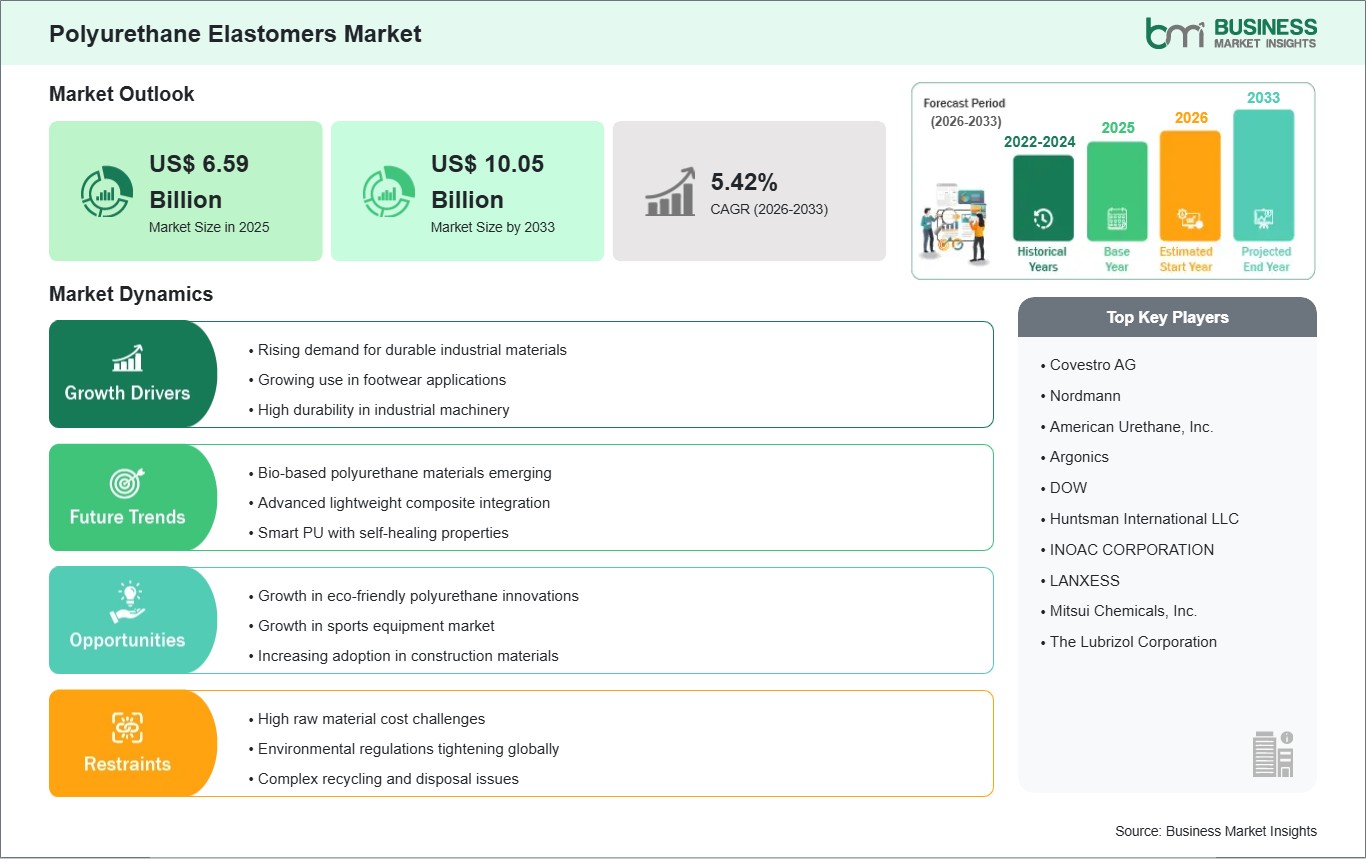
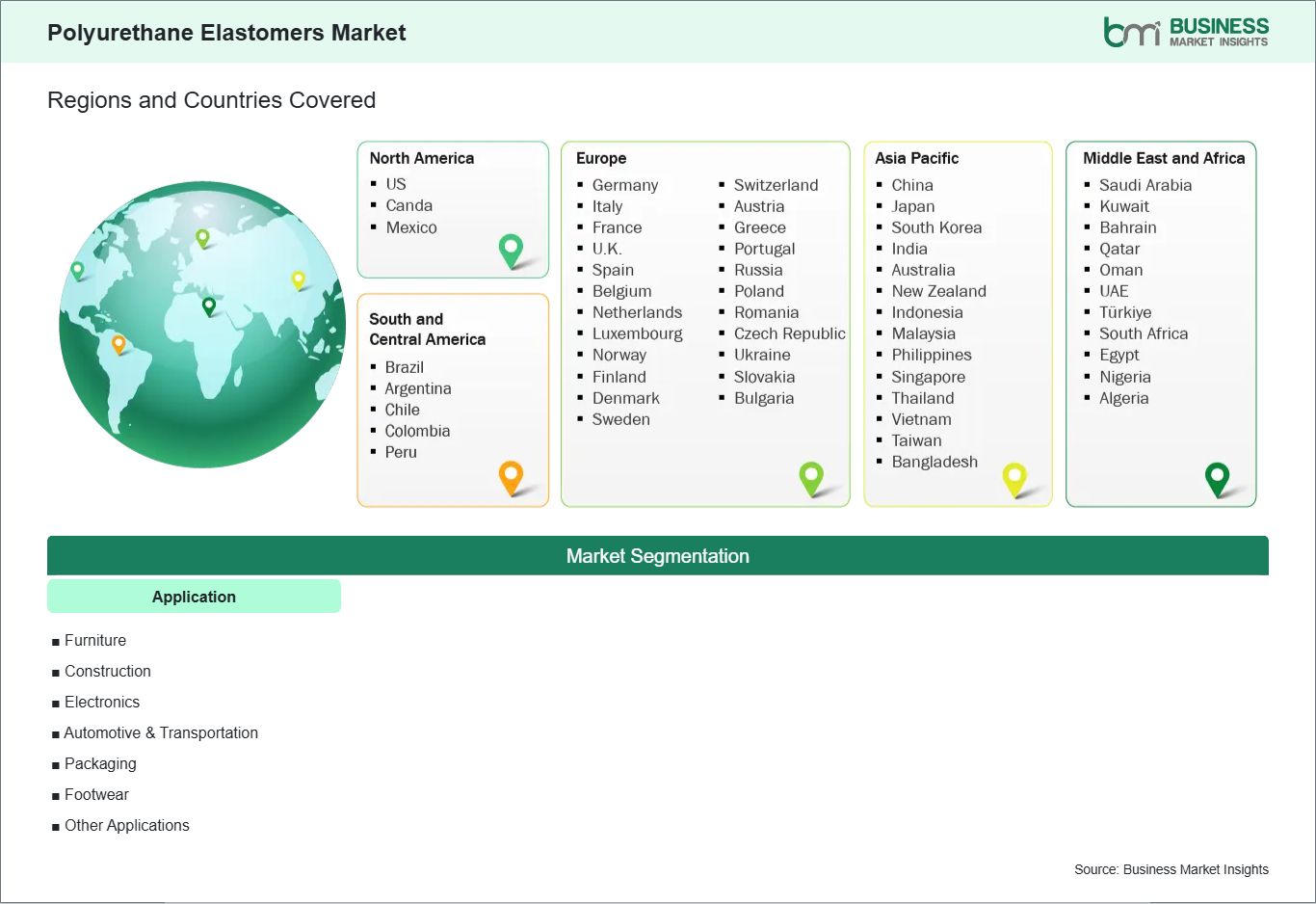
The geographical scope of the Polyurethane Elastomers Market report is divided into North America, Asia Pacific, Europe, Middle East & Africa, and South & Central America. North America held the largest share in 2025.
Regional-level dynamics in the polyurethane elastomers market reveal diverse growth patterns shaped by industrial maturity, regulatory frameworks, and sector-specific demand drivers. In North America, the market is dominant, led by the United States and Canada, with high-value applications in automotive, aerospace, and medical devices driving demand. The region benefits from advanced R&D infrastructure, stringent quality standards, and strategic collaborations between manufacturers and end-use industries, while the focus on lightweight, energy-efficient, and sustainable solutions, such as bio-based and recyclable elastomers, further accelerates adoption.
Europe is led by Germany, France, and Italy, where industrial machinery, transportation, and construction sectors support steady demand. Regulatory frameworks emphasizing environmental compliance and chemical safety encourage low-VOC and eco-friendly elastomer formulations, and precision engineering requirements drive the uptake of thermoplastic polyurethane elastomers.
The Asia Pacific region, spearheaded by China, India, and South Korea, is experiencing rapid growth due to industrialization, urbanization, and large-scale infrastructure projects, with automotive and electronics sectors as primary growth segments. Government initiatives promoting domestic manufacturing and foreign investment strengthen regional supply chains, while manufacturers focus on scalable, cost-effective production.
In the Middle East & Africa, countries such as Saudi Arabia, UAE, and South Africa leverage abundant petrochemical feedstocks to develop downstream polyurethane industries, with growth supported by infrastructure development, industrial expansion, and local fabrication for automotive and construction applications. Advanced applications are emerging gradually, alongside increasing alignment with global environmental regulations.
South & Central America, led by Brazil, Mexico, and Argentina, shows moderate growth, driven by construction, automotive assembly, and industrial machinery sectors, with local manufacturers adopting efficient production methods. However, economic fluctuations, currency volatility, and varying regulatory frameworks influence market stability and overall adoption rates, highlighting the need for region-specific strategies to optimize growth across global markets.