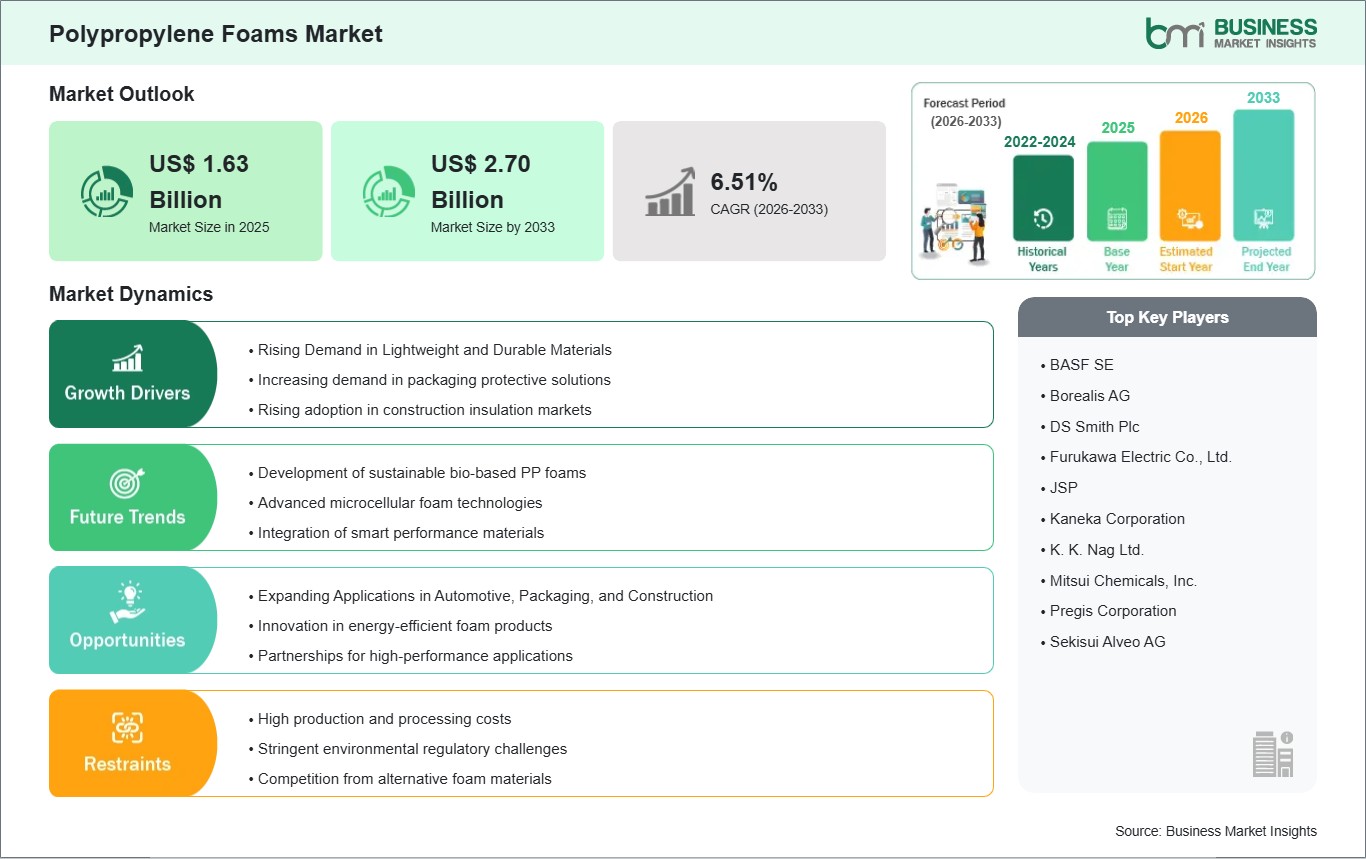
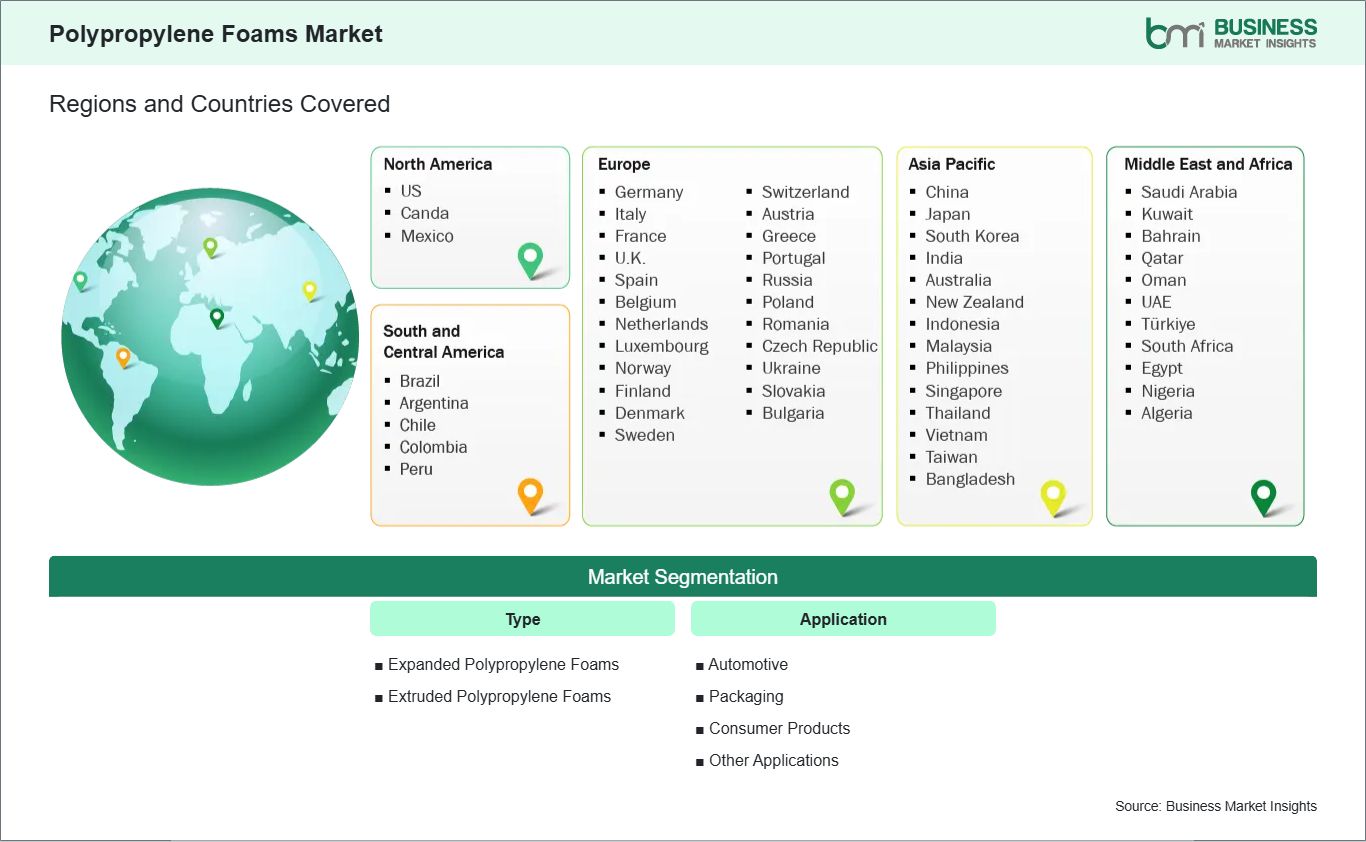
The geographical scope of the Polypropylene Foams Market report is divided into North America, Asia Pacific, Europe, Middle East & Africa, and South & Central America. North America held the largest share in 2025.
The polypropylene foams market exhibits diverse regional dynamics influenced by industrial maturity, automotive production trends, and packaging demand patterns, with North America dominating the market due to its well-established automotive sector, advanced manufacturing capabilities, and strong emphasis on lightweight and sustainable materials. The United States and Canada lead in the adoption of expanded polypropylene foams for automotive interiors, impact protection components, and reusable transport packaging, supported by innovation-driven industries and strict regulatory frameworks promoting fuel efficiency and recyclability.
In Asia Pacific, the market is witnessing rapid expansion driven by large-scale industrialization, increasing automotive production, and the surge in e-commerce activities across China, India, Japan, and South Korea. The region benefits from cost-effective manufacturing, abundant raw material availability, and growing investments in infrastructure and consumer goods, all of which contribute to higher demand for protective and insulation materials.
Europe represents a technologically advanced and environmentally conscious market, where countries such as Germany, France, and Italy emphasize sustainable material solutions and circular economy practices. The region’s automotive and packaging industries are increasingly integrating recyclable polypropylene foams to comply with stringent environmental regulations and performance standards.
In the Middle East & Africa, the market is gradually gaining traction due to infrastructure development, industrial expansion, and increasing awareness of advanced polymer materials, although reliance on imports and limited local production capabilities influence growth.
Meanwhile, South & Central America is experiencing steady development, led by Brazil, Mexico, and Argentina, where automotive manufacturing, logistics, and packaging sectors are contributing to rising demand. However, economic fluctuations, cost sensitivity, and supply chain constraints continue to shape adoption patterns across the region, creating a balanced yet evolving global market landscape.