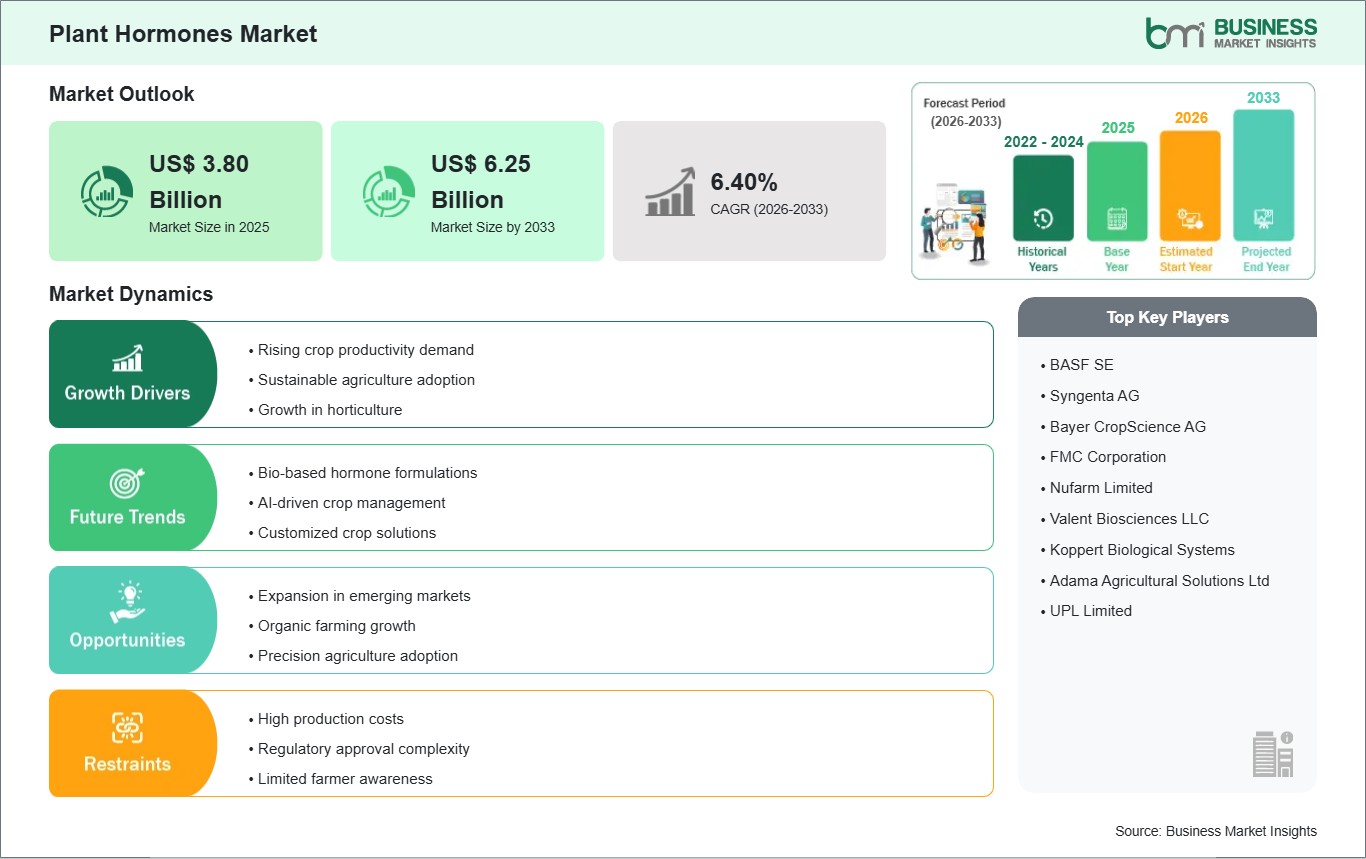
The plant hormones market size is expected to reach US$ 6.25 billion by 2033 from US$ 3.80 billion in 2025. The market is estimated to record a CAGR of 6.4% from 2026 to 2033.
The market for plant hormones grows due to the rising global need for food production, which demands effective and sustainable farming methods. More farmers are recognizing the advantages of plant growth regulators for increasing productivity and lowering crop losses, which also drives market growth. Additionally, progress in biotechnology and formulation methods is leading to more efficient and targeted hormone products. Increasing use of precision farming techniques and organic agriculture further supports the need for eco-friendly plant hormones. Urban growth and changing dietary habits, which lead to a wider variety of crops, are creating new opportunities in the plant hormones market.

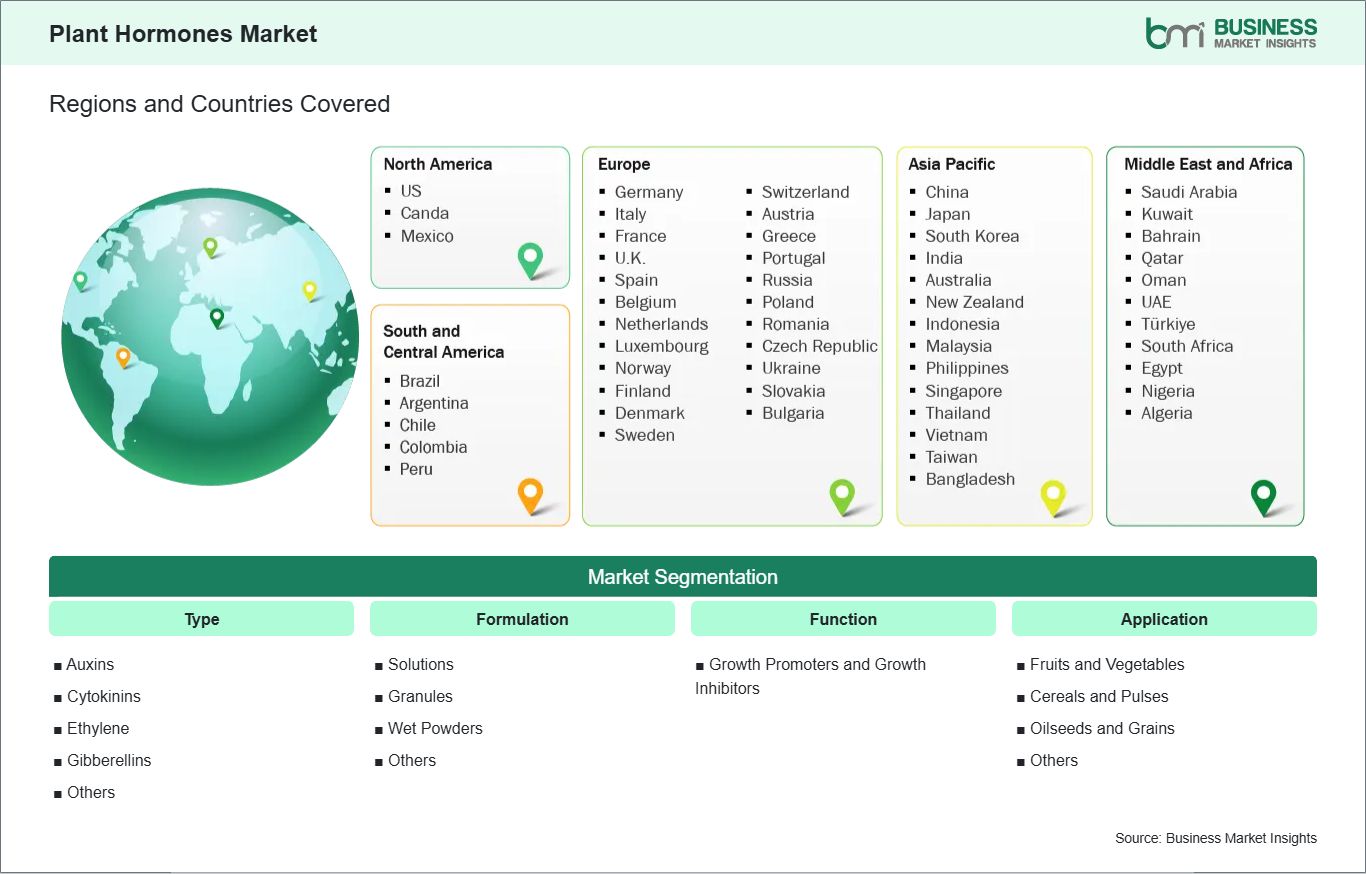
Key segments that contributed to the derivation of the plant hormones market analysis are type, formulation, function, and application.
The growing demand for higher crop yields is the main reason for the plant hormones market's expansion. With the world population expected to surpass 9 billion by 2050, farmers must maximize production on limited farmland. Plant hormones play an important role in enhancing crop growth, development, and stress tolerance, which helps farmers achieve better output per area. For example, auxins help roots grow and absorb nutrients, gibberellins encourage stem growth and fruit development, and cytokinins control cell division and slow down aging in plants.
By using synthetic and bio-based plant growth regulators, farmers can more accurately manage flowering, fruiting, and ripening. This reduces crop losses from tough environmental conditions like drought, salinity, or pest infestations. This is especially important in areas experiencing climate variability, where traditional farming methods may not consistently deliver good results. Furthermore, awareness of the economic benefits of better yield and quality is encouraging many farmers, whether small, medium, or large, to adopt these practices widely.
The increasing use of organic and sustainable farming practices is considered a growth opportunity in the market. Consumers around the world are demanding produce that is free from chemicals, safe, and good for the environment. This demand is encouraging farmers to find alternatives to traditional synthetic fertilizers and growth boosters. Bio-based plant hormones, made from natural sources like seaweed extracts, microbial metabolites, or plant extracts, provide effective growth regulation and meet organic farming standards. These products not only boost germination, flowering, and fruit development but also improve plant resistance to pests and environmental challenges, all without damaging soil health or biodiversity.
Regions such as Asia Pacific, South and Central America, and parts of Europe are rapidly expanding organic crop cultivation, creating a strong market for plant hormones that comply with certification standards. Additionally, new developments in biotechnology and formulation methods are allowing for the production of stable, easy-to-use, and cost-effective bio-hormone solutions fit for large-scale use. The combination of support for sustainable practices, consumer preference for clean products, and growing awareness among farmers about long-term soil and crop health presents a valuable opportunity for companies in the plant hormones market to create specialized products for organic and eco-friendly farming.

| Report Attribute | Details |
|---|---|
| Market size in 2025 | US$ 3.80 Billion |
| Market Size by 2033 | US$ 6.25 Billion |
| Global CAGR (2026 - 2033) | 6.40% |
| Historical Data | 2022 - 2024 |
| Forecast period | 2026-2033 |
| Segments Covered | By Type
|
|
Regions and Countries Covered
| |
| North America | US, Canada, Mexico |
| Europe | Belgium, Austria, Finland, Denmark, Greece, Poland, Romania, Russia, Ukraine, Czech Republic, Slovakia, Bulgaria, Italy, Luxembourg, Germany, Switzerland, France, Netherlands, Norway, Portugal, Spain, Sweden, United Kingdom |
| Asia-Pacific | Australia, China, India, Japan, South Korea, Indonesia, Malaysia, Philippines, Singapore, Thailand, Vietnam, Bangladesh, New Zealand, Taiwan |
| South and Central America | Brazil, Argentina, Peru, Chile, Colombia |
| Middle East and Africa | Bahrain, Kuwait, Oman, Qatar, Saudi Arabia, United Arab Emirates, Turkiye, South Africa, Egypt, Algeria, Nigeria |
| Market leaders and key company profiles |
|
The Plant Hormones Market Size and Forecast (2022-2033) report provides a detailed analysis of the market covering below areas:
The geographical scope of the plant hormones market report is divided into five regions: North America, Asia Pacific, Europe, the Middle East & Africa, and South & Central America. The plant hormones market in the Asia Pacific is expected to grow significantly during the forecast period.
Asia Pacific is the largest market for plant hormones because of demographic, agricultural, and industrial factors. The region has the world's largest population, which leads to a growing demand for food production and agricultural efficiency. Countries like China, India, Japan, and Southeast Asian nations have a lot of arable land and large volumes of crop cultivation. This creates a strong need for plant growth regulators to boost yield, improve quality, and manage crop growth cycles.
Modern farming practices, such as mechanized farming, precision agriculture, and the careful use of bio-based and synthetic hormones, also support market growth. Furthermore, the region plays a major role in horticulture, fruits, vegetables, and valuable cash crops. These all benefit greatly from using auxins, cytokinins, gibberellins, and other plant hormones. Government efforts to promote sustainable agriculture, more investment in research and development, and the rising awareness among farmers about the economic and productivity benefits of plant hormones also help solidify the region's leading position.

The plant hormones market is evaluated by gathering qualitative and quantitative data post-primary and secondary research, which includes important corporate publications, association data, and databases. A few of the key developments in the plant hormones market are:
The Plant Hormones Market is valued at US$ 3.80 Billion in 2025, it is projected to reach US$ 6.25 Billion by 2033.
As per our report Plant Hormones Market, the market size is valued at US$ 3.80 Billion in 2025, projecting it to reach US$ 6.25 Billion by 2033. This translates to a CAGR of approximately 6.40% during the forecast period.
The Plant Hormones Market report typically cover these key segments-
The historic period, base year, and forecast period can vary slightly depending on the specific market research report. However, for the Plant Hormones Market report:
The Plant Hormones Market is populated by several key players, each contributing to its growth and innovation. Some of the major players include:
The Plant Hormones Market report is valuable for diverse stakeholders, including:
Essentially, anyone involved in or considering involvement in the Plant Hormones Market value chain can benefit from the information contained in a comprehensive market report.
Please tell us your area of interest
(Market Segments/ Regions and Countries/ Companies)