Pediatric Radiology Market Outlook (2022-2033)

Historic Data: 2022 - 2024   |   Base Year: 2025   |   Forecast Period: 2026-2033
Report Content: Market Scope, Market Segmentation, Market Dynamics, and Competitive Analysis

Report Coverage:
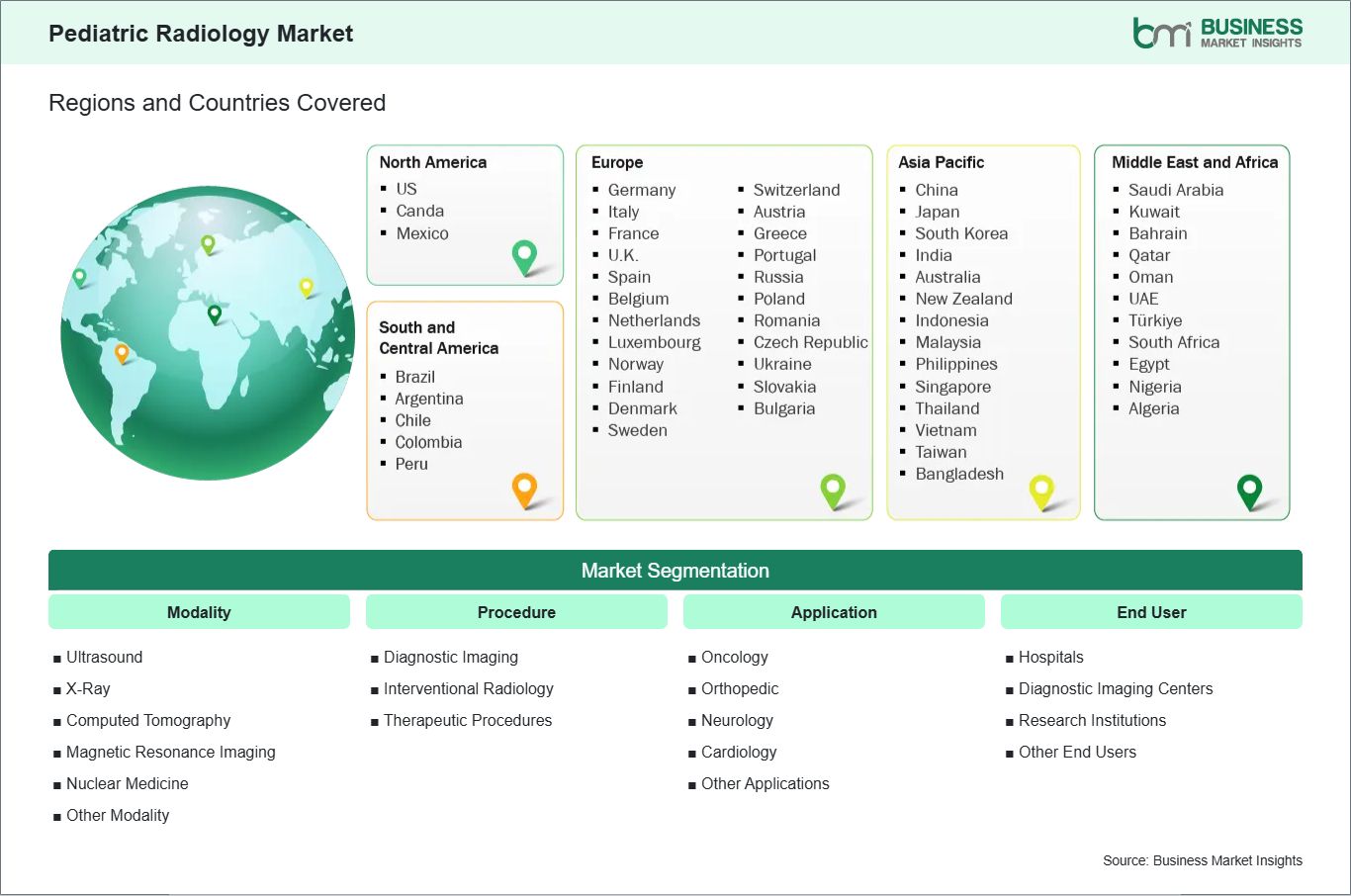
  • Modality (Ultrasound, X-Ray, Computed Tomography, Magnetic Resonance Imaging, Nuclear Medicine, Other Modality)
  • Procedure (Diagnostic Imaging, Interventional Radiology, Therapeutic Procedures)
  • Application (Oncology, Orthopedic, Neurology, Cardiology, Other Applications)
  • End User (Hospitals, Diagnostic Imaging Centers, Research Institutions, Other End Users)

No. of Pages: 400
Report Code: BMIPUB00032509
Category: Life Sciences
Pediatric Radiology Market
Buy Now

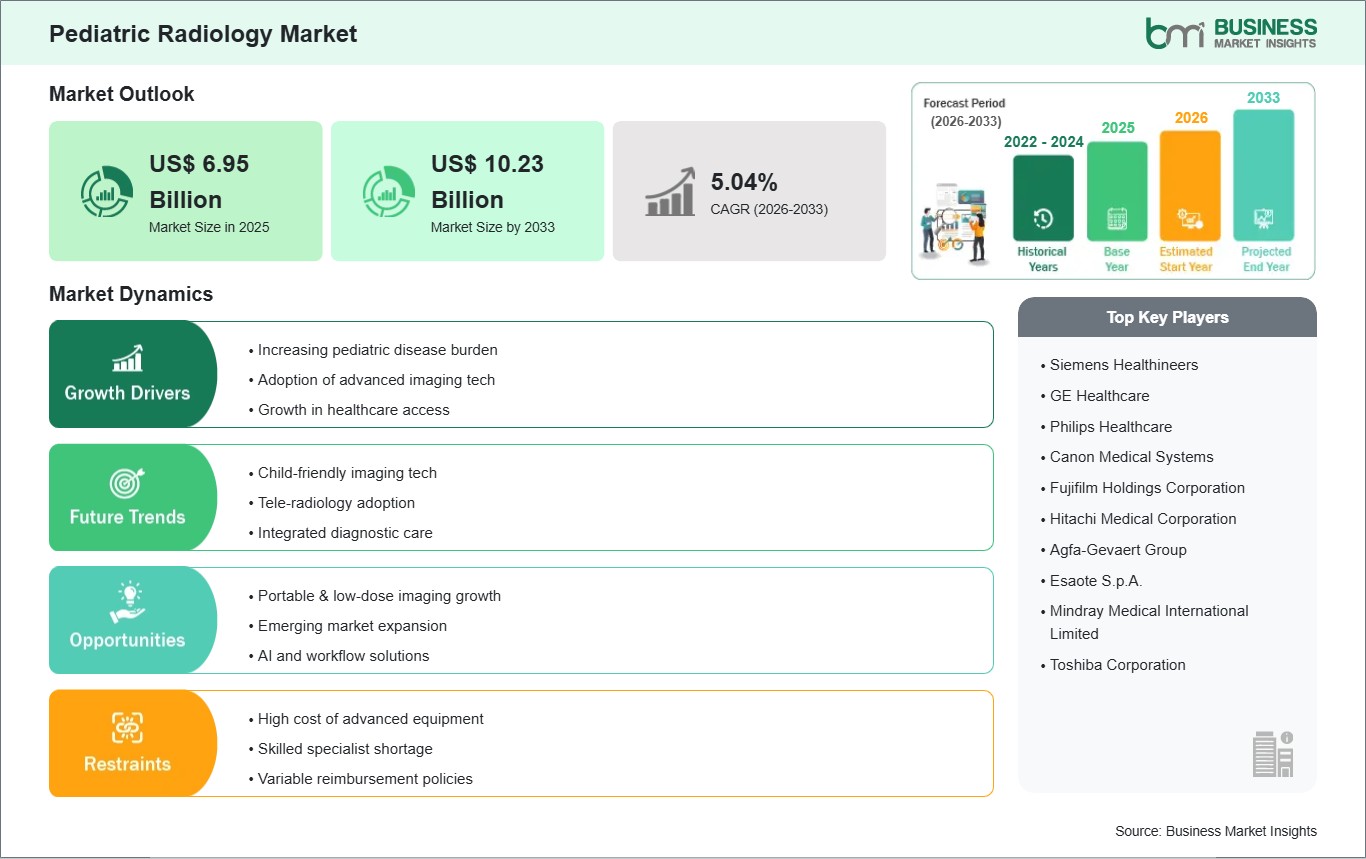
The pediatric radiology market size is expected to reach US$ 10.23 billion by 2033 from US$ 6.95 billion in 2025. The market is estimated to record a CAGR of 5.04% from 2026 to 2033.

Executive Summary and Global Market Analysis:

The pediatric radiology market encompasses the specialties and technologies of medical imaging specifically designed for diagnosing and monitoring diseases and conditions in infants, children, and adolescents. Pediatric radiology is concerned with the application of age-appropriate imaging techniques that are not only safe and accurate but also limit radiation exposure to very low levels, considering the high sensitivity of kids to ionizing radiation. The market consists of various diagnostic imaging modalities such as ultrasound, X-ray, computed tomography (CT), magnetic resonance imaging (MRI) and nuclear imaging, as well as the related software, equipment and radiology services specifically for pediatric use. There is an increase in the prevalence of congenital disorders, cancers in children, respiratory and gastrointestinal conditions, trauma-related cases and chronic illnesses that require continuous diagnostic evaluation, which will lead to the market expansion. The detection of diseases at an early stage has created awareness, and gradual improvement in healthcare access has created a growing demand for pediatric care that has been further supported by the building up of pediatric care infrastructure.

Besides, the technological innovations have been the market's most powerful drivers as the industry has witnessed the introduction of ultra-low radiation imaging systems, faster MRI machines, AI-powered image adapters, and spot-free imaging gadgets that all lead to enhanced precision in diagnosis while cutting down on the time of procedure and patient's discomfort. Ultrasound remains the king of modality due to its non-invasive and radiation-free character, while MRI is slowly but surely winning over the soft tissue imaging market with its detailed and accurate images. Hospitals are the most significant end-users, as they not only provide comprehensive pediatric diagnostic and treatment services but also have the cooperation of radiologists and multidisciplinary care teams that are specialized in these cases.

However, the market still has to face certain difficulties including high-priced apparatus, the small number of capable children's radiologists, and the hazard of exposure to radiation with particular types of scans. The government will keep on backing the market that will be the main factors to support the growth of pediatric healthcare and co-creation of stronger imaging technology. In summary, the pediatric radiology industry is in the midst of a transformation wherein the deployment of precise, child-friendly, and technology-enabled diagnostic methods is considered to be indispensable not only for the improvement of clinical outcomes and health care management in the pediatric population worldwide but also for the pediatric population in general.

Pediatric Radiology Market - Strategic Insights:

global-market-strategic-framework
Get more information on this report

Pediatric Radiology Market Segmentation Analysis:

Key segments that contributed to the derivation of the pediatric radiology market analysis are modality, procedure, application, and end user.

  • By modality, the pediatric radiology market is bifurcated into ultrasound, X-ray, computed tomography, magnetic resonance imaging, nuclear medicine, and other modality. The ultrasound segment dominated the market in 2025.
  • By procedure, the market is bifurcated into diagnostic imaging, interventional radiology, therapeutic procedures. The diagnostic imaging segment held the largest share of the market in 2025.
  • By application, the market is segmented into oncology, orthopedic, neurology, cardiology, other applications. The oncology segment held the largest share of the market in 2025.
  • By end user, the market is segmented into hospitals, diagnostic imaging centers, research institutions, other end users. The hospitals segment held the largest share of the market in 2025.
  • Pediatric Radiology Market Drivers and Opportunities:

    Increasing Burden of Pediatric Diseases

    Pneumonia is one of the leading chronic illnesses that affect infants and toddlers. An example of this is a UNICEF report published in November 2023, stating that there are more than 1,400 pneumonia cases per 100,000 children or 1 case every 71 children per year, worldwide; the highest occurrence being in South Asia (2,500 cases per 100,000 children) and West and Central Africa (1,620 cases per 100,000 children). Pneumonia is one of the major chronic diseases affecting children and increasing the demand for medical diagnostic imaging, thus pushing the market growth.

    Likewise, an upsurge in the number of children suffering from asthma is being noticed, which is one of the factors driving the market's growth. For example, in January 2023, the Journal of Asthma and Allergy reported that the global asthma prevalence is 11% for children aged 6-7 years and 9.1% for those aged 13-14 years. Furthermore, a link between asthma and poor performance at school is suggested. The increase of asthma cases in children is necessitating the advancement of new diagnosis technologies, thus supporting the pediatric radiology market.

    The major players in the industry are adopting various growth tactics like partnerships for the placement of new products in different medical facilities which is expected to lead to the market increase. For example, in July 2023, Eyas Medical Imaging integrated its neonatal MRI system Ascent within the neonatal intensive care unit (NICU) at Cincinnati Children's Hospital. The Ascent is powered by a 3-tesla magnet that translates into more precise neonatal diagnostic imaging. Such progress may refine the treatment plans for the patients and yield better results for the at-risk infants population. The enhancement could positively affect the treatment plans of patients and the outcomes of the most at-risk babies. In addition, it will facilitate the integration of pediatric imaging systems in developed countries, thereby resulting in the market growth that could be very profitable.

    Finally, the growth of the market is mainly attributed to the rising incidence of chronic diseases and the upsurge in government initiatives during the forecast period. On the other hand, ethical dilemmas in children studies and the shortage of qualified healthcare personnel are projected to restrain the market growth during the same period.

    Regulatory Support for Pediatric Imaging

    Regulatory support for pediatric imaging has emerged as a major growth driver in the pediatric radiology market by making diagnostic practices safer, more uniform, and innovation-centered, thus meeting children’s unique needs. Worldwide regulatory bodies and health organizations are increasingly recognizing the fact that children are more susceptible to the harmful effects of radiation than adults, which has led to the issuing of guidelines for the imaging of children, protocols for dose-optimization, and state-of-the-art safety standards. Measures like the compulsory tracking of radiation doses, the application of ALARA (as low as reasonably achievable) principles, and the establishment of accreditation programs that focus on pediatrics are some of the initiatives that encourage healthcare practitioners to embrace the most advanced methods of low-dose and radiation-free imaging, including ultrasound and MRI. Regulations are creating an environment that is conducive for the manufacturers in the area of pediatric imaging equipment and software development, and they can now even think of accessories that will be compliant with the regulations and at the same time improve the diagnostic accuracy. Besides, the market for the development of child-friendly imaging technologies, encompassing faster scanners, AI-assisted image analysis, and portable imaging systems suitable for neonatal and emergency care, is supported by regulatory incentives such as expedited approval pathways, grants, and public funding for pediatric research which is innovation in imaging solutions. The future is bright, and educational and training programs for pediatric radiologists and technologists, backed by regulations, are the ones that will further strengthen market acceptance by building better clinical skills and offering consistent imaging practices.

    Pediatric Radiology Market Size and Share Analysis:

    By modality, the pediatric radiology market is bifurcated into ultrasound, X-ray, computed tomography, magnetic resonance imaging, nuclear medicine, and other modality. The ultrasound segment dominated the market in 2025. The market for pediatric radiology has been dominated by ultrasound technology because it is the safest of all, does not use ionizing radiation, is the cheapest, and can provide images in real-time. The image quality, speed, and price make ultrasound the first choice for the diagnosis of congenital disorders, abdominal problems, and soft tissue in infants and children.

    By procedure, the market is bifurcated into diagnostic imaging, interventional radiology, therapeutic procedures. The diagnostic imaging segment held the largest share of the market in 2025. Diagnostic imaging is the most significant part of the pediatric radiology market as it is a key factor to get the right diagnosis and also to monitor various children ailments like congenital anomalies, infections, accidents, and chronic diseases, and it also helps in making clinical decisions timely and effectively.

    By application, the market is segmented into oncology, orthopedic, neurology, cardiology, other applications. The oncology segment held the largest share of the market in 2025. By far, oncology is the major application segment in pediatric radiology as imaging often is the only way to detect, stage, plan treatment, and follow-up. When it comes to kids, the provision of advanced imaging techniques that allow for accurate tumor location at the same time reducing radiation exposure is of utmost importance.

    By end user, the market is segmented into hospitals, diagnostic imaging centers, research institutions, other end users. The hospitals segment held the largest share of the market in 2025. The pediatric radiology market is led by hospitals as the biggest consumers due to their sophisticated imaging establish, children’s radiologists available taking care of high patient volumes and offering integrated diagnostic and treatment services for complex pediatric conditions.


    Pediatric Radiology Market Report Highlights:

    Report Attribute Details
    Market size in 2025 US$ 6.95 Billion
    Market Size by 2033 US$ 10.23 Billion
    Global CAGR (2026 - 2033)5.04%
    Historical Data 2022 - 2024
    Forecast period 2026-2033
    Segments Covered By Modality
    • Ultrasound
    • X-Ray
    • Computed Tomography
    • Magnetic Resonance Imaging
    • Nuclear Medicine
    • Other Modality
    By Procedure
    • Diagnostic Imaging
    • Interventional Radiology
    • Therapeutic Procedures
    By Application
    • Oncology
    • Orthopedic
    • Neurology
    • Cardiology
    • Other Applications
    By End User
    • Hospitals
    • Diagnostic Imaging Centers
    • Research Institutions
    • Other End Users
    Regions and Countries Covered North America
    • US
    • Canada
    • Mexico
    Europe
    • Belgium
    • Austria
    • Finland
    • Denmark
    • Greece
    • Poland
    • Romania
    • Russia
    • Ukraine
    • Czech Republic
    • Slovakia
    • Bulgaria
    • Italy
    • Luxembourg
    • Germany
    • Switzerland
    • France
    • Netherlands
    • Norway
    • Portugal
    • Spain
    • Sweden
    • United Kingdom
    Asia-Pacific
    • Australia
    • China
    • India
    • Japan
    • South Korea
    • Indonesia
    • Malaysia
    • Philippines
    • Singapore
    • Thailand
    • Vietnam
    • Bangladesh
    • New Zealand
    • Taiwan
    South and Central America
    • Brazil
    • Argentina
    • Peru
    • Chile
    • Colombia
    Middle East and Africa
    • Bahrain
    • Kuwait
    • Oman
    • Qatar
    • Saudi Arabia
    • United Arab Emirates
    • Turkiye
    • South Africa
    • Egypt
    • Algeria
    • Nigeria
    Market leaders and key company profiles
    • Siemens Healthineers
    • GE Healthcare
    • Philips Healthcare
    • Canon Medical Systems
    • Fujifilm Holdings Corporation
    • Hitachi Medical Corporation
    • Agfa-Gevaert Group
    • Esaote S.p.A.
    • Mindray Medical International Limited
    Get more information on this report

    Pediatric Radiology Market Report Coverage and Deliverables:

    The Pediatric radiology Market Size and Forecast (2025-2033) report provides a detailed analysis of the market covering below areas:

    • Pediatric radiology market size and forecast at global, regional, and country levels for all the key market segments covered under the scope
    • Pediatric radiology market trends, as well as market dynamics such as drivers, restraints, and key opportunities
    • Pediatric radiology market analysis covering key market trends, global and regional framework, major players, regulations, and recent market developments
    • Industry landscape and competition analysis covering market concentration, heat map analysis, prominent players, and recent developments for the Pediatric radiology market
    • Detailed company profiles, including SWOT analysis
    • Pediatric Radiology Market Geographic Insights:

      The geographical scope of the pediatric radiology market report is divided into five regions: North America, Asia Pacific, Europe, Middle East & Africa, and South & Central America. The pediatric radiology market in Asia Pacific is expected to grow significantly during the forecast period.

      The Asia-Pacific Pediatric radiology market is segmented into China, Japan, South Korea, India, Australia, and the Rest of Asia. The continuous progress of tele-radiology networks that link urban specialists with rural hospitals is the force behind this growth. This makes real-time image analysis possible, quick diagnosis of pediatric congenital and chronic diseases, and wider distribution of advanced imaging throughout the region. The Chinese pediatric imaging market is on an upward trend due to the rollout of AI-assisted neonatal screening programs in big city hospitals backed by the government. These programs help detect congenital heart defects and metabolic disorders at an early stage; thus, the demand for advanced, child-specific imaging technologies all over the country is growing.             

      global-market-geography
      Get more information on this report

      Pediatric Radiology Market Research Report Guidance:

    • The report includes qualitative and quantitative data in the pediatric radiology market across product, material, and end user, and geography.
    • The report starts with the key takeaways (chapter 2), highlighting the key trends and outlook of the pediatric radiology market.
    • Chapter 3 includes the research methodology of the study.
    • Chapter 4 further includes ecosystem analysis.
    • Chapter 5 highlights the major industry dynamics in the pediatric radiology market, including factors that are driving the market, prevailing deterrents, potential opportunities, as well as future trends. Impact analysis of these drivers and restraints is also covered in this section.
    • Chapter 6 discusses the pediatric radiology market scenario, in terms of historical market revenues, and forecast till the year 2031.
    • Chapters 7 to 11 cover pediatric radiology market segments by modality, procedure, application, end user, and geography across North America, Europe, Asia Pacific, Middle East and Africa, and South and Central America. They cover the market value revenue forecast and factors driving the market.
    • Chapter 12 describes the competitive analysis along with the heat map analysis for the key players operating in the market.
    • Chapter 13 describes the industry landscape analysis. It provides detailed descriptions of business activities such as market initiatives, new developments, mergers, and joint ventures globally, along with a competitive landscape.
    • Chapter 14 provides detailed profiles of the major companies operating in the pediatric radiology market. Companies have been profiled on the basis of their key facts, business descriptions, products and services, financial overview, SWOT analysis, and key developments.
    • Chapter 15, i.e., the appendix is inclusive of a brief overview of the company, list of abbreviations, and disclaimer.


    Pediatric Radiology Market News and Key Development:

    The pediatric radiology market is evaluated by gathering qualitative and quantitative data post primary and secondary research, which includes important corporate publications, association data, and databases. A few of the key developments in the pediatric radiology market are:

    • In April 2025, Philips announced a strategic collaboration with Nicklaus Children’s Health System, a major children's medical centre, to deploy its pediatric ultrasound and AI-powered imaging platform, aiming to enable sedation-free scans and dose-optimized diagnostics.
    • In January 2025, Carestream Health introduced an advanced version of the DRX-Excel Plus X-ray System, which improves productivity, efficiency, and image quality. This two-in-one solution provides real-time, high-quality imaging for various examinations. The system includes important features designed to enhance user, patient, and administrative experiences, thereby strengthening Carestream's commitment to innovation in diagnostic imaging.
    • In February 2025, The LEGO Foundation announced plans to donate 600 LEGO MRI Scanners to hospitals worldwide, helping children cope with the uncertainty of undergoing an MRI scan.


    Key Sources Referred:

    • World Bank – Global Trade Indicators
    • European Chemicals Agency
    • International Council of Chemical Associations
    • (International Monetary Fund )IMF
    • World Trade Organization (WTO)
    • International Trade Administration (ITA)
    • Company website
    • Company annual reports
    • Company investor presentations

The List of Companies - Pediatric Radiology Market

  • Siemens Healthineers
  • GE Healthcare
  • Philips Healthcare
  • Canon Medical Systems
  • Fujifilm Holdings Corporation
  • Hitachi Medical Corporation
  • Agfa-Gevaert Group
  • Esaote S.p.A.
  • Mindray Medical International Limited
  • Toshiba Corporation
Frequently Asked Questions
How big is the Pediatric Radiology Market?

The Pediatric Radiology Market is valued at US$ 6.95 Billion in 2025, it is projected to reach US$ 10.23 Billion by 2033.

What is the CAGR for Pediatric Radiology Market by (2026 - 2033)?

As per our report Pediatric Radiology Market, the market size is valued at US$ 6.95 Billion in 2025, projecting it to reach US$ 10.23 Billion by 2033. This translates to a CAGR of approximately 5.04% during the forecast period.

What segments are covered in this report?

The Pediatric Radiology Market report typically cover these key segments-

  • Modality (Ultrasound, X-Ray, Computed Tomography, Magnetic Resonance Imaging, Nuclear Medicine, Other Modality)
  • Procedure (Diagnostic Imaging, Interventional Radiology, Therapeutic Procedures)
  • Application (Oncology, Orthopedic, Neurology, Cardiology, Other Applications)
  • End User (Hospitals, Diagnostic Imaging Centers, Research Institutions, Other End Users)

What is the historic period, base year, and forecast period taken for Pediatric Radiology Market?

The historic period, base year, and forecast period can vary slightly depending on the specific market research report. However, for the Pediatric Radiology Market report:

  • Historic Period : 2022 - 2024
  • Base Year : 2025
  • Forecast Period : 2026-2033
  • Who are the major players in Pediatric Radiology Market?

    The Pediatric Radiology Market is populated by several key players, each contributing to its growth and innovation. Some of the major players include:

  • Siemens Healthineers
  • GE Healthcare
  • Philips Healthcare
  • Canon Medical Systems
  • Fujifilm Holdings Corporation
  • Hitachi Medical Corporation
  • Agfa-Gevaert Group
  • Esaote S.p.A.
  • Mindray Medical International Limited
  • Toshiba Corporation
  • Who should buy this report?

    The Pediatric Radiology Market report is valuable for diverse stakeholders, including:

    • Investors: Provides insights for investment decisions pertaining to market growth, companies, or industry insights. Helps assess market attractiveness and potential returns.
    • Industry Players: Offers competitive intelligence, market sizing, and trend analysis to inform strategic planning, product development, and sales strategies.
    • Suppliers and Manufacturers: Helps understand market demand for components, materials, and services related to concerned industry.
    • Researchers and Consultants: Provides data and analysis for academic research, consulting projects, and market studies.
    • Financial Institutions: Helps assess risks and opportunities associated with financing or investing in the concerned market.

    Essentially, anyone involved in or considering involvement in the Pediatric Radiology Market value chain can benefit from the information contained in a comprehensive market report.

    Available Report Formats

    pdf-format excel-format pptx-format
    Buy Now

    Customization Form

    Please tell us your area of interest
    (Market Segments/ Regions and Countries/ Companies)