
The North America Surgical Robots Market size is expected to reach US$ 9,899.1 million by 2033 from US$ 5,487.0 million in 2025. The market is estimated to record a CAGR of 8.0% from 2026 to 2033.
Executive Summary and Regional Market Analysis:
The North America surgical robots market is distinguished by its strong alignment with technological innovation, precision healthcare, and advanced surgical care delivery. Hospitals in the region are increasingly adopting robotic-assisted platforms to address the growing complexity of surgical procedures and to enhance patient safety metrics. The integration of robotics has shifted the focus of surgical teams from purely manual dexterity toward leveraging machine-assisted precision, reducing variability in outcomes, and improving procedural efficiency. Leading manufacturers, such as Intuitive Surgical, Medtronic, and Stryker Corporation, are investing heavily in regional service infrastructure, surgeon certification programs, and software-driven surgical planning tools to maximize system utilization. Market adoption is heavily concentrated in metropolitan teaching hospitals and research institutions, where high surgical volumes justify substantial capital expenditure. Furthermore, the adoption is influenced by hospital strategic objectives, including branding, operational differentiation, and the potential to attract international patients for minimally invasive procedures. Investment in robotic platforms is often evaluated alongside broader digital health initiatives, such as integrated imaging, surgical analytics, and workflow optimization, to ensure maximum return on technology. While private hospitals are rapidly adopting these systems, public hospitals are gradually integrating robotics through regional programs and shared surgical centers to improve access to high-precision care. The market landscape is shaped not only by clinical considerations but also by financial planning, infrastructure readiness, and long-term maintenance capabilities. Overall, North America represents a mature and competitive market where surgical robotics is central to hospital strategy, operational excellence, and clinical research leadership.
North America Surgical Robots Market Strategic Insights
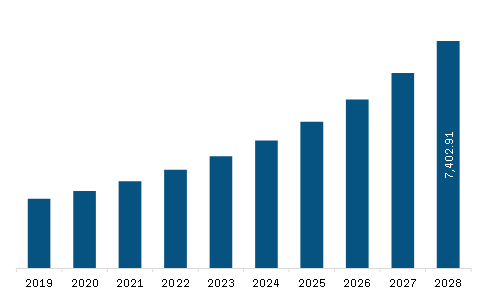
Key segments that contributed to the derivation of the North America Surgical Robots Market analysis are product, application, and end user.
- By product, the surgical robots market is segmented into robotic surgical systems, robotic surgery accessories & instruments and others. The robotic surgery accessories & instruments segment dominated the market in 2025.
- In terms of application, the surgical robots market is categorized into laparoscopy, neurology, orthopedics, gynecology, urology, cardiology and other applications. The laparoscopy segment dominated the market in 2025.
- Based on end user, the surgical robots market is classified into hospitals, ambulatory surgical centers and other end users. The hospitals segment dominated the market in 2025.
North America Surgical Robots Market Drivers and Opportunities:
Favorable reimbursement policy expansion
In North America, expanded reimbursement frameworks are significantly encouraging hospitals to integrate surgical robotic platforms into standard practice. In the United States, public and private insurers are increasingly covering procedures such as prostatectomies, hysterectomies, and bariatric surgeries performed with robotic assistance. This wider coverage reduces financial uncertainty for healthcare providers, allowing more institutions to justify the acquisition of high-cost robotic systems without depending solely on private payers or out-of-pocket patient funding. Canadian healthcare authorities are also progressively recognizing the value of robotics in surgical care, especially in complex interventions that can reduce hospital readmissions and improve recovery timelines. Provinces like Quebec and Alberta are exploring policy mechanisms that allow robotic surgery costs to be reimbursed under existing surgical budgets, facilitating broader adoption in tertiary and regional hospitals. By aligning reimbursement structures with the potential clinical and economic benefits of robotic surgery, healthcare systems are fostering an environment conducive to sustainable program expansion. Furthermore, reimbursement expansion is influencing strategic planning at institutional and regional levels. Hospitals in metropolitan areas such as Chicago, Houston, Toronto, and Montreal are using predictable coverage to model long-term investment returns, including staffing, training, and maintenance expenses. This has led to more structured robotics programs, with dedicated teams and procedure-specific protocols that maximize reimbursement potential. The combination of policy support, financial predictability, and clinical alignment is creating favorable conditions for continued growth of surgical robotics across North America.
Cost reduction manufacturing advances
Advances in manufacturing techniques are lowering the barriers to entry for surgical robotics in North America. Robotic system developers in the United States are utilizing high-precision automated assembly and modular design approaches, which reduce labor intensity and simplify component replacement. These efficiencies decrease production costs while maintaining performance standards, allowing hospitals to invest in advanced robotic systems without significantly inflating capital expenditure budgets. Material innovation is also contributing to cost reductions. North American manufacturers are incorporating lighter, more durable composites and alloys into robotic arms and instruments, which reduces both shipping costs and wear over time. Additionally, some companies are standardizing instrument platforms across multiple robotic systems, allowing hospitals to use fewer unique parts and streamline inventory management, which further reduces operational expenditures. Supply chain optimization complements these manufacturing improvements. Robotics companies in Canada and the U.S. are strategically locating production and assembly centers closer to key healthcare markets, decreasing lead times and import costs. They are also collaborating with contract manufacturers to scale up output without compromising quality. These collective manufacturing advances are not only lowering the overall acquisition cost of surgical robots but are also making maintenance and instrument replacement more affordable, supporting wider adoption across community hospitals, specialty centers, and academic institutions in North America.
North America Surgical Robots Market Size and Share Analysis
The North America Surgical Robots Market demonstrates steady growth, with size and share analysis highlighting evolving trends and competitive dynamics among key players. The report examines subsegments categorized within product, application, and end user, offering insights into their contribution to overall market performance.
By product, the robotic surgery accessories & instruments segment dominated the market in 2025, driven by the recurring and high replacement demand for consumable tools required in every robotic procedure, creating continuous revenue as surgical volumes increase.
In terms of application, the laparoscopy segment dominated the market in 2025, driven by the strong regional preference for minimally invasive robotic laparoscopic procedures that improve precision, reduce recovery time, and enhance patient outcomes.
Based on end user, the hospitals segment dominated the market in 2025, driven by their advanced healthcare infrastructure, high surgical volumes, financial capacity, and supportive reimbursement frameworks that facilitate widespread adoption of robotic systems.
North America Surgical Robots Market Report Coverage and Deliverables
The "North America Surgical Robots Market Size and Forecast (2022–2033)" report provides a detailed analysis of the market covering below areas:
- North America Surgical Robots Market size and forecast at regional and country levels for all market segments covered under the scope
- North America Surgical Robots Market trends, as well as drivers, restraints, and opportunities
- North America Surgical Robots Market analysis covering key trends, regional framework, major players, regulations, and recent developments
- Industry landscape and competition analysis covering market concentration, heat map analysis, prominent players, and recent developments for the North America Surgical Robots Market
- Detailed company profiles, including SWOT analysis
North America Surgical Robots Market Country and Regional Insights
The geographical scope of the North America Surgical Robots Market report is divided into US, Canada, and Mexico. The US held the largest share in 2025.
Within North America, adoption patterns vary significantly between the United States and Canada due to differences in healthcare financing, regulatory approaches, and hospital organization structures. United States dominates the market, with extensive deployment in high-volume academic medical centers, multi-specialty hospitals, and private healthcare networks. Hospitals focus on leveraging robotics to reduce surgical complications, shorten recovery times, and enhance overall patient experience. Investments are being made in platforms that enable multi-specialty utilization, provide advanced imaging integration, and support data-driven surgical planning. In addition, tele-mentoring initiatives and AI-assisted robotic systems are increasingly employed to extend the reach of surgical expertise into suburban and rural hospitals. Canada demonstrates more conservative adoption, concentrated in major urban centers and tertiary teaching hospitals, driven by public healthcare procurement policies and budgetary considerations. Robotics in Canada is applied primarily in complex procedures, with a strong focus on evidence-based outcomes, research integration, and clinical training. Adoption across both countries is influenced by surgeon proficiency, hospital capital allocation, and patient demand for minimally invasive surgery. While the US sets benchmarks for technological integration and procedural volume, Canada emphasizes strategic deployment and operational efficiency within its public healthcare framework. Together, these dynamics present North America as a region where surgical robotics adoption is driven by clinical sophistication, institutional strategy, and technology-led innovation, with each country tailoring implementation according to system structure and market priorities.
North America Surgical Robots Market Research Report Guidance
- The report includes qualitative and quantitative data in the North America Surgical Robots Market product, application, end user, and geography.
- The report starts with the key takeaways (chapter 2), highlighting key trends and outlook of the North America Surgical Robots Market.
- Chapter 3 focuses on the research methodology of the study.
- Chapter 4 includes ecosystem analysis.
- Chapter 5 highlights the major industry dynamics in the North America Surgical Robots Market, including factors that are driving the market, prevailing deterrents, potential opportunities, as well as future trends. Impact analysis of these drivers and restraints is also covered in this section.
- Chapter 6 discusses the North America Surgical Robots Market scenario, in terms of historical market revenues, and forecast till the year 2033.
- Chapters 7 to 10 cover North America Surgical Robots Market segments by product, application, end user, and geography across US, Canada, and Mexico. They cover the market revenue forecast and factors driving the market.
- Chapter 11 describes the competitive analysis along with the heat map analysis for the key players operating in the market.
- Chapter 12 describes the industry landscape analysis. It provides detailed descriptions of business activities such as market initiatives, new developments, mergers, and joint ventures globally, along with a competitive landscape.
- Chapter 13 provides detailed profiles of the major companies operating in the North America Surgical Robots Market. Companies have been profiled on the basis of their key facts, business descriptions, products, financial overview, SWOT analysis, and key developments.
- Chapter 14, i.e., the appendix, is inclusive of a brief overview of the company, a list of abbreviations, and a disclaimer.
North America Surgical Robots Market News and Key Developments:
The North America Surgical Robots Market is evaluated by gathering qualitative and quantitative data post primary and secondary research, which includes important corporate publications, association data, and databases. A few of the key developments in the North America Surgical Robots Market are:
- In December 2025, the Medtronic Hugo Robotic‑Assisted Surgery (RAS) system received U.S. Food and Drug Administration (FDA) clearance for use in urologic surgical procedures. This marks a major regulatory milestone for Medtronic as it expands its robotic portfolio beyond existing products. The approval enables Hugo™ to be used in clinical practice at U.S. hospitals, broadening options for minimally invasive surgery. It also sets the stage for future indications in other surgical specialties.
- In December 2025, CMR Surgical’s Versius Plus robotic surgical system received FDA 510(k) clearance, authorising its use for cholecystectomy (gallbladder removal) procedures in the United States. This clearance allows the UK‑developed modular robotic platform to enter the North American market. Hospitals can now begin preparation for clinical rollout in 2026, providing an alternative to legacy systems. The approval expands Versius’ footprint beyond Europe into mainstream U.S. surgical care.
Key Sources Referred:
- World Health Organization (WHO)
- Organisation for Economic Cooperation and Development (OECD)
- The World Bank Group
- Worldometer
- The Lancet
- International Bar Association
- International Trade Administration
North America Surgical Robots Market Report Highlights
| Report Attribute | Details |
| Market size in 2025 | US$ 5,487.0 Million |
| Market Size by 2033 | US$ 9,899.1 Million |
| CAGR (2026 - 2033) | 8.0% |
| Historical Data | 2022-2024 |
| Forecast period | 2026-2033 |
| Segments Covered |
By Product
|
|
Regions and Countries Covered
|
|
| North America | US, Canada, Mexico |
| Market leaders and key company profiles |
|
North America Surgical Robots Market Country and Regional Insights



