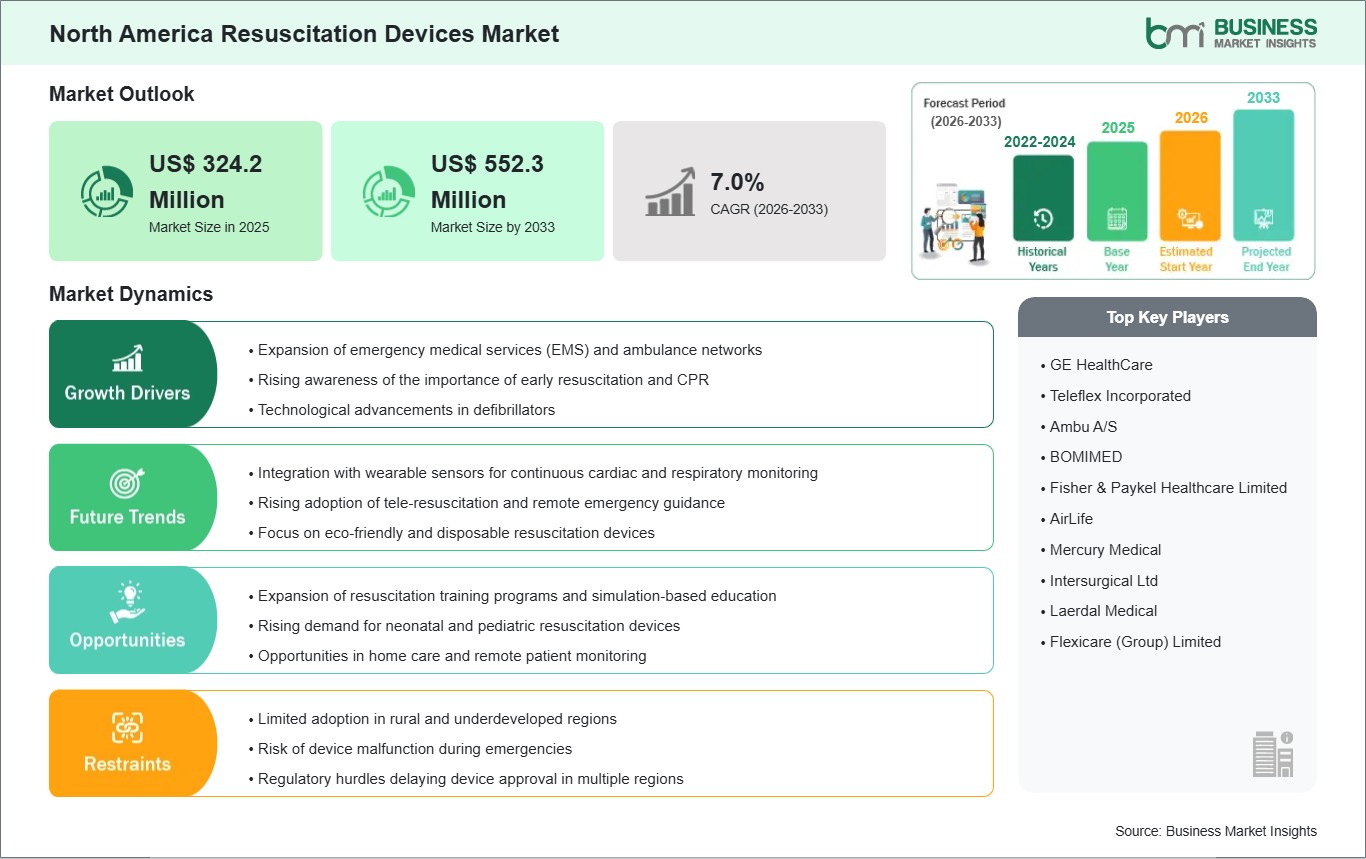
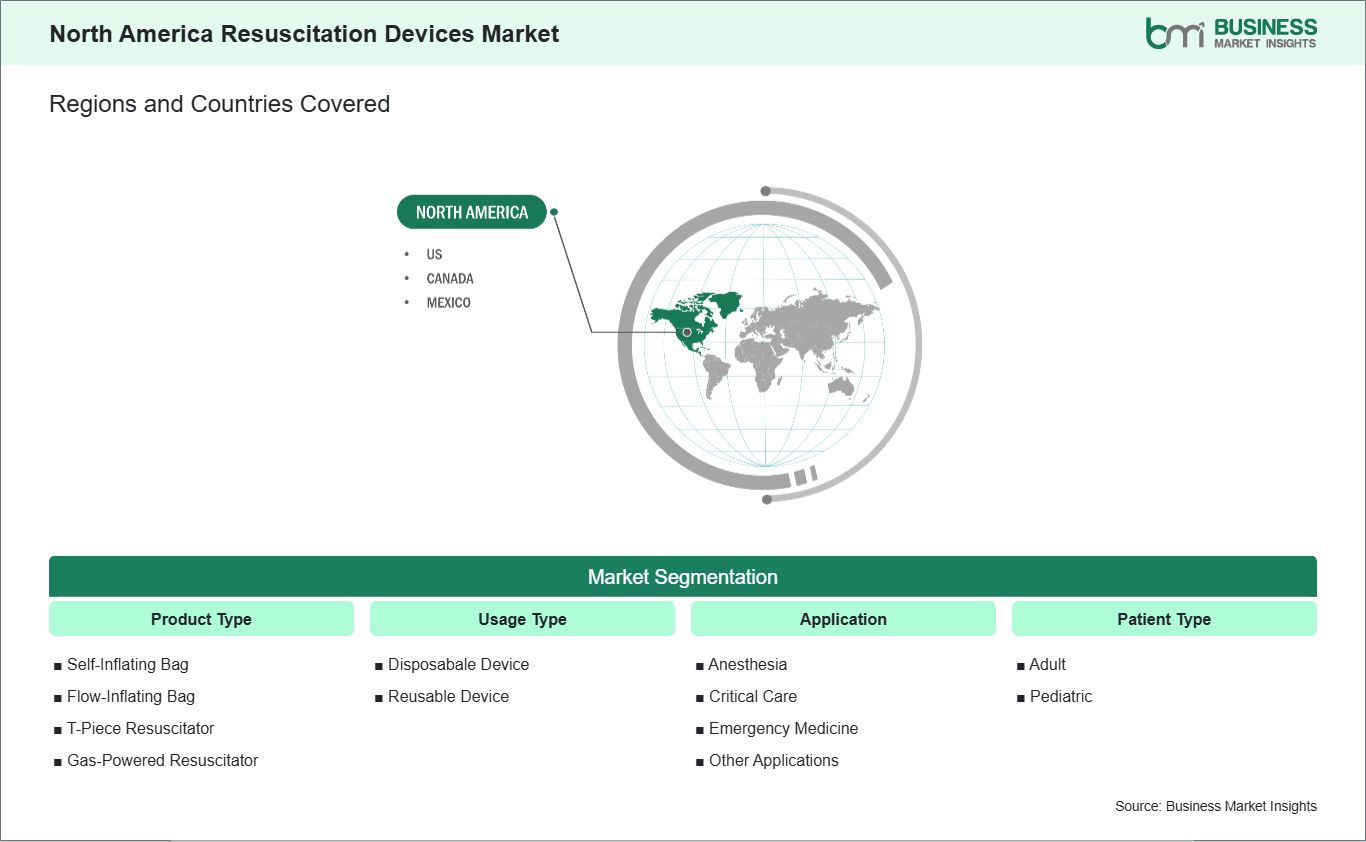
The North America resuscitation devices market is experiencing steady growth, with market size and share analysis reflecting evolving treatment preferences and competitive dynamics among key players. The report evaluates important subsegments categorized within product type, usage type, application, patient type, and end user, highlighting their respective contributions to overall market performance.
By product type, the self-inflating Bag subsegment dominated the market in 2025, as they are easy to use and do not require external gas or power sources, making them ideal for emergencies. They allow precise manual control of ventilation, which is crucial in critical care. Their portability makes them suitable for both hospital wards and transport situations.
Based on usage type, the disposable devices subsegment dominated the market in 2025 due to their ability to prevent cross-contamination and infection. They eliminate the need for complex sterilization processes, saving time and reducing operational costs. In high-volume hospital settings, disposables improve workflow efficiency. This makes them highly preferred in emergency rooms, ICUs, and surgical units.
On the basis of application, the anesthesia subsegment dominated the market in 2025, as resuscitation devices are essential for safe ventilation during induction and recovery. They provide backup support if mechanical ventilators fail. Their precise control helps manage patients with varying lung compliances. Hospitals rely on these devices to prevent hypoxia and ensure patient safety during surgeries.
In terms of patient type, the adult subsegment dominated the market in 2025, as they experience more surgical procedures and critical emergencies than pediatric populations. Their larger lung capacity requires devices designed for adult ventilation. High prevalence of cardiac and respiratory conditions in adults increases usage frequency.
Based on end user, the hospitals subsegment dominated the market in 2025 due to constant emergency and surgical care needs. ICUs, operating rooms, and emergency departments require rapid access to resuscitation devices. High patient volume and stringent safety protocols make hospitals the key market driver. Their centralized procurement and standardized protocols ensure widespread device adoption.