Analysis – by Service Type (Private Pay Patient Transportation, Insurance-Backed Patient Transportation, Courier Services, and Other Services) and Application (Dialysis, Routine Doctor Visit, Mental Health-Related Appointments, Rehabilitation, and Others)
No. of Pages:128
Report Code:
BMIRE00027677
Category:
Life Sciences
North America Non-Emergency Medical Transportation Market
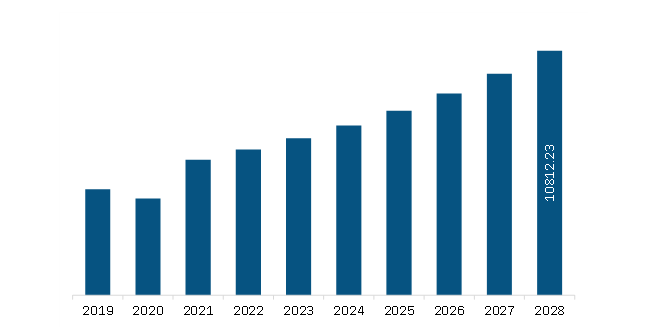
The non-emergency medical transportation market in North America is expected to grow from US$ 6,434.65 million in 2022 to US$ 10,812.23 million by 2028. It is estimated to grow at a CAGR of 9.0% from 2022 to 2028.
Growing Need for Non-Emergency Medical Transportation Boosts Market Growth
About 5.8 million Americans miss or delay their healthcare appointments due to the lack of transportation facilities. According to a study published in the American Journal of Public Health in 2019, ~16,000 individuals in the US miss their doctor’s appointments every day due to this reason, and several of these individuals have chronic conditions that can adversely affect their health. A 2019 survey by Kaiser Permanente found that one-third of Americans frequently or occasionally experience stress due to transportation. Since 1965, Medicaid has had a non-emergency medical transportation (NEMT) benefit and people covered by Medicaid are provided with transportation services as an essential benefit. ~75 million individuals have been enrolled in Medicaid as of 2019. The KFF Medicaid Budget Survey anticipated 8.2% increase in healthcare membership in the US in 2021, which was mostly driven by the COVID-19 outbreak crisis and a high unemployment rate. The need for NEMT services grows further with the rise in healthcare enrolment and eligibility. Shared mobility has undergone proliferation and normalization in recent years. According to a Pew Research Center survey, ~36% of Americans used some form of ride-hailing service in 2018. Most of the NEMT services are delivered through NEMT brokers or managed care organizations (MCOs). In many states, the brokers or MCOs receive a per capita payment to manage the NEMT, while in others, NEMT is delivered on a fee-for-service basis through local service providers. The Children’s Health Insurance Program (CHIP) provides health coverage to eligible children through Medicaid and separate CHIP programs. CHIP is administered by states as per federal requirements, and it is funded jointly by state governments and the federal government. Thus, with an increase in such initiatives by governments, the demand for NEMT is rising, which boosting the market growth in North America.
Market Overview
The non-emergency medical transportation market in North America is segmented into the US, Canada, and Mexico. The increasing prevalence of chronic illnesses (especially among aging populations), disabilities, injuries, and obesity favor the growth of the market growth in the region. Cathay Express Transportation, a non-emergency private shuttle service provider, offers wheelchair-accessible rides to medical appointments for dialysis patients. The population of the US is likely to double from 2000 to 2033, registering a 21% increase in the number of senior citizens during this period. This factor is likely to contribute to a further rise in demand for non-emergency medical transportation (NEMT) and other mediums of transport for the more efficient transportation of elderlies to clinics and hospitals. Senior citizens with health problems can have a difficult time getting from point A to point B, considering that taxi and conveyance services are in high demand. Further, the COVID-19 pandemic has generated an enormous need for reliable car transportation to get to appointments, essential doctor visits, and daily treatments. After forming their health divisions in 2018 and 2016, respectively, Uber and Lyft are now estimating the multi-billion-dollar market for their non-emergency medical transportation services. Similarly, with the increased demand, many new NEMT service businesses are emerging in the US, while the existing ones are undertaking the expansion of their operations in other states/locations.
North America Non-Emergency Medical Transportation Market Revenue and Forecast to 2028 (US$ Million)
North America Non-Emergency Medical Transportation Market Segmentation
Based on service type, the market is segmented into private pay patient transportation, insurance-backed patient transportation, courier services, and other services. The private pay patient transportation segment registered the largest market share in 2022.
In terms of application, the market is segmented into dialysis, routine doctor visits, mental health-related appointments, rehabilitation, and others. The mental health-related appointments segment held the largest market share in 2022.
Based on country, the non-emergency medical transportation market is segmented into the US, Mexico, and Canada. The US dominated the market share in 2022.
ABC Non-Emergency Medical Transportation, LLC; MTM, Inc.; AMR; Xpress Transportation; CJ Medical Transportation; Southeastrans; ModivCare; Crothall Healthcare; Elite Medical Transport; Acadian Ambulance Service; GLOBAL RESCUE LLC.; London Medical Transportation Systems; and FirstGroup plc. are the leading companies operating in the non-emergency medical transportation market in North America.
North America Non-Emergency Medical Transportation Market Strategic Insights
Get more information on this report
North America Non-Emergency Medical Transportation Market Segmentation Analysis
North America Non-Emergency Medical Transportation Market Report Highlights
North America Non-Emergency Medical Transportation Report Scope
Report Attribute
Details
Market size in 2022
US$ 6,434.65 Million
Market Size by 2028
US$ 10,812.23 Million
CAGR (2022 - 2028)
9.0%
Historical Data
2020-2021
Forecast period
2023-2028
Segments Covered
By Service Type
Private Pay Patient Transportation
Insurance-Backed Patient Transportation
Courier Services
Other Services
By Application
Dialysis
Routine Doctor Visit
Mental Health-Related Appointments
Rehabilitation
Regions and Countries Covered
North America
US, Canada, Mexico
Market leaders and key company profiles
ABC Non-Emergency Medical Transportation, LLC
MTM, Inc.
AMR
Xpress Transportation
CJ Medical Transportation
Southeastrans
ModivCare
Crothall Healthcare
Elite Medical Transport
Acadian Ambulance Service
GLOBAL RESCUE LLC.
London Medical Transportation Systems
FirstGroup plc
Get more information on this report
North America Non-Emergency Medical Transportation Market Country and Regional Insights
Get more information on this report
Identical Market Reports with other Region/Countries
The List of Companies - North America Non-Emergency Medical Transportation Market
ABC Non-Emergency Medical Transportation, LLC MTM, Inc. AMR Xpress Transportation CJ Medical Transportation Southeastrans ModivCare Crothall Healthcare Elite Medical Transport Acadian Ambulance Service GLOBAL RESCUE LLC. London Medical Transportation Systems FirstGroup plc
Frequently Asked Questions
How big is the North America Non-Emergency Medical Transportation Market?
The North America Non-Emergency Medical Transportation Market is valued at US$ 6,434.65 Million in 2022, it is projected to reach US$ 10,812.23 Million by 2028.
What is the CAGR for North America Non-Emergency Medical Transportation Market by (2022 - 2028)?
As per our report North America Non-Emergency Medical Transportation Market, the market size is valued at US$ 6,434.65 Million in 2022, projecting it to reach US$ 10,812.23 Million by 2028. This translates to a CAGR of approximately 9.0% during the forecast period.
What segments are covered in this report?
The North America Non-Emergency Medical Transportation Market report typically cover these key segments-
Service Type (Private Pay Patient Transportation, Insurance-Backed Patient Transportation, Courier Services, Other Services)
Application (Dialysis, Routine Doctor Visit, Mental Health-Related Appointments, Rehabilitation)
What is the historic period, base year, and forecast period taken for North America Non-Emergency Medical Transportation Market?
The historic period, base year, and forecast period can vary slightly depending on the specific market research report. However, for the North America Non-Emergency Medical Transportation Market report:
Historic Period : 2020-2021
Base Year : 2022
Forecast Period : 2023-2028
Who are the major players in North America Non-Emergency Medical Transportation Market?
The North America Non-Emergency Medical Transportation Market is populated by several key players, each contributing to its growth and innovation. Some of the major players include:
ABC Non-Emergency Medical Transportation, LLC
MTM, Inc.
AMR
Xpress Transportation
CJ Medical Transportation
Southeastrans
ModivCare
Crothall Healthcare
Elite Medical Transport
Acadian Ambulance Service
GLOBAL RESCUE LLC.
London Medical Transportation Systems
FirstGroup plc
Who should buy this report?
The North America Non-Emergency Medical Transportation Market report is valuable for diverse stakeholders, including:
Investors: Provides insights for investment decisions pertaining to market growth, companies, or industry insights. Helps assess market attractiveness and potential returns.
Industry Players: Offers competitive intelligence, market sizing, and trend analysis to inform strategic planning, product development, and sales strategies.
Suppliers and Manufacturers: Helps understand market demand for components, materials, and services related to concerned industry.
Researchers and Consultants: Provides data and analysis for academic research, consulting projects, and market studies.
Financial Institutions: Helps assess risks and opportunities associated with financing or investing in the concerned market.
Essentially, anyone involved in or considering involvement in the North America Non-Emergency Medical Transportation Market value chain can benefit from the information contained in a comprehensive market report.


 North America Non-Emergency Medical Transportation Market Segmentation


 Get Free Sample For North America Non-Emergency Medical Transportation Market