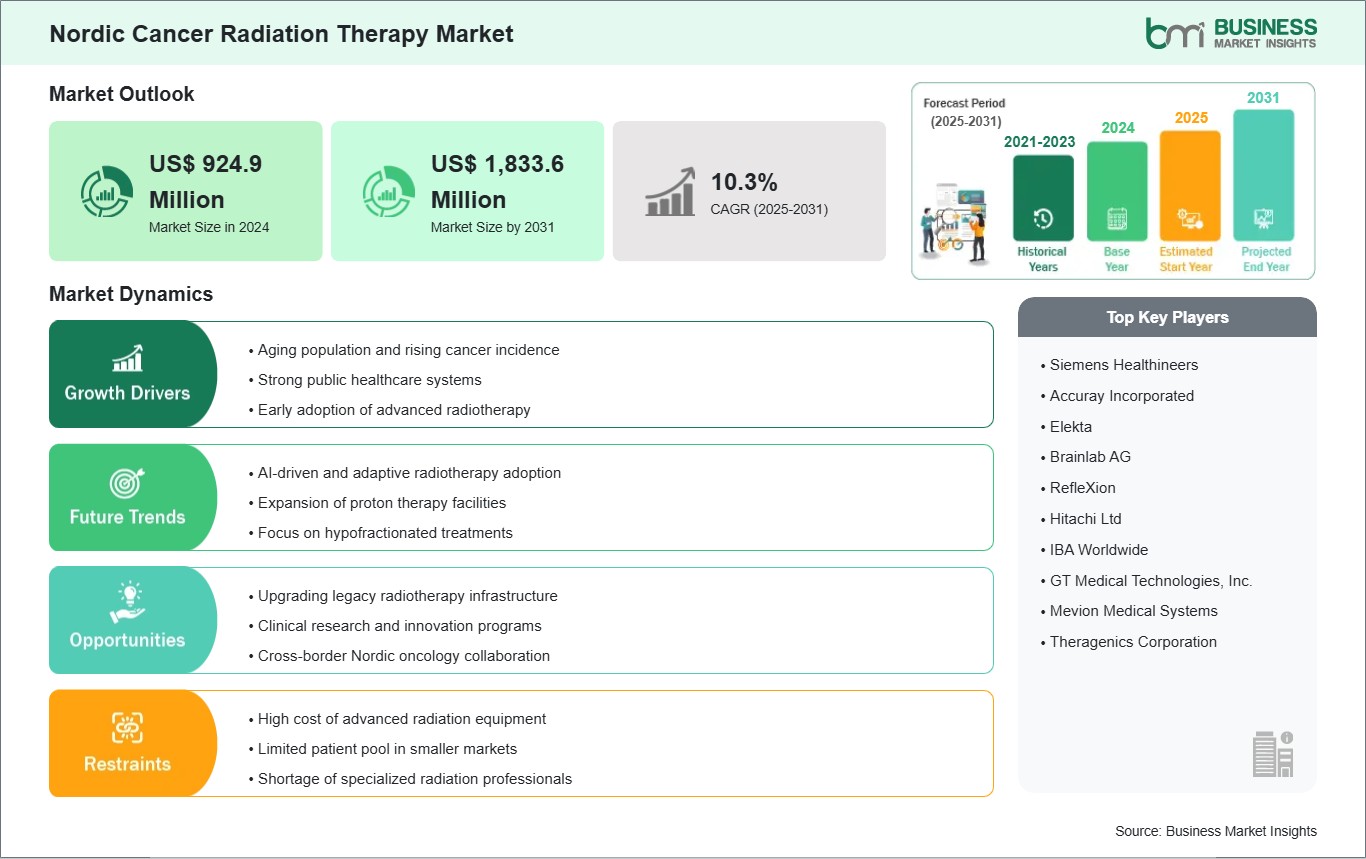
Upward Trend in Cancer Cases
Cancer prevalence in the Nordic countries—Sweden, Norway, Denmark, Finland, and Iceland—is increasing owing to aging populations, lifestyle factors, and high rates of early detection through well-established screening programs. Breast, prostate, lung, and colorectal cancers are among the most frequently diagnosed, with Sweden and Denmark reporting particularly high incidence rates. Improved awareness and robust healthcare infrastructure are leading to earlier diagnosis, resulting in more patients requiring radiation therapy as part of comprehensive cancer care.
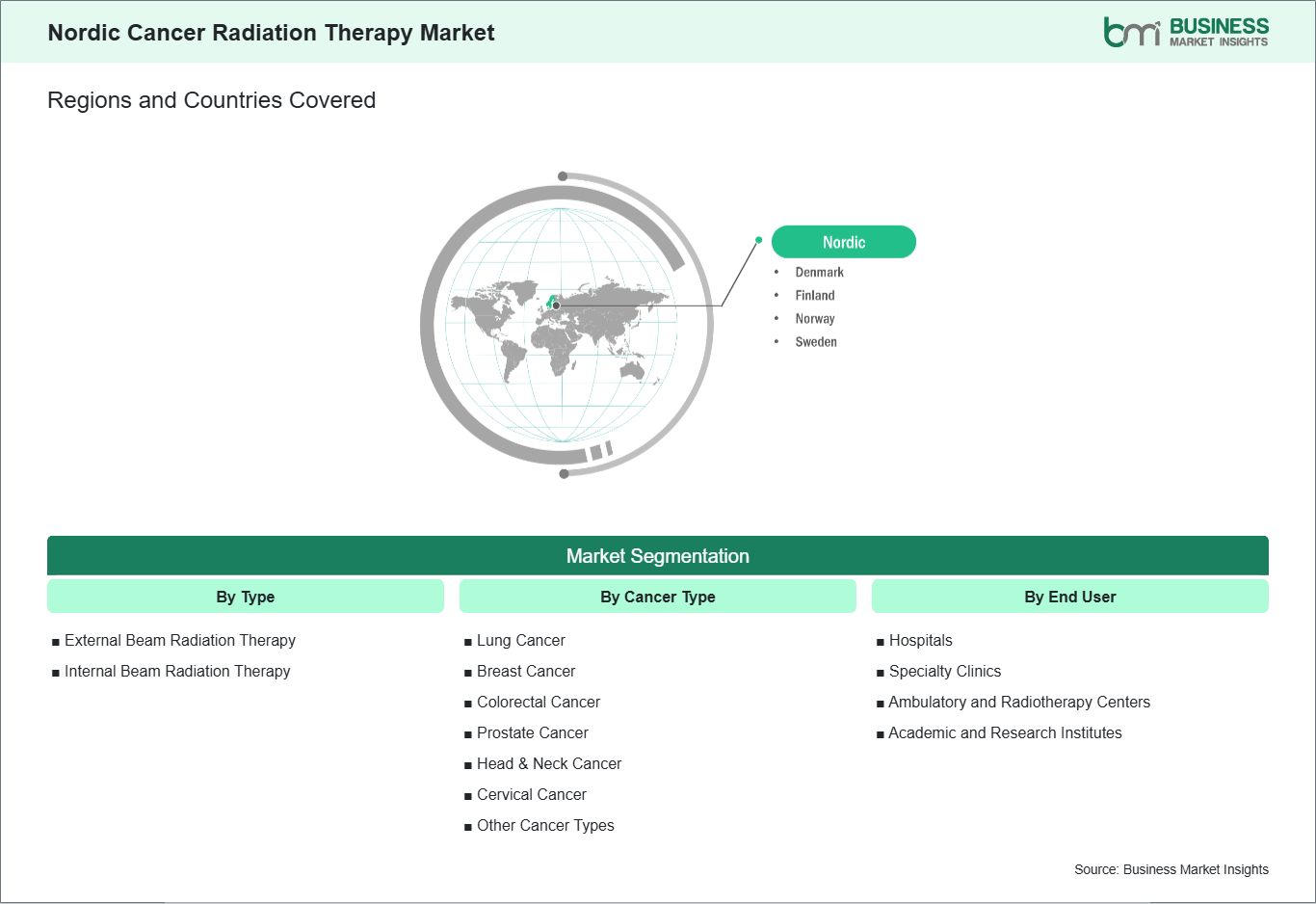
Radiation therapy is a cornerstone of oncology treatment in the Nordic region. External beam radiation therapy is widely used due to its versatility across tumor types, while internal beam (brachytherapy) is applied for prostate, gynecological, and cervical cancers. Public healthcare systems ensure that advanced therapies are accessible to a large portion of the population, while specialized oncology centers continue to expand capacity to meet growing patient demand.
Government programs and healthcare investments are supporting infrastructure upgrades, including the introduction of advanced linear accelerators and modern treatment planning software. These efforts ensure that rising cancer prevalence translates into sustained demand for radiation therapy services. Consequently, the increasing number of cancer cases remains a key driver for the Nordic cancer radiation therapy market.
Rising Focus on Precision and Personalized Medicine
Personalized medicine is gaining prominence in the Nordic countries, driven by patient-centric healthcare policies and advanced clinical research. Radiation therapy is tailored to individual patients using tumor-specific imaging, genomic profiling, and precise treatment planning. This enables clinicians to optimize dose delivery while minimizing exposure to healthy tissue, improving treatment efficacy and quality of life.
External beam radiation therapy is leveraging image-guided and intensity-modulated techniques to deliver patient-specific treatments for complex cancers such as prostate, breast, and head & neck tumors. Internal beam therapy is also being customized for individual patients, particularly in prostate and gynecological cancers, supported by advanced dosimetry and planning systems. Nordic hospitals are leaders in integrating AI and advanced imaging technologies to enhance treatment accuracy.
Collaboration among hospitals, universities, and technology providers is accelerating the adoption of personalized radiation therapy across the region. Patients are increasingly informed and prefer therapies with higher precision and fewer side effects. This growing demand for tailored treatment creates significant opportunities for equipment manufacturers, software developers, and healthcare service providers operating in the Nordic cancer radiation therapy market.