Market Summary
Executive Summary and Global Market Analysis
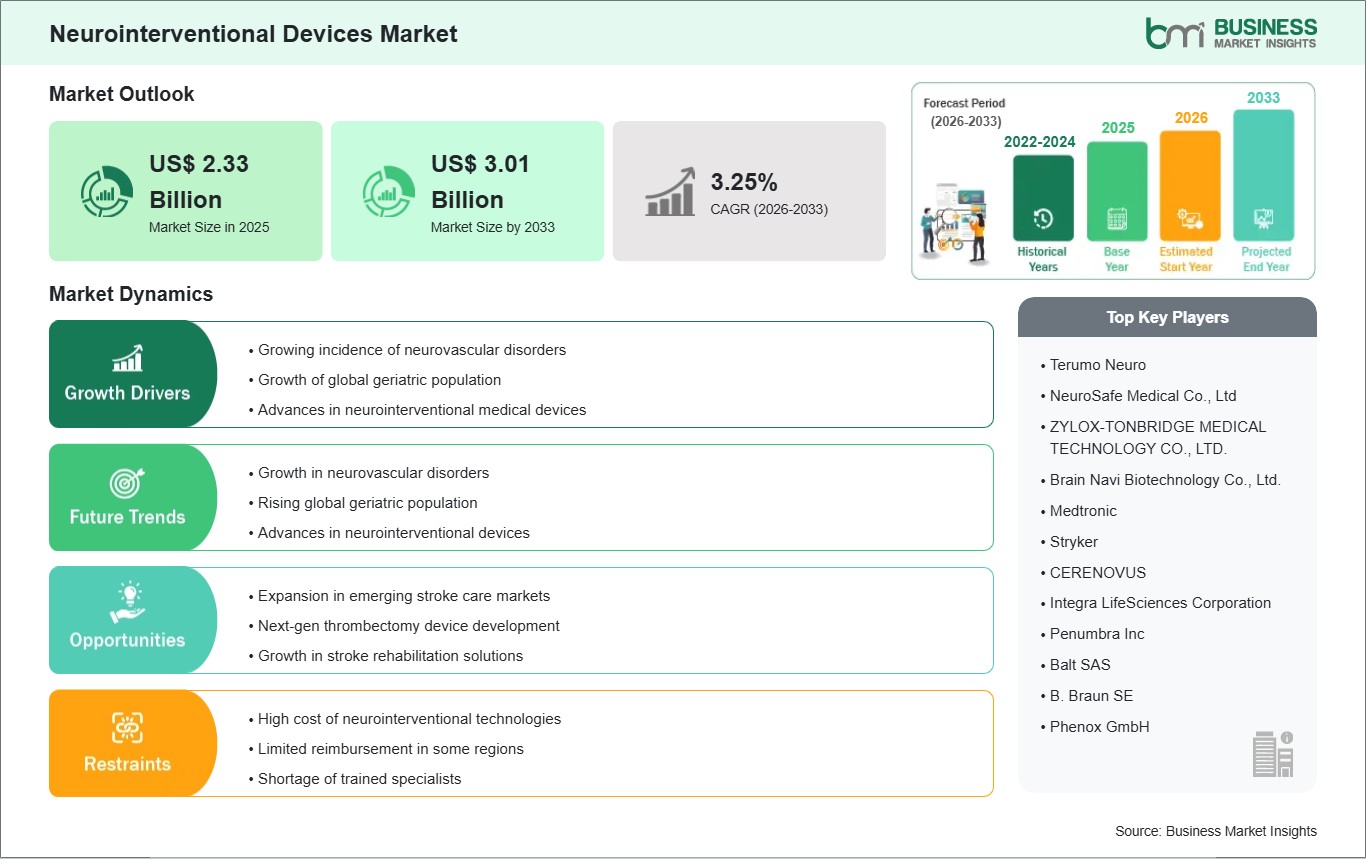
Neurointerventional devices serve as vital tools which enable medical professionals to diagnose and treat cerebrovascular disorders throughout the world. The devices provide healthcare providers with noninvasive treatment options which target acute ischemic stroke, intracranial aneurysms, cerebral arterial stenosis, arteriovenous malformations, and spinal vascular malformations. Hospitals and specialty clinics and ambulatory surgery centers depend on these devices to deliver medical procedures which achieve accurate results while maintaining patient safety and operational effectiveness. The market is expanding because more people develop strokes and aneurysms and other neurovascular diseases while they discover new treatment methods which require less invasive procedures. The development of microcatheters together with stents and thrombectomy devices plus embolic materials and image-guided navigation systems brings operational improvements which lead to higher success rates in medical procedures.
Market growth faces multiple obstacles which include expensive device prices and intricate regulatory processes and reduced insurance coverage in particular areas and the requirement for expert personnel who must receive specialized training. The market reacts to changes in hospital financial resources which exist between different healthcare systems in developing nations. Aging populations of developing countries and the rise of neurointerventional programs and the use of advanced imaging technology and AI-based procedural planning tools create multiple chances for organizations to grow. The market will expand worldwide through new business opportunities which will result from companies investing in advanced device designs and flow-diversion systems and portable neurointerventional devices.
Segment Analysis
Neurointerventional Devices Market Segmentation
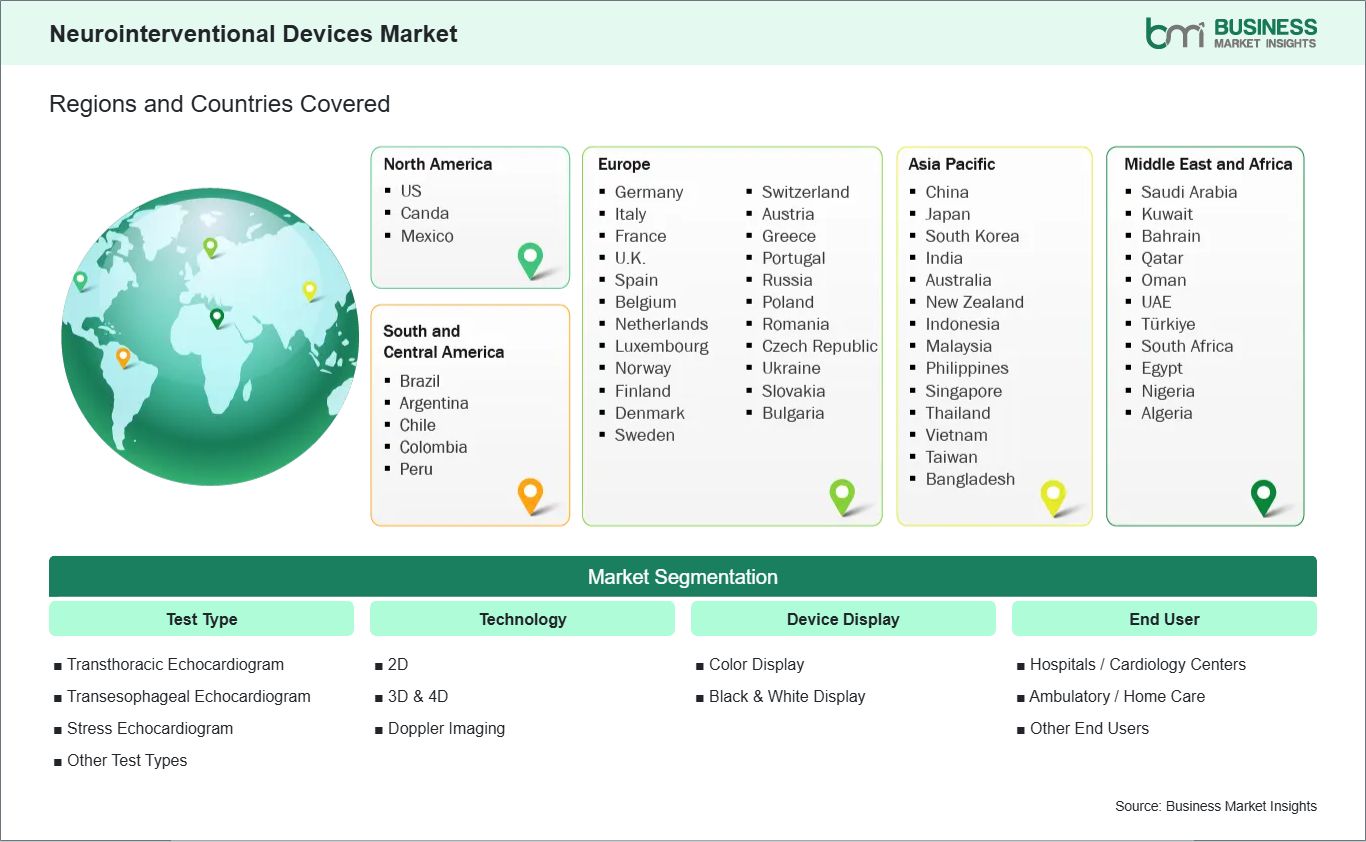
Key segments that contributed to the derivation of the neurointerventional devices market analysis are Product, Indication, End User.
- By product, the neurointerventional devices market is bifurcated into diagnostic devices [catheters, guidewires, imaging systems] and therapeutic devices [embolic materials, neurovascular stents, neurothrombectomy devices, and other products]. The therapeutic devices segment dominated the market in 2025.
- By indication the market is segmented into acute ischemic stroke (AIS), intracranial aneurysm, cerebral arterial stenosis, arteriovenous malformation (AVM), and spinal vascular malformations. The acute ischemic stroke (AIS) segment held the largest share of the market in 2025.
- By end user, the market is segmented into hospitals, specialty clinics, ambulatory surgery centers, and others. The hospitals segment held the largest share of the market in 2025
Market Forces
Neurointerventional Devices Market Drivers and Opportunities
Rising Prevalence of Neurovascular Disorders
The neurointerventional devices market experiences positive growth because neurovascular disorders now occur more frequently throughout the world. Healthcare providers require neurointerventional devices because they need medical treatments which can be performed through minimally invasive techniques and provide fast results with high accuracy because the world population ages and people develop more hypertension and diabetes and cerebrovascular diseases.
The World Stroke Organization reports that 15 million people worldwide experience a stroke every year which results in 87% of cases being categorized as ischemic strokes. The increasing patient burden arises from risk factors which include inactive behavior patterns, poor dietary habits, tobacco use, and existing cardiovascular health issues. The growing number of patients drives market expansion for neurointerventional devices because hospitals and specialty clinics and ambulatory surgery centers increasingly implement endovascular treatment methods which provide quicker patient recovery times and safer procedure execution.
Major medical device manufacturers such as Medtronic, Stryker, Johnson & Johnson, and Penumbra have expanded their global product offerings while their advanced stents and thrombectomy devices and embolic materials and microcatheters have transformed treatment guidelines. Neurointerventional devices demonstrate precise treatment capabilities which effectively address acute ischemic strokes and aneurysms and arteriovenous malformations and their clinical usage requirements develop. The use of minimally invasive endovascular interventions enables patients to recover faster than open surgical procedures because they maintain lower complication rates and shorter hospital stays which positively affect patient outcomes.
Technological Advancements and Global Market Expansion
The neurointerventional devices market experiences strong growth because innovative technologies continue to develop. The development of next-generation stents and intrasaccular devices together with improvements in AI-assisted procedural planning and imaging-guided navigation systems have produced major advancements in procedural success rates and accuracy.
The establishment of new specialized neurointerventional programs together with supportive reimbursement frameworks and dedicated healthcare facility development projects in both developed and developing nations has created fresh business possibilities. Patients can now access top-notch endovascular treatment services which are available at medical facilities around the world while medical facilities increasingly implement portable and hybrid catheterization technologies to extend their coverage of patient care. The growing understanding of minimally invasive treatment options by patients and healthcare professionals will harness the demand for neurointerventional solutions which will expand through stroke management initiatives and preventive neurology programs.
Size and Share Analysis
Neurointerventional Devices Market Size and Share Analysis
By product, the neurointerventional devices market is bifurcated into diagnostic devices [catheters, guidewires, imaging systems] and therapeutic devices [embolic materials, neurovascular stents, neurothrombectomy devices, and other products]. The therapeutic devices segment dominated the market in 2025. Therapeutic devices dominate due to their critical role in treating neurovascular conditions, including stroke and aneurysms. High clinical adoption, procedural efficacy, minimally invasive nature, and technological innovations like stents and thrombectomy devices drive market preference.
By indication the market is segmented into acute ischemic stroke (AIS), intracranial aneurysm, cerebral arterial stenosis, arteriovenous malformation (AVM), and spinal vascular malformations. The acute ischemic stroke (AIS) segment held the largest share of the market in 2025. AIS holds the largest share because it is the most prevalent cerebrovascular condition worldwide, requiring urgent intervention. Endovascular procedures using neurointerventional devices significantly improve patient outcomes, reducing mortality, disability, and hospitalization duration.
By end user, the market is segmented into hospitals, specialty clinics, ambulatory surgery centers, and others. The hospitals segment held the largest share of the market in 2025. Hospitals dominate as they have advanced infrastructure, skilled interventional radiologists and neurosurgeons, high patient volumes, and comprehensive neurovascular programs, making them the primary users of both diagnostic and therapeutic neurointerventional devices
Report Coverage
Neurointerventional Devices Market Report Coverage and Deliverables
The "Neurointerventional Devices Market Size and Forecast (2022–2033)" report provides a detailed analysis of the market covering below areas:
- Neurointerventional devices market size and forecast at global, regional, and country levels for all the key market segments covered under the scope
- Neurointerventional devices market trends, as well as market dynamics such as drivers, restraints, and key opportunities
- Neurointerventional devices market analysis covering key market trends, global and regional framework, major players, regulations, and recent market developments
- Industry landscape and competition analysis covering market concentration, heat map analysis, prominent players, and recent developments for the neurointerventional devices market
- Detailed company profiles, including SWOT analysis
Geographic Insights
Neurointerventional Devices Market Geographic Insights
The geographical scope of the neurointerventional devices market report is divided into five regions: North America, Asia Pacific, Europe, Middle East & Africa, and South & Central America. The neurointerventional devices market in North America is expected to grow significantly during the forecast period.
The North American neurointerventional devices market is segmented into the United States, Canada, and Mexico. The region is experiencing robust growth, driven by the rising prevalence of acute ischemic stroke, intracranial aneurysms, and other cerebrovascular disorders, alongside increasing adoption of minimally invasive endovascular interventions. Major economies like the U.S. and Canada are leading the way, fueled by strong healthcare infrastructure, advanced neurovascular programs, and significant R&D investments.
The region is also witnessing greater integration of advanced device technologies, including AI-assisted imaging, 3D navigation systems, microcatheters, and flow-diverter stents particularly relevant for hospitals and specialized neurovascular centers. Expansion of neurointerventional programs, coupled with increasing availability of trained interventional radiologists and neurosurgeons, is enhancing procedural success rates and patient outcomes. Additionally, rising awareness of early diagnosis and treatment, growing hospital budgets for neurovascular care, and the development of specialized stroke centers are positioning North America as a key hub in the global neurointerventional devices market. Regulatory support, favorable reimbursement policies, and strong healthcare expenditure further solidify the region`s dominant market position
Industry Activity
Recent Developments
The neurointerventional devices market is evaluated by gathering qualitative and quantitative data post primary and secondary research, which includes important corporate publications, association data, and databases. A few of the key developments in the neurointerventional devices market are:
- In February 2026, Vesalio, a global leader in vascular intervention, announced CE Mark certification and the European commercial launch of two new neurovascular devices: NeVa VS, for the treatment of cerebral vasospasm following aneurysmal subarachnoid hemorrhage (aSAH), and the NeVa 3.0 mm Thrombectomy System for stroke. In addition, the Company received an additional U.S. Food and Drug Administration (FDA) 510(k) clearance expanding the indications of its neurovascular and peripheral aspiration catheters to include distal access.
- In July 2026, Boston Scientific Corporation announced the U.S. and European launches of the Neuroform EZ Stent System, its fourth-generation intracranial aneurysm stent system designed for use in conjunction with endovascular coiling to treat wide-necked aneurysms. The Company plans to launch the product immediately in both markets.
- In June 2025, Stryker announced the launch of its AXS Lift Intracranial Base Catheter, a novel device developed to simplify neurovascular access and enhance delivery of interventional therapies. The catheter is engineered to provide both access and stable support from groin puncture to the cavernous segment of the internal carotid artery (ICA), reducing the need for multiple catheters during complex procedures
Trust & Transparency
Research Methodology
The market analysis combines proprietary research with secondary data from government agencies, company disclosures, regulatory filings, industry databases and expert interviews. Market estimates are validated through data triangulation, cross-market benchmarking and analyst
review.
View Full Research Methodology
Key Sources Referred:
World Bank – Global Trade IndicatorsAmerican Medical Association (AMA)National Center for Biotechnology Information (NCBI)National Library of Medicine (NLM)Centers for Disease Control and Prevention (CDC)Company websiteNational Institutes of Health (NIH)International Hospital Federation (IHF)Company annual reportsCompany investor presentations