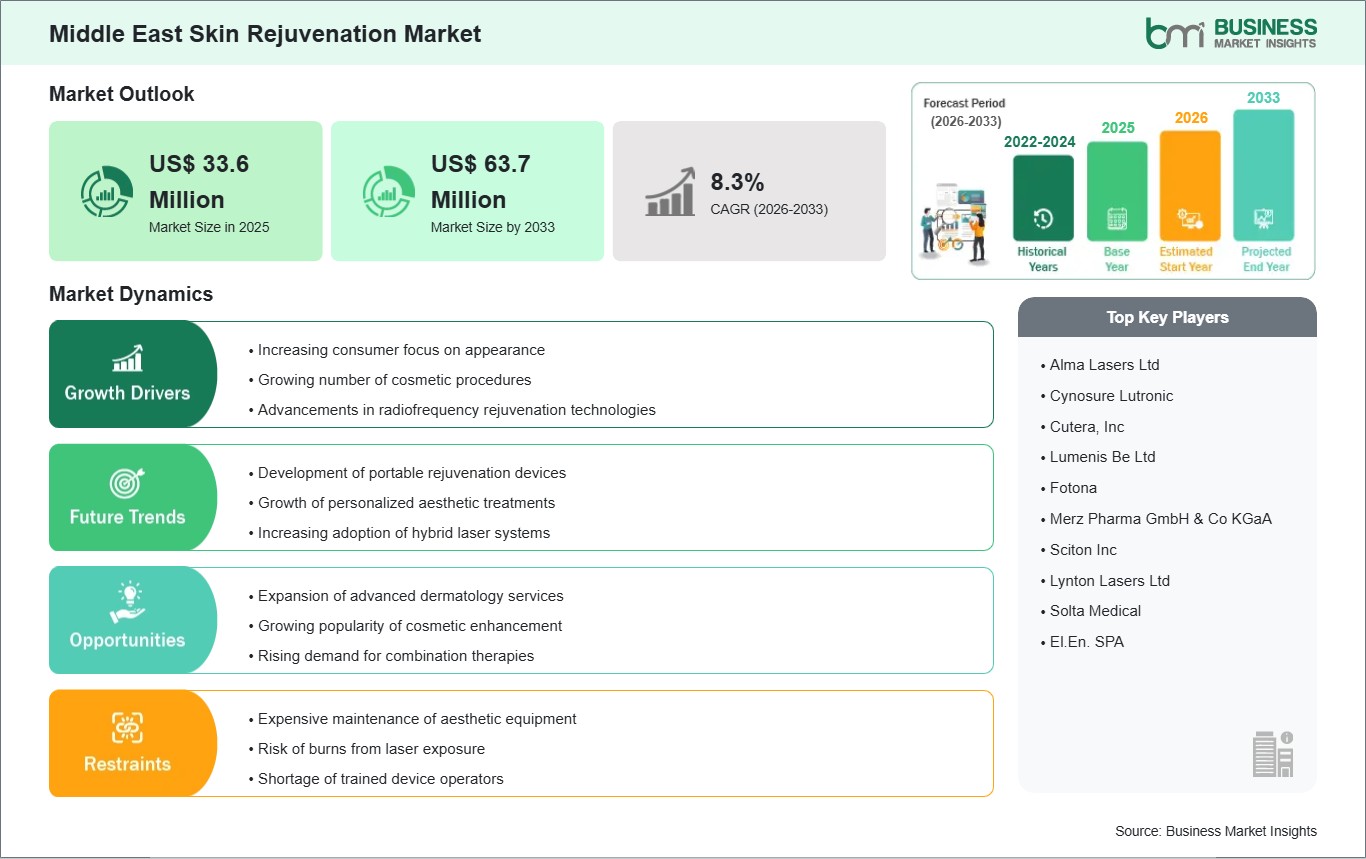
Increased consumer focus on aesthetic appearance
The Middle East skin rejuvenation market is strongly driven by an increasing consumer focus on aesthetic appearance, particularly across Gulf Cooperation Council countries such as the United Arab Emirates, Saudi Arabia, Qatar, and Kuwait. The consumers in these markets are prioritizing the need to look young and beautiful, owing to changes in their lifestyles, exposure to the Internet, and changing beauty norms. The significance of grooming has been highly ingrained within society and workplaces, where looking good translates into being confident and successful.
This is seen most clearly in metropolitan areas like Dubai, Riyadh, and Doha, where individuals from affluent social backgrounds utilize dermatology and aesthetic procedures regularly. Skin revitalization treatment processes that include use of lasers, injectables, and non-invasive skin tightening treatments have become a part of daily life, as opposed to being regarded as luxury items. In addition, the abundance of high-end dermatology facilities and spas in such metropolitan centers contributes greatly to consumer interest in skin revitalization processes.
The effect of social media and global cosmetic trends is also influencing the expectations of consumers in this market. The exposure to global standards in skin care treatment is making consumers look for cosmetic procedures that give natural-looking results. The high value placed on personal presentation in the region is also making skin rejuvenation a crucial part of the aesthetic and health industry in the Middle East.
Increasing investments in dermatology research innovations
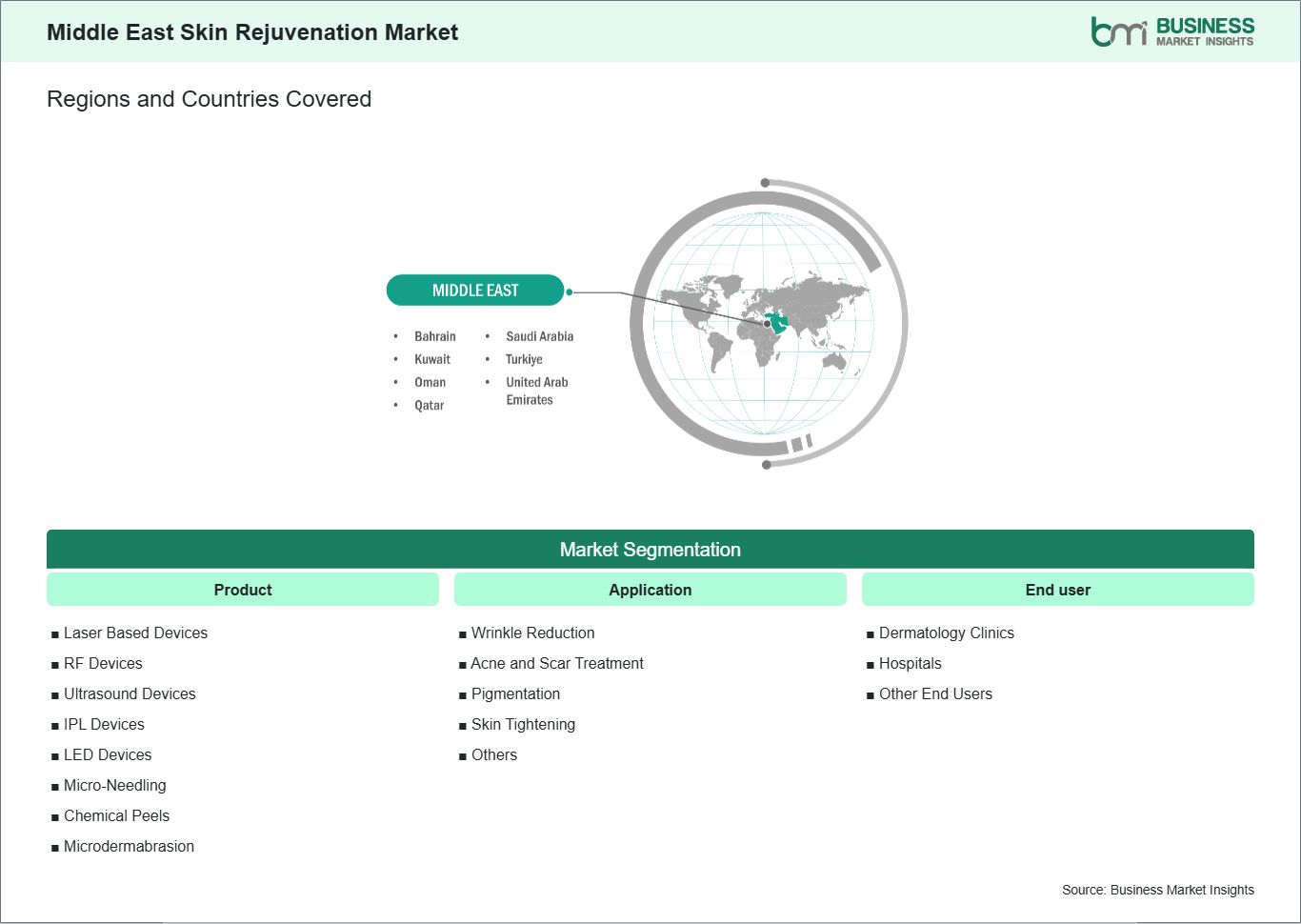
The Middle East skin rejuvenation market is also experiencing growing momentum from increasing investments in dermatology research and aesthetic innovation. The governments, along with private entities offering healthcare services in nations like Saudi Arabia and UAE, are investing in the development of medical aesthetics in the form of healthcare innovations. They include investments in dermatological centers, partnerships with researchers and the use of advanced technology for improving skin care results.
One of the major innovations is in developing and incorporating energy and regeneration-based aesthetic technologies. Clinics throughout the region are beginning to embrace advanced laser technology, radiofrequency machines, and injectable-based regeneration therapies meant to improve accuracy and reduce the healing period. The new technologies are enhancing the efficiency of skin regeneration procedures and widening their applications on various skin conditions such as pigmentation, aging, and unevenness.
Moreover, alliances formed by international technology suppliers and regional health care organizations have facilitated the swift incorporation of state-of-the-art dermatology products into the market. The emergence of medical tourism destinations like Dubai and Riyadh has led to a surge in clinical testing and the adoption of novel aesthetic procedures, thus solidifying their standing in the worldwide market for skincare. With increased research-based dermatology, the region’s skin rejuvenation market is expected to expand sustainably in the future.