Market Summary
Executive Summary and Market Analysis
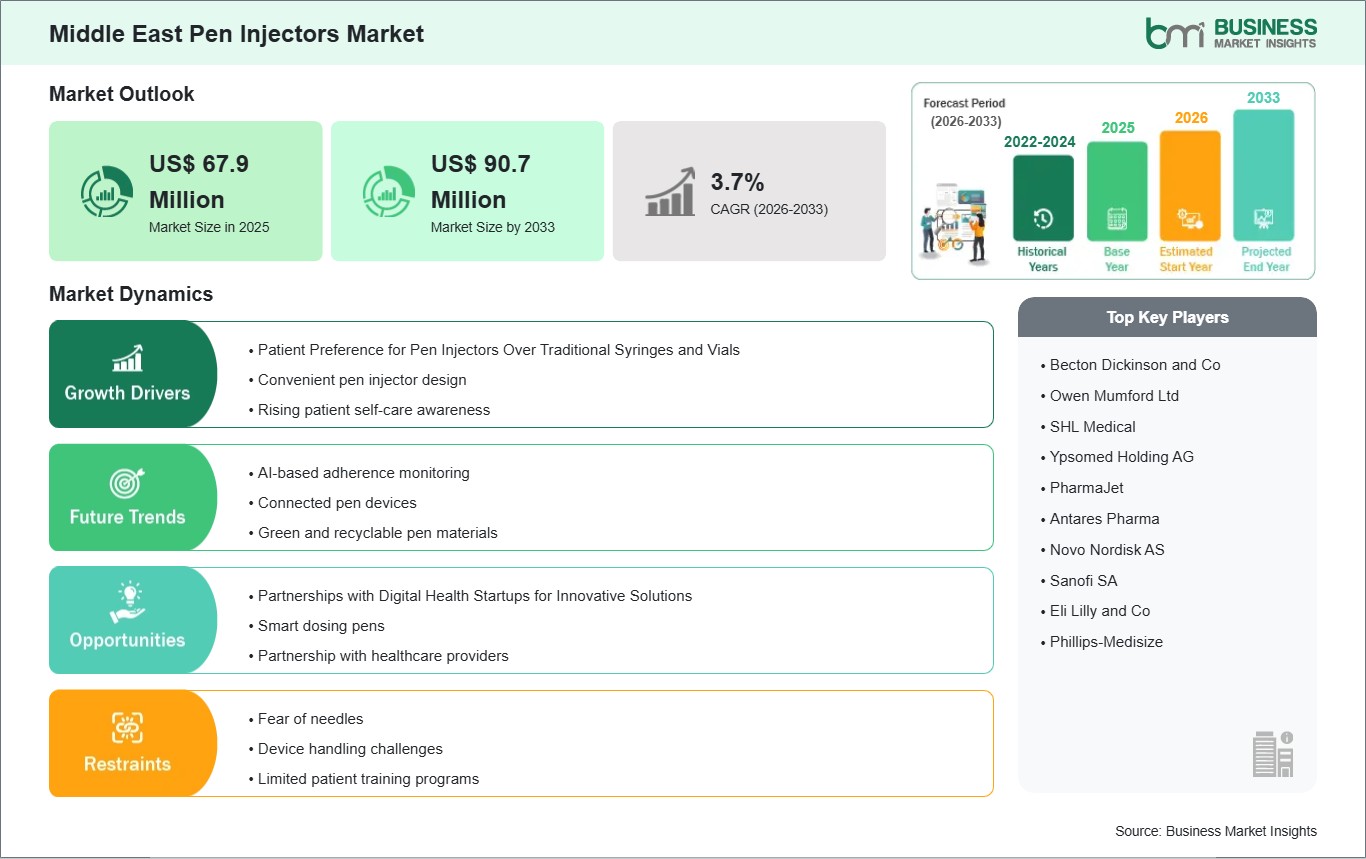
Diabetes, growth hormone deficiencies, and autoimmune disorders are the primary therapeutic segments fueling demand in countries such as Saudi Arabia, the UAE, Qatar, Kuwait, and Bahrain. The market is characterized by high adoption of prefilled and reusable pen injectors, alongside ergonomic designs and dose-memory features that enhance treatment adherence and patient convenience. Regulatory frameworks in the region are aligned with international standards, facilitating quicker approvals for combination devices and biosimilars, though local clinical validation remains a consideration for market entry. Distribution channels are diversifying, combining hospital networks, retail pharmacies, and e-pharmacy platforms to address urban and semi-urban patient populations. Strategic collaborations between global device manufacturers and regional distributors are critical to ensuring supply chain efficiency and compliance with country-specific regulations. Patient education programs led by government authorities and advocacy organizations are enhancing awareness, particularly in markets with lower healthcare literacy. Sustainability considerations, including recyclable components and reduced packaging, influence institutional procurement policies in more developed Middle Eastern markets. The market reflects a technologically progressive environment where regulatory alignment, patient-centric design, and strategic partnerships drive adoption.
Segment Analysis
Middle East Pen Injectors Market Segmentation
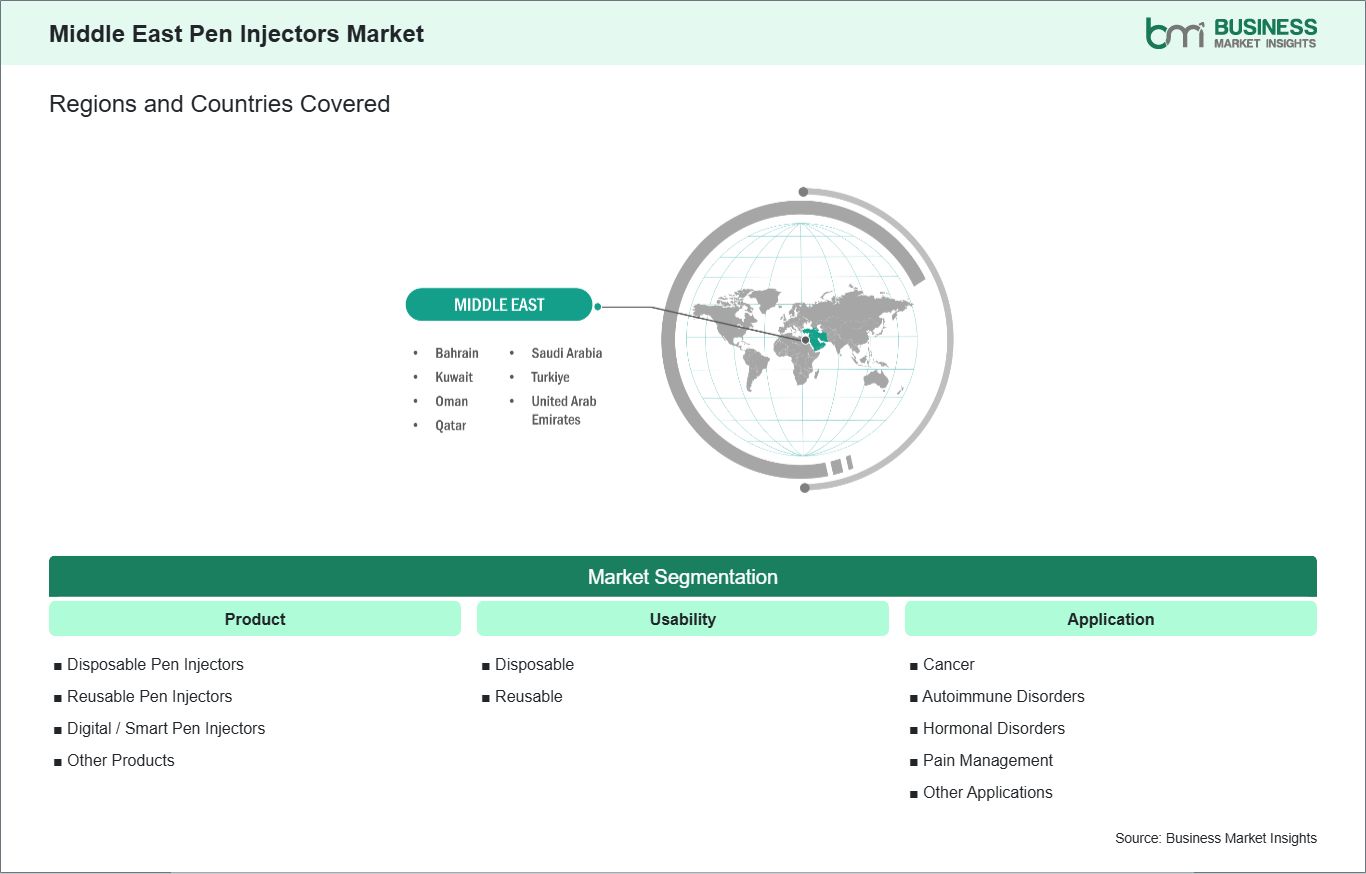
Key segments that contributed to the derivation of the Middle East Pen Injectors Market analysis are product, usability, and application.
- By product, the pen injectors market is segmented into disposable pen injectors, reusable pen injectors, digital/smart pen injectors, and others. The disposable pen injectors segment dominated the market in 2025.
- Based on usability, the pen injectors market is categorized into disposable and reusable. The disposable segment dominated the market in 2025.
- In terms of application, the market is classified into cancer, autoimmune disorders, hormonal disorders, pain management, and other applications. The autoimmune disorders segment dominated the market in 2025.
Market Forces
Middle East Pen Injectors Market Drivers and Opportunities
Patient Preference for Pen Injectors Over Traditional Syringes and Vials
Patients are showing a strong inclination toward devices that offer convenience, ease of use, and reduced discomfort during self-administration. Pen injectors provide clear dosing mechanisms and compact designs, which simplify the process of managing chronic therapies at home. This shift reflects growing patient awareness of treatment options that improve comfort, accuracy, and independence compared with conventional methods. Healthcare providers are recognizing that patient preference plays a critical role in therapy adherence. Pen injectors reduce the complexity of handling multiple components, minimize injection errors, and allow for discreet administration, which aligns with patient lifestyles and cultural expectations in the Middle East. The adoption of these devices is significant in urban and semi-urban healthcare settings, where patient empowerment and home-based care models are being prioritized to alleviate pressure on hospitals and outpatient clinics. Patient-focused design is shaping the market as manufacturers respond to regional demands for intuitive, user-friendly devices. Features such as tactile dose indicators, audible feedback, and ergonomic grips are being emphasized to cater to first-time users and elderly populations managing long-term therapies. The preference for pen injectors over traditional syringes and vials is reinforcing a trend toward patient-centered care, driving device adoption in modern therapy management.
Partnerships with Digital Health Startups for Innovative Solutions
Startups are leveraging technology to integrate pen injectors with mobile applications, remote monitoring platforms, and AI-driven analytics, enabling real-time tracking of dosing, adherence, and patient outcomes. These collaborations are enhancing the value proposition of pen injectors by combining reliable drug delivery with actionable health insights, improving patient engagement and therapy management. Manufacturers are seeking partnerships to accelerate innovation and differentiate their devices in a competitive market. By integrating digital health capabilities, pen injectors can support personalized therapy plans, provide reminders, and alert healthcare providers to missed or incorrect doses. In the Middle East, healthcare systems are emphasizing remote care solutions and data-driven management for chronic conditions. The synergy between device engineering and digital technology is helping to modernize treatment delivery and enhance patient confidence in self-administered therapies. These collaborations are fostering innovation in patient education and support services. Digital health partnerships allow pen injectors to become platforms for interactive tutorials, usage guidance, and adherence tracking, supporting long-term treatment outcomes. This approach aligns with regional priorities for improving access to advanced therapies while promoting self-management and reducing dependence on hospital visits. By combining pen injector technology with digital health solutions, manufacturers are creating integrated, patient-centered systems that drive adoption across the region.
Size and Share Analysis
Middle East Pen Injectors Market Size and Share Analysis
The Middle East Pen Injectors Market demonstrates steady growth, with size and share analysis highlighting evolving trends and competitive dynamics among key players. The report examines subsegments categorized within product, usability, and application, offering insights into their contribution to overall market performance.
By product, the disposable pen injectors subsegment dominated the market in 2025, driven by their ability to reduce cross-contamination risks and meet the rising demand for convenient self-injection options.
Based on usability, the disposable subsegment dominated the market in 2025, driven by growing patient preference for prefilled, ready-to-use devices that require minimal training.
In terms of application, the autoimmune disorders subsegment dominated the market in 2025, driven by the expansion of specialty clinics and improved access to targeted biologic therapies for chronic autoimmune conditions.
Report Coverage
Middle East Pen Injectors Market Report Coverage and Deliverables
The "Middle East Pen Injectors Market Size and Forecast (2022–2033)" report provides a detailed analysis of the market covering below areas:
- Middle East Pen Injectors Market size and forecast at regional and country levels for all market segments covered under the scope
- Middle East Pen Injectors Market trends, as well as drivers, restraints, and opportunities
- Middle East Pen Injectors Market analysis covering key trends, regional framework, major players, regulations, and recent developments
- Industry landscape and competition analysis covering market concentration, heat map analysis, prominent players, and recent developments for the Middle East Pen Injectors Market
- Detailed company profiles, including SWOT analysis
Geographic Insights
Middle East Pen Injectors Market Geographic Insights
The geographical scope of the Middle East Pen Injectors Market report is divided into UAE, Saudi Arabia, Bahrain, Oman, Kuwait, Qatar, and Turkiye. Turkiye held the largest share in 2025.
Turkiye’s government-led initiatives for chronic disease management, particularly diabetes and endocrine disorders, have accelerated the adoption of prefilled and reusable pen injectors. The country demonstrates increasing integration of smart pen technologies in outpatient and homecare settings, enhancing patient adherence through connectivity and dose-tracking features. The UAE benefits from an advanced healthcare ecosystem, widespread telemedicine adoption, and early integration of connected pen devices in homecare programs. In Saudi Arabia, extensive hospital networks, government programs, and patient education initiatives focus on chronic disease management. In Bahrain and Oman, smaller populations and high per capita healthcare expenditure support the adoption of premium and prefilled pen injectors. Kuwait has a well-developed healthcare infrastructure, and targeted government programs are facilitating the uptake of reusable and smart pen devices. Qatar is steadily expanding adoption, with a focus on public health campaigns, diabetes awareness programs, and integration of innovative therapies into hospitals and outpatient care centers. Across these countries, strategic partnerships with local distributors, compliance with national regulatory frameworks, and targeted patient education programs are critical for successful market penetration. Turkiye’s scale, domestic production capabilities, and rapid technology adoption set the benchmark for regional procurement strategies, product innovation, and adoption standards. While healthcare infrastructure, patient awareness, and reimbursement models vary across the Middle East, Turkiye’s dominant position influences regional trends, guiding manufacturer prioritization, device features, and commercialization strategies.
Industry Activity
Recent Developments
The Middle East Pen Injectors Market is evaluated by gathering qualitative and quantitative data post primary and secondary research, which includes important corporate publications, association data, and databases. A few of the key developments in the Middle East Pen Injectors Market are:
- In September 2025, Aspen Pharmacare prepared to launch the Mounjaro injector pen (tirzepatide) for type 2 diabetes and weight management in South Africa following regulatory approval, providing patients a once‑weekly administration option beyond vial formats. The pen launch enhances convenience and supports expanded GLP‑1 therapy access across the country.
- In August 2025, Novo Nordisk introduced its Wegovy (semaglutide) pre‑filled pen injector for chronic weight management in South Africa, marking the first official launch of GLP‑1 weight‑loss pens in Africa. The rollout aims to address high adult obesity and metabolic care needs and complements existing diabetes pens such as Ozempic.
Trust & Transparency
Research Methodology
The market analysis combines proprietary research with secondary data from government agencies, company disclosures, regulatory filings, industry databases and expert interviews. Market estimates are validated through data triangulation, cross-market benchmarking and analyst
review.
View Full Research Methodology
Key Sources Referred:
World Health Organization (WHO)Organisation for Economic Cooperation and Development (OECD)The World Bank GroupWorldometerThe LancetInternational Bar AssociationInternational Trade Administration