Analysis By Solution (Products and Services), Alignment (Horizontal and Vertical), Airspeed Type (Subsonic, Supersonic, Transonic, and Hypersonic), and Application (Aerospace & Defense, Automotive & Transportation, Building Construction & Wind Energy, Training & Simulation, Adventure Sports Skydiving, and Others)
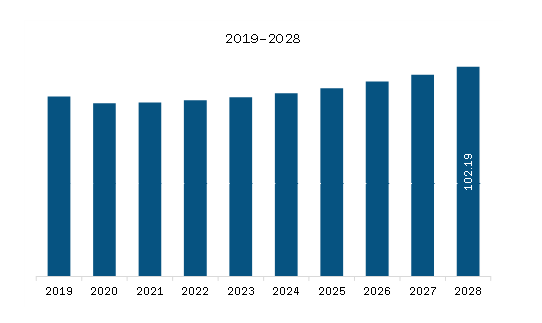
The wind tunnel market in MEA is expected to grow from US$ 84.78 million in 2021 to US$ 102.19 million by 2028; it is estimated to grow at a CAGR of 2.7% from 2021 to 2028.
Wind tunnel experiments are being widely used by architects, engineers, and aerodynamicists to assess a broad range of structures, such as buildings, vehicles, and aircraft designs. The existing wind tunnel types used across multiple industries are low subsonic, transonic, supersonic, and hypersonic, based on the amount of wind speed they can produce. However, physical wind tunnels are being replaced by wind tunnel simulation in aerodynamic testing. Its primary use is to visualize air flows around an object to assess its aerodynamics. The simulator assists design engineers by optimizing lifting and dragging, detecting and eliminating high wind speed zones, increasing top speed, and reducing wind noise, thereby optimizing automotive, aerospace, and construction planning operations. Wind tunnel simulation results in elevated prototyping and manufacturing lead times, operational costs, and computational fluid dynamics (CFD) simulations, allowing engineers to study the aerodynamic loads and reduce the inaccuracies in wind tunnel test experiments.
Cloud-based simulation allows the user to run simulations in parallel to test multiple design iterations at the same time or investigate different aspects of a design simultaneously. Several prominent simulation providers and wind testing companies offer a range of advanced cloud-based wind tunnel solutions to meet the rising requirements of aerodynamics testing in multiple industries. Altair introduced HyperWorks Virtual Wind Tunnel, which is a vertical application designed to improve wind tunnel simulation for the automotive industry. The virtual tunnel provides a friendly, intuitive user environment and an auto-setup process. Additionally, the simulation results can be incorporated with the high-performance computing systems from within the HyperWorks Virtual Wind Tunnel environment. Koenigsegg, a renowned manufacturer of high-performance supercars, uses the ICON simulation software on a cloud-based-HPC system to reduce wind tunnel testing duration and processes. Simulation allows the company’s designers to access powerful computing resources remotely, reducing hardware expenses and maintenance costs. Therefore, the transformation of physical wind tunnels toward their virtual counterparts is paving the way for future MEA wind tunnel market trends.
With the new features and technologies, vendors attract new customers and expand their footprints in emerging markets. This factor is driving the growth of the MEA wind tunnel market and is expected to grow at a significant CAGR during the forecast period.
MEA Wind TunnelMarket Revenue and Forecast to 2028 (US$ Million)
MEA Wind Tunnel Market Segmentation
The MEA wind tunnel market is analyzed on the basis of solution, alignment, airspeed type, application, and country. Based on the solution, the market is bifurcated into services and products. The services segment is expected to continue its dominance during the forecast period. Wind tunnels' reduced operation & maintenance (O&M) costs and the easy availability of technical installation and maintenance drive the segment's growth. Based on alignment type, the market is bifurcated into horizontal and vertical segments. The horizontal segment accounted for a larger market share in 2020 and is expected to continue its dominance. Based on airspeed type, the market is segmented into subsonic, supersonic, transonic, and hypersonic. The subsonic segment held the largest market share in 2020. The rising demand for commercial aircraft and automotive testing services is the primary factor responsible for the growth of this segment. Based on application, the market is segmented into aerospace and defense, automotive and transportation, building construction and wind energy, training and simulation, adventure sports skydiving, and others. The aerospace and defense segment held the largest market share in 2020 and is expected to continue its dominance during the forecast period. The increased usage of wind tunnels for testing aircraft used for aerospace and defense applications is a major factor responsible for the segment's growth. Based on country, the market is segmented into Saudi Arabia, South Africa, the UAE, and the rest of the MEA. Furthermore, Aerolab; Boeing; Horiba Ltd; Lockheed Martin Corporation; Mahle GmbH; Mitsubishi Heavy Industries, Ltd; and RUAG are among the leading companies in the MEA wind tunnel market.
Middle East and Africa Wind Tunnel Market Strategic Insights
Get more information on this report
Middle East and Africa Wind Tunnel Market Segmentation Analysis
Middle East and Africa Wind Tunnel Market Report Highlights
Middle East and Africa Wind Tunnel Report Scope
Report Attribute
Details
Market size in 2021
US$ 84.78 Million
Market Size by 2028
US$ 102.19 Million
CAGR (2021 - 2028)
2.7%
Historical Data
2019-2020
Forecast period
2022-2028
Segments Covered
By Solution
Products
Services
By Alignment
Horizontal
Vertical
By Airspeed Type
Subsonic
Supersonic
Transonic
Hypersonic
By Application
Aerospace & Defense
Automotive & Transportation
Building Construction & Wind Energy
Training & Simulation
Adventure Sports Skydiving
Regions and Countries Covered
Middle East and Africa
South Africa, Saudi Arabia, UAE, Rest of Middle East and Africa
Market leaders and key company profiles
Aerolab
Boeing
Horiba Ltd
Lockheed Martin Corporation
Mahle GmbH
Mitsubishi Heavy Industries, Ltd
RUAG
Get more information on this report
Middle East and Africa Wind Tunnel Market Country and Regional Insights
Get more information on this report
Identical Market Reports with other Region/Countries
The List of Companies - Middle East and Africa Wind Tunnel Market
AerolabBoeingHoriba LtdLockheed Martin CorporationMahle GmbHMitsubishi Heavy Industries, LtdRUAG
Frequently Asked Questions
How big is the Middle East and Africa Wind Tunnel Market?
The Middle East and Africa Wind Tunnel Market is valued at US$ 84.78 Million in 2021, it is projected to reach US$ 102.19 Million by 2028.
What is the CAGR for Middle East and Africa Wind Tunnel Market by (2021 - 2028)?
As per our report Middle East and Africa Wind Tunnel Market, the market size is valued at US$ 84.78 Million in 2021, projecting it to reach US$ 102.19 Million by 2028. This translates to a CAGR of approximately 2.7% during the forecast period.
What segments are covered in this report?
The Middle East and Africa Wind Tunnel Market report typically cover these key segments-
Solution (Products, Services)
Alignment (Horizontal, Vertical)
Airspeed Type (Subsonic, Supersonic, Transonic, Hypersonic)
Application (Aerospace & Defense, Automotive & Transportation, Building Construction & Wind Energy, Training & Simulation, Adventure Sports Skydiving)
What is the historic period, base year, and forecast period taken for Middle East and Africa Wind Tunnel Market?
The historic period, base year, and forecast period can vary slightly depending on the specific market research report. However, for the Middle East and Africa Wind Tunnel Market report:
Historic Period : 2019-2020
Base Year : 2021
Forecast Period : 2022-2028
Who are the major players in Middle East and Africa Wind Tunnel Market?
The Middle East and Africa Wind Tunnel Market is populated by several key players, each contributing to its growth and innovation. Some of the major players include:
Aerolab
Boeing
Horiba Ltd
Lockheed Martin Corporation
Mahle GmbH
Mitsubishi Heavy Industries, Ltd
RUAG
Who should buy this report?
The Middle East and Africa Wind Tunnel Market report is valuable for diverse stakeholders, including:
Investors: Provides insights for investment decisions pertaining to market growth, companies, or industry insights. Helps assess market attractiveness and potential returns.
Industry Players: Offers competitive intelligence, market sizing, and trend analysis to inform strategic planning, product development, and sales strategies.
Suppliers and Manufacturers: Helps understand market demand for components, materials, and services related to concerned industry.
Researchers and Consultants: Provides data and analysis for academic research, consulting projects, and market studies.
Financial Institutions: Helps assess risks and opportunities associated with financing or investing in the concerned market.
Essentially, anyone involved in or considering involvement in the Middle East and Africa Wind Tunnel Market value chain can benefit from the information contained in a comprehensive market report.




 Get Free Sample For Middle East and Africa Wind Tunnel Market