Market Summary
Executive Summary and Market Analysis
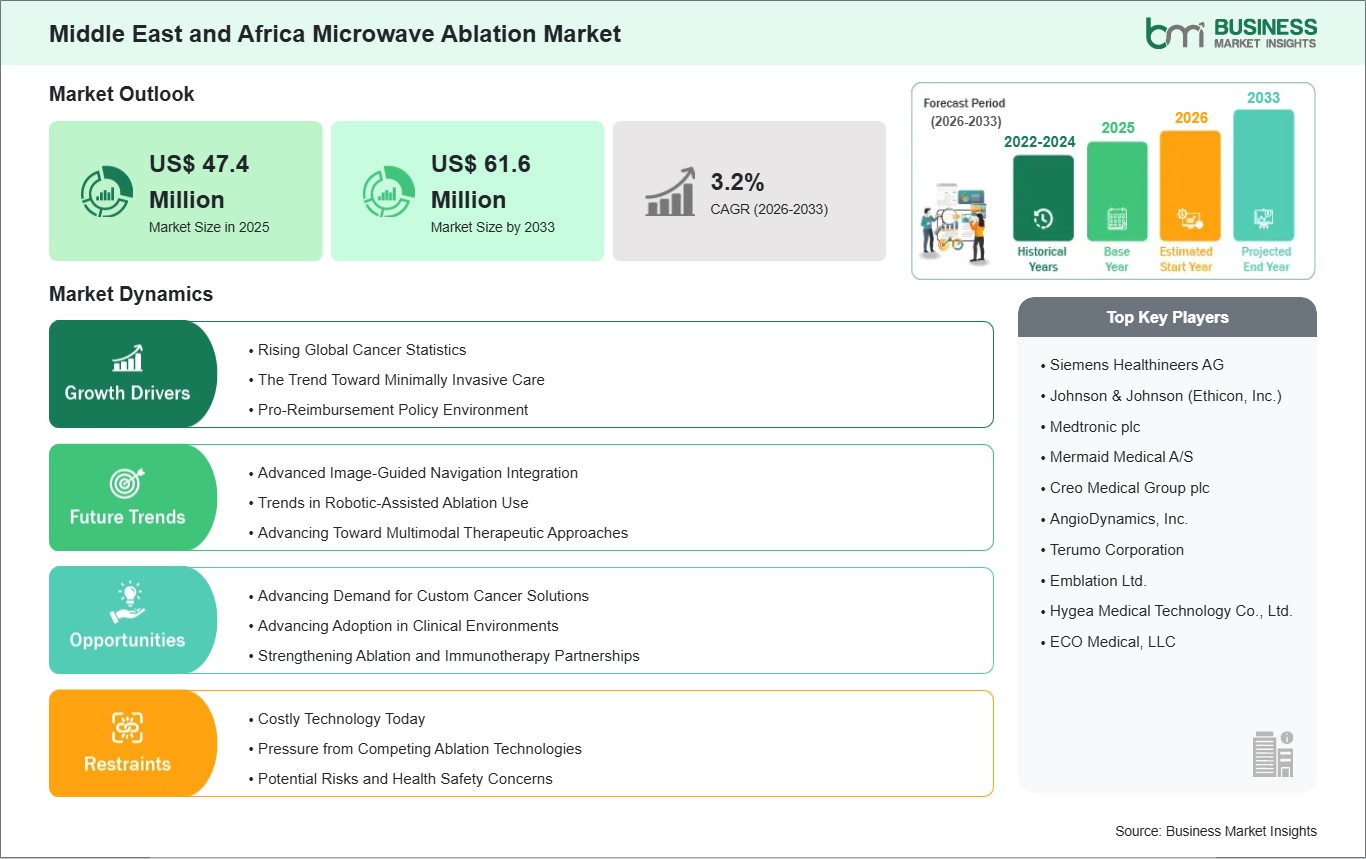
The Middle East and Africa (MEA) microwave ablation market is evolving steadily, driven by rising cancer prevalence, growing demand for minimally invasive procedures, and gradual modernization of tertiary healthcare infrastructure across key urban centers. Increasing incidence of liver, lung, and kidney tumors particularly hepatocellular carcinoma in parts of the Middle East has positioned microwave ablation as a preferred interventional oncology solution due to its precision, reduced procedure time, and suitability for patients ineligible for open surgery. Expanding private healthcare networks and medical tourism hubs in the Gulf region are further strengthening procedural adoption.
Government-led healthcare transformation programs in countries such as Saudi Arabia and the UAE are enhancing access to advanced oncology technologies, indirectly supporting microwave ablation device uptake. However, uneven healthcare access across sub-Saharan Africa, limited reimbursement frameworks, and high capital costs of ablation systems remain structural restraints. Additionally, shortages of trained interventional radiologists in lower-income African nations constrain broader penetration. Despite these challenges, strategic collaborations between global device manufacturers and regional distributors, along with increasing awareness of image-guided minimally invasive therapies, are expected to reinforce long-term market expansion in Middle East and Africa.
Segment Analysis
Middle East and Africa Microwave Ablation Market Segmentation
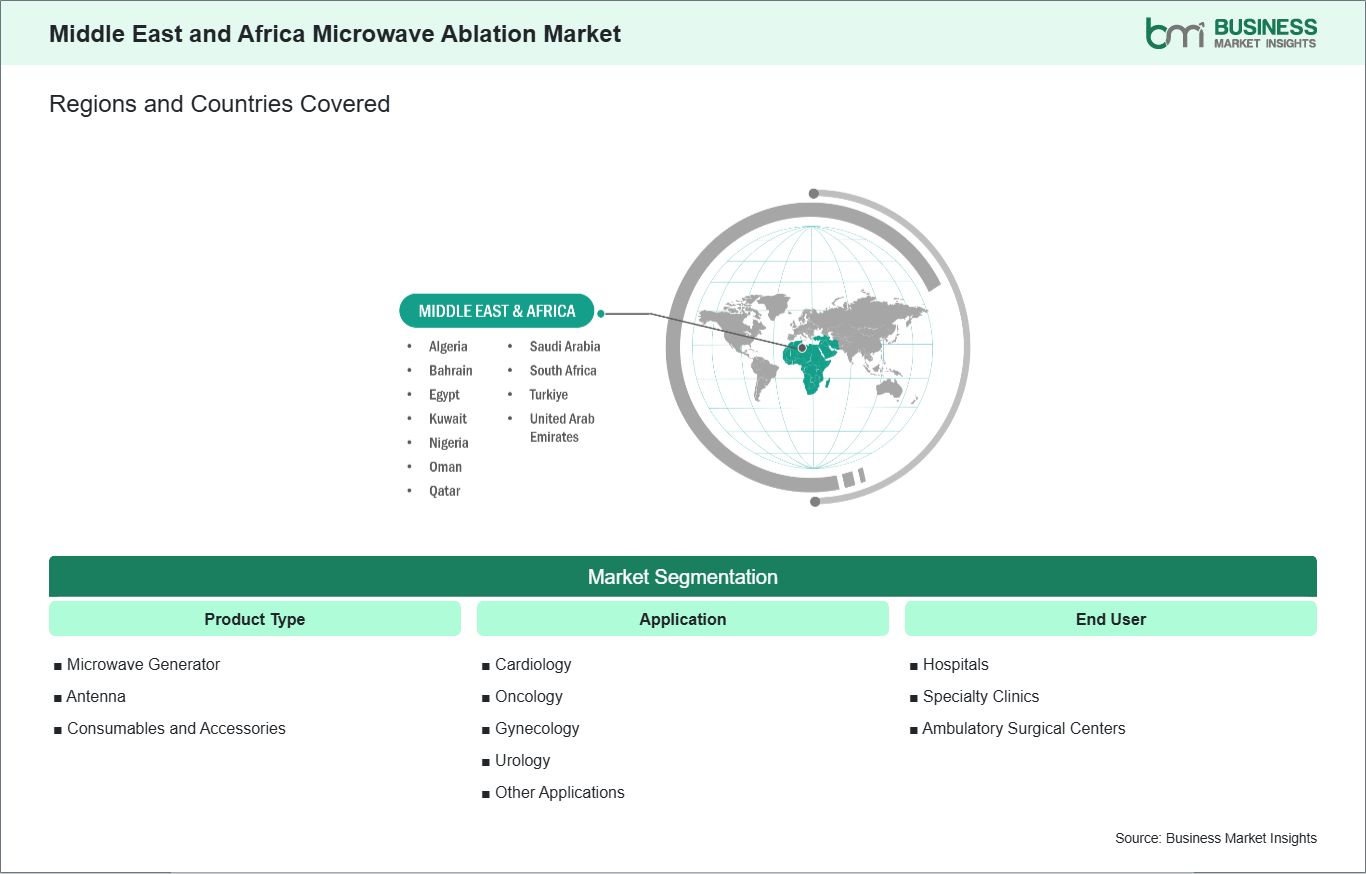
Key segments that contributed to the derivation of the Africa microwave Ablation market analysis are product type, application, and end user.
- By product type, the microwave ablation market is segmented into microwave generator, antenna, and consumables & accessories. The antenna segment dominated the market in 2025.
- Based on application, the microwave ablation market is classified into cardiology, oncology, gynecology, urology, and others. The oncology segment dominated the market in 2025.
- In terms of end user, the microwave ablation market is categorized into hospitals, specialty clinics, and ambulatory surgical centers. The hospitals segment dominated the market in 2025.
Market Forces
Middle East and Africa Microwave Ablation Market Drivers and Opportunities
Rising Global Cancer Statistics
The Middle East and Africa (MEA) microwave ablation market is being shaped by the global increase in cancer diagnoses that is reflected across both developed and developing healthcare systems. Rising cancer caseloads particularly solid tumors such as liver, lung, and breast cancers are placing greater demand on existing treatment pathways. Healthcare providers in the region are thus seeking effective and less invasive options to manage tumor burden, especially in patients who may not be suitable candidates for traditional surgery or lengthy hospital stays.
Healthcare facilities across the MEA are expanding oncology services to address this growing clinical need. Tertiary care centers and specialty clinics are increasingly incorporating interventional oncology procedures to complement conventional therapies. Microwave ablation as a thermal, image-guided technique is gaining clinical attention due to its ability to destroy tumor tissue with minimal disruption to surrounding healthy anatomy. This capability is particularly valued in settings where surgical resources are constrained or where patients present with comorbidities that complicate major operations.
In addition, investments in diagnostic capacity and cancer care infrastructure are supporting the adoption of advanced treatment technologies. As awareness of microwave ablation grows among clinicians and healthcare administrators, demand for ablation systems is rising in parallel with the broader rise in cancer incidence. This trend is expected to support incremental market growth as both public and private healthcare systems seek to broaden treatment portfolios in response to evolving disease patterns.
Advancing Demand for Custom Cancer Solutions
There is a noticeable rise in demand for tailored cancer treatments, as clinicians emphasize strategies that are customized to individual patient and tumor characteristics. Precision oncology is gaining prominence, with multidisciplinary teams engaging in more nuanced treatment planning to balance therapeutic effectiveness with quality-of-life considerations. Within this context, minimally invasive and adaptable therapies such as microwave ablation are increasingly being viewed as complementary tools in personalized care pathways.
Clinicians in the region are leveraging advanced imaging and diagnostics to better characterize tumors and inform treatment selection. This collaborative approach encourages the use of treatment modalities that can be adjusted according to tumor size, location, and patient health status. Microwave ablation's flexibility both in energy delivery and in its integration with real-time imaging makes it conducive to individualized treatment strategies, especially when conventional surgical options may pose heightened risk or prolonged recovery.
Patient expectations are also influencing the shift toward customized cancer solutions. Many patients and referring physicians are seeking interventions that offer not only clinical efficacy but also minimized procedural risk and quicker return to normal activity. The minimally invasive nature of microwave ablation aligns with these priorities, contributing to its consideration alongside other personalized cancer therapies. As demand for individualized care continues to advance across Middle East and Africa, the market for microwave ablation systems is expected to grow in tandem with evolving clinical practices and patient-driven preferences.
Size and Share Analysis
Middle East and Africa Microwave Ablation Market Size and Share Analysis
The Middle East and Africa microwave ablation market demonstrates steady growth, with size and share analysis highlighting evolving trends and competitive dynamics among key players. The report evaluates important subsegments categorized within product type, application, and end user, highlighting their respective contributions to overall market performance.
By product type, the antenna subsegment dominated the market in 2025. There is a recurring need for high-performance, precise antennas during MWA procedures, which are essential for effective thermal ablation of tumors, making them a key revenue driver for manufacturers.
In terms of application, the oncology subsegment dominated the market in 2025. Oncology applications lead because of a rising prevalence of cancer cases, increasing preference for minimally invasive tumor ablation techniques, and growing awareness among healthcare providers about the effectiveness of MWA in treating liver, lung, and other solid tumors.
Based on end user, the hospitals subsegment dominated the market in 2025. Hospitals maintain a stronghold due to their well-established oncology and surgical departments, access to advanced MWA equipment, trained interventional radiologists and staff, and the capability to manage complex ablation procedures with comprehensive patient care.
Report Coverage
Middle East and Africa Microwave Ablation Market Report Coverage and Deliverables
The "Middle East and Africa Microwave Ablation Market Size and Forecast (2022-2033)" report provides a detailed analysis of the market covering below areas:
- Middle East and Africa Microwave Ablation market size and forecast at regional and country levels for all market segments covered under the scope
- Middle East and Africa Microwave Ablation market trends, as well as drivers, restraints, and opportunities
- Middle East and Africa Microwave Ablation market analysis covering key trends, regional framework, major players, regulations, and recent developments
- Industry landscape and competition analysis covering market concentration, heat map analysis, prominent players, and recent developments for the Middle East and Africa Microwave Ablation market
- Detailed company profiles, including SWOT analysis
Geographic Insights
Middle East and Africa Microwave Ablation Market Geographic Insights
The geographical scope of the Middle East and Africa microwave ablation market report is divided into: Saudi Arabia, the UAE, Kuwait, Bahrain, Qatar, Oman, Turkiye, South Africa, Egypt, Nigeria, Algeria, and the Rest of MEA. Turkiye held the largest share in 2025.
Turkiye represents the dominant market within the MEA due to its well-established interventional radiology ecosystem and strong public–private healthcare integration. The country has positioned itself as a regional medical tourism hub, particularly in oncology and minimally invasive surgery, attracting patients from neighboring Middle Eastern, Central Asian, and Eastern European countries. Advanced tertiary hospitals in cities such as Istanbul, Ankara, and Izmir are equipped with hybrid operating rooms and image-guided intervention suites that facilitate microwave ablation procedures. The growing burden of liver and lung cancers, combined with national cancer control initiatives, has increased the clinical adoption of thermal ablation techniques. Turkish physicians demonstrate strong technical expertise in percutaneous tumor ablation, supported by academic research institutions and university hospitals that actively participate in clinical studies. Furthermore, reimbursement coverage for certain oncological interventions under Turkiye's public healthcare system enhances patient access compared to many other MEA countries. Local distributor networks play a crucial role in market penetration, ensuring the availability of leading global microwave ablation systems. However, currency volatility and procurement cost pressures can impact hospital purchasing decisions. Turkiye's mature interventional radiology infrastructure and regional referral base solidify its leadership within the MEA market.
Industry Activity
Recent Developments
The Middle East and Africa Microwave Ablation market is evaluated by gathering qualitative and quantitative data post primary and secondary research, which includes important corporate publications, association data, and databases. A few of the key developments in the Middle East and Africa Microwave Ablation market are:
- In the November 2025 announcement, the collaboration involved ECO (ECO Medical Technology) and an international expert/specialist partner, Prof. Konstantinos Chaidas from Greece. Together they worked with the local clinical team in Saudi Arabia to successfully perform the first thyroid microwave ablation case there, a milestone for microwave ablation adoption and specialist training in the Kingdom.
- In January 2023, Tawam Hospital, part of Abu Dhabi Health Services Company (SEHA), introduced thyroid radiofrequency and microwave ablation procedures to treat benign thyroid nodules. The hospital performed the region's first combined ablation case for a patient with a large compressive nodule, expanding minimally invasive treatment options in the UAE.
Trust & Transparency
Research Methodology
The market analysis combines proprietary research with secondary data from government agencies, company disclosures, regulatory filings, industry databases and expert interviews. Market estimates are validated through data triangulation, cross-market benchmarking and analyst
review.
View Full Research Methodology
Key Sources Referred:
The World BankWorld Health Organization (WHO)Center for Disease Control and Prevention (CDC)Food and Drug Administration (FDA)European Database on Medical Devices (EUDAMED)European Society of Cardiology (ESC)American College of Cardiology (ACC)American Heart Association (AHA)Company WebsitesCompany Annual ReportsCompany Investor Presentations