Analysis– by Offering (Software and Services), Deployment (On-Premises and Cloud), Organization Size (SMEs and Large Enterprises), and Application (Pharmaceutical, Biotechnology, and Medical Devices)
No. of Pages:130
Report Code:
BMIRE00028419
Category:
Technology, Media and Telecommunications
Middle East & Africa Manufacturing Execution System (MES) In Life Sciences Market
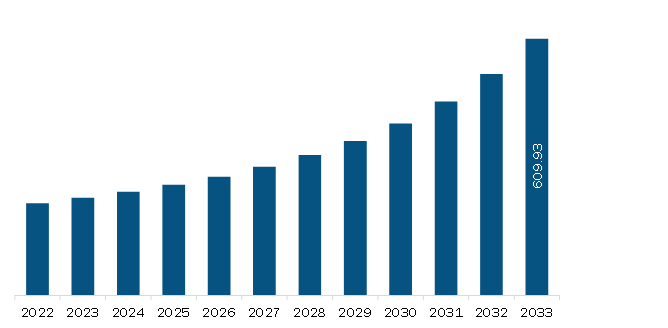
The Middle East & Africa manufacturing execution system in life sciences market is expected to grow from US$ 231.17 million in 2023 to US$ 609.93 million by 2033. It is estimated to grow at a CAGR of 10.2% from 2023 to 2033.
Shift from Legacy to Modern MES Fuels Middle East & Africa Manufacturing Execution System (MES) In Life Sciences Market
Modern MES solution is an advanced and lighter version of MES. It helps enhance pharmaceutical industry production processes without requiring custom coding. The digital production records and automated workflows that foster right-first-time batches provided by the modern MES will further help increase efficiency. In addition, the fast and flexible responsiveness of the modern MES solution will make it easier to change production lines and accommodate small batches. The solution provides real-time visibility by helping retrieve data from local and remote locations. Thus, various pharma companies are shifting to modern MES solutions to develop high-quality pharmaceutical products and enhance production performance. Some examples of modern MES solutions are Tulip’s Next Gen MES, MasterControl’s MES, 42Q’s MES 101, and EIS’s OpsTrakker Solution Suite, among others. Bristol-Myers Squibb, Synthego Corporation, Sri Krishna Pharmaceuticals Limited, EpiBone, and Fagron NV are among the users of these modern MES solutions. Such factors are expected to promote the adoption of modern manufacturing execution systems among life sciences players during the forecast period.
Middle East & Africa Manufacturing Execution System (MES) In Life Sciences Market Overview
Middle East, Saudi Arabia is the largest pharmaceutical manufacturing market, which accounts for 60% of the regional share, followed by the UAE. The largest part of the Saudi manufacturing industry is spread in the Gulf region, however, most of the local production is destined for export markets. Leading indigenous players in the region include Spimaco, Jamjoom Pharma, Tabuk Pharmaceutical Manufacturing, Jazeera Pharmaceutical Industries, and Julphar. Top multinational companies such as GSK, Sanofi, and Abbott Laboratories have also set up manufacturing units in the region. Per the Saudi Vision 2030, the country is a unique transformative economic and social reform blueprint. With this vision, it is opening up to the world and looking for the upgrading of its healthcare sector. The progressive healthcare and life sciences sector would bring huge growth avenues to the MES in life sciences market during the forecast period.
Middle East & Africa Manufacturing Execution System (MES) In Life Sciences Market Revenue and Forecast to 2033 (US$ Million)
Middle East & Africa Manufacturing Execution System (MES) In Life Sciences Market Segmentation
Based on offering, the Middle East & Africa manufacturing execution system in life sciences market is segmented into software and services. The services segment held a larger share of the Middle East & Africa manufacturing execution system in life sciences market in 2023.
Based on deployment, the Middle East & Africa manufacturing execution system in life sciences market is segmented into on-premises and cloud. The cloud segment held a larger share of the Middle East & Africa manufacturing execution system in life sciences market in 2023.
Based on organization size, the Middle East & Africa manufacturing execution system in life sciences market is segmented into SMEs and large enterprises. The large enterprises segment held the largest share of the Middle East & Africa manufacturing execution system in life sciences market in 2023.
Based on application, the Middle East & Africa manufacturing execution system in life sciences market is segmented into pharmaceutical, biotechnology, and medical devices. The medical devices segment held the largest share of the Middle East & Africa manufacturing execution system in life sciences market in 2023.
Based on country, the Middle East & Africa manufacturing execution system in life sciences market is segmented into South Africa, Saudi Arabia, the UAE, and the Rest of Middle East & Africa. The UAE dominated the share of the Middle East & Africa manufacturing execution system in life sciences market in 2023.
ATS Global B.V.; Emerson Electric Co; Rockwell Automation Inc; Schneider Electric SE; and Siemens AG are the leading companies operating in the Middle East & Africa manufacturing execution system in life sciences market.
Middle East & Africa Manufacturing Execution System (MES) In Life Sciences Market Strategic Insights
Get more information on this report
Middle East & Africa Manufacturing Execution System (MES) In Life Sciences Market Segmentation Analysis
Middle East & Africa Manufacturing Execution System (MES) In Life Sciences Market Report Highlights
Middle East & Africa Manufacturing Execution System (MES) In Life Sciences Report Scope
Report Attribute
Details
Market size in 2023
US$ 231.17 Million
Market Size by 2033
US$ 609.93 Million
CAGR (2023 - 2033)
10.2%
Historical Data
2021-2022
Forecast period
2024-2033
Segments Covered
By Offering
Software
Services
By Deployment
On-Premises
Cloud
By Organization Size
SMEs
Large Enterprises
By Application
Pharmaceutical
Biotechnology
Medical Devices
Regions and Countries Covered
Middle East and Africa
South Africa, Saudi Arabia, UAE, Rest of Middle East and Africa
Market leaders and key company profiles
ATS Global B.V.
Emerson Electric Co
Rockwell Automation Inc
Schneider Electric SE
Siemens AG
Get more information on this report
Middle East & Africa Manufacturing Execution System (MES) In Life Sciences Market Country and Regional Insights
Get more information on this report
Identical Market Reports with other Region/Countries
The List of Companies - Middle East & Africa Manufacturing Execution System (MES) In Life Sciences Market
ATS Global B.V.Emerson Electric CoRockwell Automation IncSchneider Electric SESiemens AG
Frequently Asked Questions
How big is the Middle East & Africa Manufacturing Execution System (MES) In Life Sciences Market?
The Middle East & Africa Manufacturing Execution System (MES) In Life Sciences Market is valued at US$ 231.17 Million in 2023, it is projected to reach US$ 609.93 Million by 2033.
What is the CAGR for Middle East & Africa Manufacturing Execution System (MES) In Life Sciences Market by (2023 - 2033)?
As per our report Middle East & Africa Manufacturing Execution System (MES) In Life Sciences Market, the market size is valued at US$ 231.17 Million in 2023, projecting it to reach US$ 609.93 Million by 2033. This translates to a CAGR of approximately 10.2% during the forecast period.
What segments are covered in this report?
The Middle East & Africa Manufacturing Execution System (MES) In Life Sciences Market report typically cover these key segments-
Offering (Software, Services)
Deployment (On-Premises, Cloud)
Organization Size (SMEs, Large Enterprises)
Application (Pharmaceutical, Biotechnology, Medical Devices)
What is the historic period, base year, and forecast period taken for Middle East & Africa Manufacturing Execution System (MES) In Life Sciences Market?
The historic period, base year, and forecast period can vary slightly depending on the specific market research report. However, for the Middle East & Africa Manufacturing Execution System (MES) In Life Sciences Market report:
Historic Period : 2021-2022
Base Year : 2023
Forecast Period : 2024-2033
Who are the major players in Middle East & Africa Manufacturing Execution System (MES) In Life Sciences Market?
The Middle East & Africa Manufacturing Execution System (MES) In Life Sciences Market is populated by several key players, each contributing to its growth and innovation. Some of the major players include:
ATS Global B.V.
Emerson Electric Co
Rockwell Automation Inc
Schneider Electric SE
Siemens AG
Who should buy this report?
The Middle East & Africa Manufacturing Execution System (MES) In Life Sciences Market report is valuable for diverse stakeholders, including:
Investors: Provides insights for investment decisions pertaining to market growth, companies, or industry insights. Helps assess market attractiveness and potential returns.
Industry Players: Offers competitive intelligence, market sizing, and trend analysis to inform strategic planning, product development, and sales strategies.
Suppliers and Manufacturers: Helps understand market demand for components, materials, and services related to concerned industry.
Researchers and Consultants: Provides data and analysis for academic research, consulting projects, and market studies.
Financial Institutions: Helps assess risks and opportunities associated with financing or investing in the concerned market.
Essentially, anyone involved in or considering involvement in the Middle East & Africa Manufacturing Execution System (MES) In Life Sciences Market value chain can benefit from the information contained in a comprehensive market report.





 Get Free Sample For Middle East & Africa Manufacturing Execution System (MES) In Life Sciences Market