Analysis – by Type of Packaging (Single-Use Vials, Point-of-Care Reconstitution, and Specialty Packaging), Type of Delivery (Prefilled Diluent Syringes, Single-Step Devices, Proprietary Reconstitution Devices, and Multi-Step Devices), Indication (Metabolic and Oncology Conditions, Infectious Diseases, Autoimmune Diseases, and Others), and End User (Hospitals, Ambulatory Surgical Centers, Specialty Clinics, and Others)
No. of Pages:123
Report Code:
BMIRE00027590
Category:
Life Sciences
Middle East & Africa Lyophilized Injectable Market
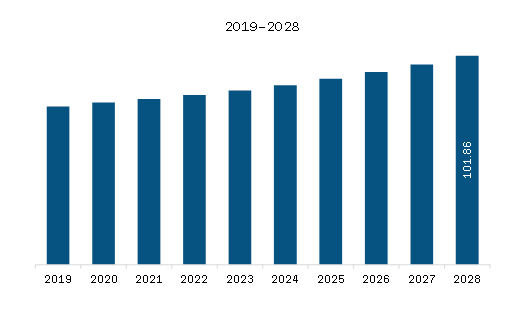
The MEA lyophilized injectable market is expected to grow from US$ 82.87 million in 2022 to US$ 101.86 million by 2028. It is estimated to grow at a CAGR of 3.5% from 2022 to 2028.
Expansion of Pipeline of Lyophilized Injectable Drugs
The continuous research to invent drugs to treat chronic diseases has driven the development of lyophilized injectable drugs in the pharmaceutical industry. Product innovation and strategic activities by critical key players provide opportunities to penetrate a new therapeutic area/market. Approximately 2,400 injectable products are present in the development pipeline. Drug developers are increasingly interested in the lyophilization technique as it can extend the shelf life of small and large-molecule drugs. The prevalence of formulation stability challenges for complex APIs and biologics resulted in more pharmaceutical and biopharmaceutical manufacturers turning to lyophilization. The use of lyophilization for pharmaceutical and biopharmaceutical product manufacturing has grown by ~13.5% per year in the past five years. Because liquids are the preferred formulation for commercial-scale production of many parenteral products, lyophilization is increasingly essential in bringing liquid products to market. Lyophilization is significant for two reasons—increasing the number of new drug applications and decreasing review times for new drug approvals. More than 3,000 drug candidates are in the pipeline in therapeutic areas where parenteral delivery dominates. Of these 3,000 products, ~2,250 are in pre-clinical development/Phase I. Of the remaining candidates, ~750 are in Phase II and III. This pipeline of lyophilized products will add to the established list of lyophilized drugs in the upcoming period. Thus, it is expected to augment the lyophilized injectable market.
Market Overview
The MEA lyophilized injectable market is segmented into the UAE, Saudi Arabia, South Africa, and the Rest of MEA. South Africa dominated the market in 2022. South Africa is one of the developing economies in the region, with a GDP of USD 301.92 billion, and healthcare accounts for 33% of the GDP, with the second largest share. South Africa does not have a universal healthcare system, but it has two parallel systems—public healthcare system and private healthcare system—which work hand in hand. Approximately 84% of the population of South Africa relies on the public healthcare system and 16% on the private healthcare system. South Africa has a high prevalence rate of infectious diseases, cancer, and other chronic disorders. As per the World Health Organization, a total of 116,391 new cancer cases were diagnosed in South Africa during 2020, out of which breast cancer and prostate cancer accounted for the maximum share of 14.2% and 12%, respectively. Additionally, South Africa had the highest prevalence rate of Hepatitis B, with 6.7% (3.4 million people) in 2019. Moreover, an increase in government initiatives to boost awareness among people and the supply of therapeutic drugs in the region have boosted the demand for lyophilized injectables. Additionally, the development of healthcare services and increased affordability of advanced treatment options for chronic disorders, followed by new product launches and approvals, are further expected to amplify the market growth.
MEA Lyophilized Injectable Market Revenue and Forecast to 2028 (US$ Million)
Based on type of packaging, the MEA lyophilized injectable market is segmented into single-use vials, point-of-care reconstitution, and specialty packaging. The single-use vials segment held the largest market share in 2022.
In terms of type of delivery, the MEA lyophilized injectable market is segmented into prefilled diluent syringes, single-step devices, proprietary reconstitution devices, and multi-step devices. The prefilled diluent syringes segment held the largest market share in 2022.
Based on indication, the MEA lyophilized injectable market is categorized into metabolic and oncology conditions, infectious diseases, autoimmune diseases, and others. The metabolic and oncology conditions segment held the largest market share in 2022.
Based on end user, the MEA lyophilized injectable market is segmented into hospitals, ambulatory surgical centers, specialty clinics, and others. The hospitals segment held the largest market share in 2022.
Based on country, the MEA lyophilized injectable market is segmented into the UAE, Saudi Arabia, South Africa, and the Rest of MEA. South Africa dominated the market in 2022.
Aristopharma Ltd.; Baxter; Credence MedSystems, Inc.; Jubilant HollisterStier (Jubilant Pharma Limited); Nipro; Recipharm AB; S.G. Biopharm Pvt. Ltd.; and Vetter Pharma are among the leading companies operating in the MEA lyophilized injectable market.
Middle East & Africa Lyophilized Injectable Market Strategic Insights
Get more information on this report
Middle East & Africa Lyophilized Injectable Market Segmentation Analysis
Middle East & Africa Lyophilized Injectable Market Report Highlights
Middle East & Africa Lyophilized Injectable Report Scope
Report Attribute
Details
Market size in 2022
US$ 82.87 Million
Market Size by 2028
US$ 101.86 Million
CAGR (2022 - 2028)
3.5%
Historical Data
2020-2021
Forecast period
2023-2028
Segments Covered
By Type of Packaging
Single-Use Vials
Point-of-Care Reconstitution
Specialty Packaging
By Type of Delivery
Prefilled Diluent Syringes
Single-Step Devices
Proprietary Reconstitution Devices
Multi-Step Devices
By Indication
Metabolic and Oncology Conditions
Infectious Diseases
Autoimmune Diseases
By End User
Hospitals
Ambulatory Surgical Centers
Specialty Clinics
Regions and Countries Covered
Middle East and Africa
South Africa, Saudi Arabia, UAE, Rest of Middle East and Africa
Market leaders and key company profiles
Aristopharma Ltd.
Baxter
Credence MedSystems, Inc.
Jubilant HollisterStier (Jubilant Pharma Limited)
Nipro
Recipharm AB
S.G. Biopharm Pvt. Ltd.
Vetter Pharma
Get more information on this report
Middle East & Africa Lyophilized Injectable Market Country and Regional Insights
Get more information on this report
Identical Market Reports with other Region/Countries
The List of Companies - Middle East & Africa Lyophilized Injectable Market
Aristopharma Ltd.BaxterCredence MedSystems, Inc. Jubilant HollisterStier (Jubilant Pharma Limited)NiproRecipharm ABS.G. Biopharm Pvt. Ltd. Vetter Pharma
Krishna is a Market Research Analyst with over 4 years of experience across Life Sciences and Materials & Chemicals industries. He holds a Bachelor's degree in Pharmacy (B.Pharm.) and a Master's degree in Pharmaceutical Medicinal Chemistry (M.Pharm.). His expertise spans market intelligence, competitive benchmarking, market sizing and forecasting, primary and secondary research, and strategic consulting.
Krishna has successfully contributed to numerous syndicated and custom research engagements, delivering industry reports, market assessments, competitive analyses, and business proposals for clients across diverse sectors. With ..
Show More
Frequently Asked Questions
How big is the Middle East & Africa Lyophilized Injectable Market?
The Middle East & Africa Lyophilized Injectable Market is valued at US$ 82.87 Million in 2022, it is projected to reach US$ 101.86 Million by 2028.
What is the CAGR for Middle East & Africa Lyophilized Injectable Market by (2022 - 2028)?
As per our report Middle East & Africa Lyophilized Injectable Market, the market size is valued at US$ 82.87 Million in 2022, projecting it to reach US$ 101.86 Million by 2028. This translates to a CAGR of approximately 3.5% during the forecast period.
What segments are covered in this report?
The Middle East & Africa Lyophilized Injectable Market report typically cover these key segments-
Type of Packaging (Single-Use Vials, Point-of-Care Reconstitution, Specialty Packaging)
Type of Delivery (Prefilled Diluent Syringes, Single-Step Devices, Proprietary Reconstitution Devices, Multi-Step Devices)
Indication (Metabolic and Oncology Conditions, Infectious Diseases, Autoimmune Diseases)
End User (Hospitals, Ambulatory Surgical Centers, Specialty Clinics)
What is the historic period, base year, and forecast period taken for Middle East & Africa Lyophilized Injectable Market?
The historic period, base year, and forecast period can vary slightly depending on the specific market research report. However, for the Middle East & Africa Lyophilized Injectable Market report:
Historic Period : 2020-2021
Base Year : 2022
Forecast Period : 2023-2028
Who are the major players in Middle East & Africa Lyophilized Injectable Market?
The Middle East & Africa Lyophilized Injectable Market is populated by several key players, each contributing to its growth and innovation. Some of the major players include:
Aristopharma Ltd.
Baxter
Credence MedSystems, Inc.
Jubilant HollisterStier (Jubilant Pharma Limited)
Nipro
Recipharm AB
S.G. Biopharm Pvt. Ltd.
Vetter Pharma
Who should buy this report?
The Middle East & Africa Lyophilized Injectable Market report is valuable for diverse stakeholders, including:
Investors: Provides insights for investment decisions pertaining to market growth, companies, or industry insights. Helps assess market attractiveness and potential returns.
Industry Players: Offers competitive intelligence, market sizing, and trend analysis to inform strategic planning, product development, and sales strategies.
Suppliers and Manufacturers: Helps understand market demand for components, materials, and services related to concerned industry.
Researchers and Consultants: Provides data and analysis for academic research, consulting projects, and market studies.
Financial Institutions: Helps assess risks and opportunities associated with financing or investing in the concerned market.
Essentially, anyone involved in or considering involvement in the Middle East & Africa Lyophilized Injectable Market value chain can benefit from the information contained in a comprehensive market report.







 Get Free Sample For Middle East & Africa Lyophilized Injectable Market