Market Summary
Executive Summary and Market Analysis
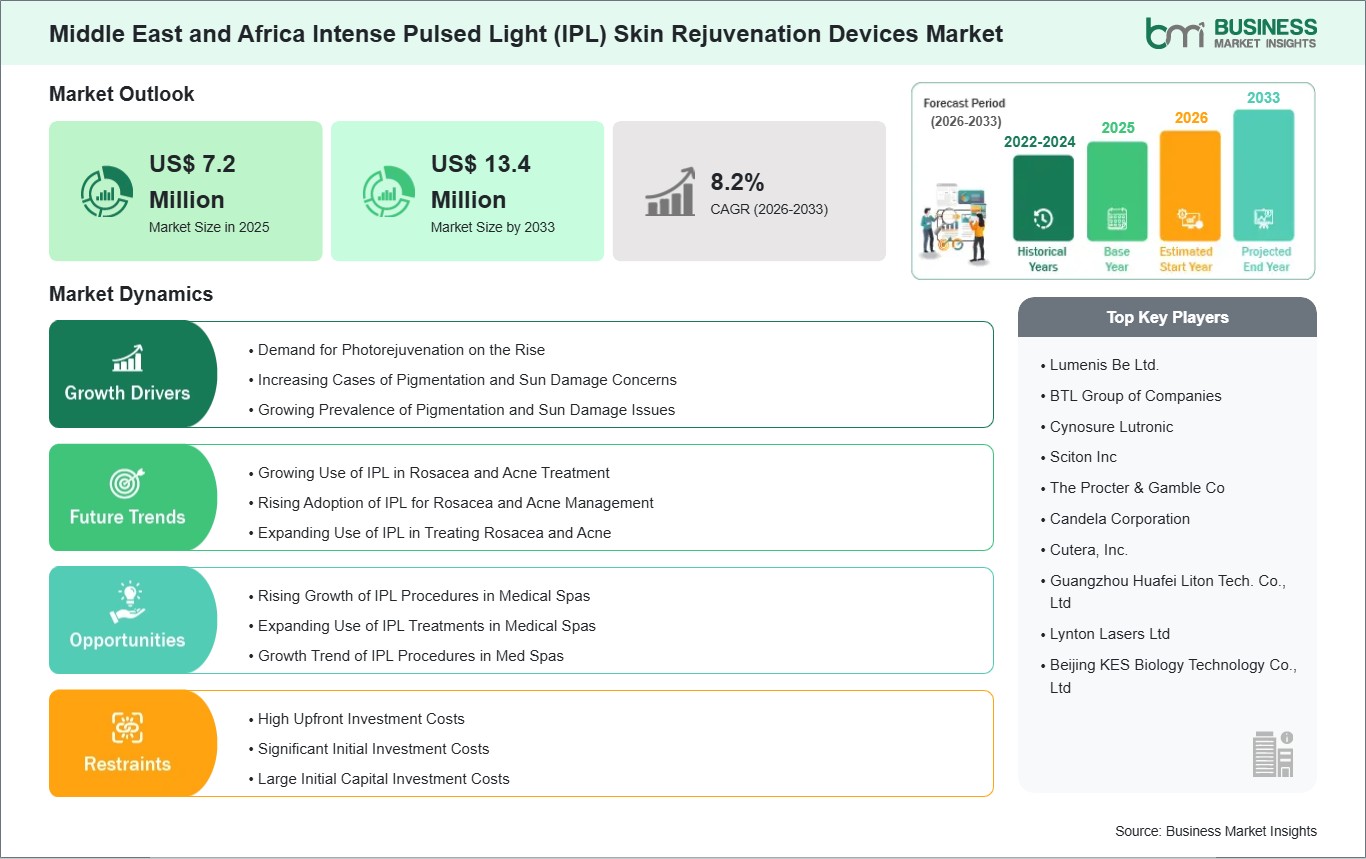
The Middle East and Africa (MEA) intense pulsed light (IPL) skin rejuvenation devices market is gradually expanding, driven by rising demand for advanced aesthetic dermatology treatments, increasing awareness of non-invasive cosmetic procedures, and the growing establishment of specialized skin care and medical aesthetic centers. Across the region, consumers are increasingly prioritizing skin health and appearance, particularly treatments addressing hyperpigmentation, sun damage, uneven skin tone, and early signs of aging. IPL technology is gaining traction due to its ability to deliver multi-functional skin rejuvenation benefits through relatively quick and minimally invasive procedures, making it suitable for both clinical and medical spa settings.
The private healthcare industry is improving, and the number of professionals offering aesthetic medicine is on the rise with an increasing presence of professionals offering these types of services in urban/metropolitan areas. With the increase in disposable income in some of the MEA region's countries, many people are becoming more familiar with global beauty standards as a result of social media, which is leading to a more accepted use of cosmetic dermatology procedures. In addition to these factors, high levels of sun exposure in different parts of the region have led to increased rates of pigmentation issues, which will continue to drive interest in IPL treatments.
Limited availability of advanced technologies in many African countries makes it difficult for innovations like IPL to be broadly adopted; in addition, the high costs of equipment and reliance on skilled technicians can make it challenging for smaller clinics to adopt these technologies. Other forms of technology, such as laser resurfacing and radiofrequency devices, are also competing against IPL for consumer attention. Despite the above factors limiting potential growth for IPL in the MEA region, there is still potential for steady growth within the market due to many developing aesthetic healthcare markets as more people become aware of aesthetics, as healthcare becomes more relevant on a global level, and as private companies expand their investments into dermatology-related services.
Segment Analysis
Middle East and Africa Intense Pulsed Light (IPL) Skin Rejuvenation Devices Market Segmentation
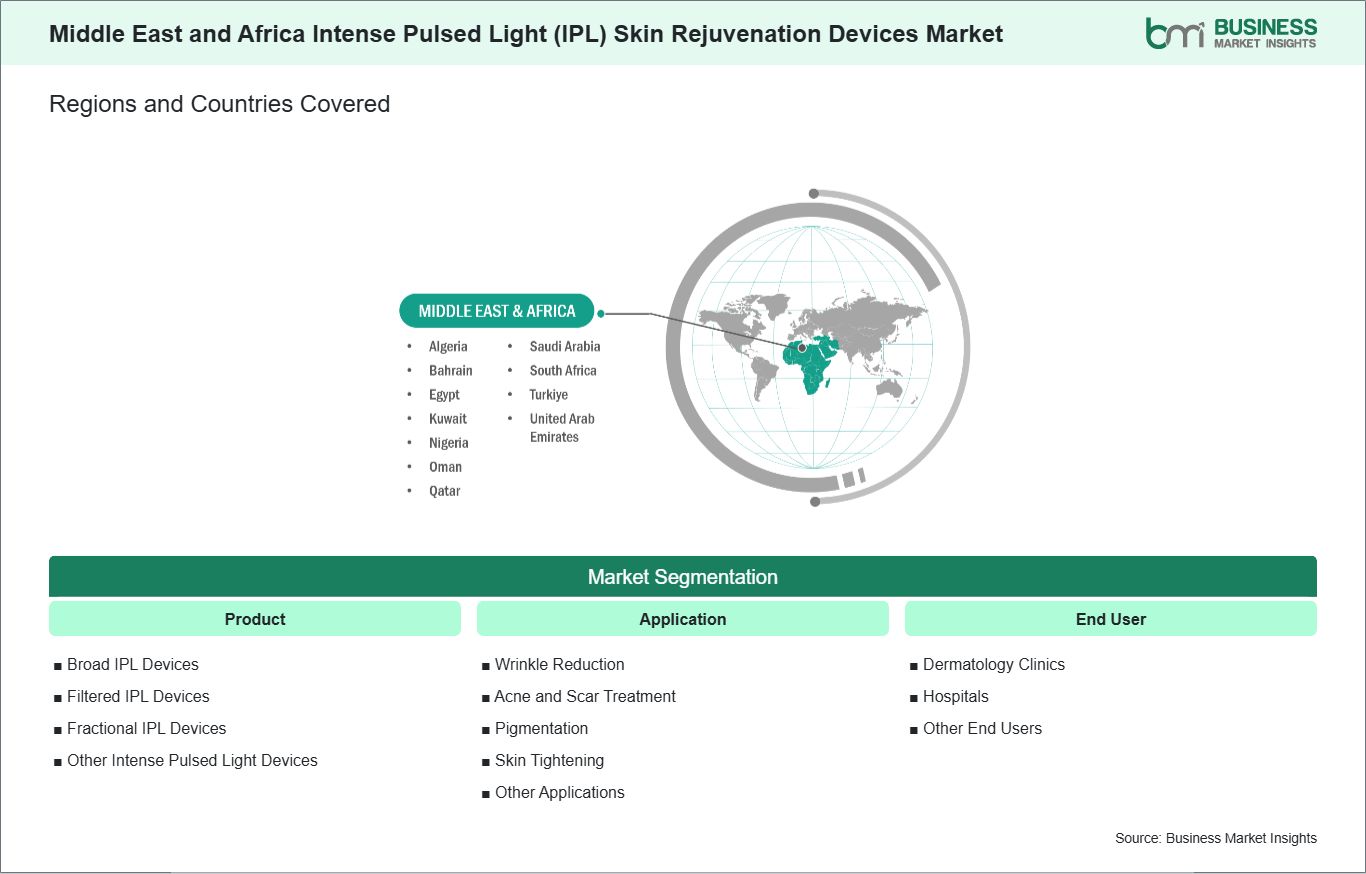
Key segments that contributed to the derivation of the Africa intense pulsed light (IPL) skin rejuvenation devices market analysis are product, application, and end user.
- By product, the intense pulsed light (IPL) skin rejuvenation devices market is segmented into broad IPL devices, filtered IPL devices, fractional IPL devices, and other intense pulsed light (IPL) devices. The broad IPL devices segment dominated the market in 2025.
- Based on application, the intense pulsed light (IPL) skin rejuvenation devices market is classified into wrinkle reduction, acne and scar treatment, pigmentation, skin tightening, and other applications. The wrinkle reduction segment dominated the market in 2025.
- In terms of end user, the intense pulsed light (IPL) skin rejuvenation devices market is categorized into dermatology clinics, hospitals, and other end users. The dermatology clinics segment dominated the market in 2025.
Market Forces
Middle East and Africa Intense Pulsed Light (IPL) Skin Rejuvenation Devices Market Drivers and Opportunities
Rapid Growth in Photorejuvenation Treatment Demand
Demand for photorejuvenation services across the Middle East and Africa is rising steadily, driven by increasing awareness of non-invasive aesthetic procedures and a growing preference for treatments with minimal downtime. High ultraviolet exposure across the region contributes significantly to skin concerns such as hyperpigmentation, uneven tone, and early photoaging, which has strengthened interest in Intense Pulsed Light (IPL) skin rejuvenation procedures. Dermatology clinics are increasingly positioning IPL as a first-line solution for cosmetic skin correction.
The region's expanding urban population and rising disposable incomes are supporting greater spending on aesthetic dermatology. Consumers are becoming more proactive about skin maintenance, with IPL treatments gaining popularity among younger demographics as preventive skincare rather than purely corrective intervention. This shift is also supported by the growing influence of digital media, where aesthetic awareness and treatment visibility are driving higher acceptance of energy-based skin procedures.
Improving access to private dermatology services and aesthetic clinics is further accelerating market penetration. Many healthcare providers are incorporating IPL systems into their core service offerings due to their versatility in treating pigmentation disorders, vascular lesions, and skin texture issues. As infrastructure in private healthcare continues to expand, IPL photorejuvenation is becoming more widely available across both high-income urban centers and emerging secondary cities in the region.
Surge in IPL Treatments Across Medical Spas
Medical spas in the Middle East and Africa are experiencing a notable surge in demand for IPL-based procedures as consumers increasingly seek efficient, non-surgical aesthetic treatments. IPL technology is being widely adopted for skin rejuvenation, hair reduction, and vascular lesion treatment, making it a key revenue driver for aesthetic service providers. The ability to deliver multiple skin benefits using a single platform has made IPL systems highly attractive for medical spa operators.
The premium aesthetic segment is expanding rapidly, with medical spas integrating IPL into broader wellness and anti-aging treatment packages. Consumers are showing strong interest in combination therapies that pair IPL with other non-invasive procedures such as chemical resurfacing and laser-based skin therapies. This integrated approach is helping medical spas increase treatment value per client while improving patient satisfaction and retention.
At the same time, mid-tier and budget-friendly medical spas are also increasing IPL adoption due to the technology's operational efficiency and relatively quick treatment cycles. Providers are investing in newer IPL platforms with improved safety profiles and customizable settings to cater to diverse skin types and conditions. Rising competition in the aesthetic services sector is further pushing medical spas to expand IPL offerings as a core differentiator in an increasingly crowded market.
Size and Share Analysis
Middle East and Africa Intense Pulsed Light (IPL) Skin Rejuvenation Devices Market Size and Share Analysis
The Middle East and Africa intense pulsed light (IPL) skin rejuvenation devices market demonstrates steady growth, with size and share analysis highlighting evolving trends and competitive dynamics among key players. The report evaluates important subsegments categorized within product, application, and end user, highlighting their respective contributions to overall market performance.
By product, the broad IPL devices subsegment dominated the market in 2025, driven by their widespread adoption for versatile skin rejuvenation treatments, including hair removal, pigmentation correction, acne management, and anti-aging procedures. These devices offer broader wavelength coverage, cost-effectiveness, and suitability for multiple dermatological applications, making them the preferred choice among aesthetic practitioners and skincare professionals.
Based on application, the wrinkle reduction subsegment dominated the market in 2025, propelled by the growing demand for non-invasive anti-aging treatments, increasing consumer awareness regarding skin appearance, and rising preference for cosmetic procedures that improve skin texture and elasticity. The effectiveness of IPL technology in stimulating collagen production and reducing fine lines significantly contributed to segment growth.
In terms of end user, the dermatology clinics subsegment dominated the market in 2025 due to the increasing number of specialized skincare centers, availability of trained dermatologists and aesthetic professionals, and growing patient preference for professional cosmetic treatments. Additionally, the adoption of technologically advanced IPL skin rejuvenation devices and personalized treatment solutions further supported the segment's dominance.
Report Coverage
Middle East and Africa Intense Pulsed Light (IPL) Skin Rejuvenation Devices Market Report Coverage and Deliverables
The "Middle East and Africa Intense Pulsed Light (IPL) Skin Rejuvenation Devices Market Size and Forecast (2022-2033)" report provides a detailed analysis of the market covering below areas:
- Market size and forecast at regional and country levels for all market segments covered under the scope
- Market trends, as well as drivers, restraints, and opportunities
- Market analysis covering key trends, regional framework, major players, regulations, and recent developments
- Market concentration, heat map analysis, prominent players, and recent developments for the Market
- Detailed company profiles, including SWOT analysis
Geographic Insights
Middle East and Africa Intense Pulsed Light (IPL) Skin Rejuvenation Devices Market Geographic Insights
The geographical scope of the Middle East and Africa intense pulsed light (IPL) skin rejuvenation devices market report is divided into: Saudi Arabia, the United Arab Emirates, Kuwait, Bahrain, Qatar, Oman, Turkiye, South Africa, Egypt, Nigeria, Algeria, and the Rest of MEA. Turkiye held the largest share in 2025.
The market for intense pulsed light skin rejuvenation devices is dominated by Turkiye's rapidly expanding medical aesthetics sector, a strong medical tourism industry and a wide infrastructure of both dermatology a nd cosmetic surgery practices. Turkiye is positioned as a center for aesthetic procedures within this area for both local and international patients seeking low-cost, high-quality cosmetic procedures. Many clinics are currently using intense-pulsed-light technology for all types of skin rejuvenation purposes, including treatment of pigment disorders, acne and sun damage.
A significant contributing factor to Turkiye leadership within the market is the growth of the medical tourism industry. Advanced aesthetic clinics in cities such as Istanbul and Ankara have created many medical tourist packages that combine dermatology expertise, high-performance IPL systems, and other modern devices to offer patients completed treatment solutions based on their individual needs across multiple countries. As a result of the demands of this expanding medical tourism industry, many clinics are investing in advanced high-performance IPL systems designed to deliver customized and effective treatment results for patients of all types.
Additionally, rising aesthetic consciousness among the local population, influenced by global beauty trends and social media, has significantly increased demand for non-invasive cosmetic procedures. Turkish consumers are increasingly opting for treatments that provide visible improvements with minimal downtime, making IPL technology a preferred choice. The country also benefits from a growing base of trained dermatologists and aesthetic practitioners who are familiar with energy-based skin rejuvenation systems. While regulatory variability and economic fluctuations may influence market dynamics, Turkiye continues to lead the MEA region due to its strong medical aesthetics ecosystem, tourism-driven demand, and expanding adoption of advanced dermatological technologies.
Industry Activity
Recent Developments
The Middle East and Africa intense pulsed light (IPL) skin rejuvenation devices market is evaluated by gathering qualitative and quantitative data post primary and secondary research, which includes important corporate publications, association data, and databases. A few of the key developments in the Middle East and Africa intense pulsed light (IPL) skin rejuvenation devices market are:
- In October 2025, Cynosure Lutronic announced the launch of the eCO2 3D Laser system in the Middle East & Africa region, expanding its advanced energy-based aesthetics portfolio used for skin resurfacing and rejuvenation treatments across dermatology clinics in the UAE and Saudi Arabia.
- In March 2025, Lumenis announced the launch of the M22 OptiLight IPL platform upgrade, strengthening its presence across MEA clinics by offering an enhanced multi-application system for pigmentation correction, vascular treatments, and skin rejuvenation procedures.
Trust & Transparency
Research Methodology
The market analysis combines proprietary research with secondary data from government agencies, company disclosures, regulatory filings, industry databases and expert interviews. Market estimates are validated through data triangulation, cross-market benchmarking and analyst
review.
View Full Research Methodology
Key Sources Referred:
The World BankWorld Health Organization (WHO)Center for Disease Control and Prevention (CDC)Food and Drug Administration (FDA)European Database on Medical Devices (EUDAMED)American Academy of Dermatology (AAD)American Society for Dermatologic Surgery (ASDS)International Society of Aesthetic Plastic Surgery (ISAPS)American Society for Laser Medicine and Surgery (ASLMS)American Society of Plastic Surgeons (ASPS)Company WebsitesCompany Annual ReportsCompany Investor Presentations