Analysis By Type (Disposable Injection Pens and Reusable Injection Pens), Therapy (Diabetes, Growth Hormone Therapy, Autoimmune Diseases, Fertility, Cancer, and Others Therapy), and End User (Hospitals and Clinics, Home Care, and Others)
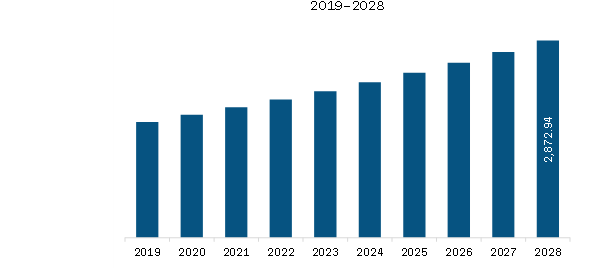
The Middle East & Africa injection pen market is expected to grow from US$ 2,016.10 million in 2022 to US$ 2,872.94 million by 2028. It is estimated to register a CAGR of 6.1% from 2022 to 2028.
Increase in Biologics Patent Expiry and Use of Biosimilars in Middle East & Africa Injection Pen Market
Biologics are widely developed for treating chronic disorders such as cancer, multiple sclerosis, and diabetes. These drugs are unique in their own way, and manufacturers own patents of 20 years for manufacturing and distributing such drugs. As most patents are either expired or on the verge of expiry, other market players have begun launching their own version of such drugs, i.e., biosimilars. Biosimilars (generic drugs that are low-priced and are preferred by the government and insurance companies) have gained tremendous traction in the past few years over the original biologics. The pharmaceutical market players are promoting the adoption of biosimilars, which further creates the demand for injection pens for their delivery. As per AJMC, a total of 40 biosimilars were approved, and 25 new biosimilars were launched in the US till December 2022. Furthermore, there has been significant use of injectables on a large scale owing to prompt response, thus, generating the demand for injection pens for safe. Furthermore, the manufacturers of injection pens are constantly providing training for the proper use of injection pens to avoid associated dangers such as needle stick injuries and hyperglycemia which are further expected to create opportunities for the injection pen market. Therefore, increased use of biosimilars, patent expiry, and increased use of injectables are likely to create ample opportunity for the growth of the injection pen market in the coming years.
Middle East & Africa Injection Pen Market Overview
The Middle East & Africa injection pen market is segmented into South Africa, Saudi Arabia, the UAE, and the Rest of Middle East & Africa. The market growth in this region is attributed to the increasing incidence of diabetes and infertility and growing efforts by companies for product development. The incidence of diabetes in Saudi Arabia is increasing rapidly and is expected to remain consistently high in the coming years due to the presence of a high percentage of obese and overweight citizens. According to the World Health Organization (WHO), children from Saudi Arabia are more likely to develop diabetes at an early age due to an unhealthy lifestyle and insufficient physical activity, and the prevalence of juvenile diabetes has been observed to be increasing continuously in the country in recent years. According to a report by the IDF, 10% of people from Saudi Arabia have diabetes, and the prevalence will almost double by 2045. Moreover, ~4.27 million Saudi Arabians have diabetes, and 1.86 million are yet to be diagnosed with the disease. This number is expected to reach 5.6 million and 7.5 million by 2030 and 2045, respectively.
Middle East & Africa Injection Pen Market Revenue and Forecast to 2028 (US$ Million)
Middle East & Africa Injection Pen Market Segmentation
The Middle East & Africa injection pen market is segmented on the basis of type, therapy, end user, and country. Based on type, the injection pen market is segmented into disposable injection pens and reusable injection pens. The disposable injection pens segment registered a larger market share in 2022.
Based on therapy, the Middle East & Africa injection pen market is segmented into diabetes therapy, growth hormone therapy, autoimmune diseases therapy, fertility therapy, cancer therapy, and others. The diabetes therapy segment registered the largest market share in 2022.
Based on end user, the Middle East & Africa injection pen market is segmented into hospitals & clinics, home care, and others. The home care segment registered the largest market share in 2022.
Based on country, the Middle East & Africa injection pen market is segmented into Saudi Arabia, South Africa, the UAE, and the Rest of Middle East & Africa. The Rest of Middle East & Africa dominated the market in 2022.
AstraZeneca Plc, Becton Dickinson and Co, Eli Lilly, and Co, Gerresheimer AG, Haselmeier GmbH, Merck KGaA, Novo Nordisk AS, Owen Mumford Ltd, Sanofi SA, and Teva Pharmaceutical Industries Ltd are among the leading companies operating in the Middle East & Africa injection pen market.
Middle East & Africa Injection Pen Market Strategic Insights
Get more information on this report
Middle East & Africa Injection Pen Market Segmentation Analysis
Middle East & Africa Injection Pen Market Report Highlights
Middle East & Africa Injection Pen Report Scope
Report Attribute
Details
Market size in 2022
US$ 2,016.10 Million
Market Size by 2028
US$ 2,872.94 Million
CAGR (2022 - 2028)
6.1%
Historical Data
2020-2021
Forecast period
2023-2028
Segments Covered
By Type
Disposable Injection Pens
Reusable Injection Pens
By Therapy
Diabetes
Growth Hormone Therapy
Autoimmune Diseases
Fertility
Cancer
Others Therapy
By End User
Hospitals and Clinics
Home Care
Regions and Countries Covered
Middle East and Africa
South Africa, Saudi Arabia, UAE, Rest of Middle East and Africa
Market leaders and key company profiles
AstraZeneca Plc
Becton Dickinson and Co
Eli Lilly and Co
Gerresheimer AG
Haselmeier GmbH
Merck KGaA
Novo Nordisk AS
Owen Mumford Ltd
Sanofi SA
Teva Pharmaceutical Industries Ltd
Get more information on this report
Middle East & Africa Injection Pen Market Country and Regional Insights
Get more information on this report
Identical Market Reports with other Region/Countries
The List of Companies - Middle East & Africa Injection Pen Market
AstraZeneca PlcBecton Dickinson and CoEli Lilly and CoGerresheimer AGHaselmeier GmbHMerck KGaANovo Nordisk ASOwen Mumford LtdSanofi SATeva Pharmaceutical Industries Ltd
Frequently Asked Questions
How big is the Middle East & Africa Injection Pen Market?
The Middle East & Africa Injection Pen Market is valued at US$ 2,016.10 Million in 2022, it is projected to reach US$ 2,872.94 Million by 2028.
What is the CAGR for Middle East & Africa Injection Pen Market by (2022 - 2028)?
As per our report Middle East & Africa Injection Pen Market, the market size is valued at US$ 2,016.10 Million in 2022, projecting it to reach US$ 2,872.94 Million by 2028. This translates to a CAGR of approximately 6.1% during the forecast period.
What segments are covered in this report?
The Middle East & Africa Injection Pen Market report typically cover these key segments-
Type (Disposable Injection Pens, Reusable Injection Pens)
What is the historic period, base year, and forecast period taken for Middle East & Africa Injection Pen Market?
The historic period, base year, and forecast period can vary slightly depending on the specific market research report. However, for the Middle East & Africa Injection Pen Market report:
Historic Period : 2020-2021
Base Year : 2022
Forecast Period : 2023-2028
Who are the major players in Middle East & Africa Injection Pen Market?
The Middle East & Africa Injection Pen Market is populated by several key players, each contributing to its growth and innovation. Some of the major players include:
AstraZeneca Plc
Becton Dickinson and Co
Eli Lilly and Co
Gerresheimer AG
Haselmeier GmbH
Merck KGaA
Novo Nordisk AS
Owen Mumford Ltd
Sanofi SA
Teva Pharmaceutical Industries Ltd
Who should buy this report?
The Middle East & Africa Injection Pen Market report is valuable for diverse stakeholders, including:
Investors: Provides insights for investment decisions pertaining to market growth, companies, or industry insights. Helps assess market attractiveness and potential returns.
Industry Players: Offers competitive intelligence, market sizing, and trend analysis to inform strategic planning, product development, and sales strategies.
Suppliers and Manufacturers: Helps understand market demand for components, materials, and services related to concerned industry.
Researchers and Consultants: Provides data and analysis for academic research, consulting projects, and market studies.
Financial Institutions: Helps assess risks and opportunities associated with financing or investing in the concerned market.
Essentially, anyone involved in or considering involvement in the Middle East & Africa Injection Pen Market value chain can benefit from the information contained in a comprehensive market report.





 Get Free Sample For Middle East & Africa Injection Pen Market