Analysis – by Type (Frozen Desserts; Frozen Bakery; Frozen Meat, Poultry, and Seafood; Frozen Ready Meals; Frozen Snacks and Appetizers; and Others) and Distribution Channel (Supermarkets and Hypermarkets, Convenience Stores, Online Retail, and Others)
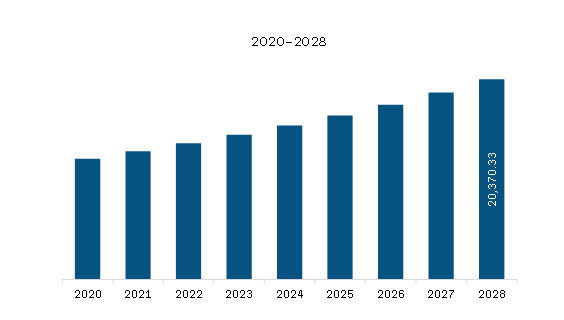
The frozen food market in the Middle East & Africa is expected to grow from US$ 13.85 billion in 2022 to US$ 20.37 billion by 2028; it is estimated to grow at a CAGR of 7.0% from 2022 to 2028.
The burgeoning popularity of plant-based frozen products is the major factor driving the growth of the Middle East & Africa frozen food market. Veganism has gained significant traction in recent years. Consumers are highly inclined toward plant-based products as they perceive them to be healthier than conventional products. Additionally, increasing awareness regarding animal protection and environmental sustainability is adding to the popularity of these food products. Registrations for the Veganuary Campaign have increased dramatically over the past few years. Thus, manufacturers of frozen food are launching plant-based products to catch up with the flourishing trend of veganism. For instance, in 2020, Lazy Vegan, a Dutch start-up, released its latest frozen ready meal—gluten-free and soy-free Thai Green Curry. Thus, the growing inclination toward plant-based food, with the popularity of veganism, is expected to bring new trends to the frozen food market in the Middle East and Africa during the forecast period.
Middle East & Africa Frozen FoodMarket Revenue and Forecast to 2028 (US$ Billion)
Middle East & Africa Frozen Food Market Segmentation
The Middle East & Africa frozen food market is segmented into type, distribution channel, and country. Based on type, the frozen food market is segmented into frozen desserts; frozen bakery; frozen meat, poultry, and seafood; frozen ready meals; frozen snacks and appetizers; others. The meat, poultry, and seafood segment are projected to register the largest share during the forecast period. Based on distribution, the frozen food market is segmented into supermarkets and hypermarkets, convenience stores, online retail, and others. The online retail segment is projected to register the highest CAGR in the market due to its shopping and product delivery convenience. Based on country, the Middle East & Africa frozen food market is segmented into Saudi Arabia, South Africa, UAE, and the Rest of Middle East & Africa. The Rest of Middle East & Africa held the largest market share in 2022.
Bonduelle Group; General Mills; Kellogg’s Company; McCain Foods Limited; Nestle S.A.; The Kraft Heinz Company; and Tyson Foods, Inc. are among the leading companies in the frozen food market in the region.
Middle East & Africa Frozen Food Market Strategic Insights
Get more information on this report
Middle East & Africa Frozen Food Market Segmentation Analysis
Middle East & Africa Frozen Food Market Report Highlights
Middle East & Africa Frozen Food Report Scope
Report Attribute
Details
Market size in 2022
US$ 13.85 Billion
Market Size by 2028
US$ 20.37 Billion
CAGR (2022 - 2028)
7.0%
Historical Data
2020-2021
Forecast period
2023-2028
Segments Covered
By Type
Frozen Desserts
Frozen Bakery
Frozen Meat
Poultry
Seafood
Frozen Ready Meals
Frozen Snacks and Appetizers
By Distribution Channel
Supermarkets and Hypermarkets
Convenience Stores
Online Retail
Regions and Countries Covered
Middle East and Africa
South Africa, Saudi Arabia, UAE, Rest of Middle East and Africa
Market leaders and key company profiles
Bonduelle Group
General Mills
Kellogg’s Company
McCain Foods Limited
Nestle S.A.
The Kraft Heinz Company
Tyson Foods, Inc.
Get more information on this report
Middle East & Africa Frozen Food Market Country and Regional Insights
Get more information on this report
Identical Market Reports with other Region/Countries
The List of Companies - Middle East & Africa Frozen Food Market
Bonduelle GroupGeneral MillsKellogg’s CompanyMcCain Foods LimitedNestle S.A.The Kraft Heinz CompanyTyson Foods, Inc.
Frequently Asked Questions
How big is the Middle East & Africa Frozen Food Market?
The Middle East & Africa Frozen Food Market is valued at US$ 13.85 Billion in 2022, it is projected to reach US$ 20.37 Billion by 2028.
What is the CAGR for Middle East & Africa Frozen Food Market by (2022 - 2028)?
As per our report Middle East & Africa Frozen Food Market, the market size is valued at US$ 13.85 Billion in 2022, projecting it to reach US$ 20.37 Billion by 2028. This translates to a CAGR of approximately 7.0% during the forecast period.
What segments are covered in this report?
The Middle East & Africa Frozen Food Market report typically cover these key segments-
Type (Frozen Desserts, Frozen Bakery, Frozen Meat, Poultry, Seafood, Frozen Ready Meals, Frozen Snacks and Appetizers ,)
Distribution Channel (Supermarkets and Hypermarkets, Convenience Stores, Online Retail)
What is the historic period, base year, and forecast period taken for Middle East & Africa Frozen Food Market?
The historic period, base year, and forecast period can vary slightly depending on the specific market research report. However, for the Middle East & Africa Frozen Food Market report:
Historic Period : 2020-2021
Base Year : 2022
Forecast Period : 2023-2028
Who are the major players in Middle East & Africa Frozen Food Market?
The Middle East & Africa Frozen Food Market is populated by several key players, each contributing to its growth and innovation. Some of the major players include:
Bonduelle Group
General Mills
Kellogg’s Company
McCain Foods Limited
Nestle S.A.
The Kraft Heinz Company
Tyson Foods, Inc.
Who should buy this report?
The Middle East & Africa Frozen Food Market report is valuable for diverse stakeholders, including:
Investors: Provides insights for investment decisions pertaining to market growth, companies, or industry insights. Helps assess market attractiveness and potential returns.
Industry Players: Offers competitive intelligence, market sizing, and trend analysis to inform strategic planning, product development, and sales strategies.
Suppliers and Manufacturers: Helps understand market demand for components, materials, and services related to concerned industry.
Researchers and Consultants: Provides data and analysis for academic research, consulting projects, and market studies.
Financial Institutions: Helps assess risks and opportunities associated with financing or investing in the concerned market.
Essentially, anyone involved in or considering involvement in the Middle East & Africa Frozen Food Market value chain can benefit from the information contained in a comprehensive market report.





 Get Free Sample For Middle East & Africa Frozen Food Market