Analysis By Active Ingredient (Antioxidants, Peptides and Proteins, Exfoliants, Retinoids, Botanicals, and Others), Distribution Channel (Supermarkets/Hypermarkets, Online Retail Stores, Convenience Stores, Specialist Stores, and Other Distribution Channels), and Product (Skin Care, Hair Care, Oral Care, and Others)
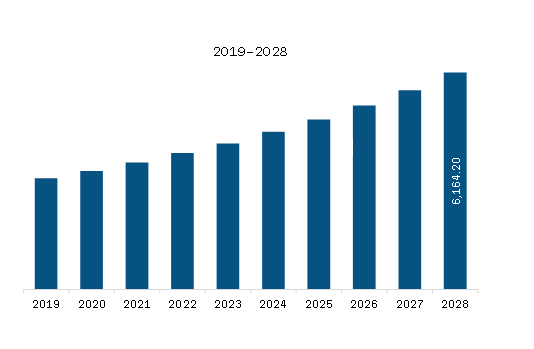
The cosmeceuticals market in MEA is expected to grow from US$ 3,612.99 million in 2021 to US$ 6,164.20 million by 2028; it is estimated to grow at a CAGR of 7.9% from 2021 to 2028.
The COVID-19 pandemic forced consumers to live inside the confines of homes, which enhanced digitalization over every aspect of their lives. People who were previously unwilling to adopt technology into their lives completely rely on digital technology to continue their daily activities. This dependence on technology also increased the exposure to blue light. Blue light is known to have damaging effects on the skin. This allows cosmeceutical brands to provide innovative ingredients to minimize blue light’s damaging impact on the skin. Blue light protection is one of the most anticipated and significant trends that is expected in the future. The customers want to take care of their skin, and cosmeceutical companies are here to help delay the process of skin aging. The market is expected to witness the supply of ingredients such as turmeric and algae in cosmeceutical products.
With the new features and technologies, vendors can attract new customers and expand their footprints in emerging markets. This factor is likely to drive the MEA cosmeceuticals market. The MEA cosmeceuticals market is expected to grow at a good CAGR during the forecast period.
MEA CosmeceuticalsMarket Revenue and Forecast to 2028 (US$ Million)
MEA Cosmeceuticals Market Segmentation
MEA cosmeceuticals market is segmented into active ingredient, distribution channel, product and country. By active ingredient, the cosmeceuticals market is segmented into antioxidants, peptides and proteins, exfoliants, retinoids, botanicals, and others. The antioxidants segment held the largest market share in 2021. The MEA cosmeceuticals market, based on distribution channel, is segmented into supermarket/hypermarket, online retail stores, convenience stores, specialist stores, and other distribution channels. In 2021, the supermarket/hypermarket segment held the largest share of the market. The cosmeceuticals market, by product, is segmented into skin care, hair care, oral care, and others. The skin care segment held the largest share of the market in 2021. Based on country, the MEA cosmeceuticals market is segmented into Saudi Arabia, South Africa, UAE, and the Rest of MEA.
Allergan, Amway Corp., Avon Products Inc., BASF SE, Beiersdorf Global, Croda International Plc, Johnson & Johnson, L'Oreal, Procter & Gamble, and Unilever plc are among the leading companies in the MEA cosmeceuticals market.
Middle East and Africa Cosmeceuticals Market Strategic Insights
Get more information on this report
Middle East and Africa Cosmeceuticals Market Segmentation Analysis
Middle East and Africa Cosmeceuticals Market Report Highlights
Middle East and Africa Cosmeceuticals Report Scope
Report Attribute
Details
Market size in 2021
US$ 3,612.99 Million
Market Size by 2028
US$ 6,164.20 Million
CAGR (2021 - 2028)
7.9%
Historical Data
2019-2020
Forecast period
2022-2028
Segments Covered
By Active Ingredient
Antioxidants
Peptides and Proteins
Exfoliants
Retinoids
Botanicals
By Distribution Channel
Supermarkets/Hypermarkets
Online Retail Stores
Convenience Stores
Specialist Stores
Other Distribution Channels
By Product
Skin Care
Hair Care
Oral Care
Regions and Countries Covered
Middle East and Africa
South Africa, Saudi Arabia, UAE, Rest of Middle East and Africa
Market leaders and key company profiles
Allergan
Amway Corp.
Avon Products Inc.
BASF SE
Beiersdorf Global
Croda International Plc
Johnson & Johnson
L'Oreal
Procter & Gamble
Unilever plc
Get more information on this report
Middle East and Africa Cosmeceuticals Market Country and Regional Insights
Get more information on this report
Identical Market Reports with other Region/Countries
The List of Companies - Middle East and Africa Cosmeceuticals Market
AllerganAmway Corp.Avon Products Inc.BASF SEBeiersdorf GlobalCroda International PlcJohnson & JohnsonL'OrealProcter & GambleUnilever plc
Frequently Asked Questions
How big is the Middle East and Africa Cosmeceuticals Market?
The Middle East and Africa Cosmeceuticals Market is valued at US$ 3,612.99 Million in 2021, it is projected to reach US$ 6,164.20 Million by 2028.
What is the CAGR for Middle East and Africa Cosmeceuticals Market by (2021 - 2028)?
As per our report Middle East and Africa Cosmeceuticals Market, the market size is valued at US$ 3,612.99 Million in 2021, projecting it to reach US$ 6,164.20 Million by 2028. This translates to a CAGR of approximately 7.9% during the forecast period.
What segments are covered in this report?
The Middle East and Africa Cosmeceuticals Market report typically cover these key segments-
Active Ingredient (Antioxidants, Peptides and Proteins, Exfoliants, Retinoids, Botanicals)
Distribution Channel (Supermarkets/Hypermarkets, Online Retail Stores, Convenience Stores, Specialist Stores, Other Distribution Channels)
Product (Skin Care, Hair Care, Oral Care)
What is the historic period, base year, and forecast period taken for Middle East and Africa Cosmeceuticals Market?
The historic period, base year, and forecast period can vary slightly depending on the specific market research report. However, for the Middle East and Africa Cosmeceuticals Market report:
Historic Period : 2019-2020
Base Year : 2021
Forecast Period : 2022-2028
Who are the major players in Middle East and Africa Cosmeceuticals Market?
The Middle East and Africa Cosmeceuticals Market is populated by several key players, each contributing to its growth and innovation. Some of the major players include:
Allergan
Amway Corp.
Avon Products Inc.
BASF SE
Beiersdorf Global
Croda International Plc
Johnson & Johnson
L'Oreal
Procter & Gamble
Unilever plc
Who should buy this report?
The Middle East and Africa Cosmeceuticals Market report is valuable for diverse stakeholders, including:
Investors: Provides insights for investment decisions pertaining to market growth, companies, or industry insights. Helps assess market attractiveness and potential returns.
Industry Players: Offers competitive intelligence, market sizing, and trend analysis to inform strategic planning, product development, and sales strategies.
Suppliers and Manufacturers: Helps understand market demand for components, materials, and services related to concerned industry.
Researchers and Consultants: Provides data and analysis for academic research, consulting projects, and market studies.
Financial Institutions: Helps assess risks and opportunities associated with financing or investing in the concerned market.
Essentially, anyone involved in or considering involvement in the Middle East and Africa Cosmeceuticals Market value chain can benefit from the information contained in a comprehensive market report.





 Get Free Sample For Middle East and Africa Cosmeceuticals Market