Analysis– by Base Oil (Vegetable Oils, Animal Fats, and Others), Application (Gear Oils, Hydraulic Oils, Metalworking Fluids, Greases, and Others), and End Use (Automotive, Industrial, Marine, Agriculture & Forestry, and Others)
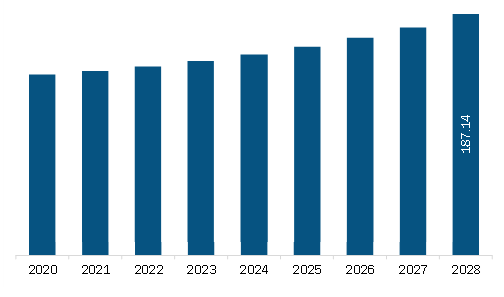
The Middle East & Africa biolubricants market is expected to grow from US$ 33.80 million in 2022 to US$ 38.64 million by 2028. It is estimated to register a CAGR of 2.3% from 2022 to 2028.
Rising Research and Development to Enhance Performance of Biolubricants Drives Middle East & Africa Biolubricants Market
Compared to mineral oils, biolubricants show a significant degree of biodegradability, a lower amount of toxicity, higher viscosity indices, higher flash points, and better adherence to metal; however, they suffer from lower pour points and oxidative stability. The increasing attention toward sustainability and environmental concerns has driven the substitution of mineral oils with biolubricants. Research & development is being done on biolubricants for effective lubrication with superior tribological performance under a wide range of operating conditions and contact geometries. To take advantage of the high viscosities, biodegradability, and flash points, much of the research has attempted to improve the weaknesses of the vegetable oil base, i.e., the thermal and oxidative stabilities through chemical modification or additives. The inherent unsaturation in plant oils makes them perform poorly in extreme temperatures. To overcome this, chemical modification such as epoxidation of the double bonds has been used. Most additives are common in mineral and plant oils. However, due to the toxicity of currently used additives, research is required to develop and use alternate bio-based additives. Sensitive environments such as marine and forestry and the push for safe and sustainable lubricants drive research & development for improved bio-based lubricants. Various manufacturers are launching products made from recovered raw materials, which helps them reduce raw material costs. In October 2019, NextChem, a Maire Tecnimont subsidiary, launched a project with SO.G.I.S. for the recovery of residual fats to produce oleic acid, an intermediate product used for biolubricants production. These biolubricants are suitable to be used in naval transport due to their biodegradability and biocompatibility and suitable to be used in severe environmental conditions, such as in aeronautical systems, due to their fluid dynamic properties at low and very low temperatures. Thus, launching such innovative projects and increased research & development to enhance the performance of biolubricants would boost the Middle East and Africa biolubricants market growth over the coming years.
Middle East & Africa Biolubricants Market Overview
The Middle East & Africa biolubricants market growth is attributed to the high demand for biolubricants from industries such as oil & gas, automotive, and marine. The growing automotive sales in South Africa and Saudi Arabia are creating a significant demand for biolubricants. Biolubricants are used in manufacturing different vehicle components. Further, the strong presence of the oil & gas sector in Middle Eastern countries, such as Saudi Arabia, Iraq, the UAE, Iran, and Kuwait, creates a huge demand for biolubricants. The biolubricants market is also driven by local regulations in the region, which helps reduce carbon emissions by lowering the greenhouse effect. The demand for vehicles made in the Middle East & Africa is growing consistently. These biolubricants offer outstanding performance, increase machine life, and lower maintenance costs. Rising middle-class income, increasing population, and the total increase in passenger vehicle production are among the other factors driving the biolubricants market in the region.
Middle East & Africa Biolubricants Market Revenue and Forecast to 2028 (US$ Million)
Middle East & Africa Biolubricants Market Segmentation
Based on base oil, the Middle East & Africa biolubricants market is segmented into vegetable oils, animal fats, and others. The vegetable oils segment held the largest Middle East & Africa biolubricants market share in 2022.
Based on application, the Middle East & Africa biolubricants market is segmented into gear oils, hydraulic oils, metalworking fluids, greases, and others. The hydraulic oils segment held the largest Middle East & Africa biolubricants market share in 2022.
Based on end use, the Middle East & Africa biolubricants market is segmented into automotive, industrial, marine, agriculture & forestry, and others. The industrial segment held the largest Middle East & Africa biolubricants market share in 2022.
Based on country, the Middle East & Africa biolubricants market is segmented into South Africa, Saudi Arabia, the UAE, and the Rest of Middle East & Africa. Saudi Arabia dominated the Middle East & Africa biolubricants market in 2022.
Carl Bechem GmbH, Fuchs Petrolub SE, Kluber Lubrication GmbH & Co KG, Shell Plc, and TotalEnergies SE are among the leading companies operating in the Middle East & Africa biolubricants market.
Middle East & Africa Biolubricants Market Strategic Insights
Get more information on this report
Middle East & Africa Biolubricants Market Segmentation Analysis
Middle East & Africa Biolubricants Market Report Highlights
Middle East & Africa Biolubricants Report Scope
Report Attribute
Details
Market size in 2022
US$ 33.80 Million
Market Size by 2028
US$ 38.64 Million
CAGR (2022 - 2028)
2.3%
Historical Data
2020-2021
Forecast period
2023-2028
Segments Covered
By Base Oil
Vegetable Oils
Animal Fats
By Application
Gear Oils
Hydraulic Oils
Metalworking Fluids
Greases
By End Use
Automotive
Industrial
Marine
Agriculture & Forestry
Regions and Countries Covered
Middle East and Africa
South Africa, Saudi Arabia, UAE, Rest of Middle East and Africa
Market leaders and key company profiles
Carl Bechem GmbH
Fuchs Petrolub SE
Kluber Lubrication GmbH & Co KG
Shell Plc
TotalEnergies SE
Get more information on this report
Middle East & Africa Biolubricants Market Country and Regional Insights
Get more information on this report
Identical Market Reports with other Region/Countries
The List of Companies - Middle East & Africa Biolubricants Market
Carl Bechem GmbHFuchs Petrolub SEKluber Lubrication GmbH & Co KGShell PlcTotalEnergies SE
Frequently Asked Questions
How big is the Middle East & Africa Biolubricants Market?
The Middle East & Africa Biolubricants Market is valued at US$ 33.80 Million in 2022, it is projected to reach US$ 38.64 Million by 2028.
What is the CAGR for Middle East & Africa Biolubricants Market by (2022 - 2028)?
As per our report Middle East & Africa Biolubricants Market, the market size is valued at US$ 33.80 Million in 2022, projecting it to reach US$ 38.64 Million by 2028. This translates to a CAGR of approximately 2.3% during the forecast period.
What segments are covered in this report?
The Middle East & Africa Biolubricants Market report typically cover these key segments-
End Use (Automotive, Industrial, Marine, Agriculture & Forestry)
What is the historic period, base year, and forecast period taken for Middle East & Africa Biolubricants Market?
The historic period, base year, and forecast period can vary slightly depending on the specific market research report. However, for the Middle East & Africa Biolubricants Market report:
Historic Period : 2020-2021
Base Year : 2022
Forecast Period : 2023-2028
Who are the major players in Middle East & Africa Biolubricants Market?
The Middle East & Africa Biolubricants Market is populated by several key players, each contributing to its growth and innovation. Some of the major players include:
Carl Bechem GmbH
Fuchs Petrolub SE
Kluber Lubrication GmbH & Co KG
Shell Plc
TotalEnergies SE
Who should buy this report?
The Middle East & Africa Biolubricants Market report is valuable for diverse stakeholders, including:
Investors: Provides insights for investment decisions pertaining to market growth, companies, or industry insights. Helps assess market attractiveness and potential returns.
Industry Players: Offers competitive intelligence, market sizing, and trend analysis to inform strategic planning, product development, and sales strategies.
Suppliers and Manufacturers: Helps understand market demand for components, materials, and services related to concerned industry.
Researchers and Consultants: Provides data and analysis for academic research, consulting projects, and market studies.
Financial Institutions: Helps assess risks and opportunities associated with financing or investing in the concerned market.
Essentially, anyone involved in or considering involvement in the Middle East & Africa Biolubricants Market value chain can benefit from the information contained in a comprehensive market report.





 Get Free Sample For Middle East & Africa Biolubricants Market