Analysis By Forging Type (Closed Die Forging and Seamless Rolled Ring Forging), Material Type (Nickel Alloys and Titanium Alloys), and Application (Fan Case, Combustion Chamber Outer Case, Turbine Disc, Rotors, and Others)
No. of Pages:110
Report Code:
TIPRE00028628
Category:
Aerospace and Defense
Middle East and Africa Aircraft Engine Forging Market
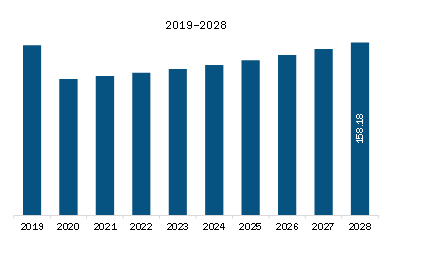
The aircraft engine forging market in the MEA is expected to grow from US$ 127.54 million in 2021 to US$ 158.18 million by 2028; it is estimated to grow at a CAGR of 3.1% from 2021 to 2028.
Although the production and procurement of airplanes are rising substantially with continuous increase in air travel, ~400–600 commercial aircraft units are retired, ruled out (due to age), and disassembled each year, which creates a heap of waste. Such a massive amount of waste includes ~1,000 tonnes of carbon fiber, 1,800 tonnes of alloys, 30,000 tonnes of aluminum, and 600 tonnes of other scrap materials. With rising concerns about the environment, aerospace companies such as Pratt & Whitney, along with government bodies, have identified new ways to replace the existing, newly sourced raw materials for the manufacturing of aerospace parts with recycled and renewable materials. Thus, efforts by various countries for escalating the use of USM are likely to drive the aircraft engine forging market during the forecast period.
The MEA aircraft engine forging market is majorly affected by the disruption in the supply chain. Pertaining to the closure of borders of countries, the supply chain of several components and systems have been disturbed. The demand for advanced aerospace technologies such as aircraft engines and engine components has declined. This has resulted in a loss of business among the aircraft engines and aircraft engine forged components market players offering their products to respective customers in the MEA region. South Africa has few aircraft manufacturers, which produce general aviation piston aircraft. The widespread COVID – 19 virus has led the manufacturers to suspend their operations or operate with a minimal workforce temporarily. This has weakened the demand for engine and engine forged components, thereby hindering the aircraft engine forging market in the country. Additionally, the disruption in the supply chain business owing to the trade ban has also reflected adverse effects on the aircraft engine forging market in the country.
With the new features and technologies, vendors can attract new customers and expand their footprints in emerging markets. This factor is likely to drive the aircraft engine forging market. The MEA aircraft engine forging market is expected to grow at a good CAGR during the forecast period.
MEA Aircraft Engine Forging Market Revenue and Forecast to 2028 (US$ Million)
MEA Aircraft Engine Forging Market Segmentation
MEA Aircraft Engine Forging Market – ByForging Type
Closed Die Forging
Seamless Rolled Ring Forging
MEA Aircraft Engine Forging Market – By Material Type
Nickel Alloy
Titanium Alloy
MEA Aircraft Engine Forging Market – By Application
Fan Case
Combustion Chamber Outer Case
Turbine Disc
Rotors
Others
MEA Aircraft Engine Forging Market- By Country
Saudi Arabia
UAE
South Africa
Rest of MEA
MEA Aircraft Engine Forging Market-Companies Mentioned
Allegheny Technologies Incorporated
Doncasters Group
Farinia Group
LISI Group
Otto Fuchs KG
Precision Castparts Corp.
Safran
VSMPO-AVISHMA Corporation
Middle East and Africa Aircraft Engine Forging Market Strategic Insights
Get more information on this report
Middle East and Africa Aircraft Engine Forging Market Segmentation Analysis
Middle East and Africa Aircraft Engine Forging Market Report Highlights
Middle East and Africa Aircraft Engine Forging Report Scope
Report Attribute
Details
Market size in 2021
US$ 127.54 Million
Market Size by 2028
US$ 158.18 Million
CAGR (2021 - 2028)
3.1%
Historical Data
2019-2020
Forecast period
2022-2028
Segments Covered
By Forging Type
Closed Die Forging
Seamless Rolled Ring Forging
By Material Type
Nickel Alloys
Titanium Alloys
By Application
Fan Case
Combustion Chamber Outer Case
Turbine Disc
Rotors
Regions and Countries Covered
Middle East and Africa
South Africa, Saudi Arabia, UAE, Rest of Middle East and Africa
Market leaders and key company profiles
Allegheny Technologies Incorporated
Doncasters Group
Farinia Group
LISI Group
Otto Fuchs KG
Precision Castparts Corp.
Safran
VSMPO-AVISHMA Corporation
Get more information on this report
Middle East and Africa Aircraft Engine Forging Market Country and Regional Insights
Get more information on this report
Identical Market Reports with other Region/Countries
The List of Companies - Middle East and Africa Aircraft Engine Forging Market
Allegheny Technologies IncorporatedDoncasters GroupFarinia GroupLISI GroupOtto Fuchs KGPrecision Castparts Corp.SafranVSMPO-AVISHMA Corporation
Frequently Asked Questions
How big is the Middle East and Africa Aircraft Engine Forging Market?
The Middle East and Africa Aircraft Engine Forging Market is valued at US$ 127.54 Million in 2021, it is projected to reach US$ 158.18 Million by 2028.
What is the CAGR for Middle East and Africa Aircraft Engine Forging Market by (2021 - 2028)?
As per our report Middle East and Africa Aircraft Engine Forging Market, the market size is valued at US$ 127.54 Million in 2021, projecting it to reach US$ 158.18 Million by 2028. This translates to a CAGR of approximately 3.1% during the forecast period.
What segments are covered in this report?
The Middle East and Africa Aircraft Engine Forging Market report typically cover these key segments-
Forging Type (Closed Die Forging, Seamless Rolled Ring Forging)
What is the historic period, base year, and forecast period taken for Middle East and Africa Aircraft Engine Forging Market?
The historic period, base year, and forecast period can vary slightly depending on the specific market research report. However, for the Middle East and Africa Aircraft Engine Forging Market report:
Historic Period : 2019-2020
Base Year : 2021
Forecast Period : 2022-2028
Who are the major players in Middle East and Africa Aircraft Engine Forging Market?
The Middle East and Africa Aircraft Engine Forging Market is populated by several key players, each contributing to its growth and innovation. Some of the major players include:
Allegheny Technologies Incorporated
Doncasters Group
Farinia Group
LISI Group
Otto Fuchs KG
Precision Castparts Corp.
Safran
VSMPO-AVISHMA Corporation
Who should buy this report?
The Middle East and Africa Aircraft Engine Forging Market report is valuable for diverse stakeholders, including:
Investors: Provides insights for investment decisions pertaining to market growth, companies, or industry insights. Helps assess market attractiveness and potential returns.
Industry Players: Offers competitive intelligence, market sizing, and trend analysis to inform strategic planning, product development, and sales strategies.
Suppliers and Manufacturers: Helps understand market demand for components, materials, and services related to concerned industry.
Researchers and Consultants: Provides data and analysis for academic research, consulting projects, and market studies.
Financial Institutions: Helps assess risks and opportunities associated with financing or investing in the concerned market.
Essentially, anyone involved in or considering involvement in the Middle East and Africa Aircraft Engine Forging Market value chain can benefit from the information contained in a comprehensive market report.




 Get Free Sample For Middle East and Africa Aircraft Engine Forging Market