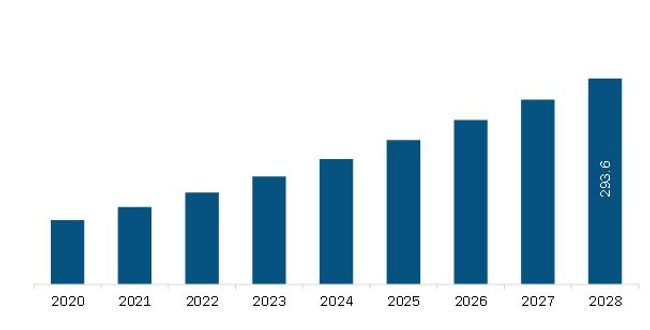
The Middle East & Africa 3D printing medical devices market is expected to reach US$ 293.6 million by 2028 from US$ 109.6 million in 2021. The market is estimated to grow at a CAGR of 15.1% from 2021–2028.
The advancements of the medical 3D printing technology have made significant contributions to the healthcare sector. New tools and therapeutic methods developed through 3D printing can bring new levels of comfort and personalization to treatments. The applications of 3D printing technology also allow doctors to gain a better understanding of complex cases, which can lead to a higher standard of care. Moreover, individualized treatments and high-impact medical applications are likely to become a reality with advancements in 3D printing technologies and materials. The use of 3D printing also brings cost-effectiveness, higher productivity, design and manufacturing democratization, and improved cooperation in therapeutic applications. The freedom to create custom-made medical devices and equipment, including personalized prosthetics and implants, is the main advantage of 3D printers in medical applications. Furthermore, 3D printing can be used to create custom jigs and fixtures for use in operating rooms. Custom-made implants, fixtures, and surgical instruments can help reduce surgery time, improve patient recovery time, and increase surgery or implantation success. These technologies are also expected to allow the personalization of medicine dosage forms, release profiles, and dispensing for each patient in the future.
The adoption of 3D print technology across Africa region has been slow over the last few years, with applications limited to uses cases such as concept modeling and functional prototyping. Given the 3D print market's high responsiveness and agility to fill in medical supply-chain gaps, COVID-19 has likely compelled more businesses in Africa to reconsider their adoption of the technology and make a profound impact on disrupted supply chains. Elective surgeries have declined more rapidly in the Middle East than in Europe and the United States, with some treatments being hit more than others. Bariatric, orthopedic, and plastic surgeries have been particularly severely impacted, whereas trauma and some cardiovascular procedures have fared better.
With the new features and technologies, vendors can attract new customers and expand their footprints in emerging markets. This factor is likely to drive the 3D printing medical devices market. The Middle East & Africa 3D printing medical devices market is expected to grow at a good CAGR during the forecast period.
Middle East & Africa 3D Printing Medical Devices Market Revenue and Forecast to 2028 (US$ Million)
Middle East & Africa 3D Printing Medical Devices Market Segmentation
By Component
Software and Services
Equipment
3D Printers
3D Bioprinters
Materials
Plastics Material
Metal and Metal Alloys
Bioprinting Biomaterials
Wax
Others
By Technology
Laser Beam Melting
Direct Metal Laser Sintering
Selective Laser Sintering
Selective Laser Melting
LaserCusing
Photopolymerization
Stereolithography
Others
Droplet Deposition/Extrusion Based Technologies
Fused Deposition Modelling
Multiphase Solidification
Low Temperature Deposition Manufacturing
Electron Beam melting
By Application
Custom Prosthetics and Implants
Craniomaxillofacial Implants
Custom Dental Prosthetics and Implants
Custom Orthopaedic Implants
Surgical Guides
Dental Guides
Orthopaedic Guides
Craniomaxillofacial Guides
Spinal Guides
Tissue Engineering Products
Bone and Cartilage Scaffolds
Ligaments and Tendons Scaffolds
Surgical Instruments
Surgical Fasteners
Scalpels
Retractors
Hearing Aids
Wearable Medical Devices
Standard Prosthetic and Implants
Others
By End-User
Hospitals and Surgical Centres
Dental and Orthopaedic Centres
Medical Device Companies
Pharmaceutical and Biotechnology Companies
Academic and Research Institutes
Others
By Country
Middle East & Africa
UAE
Saudi Arabia
South Africa
Rest of Middle East & Africa
Companies Mentioned
EOS GmbH Electro Optical Systems
Stratasys Ltd.
3D Systems, Inc.
EnvisionTech, Inc.
Concept Laser Gmbh (General Electric)
SLM Solution Group AG
Middle East and Africa 3D Printing Medical Devices Market Strategic Insights
Get more information on this report
Middle East and Africa 3D Printing Medical Devices Market Segmentation Analysis
Middle East and Africa 3D Printing Medical Devices Market Report Highlights
Middle East and Africa 3D Printing Medical Devices Report Scope
Report Attribute
Details
Market size in 2021
US$ 109.6 Million
Market Size by 2028
US$ 293.6 Million
CAGR (2021 - 2028)
15.1%
Historical Data
2019-2020
Forecast period
2022-2028
Segments Covered
By Component
Software and Services
Equipment
Materials
By Technology
Laser Beam Melting
Photopolymerization
Droplet Deposition/Extrusion Based Technologies
Electron Beam Melting
By Application
Custom Prosthetics and Implants
Surgical Instruments
Hearing Aids
Wearable Medical Devices
Standard Prosthetics and Implants
By End-User
Hospitals and Surgical Centers
Dental and Orthopedic Centers
Medical Device Companies
Pharmaceutical and Biotechnology Companies
Academic and Research Institutes
Regions and Countries Covered
Middle East and Africa
South Africa, Saudi Arabia, UAE, Rest of Middle East and Africa
Market leaders and key company profiles
EOS GmbH Electro Optical Systems
Stratasys Ltd.
3D Systems, Inc.
EnvisionTech, Inc.
Concept Laser Gmbh (General Electric)
SLM Solution Group AG
Get more information on this report
Middle East and Africa 3D Printing Medical Devices Market Country and Regional Insights
Get more information on this report
Identical Market Reports with other Region/Countries
The List of Companies - Middle East and Africa 3D Printing Medical Devices Market
EOS GmbH Electro Optical SystemsStratasys Ltd.3D Systems, Inc.EnvisionTech, Inc.Concept Laser Gmbh (General Electric)SLM Solution Group AG
Frequently Asked Questions
How big is the Middle East and Africa 3D Printing Medical Devices Market?
The Middle East and Africa 3D Printing Medical Devices Market is valued at US$ 109.6 Million in 2021, it is projected to reach US$ 293.6 Million by 2028.
What is the CAGR for Middle East and Africa 3D Printing Medical Devices Market by (2021 - 2028)?
As per our report Middle East and Africa 3D Printing Medical Devices Market, the market size is valued at US$ 109.6 Million in 2021, projecting it to reach US$ 293.6 Million by 2028. This translates to a CAGR of approximately 15.1% during the forecast period.
What segments are covered in this report?
The Middle East and Africa 3D Printing Medical Devices Market report typically cover these key segments-
Component (Software and Services, Equipment, Materials)
Technology (Laser Beam Melting, Photopolymerization, Droplet Deposition/Extrusion Based Technologies, Electron Beam Melting)
Application (Custom Prosthetics and Implants, Surgical Instruments, Hearing Aids, Wearable Medical Devices, Standard Prosthetics and Implants)
End-User (Hospitals and Surgical Centers, Dental and Orthopedic Centers, Medical Device Companies, Pharmaceutical and Biotechnology Companies, Academic and Research Institutes)
What is the historic period, base year, and forecast period taken for Middle East and Africa 3D Printing Medical Devices Market?
The historic period, base year, and forecast period can vary slightly depending on the specific market research report. However, for the Middle East and Africa 3D Printing Medical Devices Market report:
Historic Period : 2019-2020
Base Year : 2021
Forecast Period : 2022-2028
Who are the major players in Middle East and Africa 3D Printing Medical Devices Market?
The Middle East and Africa 3D Printing Medical Devices Market is populated by several key players, each contributing to its growth and innovation. Some of the major players include:
EOS GmbH Electro Optical Systems
Stratasys Ltd.
3D Systems, Inc.
EnvisionTech, Inc.
Concept Laser Gmbh (General Electric)
SLM Solution Group AG
Who should buy this report?
The Middle East and Africa 3D Printing Medical Devices Market report is valuable for diverse stakeholders, including:
Investors: Provides insights for investment decisions pertaining to market growth, companies, or industry insights. Helps assess market attractiveness and potential returns.
Industry Players: Offers competitive intelligence, market sizing, and trend analysis to inform strategic planning, product development, and sales strategies.
Suppliers and Manufacturers: Helps understand market demand for components, materials, and services related to concerned industry.
Researchers and Consultants: Provides data and analysis for academic research, consulting projects, and market studies.
Financial Institutions: Helps assess risks and opportunities associated with financing or investing in the concerned market.
Essentially, anyone involved in or considering involvement in the Middle East and Africa 3D Printing Medical Devices Market value chain can benefit from the information contained in a comprehensive market report.




 Get Free Sample For Middle East and Africa 3D Printing Medical Devices Market