Metro Rail Infrastructure Market Regional Highlights
North America Metro Rail Infrastructure Market
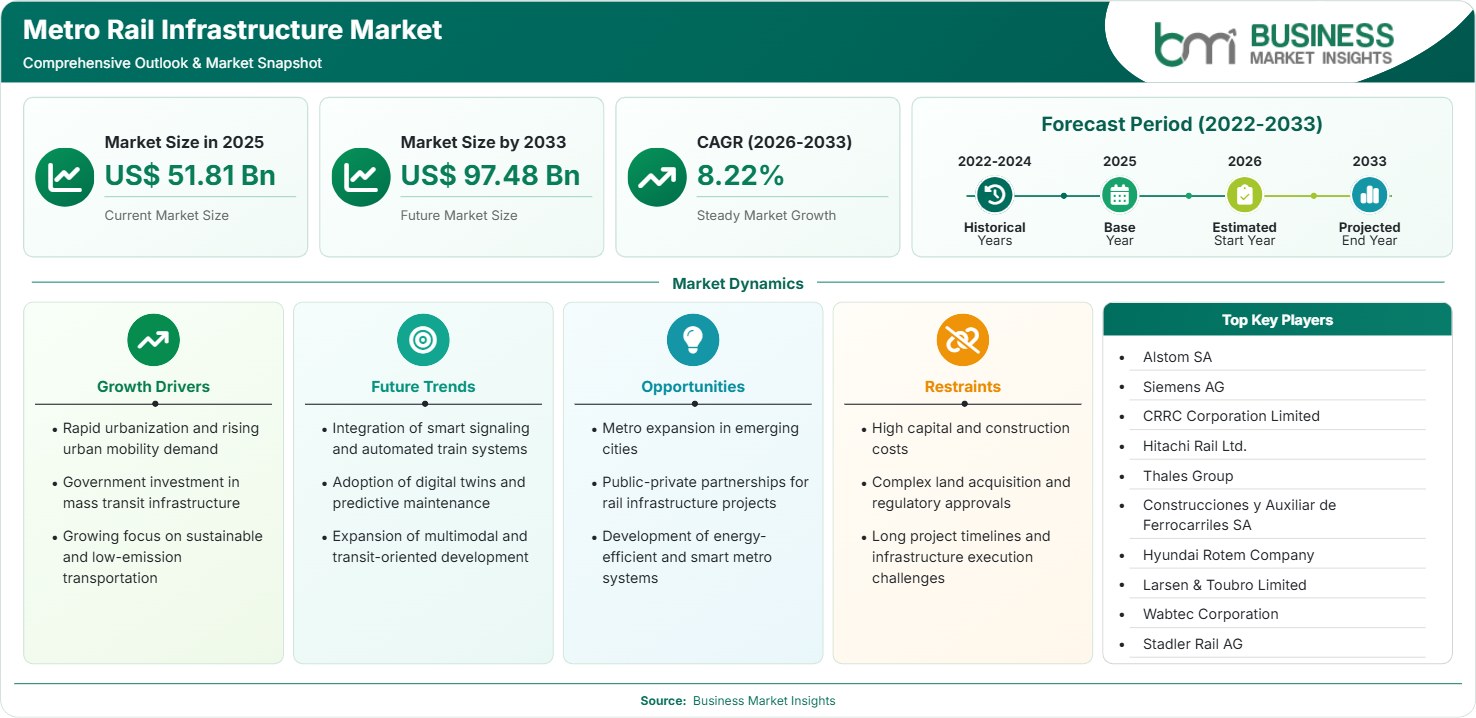
North America Metro Rail Infrastructure Market held 35%–39% share in 2025 and is projected to grow at a 7.8%–8.5% CAGR from 2026–2033. Metro networks matured through the process of modernization rather than new development. Aging infrastructure, accessibility, replacement of signaling systems, station upgrading, resilience spending, and rolling stock renewal justify continued acquisition.
- Network modernization is driving procurement of signaling, traction power, communications, station equipment, and fleet upgrades as operators seek higher reliability without completely rebuilding existing corridors.
- Automation investments are expanding beyond new lines into brownfield modernization, creating opportunities for suppliers capable of integrating advanced train control with legacy infrastructure and operational constraints.
- Infrastructure resilience is becoming commercially important as metropolitan agencies address flooding, extreme weather, power interruptions, cybersecurity exposure, and aging structures through targeted capital programs.
- Station accessibility and passenger experience improvements support spending on platform systems, elevators, communications, ticketing, security, passenger information, and energy efficient building infrastructure.
US Metro Rail Infrastructure Market
The US Metro Rail Infrastructure Market accounted for approximately 70%–74% of North American revenue in 2025, with a projected 7.6%–8.3% CAGR through 2033. The investments are primarily made in metropolitan transit authorities that have older infrastructure and high demands from customers. Funding from the government is made available for making capital improvements, while the cities invest in extending routes, increasing capacity, improving accessibility and replacing the fleet. Procurement processes favor suppliers that manufacture products locally and have an excellent safety record.
- Major metropolitan systems are prioritizing state of good repair programs, creating steady demand for rehabilitation, signaling renewal, power modernization, station improvements, and replacement of obsolete equipment.
- Domestic manufacturing requirements can influence supplier selection, encouraging global companies to establish local production, partnerships, assembly operations, and supplier ecosystems for transit equipment.
- Digital transformation is increasing demand for condition monitoring, cybersecurity, passenger information, communications, automated inspection, and predictive maintenance across established metro networks.
Europe Metro Rail Infrastructure Market
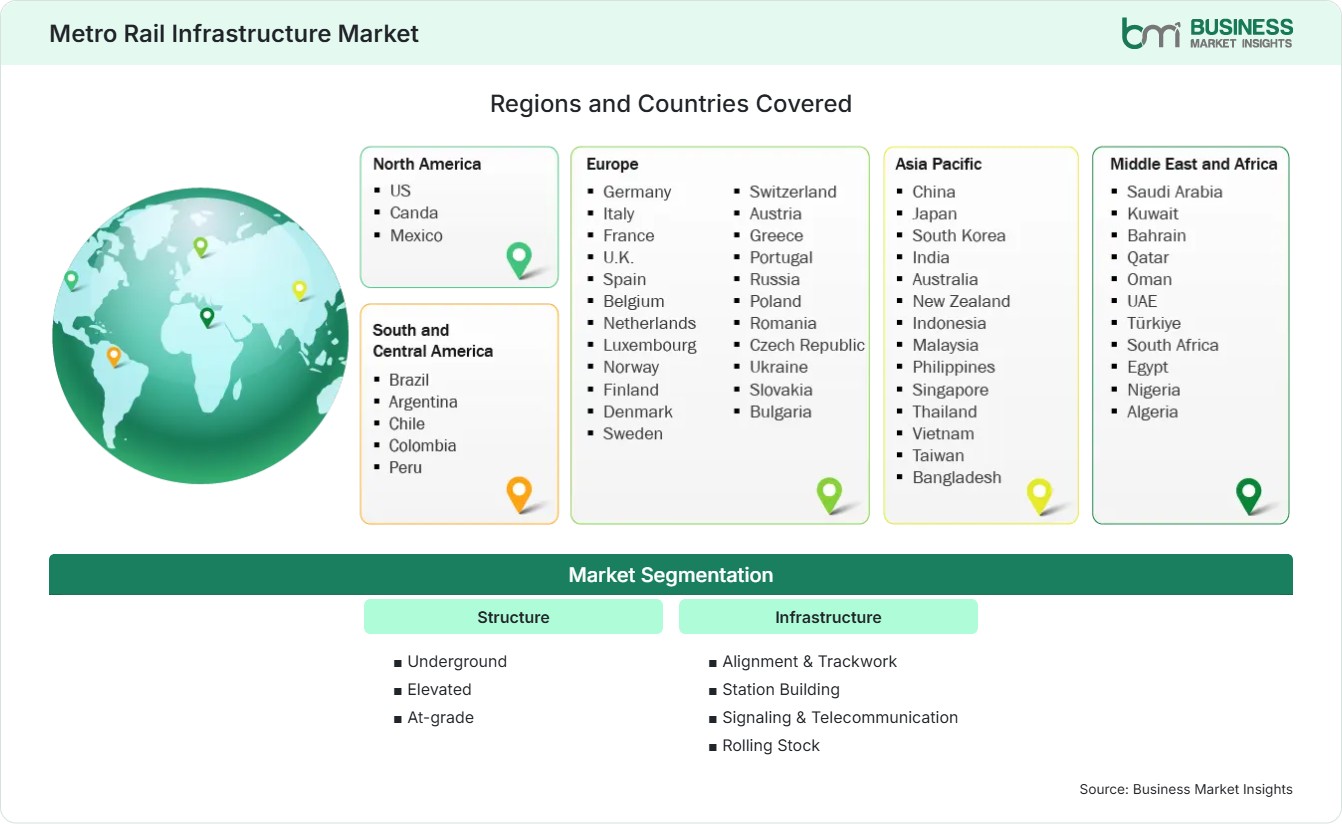
Europe Metro Rail Infrastructure Market held 26%–30% share in 2025 and is projected to grow at a 7.4%–8.1% CAGR during 2026–2033. The region offers mature urban transport infrastructure in combination with targeted new construction and modernization. Markets in Germany, France, Spain, Italy, and the United Kingdom remain strong, whereas cities in Eastern Europe present possibilities for further growth. Automation, energy efficiency, interoperability, accessibility, and digital signaling are key areas of procurement.
- Germany remains a leading market for signaling, rolling stock modernization, station upgrades, and integrated infrastructure as cities pursue capacity expansion and improved network reliability.
- France combines established metro networks with automation leadership, creating demand for advanced signaling, driverless operations, rolling stock upgrades, station modernization, and digital control technologies.
- Spain and Italy provide opportunities through network extensions, station improvements, electrification, and modernization programs, while high-growth projects increasingly favor integrated engineering and technology packages.
- The United Kingdom continues investing in major metropolitan rail infrastructure, emphasizing digital signaling, accessibility, fleet modernization, capacity enhancement, and asset reliability across complex urban networks.
Asia Pacific Metro Rail Infrastructure Market
Asia Pacific Metro Rail Infrastructure Market represented 28%–33% share in 2025 and is projected to expand at a 9.1%–9.8% CAGR through 2033. China continues to be the largest regional deployment base; however, India, Japan, South Korea, Indonesia, and Southeast Asia remain reliable sources of investment pipelines. Urbanization, decongestion goals, public transportation policy, and massive infrastructure budgets facilitate corridor development.
- China combines extensive metro coverage with continued automation, fleet renewal, network extensions, energy efficiency, and intelligent operations, sustaining demand across rolling stock and infrastructure systems.
- India is developing multiple metro corridors across major cities, supporting opportunities in civil construction, stations, signaling, traction systems, rolling stock, communications, and integrated project management.
- Japan represents a mature technology market where automation, safety, energy efficiency, predictive maintenance, and renewal of complex urban infrastructure remain central investment priorities.
- Southeast Asia offers high growth potential through projects in Indonesia, Thailand, Vietnam, Malaysia, and the Philippines as governments address congestion and strengthen mass transit connectivity.
Rest of World Metro Rail Infrastructure Market
Rest of World Metro Rail Infrastructure Market held approximately 9%–13% share in 2025 and is projected to grow at a CAGR of 8.0%–8.8% during 2026–2033. South and Central America are progressing in metro investments by developing new extensions, urban mobility plans, and by modernizing existing networks. There are many opportunities in countries like Brazil, Mexico, Colombia, Chile, and Peru, where high-density travel and population concentration can make high-capacity transit feasible. Countries like Saudi Arabia, the UAE, and Egypt, as well as some cities in Africa, are focusing on developing urban rail infrastructure projects.
- Brazil and Mexico provide important regional opportunities through metro modernization, extensions, signaling upgrades, station rehabilitation, and integrated transit planning linked with rapidly growing metropolitan areas.
- Colombia, Chile, and Peru are expanding urban rail capabilities as governments seek alternatives to road congestion and develop higher capacity connections between dense residential and commercial districts.
- Saudi Arabia and the United Arab Emirates are investing in advanced mobility infrastructure, creating demand for automated operations, integrated stations, digital signaling, and premium passenger services.
- Egypt represents an important African market where metro, monorail, and urban rail development is creating opportunities for international technology providers and engineering contractors.