
Medical Electronics Market Outlook: Size, Share, Trends, Growth Analysis, Competitive Landscape & Forecast, 2026-2033

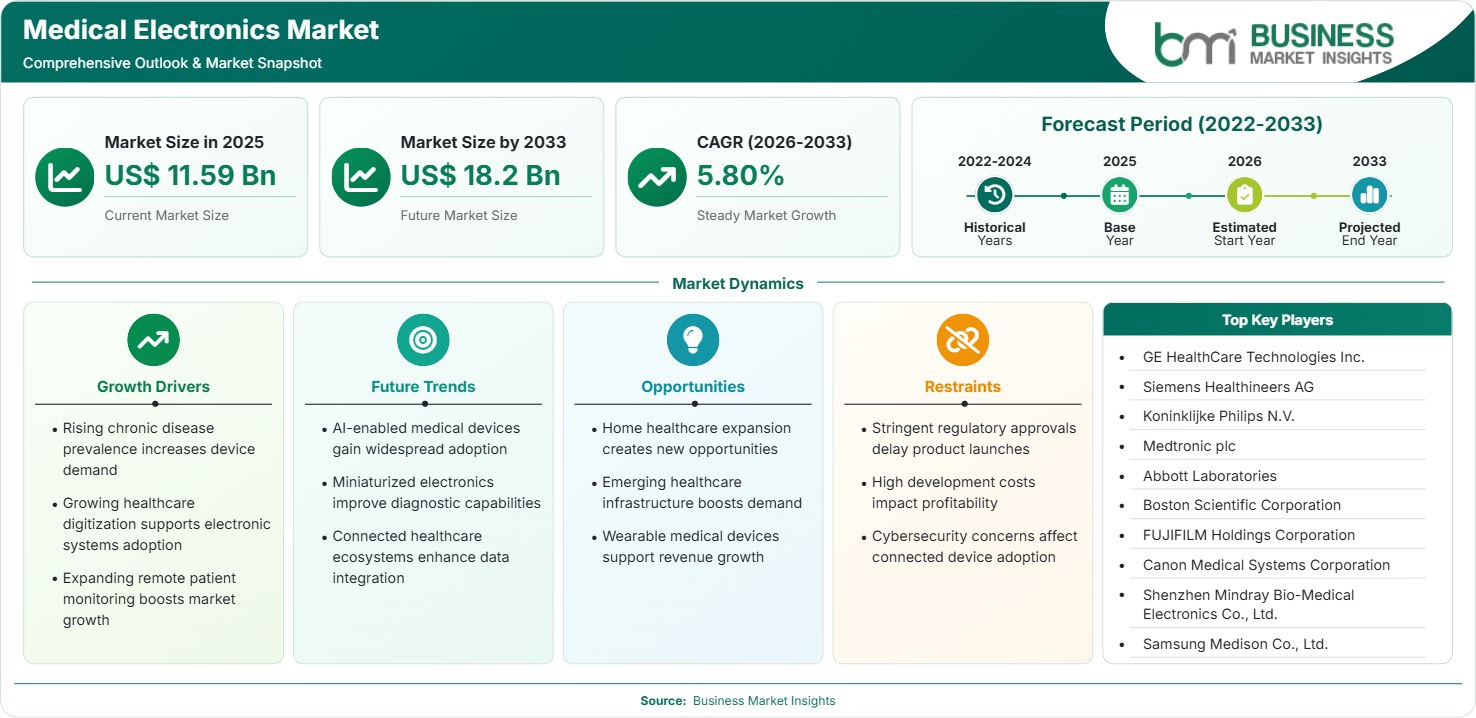
The Medical Electronics Market size was valued at US$ 11.59 Billion in 2025 and is projected to reach US$ 18.2 Billion by 2033, growing at a CAGR of 5.8% during 2026–2033. Growth is supported by rising chronic disease incidence, AI-enabled diagnostics, remote monitoring adoption, healthcare digitization, point-of-care technologies, aging populations, and investments in precision medicine infrastructure.

Report Coverage
  • Product Type: Diagnostic Imaging Devices , Patient Monitoring Devices , Therapeutic Devices
  • Component: Sensors, Microprocessors/Microcontrollers, Memory Devices, Others
  • End User: Hospitals & ASCs, Specialty Clinics, Diagnostic Laboratories, Others
US$ 11.59 Bn Market size in 2025
US$ 18.2 Bn Market Size by 2033
5.80% CAGR, 2026 - 2033
2026-2033 Forecast Period

AI Overview

Medical Electronics Market Summary

  • North America Region: Holds a market share of 36%–39% in 2025, growing at a CAGR of 5.1%–5.6% during 2026–2033. Demand is supported by hospital modernization, AI-assisted diagnostics, connected care platforms, advanced reimbursement models, rising imaging volumes, digital therapeutics deployment, precision medicine initiatives, cybersecurity upgrades, and strong research funding. The U.S. market benefits from extensive healthcare technology adoption and is projected to expand at a CAGR of 5.2%–5.7%.
  • Fastest Growing Region: Asia Pacific holds a 28%–31% share in 2025 and advances at 6.8%–7.4% CAGR. Expansion is driven by healthcare infrastructure investments, domestic manufacturing support, expanding diagnostics access, rising chronic disease burden, telehealth penetration, urbanization, stronger insurance coverage, and public-private healthcare development programs.
  • Leading Segment: Diagnostic Imaging Devices account for 43%–46% share in 2025 and grow at 5.4%–5.9% CAGR. Growth reflects increasing imaging utilization, oncology screening demand, AI-enhanced image interpretation, replacement of aging equipment, radiology workflow optimization, and demand for high-resolution diagnostic systems.
  • High Growth Segment: Patient Monitoring Devices represent 27%–30% share in 2025 and expand at 6.5%–7.1% CAGR. Adoption is supported by remote care models, chronic disease management programs, connected healthcare ecosystems, wearable monitoring integration, home-care migration, and continuous patient surveillance requirements.
  • Key Market Opportunity: Expansion of AI-integrated imaging, portable diagnostics, cloud-based monitoring, semiconductor miniaturization, predictive analytics, emerging-market healthcare investment, and decentralized care delivery is creating substantial commercialization opportunities across healthcare ecosystems globally.
  • Major Market Players: GE HealthCare Technologies Inc., Siemens Healthineers AG, Koninklijke Philips N.V., Medtronic plc, Abbott Laboratories, Boston Scientific Corporation, FUJIFILM Holdings Corporation, Canon Medical Systems Corporation, Shenzhen Mindray Bio-Medical Electronics Co., Ltd., Samsung Medison Co., Ltd.
Strategic Insights

Medical Electronics Market: Strategic Insights

Medical Electronics Market Strategic Framework
FREE PDF
Request your free sample
Request free sample
Stakeholder View

Key Takeaways

  • The value chain increasingly integrates semiconductor suppliers, software developers, cloud service providers, and medical device manufacturers, creating stronger interoperability requirements and collaborative innovation models.
  • Remote patient monitoring and decentralized diagnostics offer the highest upside as healthcare systems seek lower-cost care delivery with continuous patient engagement.
  • Product development priorities are shifting toward AI-enabled interpretation, predictive maintenance, device connectivity, and advanced sensor technologies capable of supporting data-driven clinical decisions.
  • Asia Pacific presents the strongest investment case owing to healthcare infrastructure spending, manufacturing localization strategies, and rapidly expanding patient populations.
  • Strategic acquisitions increasingly target digital health platforms, imaging software, analytics capabilities, and connected-care technologies to strengthen competitive differentiation.
  • Cybersecurity and regulatory compliance are emerging as critical competitive factors influencing procurement decisions among large healthcare institutions.
Geographic Outlook

Medical Electronics Market Regional Highlights

North America Medical Electronics Market

North America accounted for 36%–39% of the Medical Electronics Market share in 2025 and is expected to register a CAGR of 5.1%–5.6% through 2033. Strong healthcare spending, rapid incorporation of AI-enabled clinical tools, and extensive installed imaging infrastructure sustain regional leadership. Demand is supported by replacement cycles for advanced diagnostic equipment, digital hospital initiatives, expanding chronic care programs, and high adoption of connected monitoring systems. Research investments and regulatory pathways supporting innovative healthcare technologies further strengthen regional competitiveness.

  • Large integrated health systems continue investing in interoperable diagnostic and monitoring ecosystems.
  • AI-assisted imaging workflows improve productivity and support radiologist efficiency.
  • Growth in outpatient care expands demand for compact and mobile electronics.
  • Semiconductor innovation improves performance and energy efficiency of clinical devices.

US Medical Electronics Market

The United States represented 81%–85% of the regional market in 2025 and is projected to grow at 5.2%–5.7% CAGR. Strong reimbursement coverage, advanced healthcare infrastructure, and rapid technology commercialization support device adoption. Hospitals continue investing in imaging modernization, patient monitoring upgrades, and connected-care platforms to improve outcomes and operational efficiency.

  • Academic medical centers remain leading adopters of innovative electronic systems.
  • Remote monitoring reimbursement expansion supports wider deployment.
  • Increasing imaging volumes stimulate replacement demand for advanced scanners.
  • Software-enabled devices gain traction across care delivery networks.

Europe Medical Electronics Market

Europe retained a share of 27% to 30% and is projected to grow at a CAGR of 5.0% to 5.5%. Germany accounts for the highest regional revenue due to advanced medical technology manufacturing, with Eastern Europe providing rapid growth prospects. The growth would be driven by healthcare digitization, an aging population, and upgrades in medical imaging.

  • Germany remains the leading country with strong imaging equipment deployment.
  • Spain and Poland demonstrate above-regional-average adoption momentum.
  • Regulatory emphasis on patient safety supports premium technology adoption.
  • Digital health investments increase demand for connected monitoring platforms.

Asia Pacific Medical Electronics Market

The Asia Pacific region accounted for 28%-31% in 2025 and will maintain the fastest CAGR of 6.8%-7.4%. China continues to hold the largest Medical Electronics market share, while India and Southeast Asian nations continue to grow at an accelerated pace. The development of healthcare infrastructure, incentives for domestic manufacturing, rising incomes, and increased availability of diagnostics continue to fuel the equipment market.

  • China leads regional demand through extensive healthcare investments.
  • India records some of the fastest growth supported by hospital expansion.
  • Local manufacturing initiatives improve supply-chain resilience.
  • Demand for affordable diagnostic solutions accelerates market penetration.
  • Telehealth integration supports monitoring device adoption.

Rest of World Medical Electronics Market

Rest of World accounted for an 8%–11% share in 2025 and is projected to grow at a 5.9%–6.4% CAGR. Latin America benefits from expanding private healthcare investment, while the Middle East increasingly deploys advanced hospital technologies. Saudi Arabia and the UAE lead healthcare modernization initiatives, whereas Brazil remains the largest Latin American revenue contributor.

  • Gulf countries prioritize smart hospitals and digital healthcare ecosystems.
  • Brazil benefits from growing diagnostic infrastructure investments.
  • Private healthcare networks support imaging equipment procurement.
  • International partnerships increase technology transfer and training.
  • Healthcare access initiatives expand demand for portable monitoring systems.
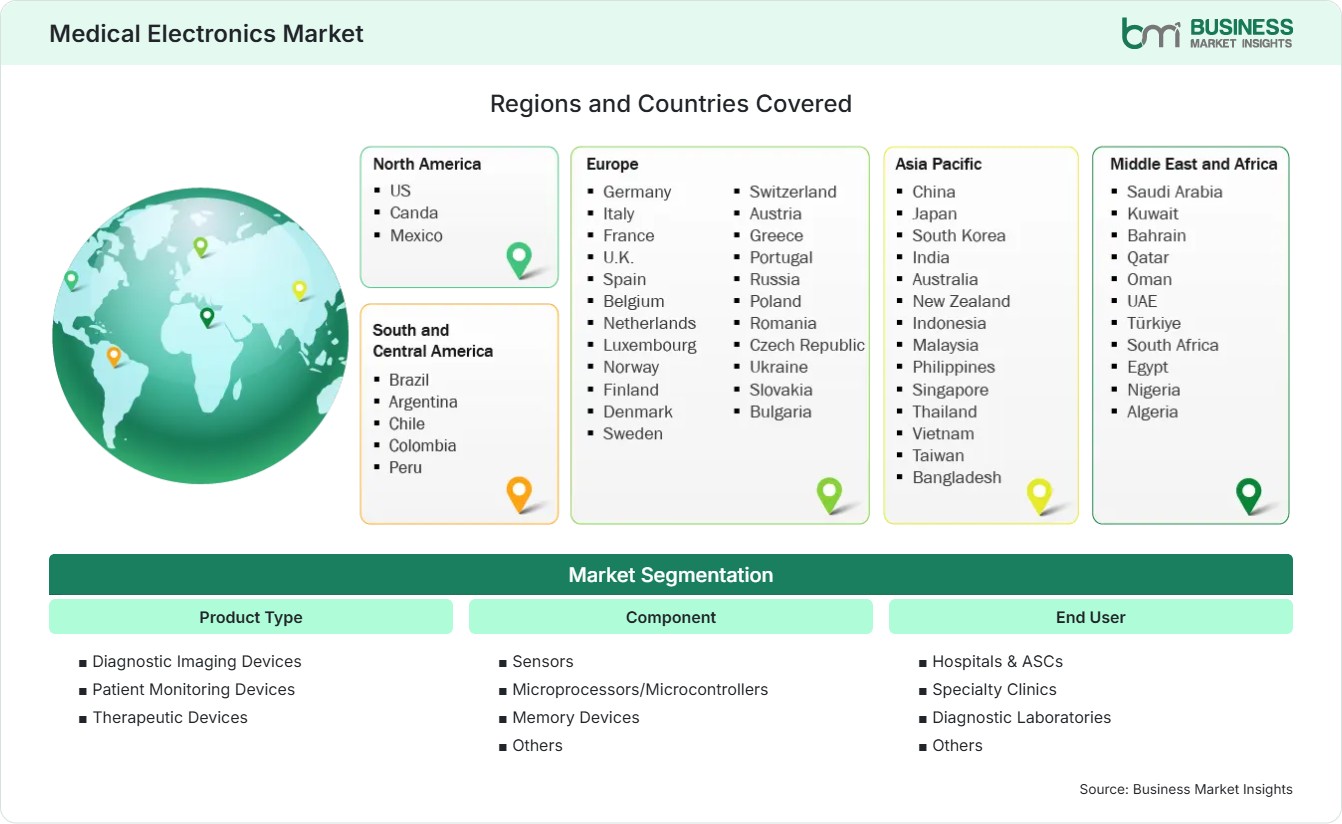
Global Market Geography
FREE PDF
Request your free sample
Request free sample
Segment Analysis

Medical Electronics Market Segmentation

Product Type

The Product Type is estimated to achieve a market share of 43% - 46% in 2025 and is forecast to grow at a CAGR of 5.8% - 6.2%. The growth drivers include an increase in diagnostic procedures, a rise in chronic disease cases, the expansion of outpatient services, and technological advancements. The Medical Electronics Market scope has continued to expand through AI-enabled imaging, connected monitoring systems, and therapeutic electronics.

  • MRI: High-resolution diagnostic capabilities and growing neurological and oncology applications continue supporting adoption across major healthcare institutions.
  • X-ray: Digital radiography upgrades and demand for rapid diagnostic imaging strengthen utilization across hospitals and outpatient settings.
  • CT: Advanced visualization capabilities support emergency medicine, cardiovascular imaging, and oncology diagnostics applications.
  • IVD Analyzers: Laboratory automation and growing testing volumes increase reliance on advanced analyzers for diagnostic efficiency.
  • Blood Glucose Monitors: Rising diabetes prevalence and home-based monitoring requirements support widespread adoption.
  • Cardiac Monitors: Demand increases through remote cardiac surveillance programs and chronic disease management strategies.
  • Hemodynamic Monitors: Critical care environments continue utilizing advanced monitoring for real-time patient assessment.
  • Surgical & Operating Room Electronics: Growing procedural volumes and minimally invasive surgery adoption stimulate investments.
  • Life Support Devices: Intensive care demand and emergency preparedness initiatives support deployment globally.

Component

The Components segment accounted for 31%-34% of the total in 2025 and is expected to grow at a CAGR of 6.1%-6.6%. The Medical Electronics Market Trends show that technological advancements in semiconductors, sensing devices, and power-efficient processors are improving performance.

  • Sensors: Enable real-time physiological monitoring and support AI-driven clinical decision-making.
  • Microprocessors/Microcontrollers: Deliver computing power required for device intelligence and connectivity.
  • Memory Devices: Facilitate secure storage of clinical information and imaging datasets.

End User

End-user demand remains highly focused on the hospital market, even as decentralized healthcare delivery continues to grow. The sector accounted for 35%-38% of the market and is expected to witness a CAGR of 5.7%-6.1% as healthcare systems enhance diagnostic and monitoring capabilities.

  • Hospitals & ASCs: Major purchasers due to broad utilization across imaging, monitoring, and therapeutic applications.
  • Specialty Clinics: Adoption rises with expansion of focused treatment and diagnostic centers.
  • Diagnostic Laboratories: Automation strategies and increasing testing volumes support equipment investments.
Market Forces

Medical Electronics Market Dynamics

Key Market Drivers

Rising Burden of Chronic Diseases

WHO assessments reveal that noncommunicable diseases are responsible for the majority of deaths across the globe, leading to an increased need for technologies related to diagnostics and monitoring as well as therapies. The rise in incidences of diabetes, heart-related diseases, and cancers is directly responsible for increasing healthcare usage and technology usage. Medical facilities need state-of-the-art electronic devices that can be continuously monitored and facilitate early disease detection. Such trends result in an increased uptake of glucose-monitoring devices, cardiac-monitoring devices, imaging devices, and even technologies that make healthcare more connected.

Accelerating Digital Healthcare Transformation

The healthcare industry is integrating connected devices, cloud technology, and software driven by artificial intelligence into its clinical processes. Digital transformation will enable greater efficiency, improved access to information, and more precise treatment. Medical electronics are essential components of critical infrastructure and play important roles in patient prediction and remote management. Interoperability and EHR integration initiatives support the use of advanced technology. Health systems desire solutions that can generate clinical intelligence while also streamlining workflows.

Advancements in Imaging and Semiconductor Technologies

Improvements in imaging resolution, processing speed, energy efficiency, and miniaturization enhance device capabilities. The use of sophisticated sensors and microprocessors increases diagnostic precision while providing portability. Healthcare professionals are moving towards adopting technologies that combine hardware capabilities with intelligent software features. Manufacturers spend considerable time on R&D to improve image quality, automation, and maintenance.

Key Market Opportunities

Expansion of Remote Patient Monitoring Ecosystems

Healthcare systems are more oriented towards providing care at home and constant patient monitoring. The use of remote monitoring technologies reduces hospitals' workload while improving patient treatment and long-term disease management. The demand for wearables, cardiac monitoring equipment, and data management solutions will provide additional revenue. There will be increasing demand for scalable solutions that help take preemptive measures. According to the Medical Electronics Market Forecasts, this pattern will persist, creating opportunities for companies that manufacture medical devices, software, and components.

AI-Driven Diagnostic Decision Support

The emergence of artificial intelligence is revolutionizing healthcare diagnostics by providing efficient image-processing capabilities and automating anomaly detection. In light of the current staff shortage and rising patient numbers at healthcare organizations, the deployment of AI-based solutions is becoming an effective way to increase productivity. Such tools will enable healthcare professionals to make faster, better decisions while minimizing the burden of administrative tasks. The primary applications include medical imaging, pathology, and laboratory diagnostics, as automation provides great value in these areas. Continued advancements in algorithms, expanding clinical validation, and growing regulatory approvals are expected to drive long-term commercialization and adoption.

Emerging Market Healthcare Infrastructure Development

The development of healthcare infrastructure in developing countries creates significant business opportunities for medical technology companies. The governments of Asia, Latin America, and the Middle East are making significant investments in hospital construction, diagnostic laboratories, and specialized healthcare facilities due to increased demand for patient care. Higher insurance penetration, better access to healthcare services, and increased healthcare spending contribute to the use of cutting-edge diagnostic and monitoring devices. Moreover, localization programs create favorable conditions for business growth by fostering manufacturing collaborations and technology transfer in the region.

Market Restraints and Challenges

High Regulatory Compliance Costs

Factor: Medical devices must comply with stringent regulatory frameworks governing product safety, cybersecurity, clinical validation, software performance, and quality management systems. Impact: Compliance requirements often extend development timelines, increase certification expenses, and create barriers to market entry. Manufacturers must invest heavily in testing, technical documentation, clinical evaluations, and post-market surveillance programs. Regulatory differences across regions further complicate global expansion strategies and product standardization efforts. Frequent updates to data privacy and cybersecurity regulations require continuous monitoring and system upgrades, reducing operational flexibility and potentially delaying the commercial launch of innovative healthcare technologies.

Supply Chain and Component Availability Risks

Factor: Medical electronics depend on highly specialized semiconductors, sensors, microcontrollers, and precision-engineered components sourced through complex international supply networks. Impact: Supply disruptions can result in longer lead times, higher procurement costs, and production delays that affect equipment availability. Geopolitical uncertainties, transportation bottlenecks, and supplier concentration in specific regions increase vulnerability to shortages. Healthcare organizations may defer purchasing decisions when delivery schedules become unpredictable, affecting revenue generation for manufacturers. Although companies are pursuing supplier diversification, regional sourcing, and inventory optimization strategies, component availability remains a critical challenge that can influence product deployment and market competitiveness.

Company Analysis

Competitive Landscape

The competitive environment is characterized by technological innovation, digital integration, and strategic partnerships. This Medical Electronics Market analysis highlights leading participants shaping industry development.

Company Name

Overview

Products and Services relevant to this market

GE HealthCare Technologies Inc.

Global healthcare technology company focused on imaging and digital care solutions.

MRI, CT, X-ray systems, monitoring solutions, healthcare software.

Siemens Healthineers AG

Major diagnostics and imaging technology provider with global reach.

Imaging equipment, laboratory diagnostics, AI-enabled healthcare systems.

Koninklijke Philips N.V.

Healthcare technology specialist emphasizing connected care.

Patient monitoring, imaging, diagnostic informatics, telehealth solutions.

Medtronic plc

Medical technology company with extensive therapeutic device portfolio.

Life support technologies, monitoring systems, surgical electronics.

Abbott Laboratories

Diversified healthcare company with diagnostics expertise.

Glucose monitoring, diagnostics platforms, cardiovascular monitoring devices.

Boston Scientific Corporation

Provider of minimally invasive medical technologies.

Therapeutic electronics, monitoring technologies, interventional systems.

FUJIFILM Holdings Corporation

Imaging and healthcare technology company with global presence.

Diagnostic imaging equipment and healthcare information systems.

Canon Medical Systems Corporation

Advanced diagnostic imaging solution provider.

CT, MRI, ultrasound, X-ray technologies.

Shenzhen Mindray Bio-Medical Electronics Co., Ltd.

Leading manufacturer of patient monitoring and diagnostics products.

Monitoring devices, imaging systems, laboratory analyzers.

Samsung Medison Co., Ltd.

Medical imaging specialist focused on ultrasound technologies.

Diagnostic imaging and digital healthcare solutions.

Trust & Transparency

Research Methodology

The market analysis combines proprietary research with secondary data from government agencies, company disclosures, regulatory filings, industry databases and expert interviews. Market estimates are validated through data triangulation, cross-market benchmarking and analyst review.

View Full Research Methodology

Questions Answered

Frequently Asked Questions

What does the Medical Electronics Market Report typically evaluate?

A comprehensive Market Report assesses market size, competitive positioning, technology developments, segmentation trends, regional demand patterns, investment opportunities, and regulatory influences.

How is artificial intelligence influencing industry development?

AI improves diagnostic accuracy, image interpretation speed, workflow automation, predictive maintenance, and decision support, increasing the value delivered by electronic healthcare systems.

What role do semiconductors play in healthcare electronics?

Semiconductors enable data processing, sensing, connectivity, imaging performance, power management, and AI functionality, making them fundamental components in modern healthcare equipment.

Which region offers the strongest future expansion potential?

Asia Pacific presents the strongest expansion potential due to healthcare infrastructure investment, rising incomes, broader insurance access, and domestic medical technology manufacturing initiatives.

Which product category generates the highest revenue within the industry?

Diagnostic imaging devices generate the largest revenue contribution because hospitals prioritize imaging for diagnosis, treatment planning, and disease screening across numerous clinical specialties.

Access the Full Medical Electronics Market Report

Get segment-level forecasts, regional estimates, competitive benchmarking, company profiles and downloadable Excel datasets.

Access the full Medical Electronics Market Report
350 pages PDF & Excel | 2026-08-31