Market Summary
Executive Summary and Global Market Analysis
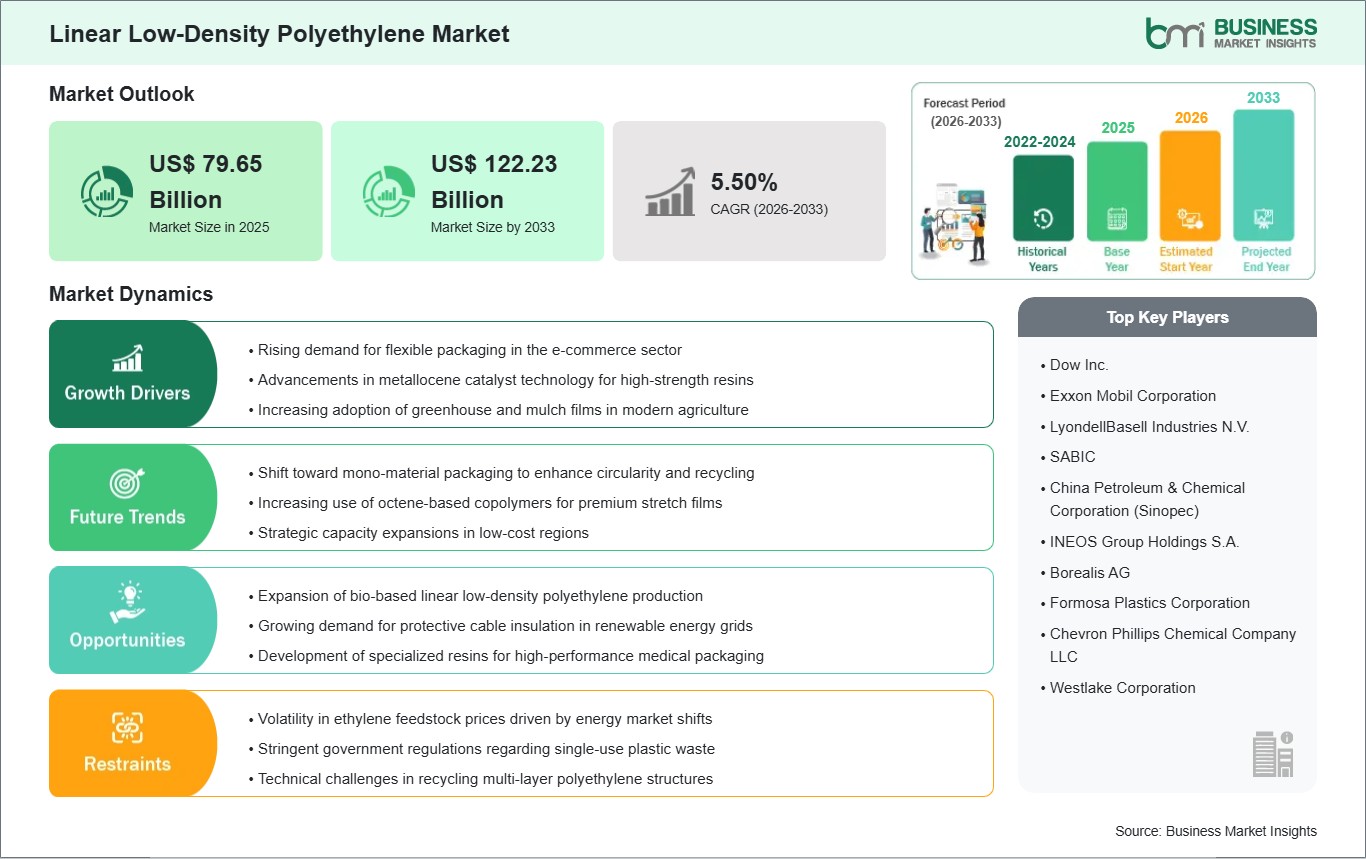
The linear low-density polyethylene market is currently dominated by its role in enabling international trade and food security. The material, being highly versatile in nature, acts as the backbone for the flexible packaging industry, which is expanding in response to urbanization and the growth of the e-commerce world. The linear low-density polyethylene market is dominated by gas-phase production processes, which have the scale and flexibility required to meet various industrial needs. Though films dominate the linear low-density polyethylene market, its unique balance of flexibility and resistance to environmental stress cracking has helped it penetrate the construction, automotive, and agricultural industries.
This has allowed for the development of high-performance resins that offer greater strength at reduced thicknesses, and it has been the primary driver in response to cost pressures and environmental sustainability concerns. Despite the challenges that the market has faced in the form of cost variability in feedstocks and increasing levels of regulatory pressure regarding waste, the market has remained buoyant due to the lack of alternatives that are capable of offering a similar price/performance equation. Moving forward, the market will likely continue to develop the recyclability of the structures that the resin takes, as well as the ability to utilize bio-based feedstocks, to ensure that linear low-density polyethylene continues to be a major player in the world of modern material science.
Segment Analysis
Linear Low-Density Polyethylene Market Segmentation
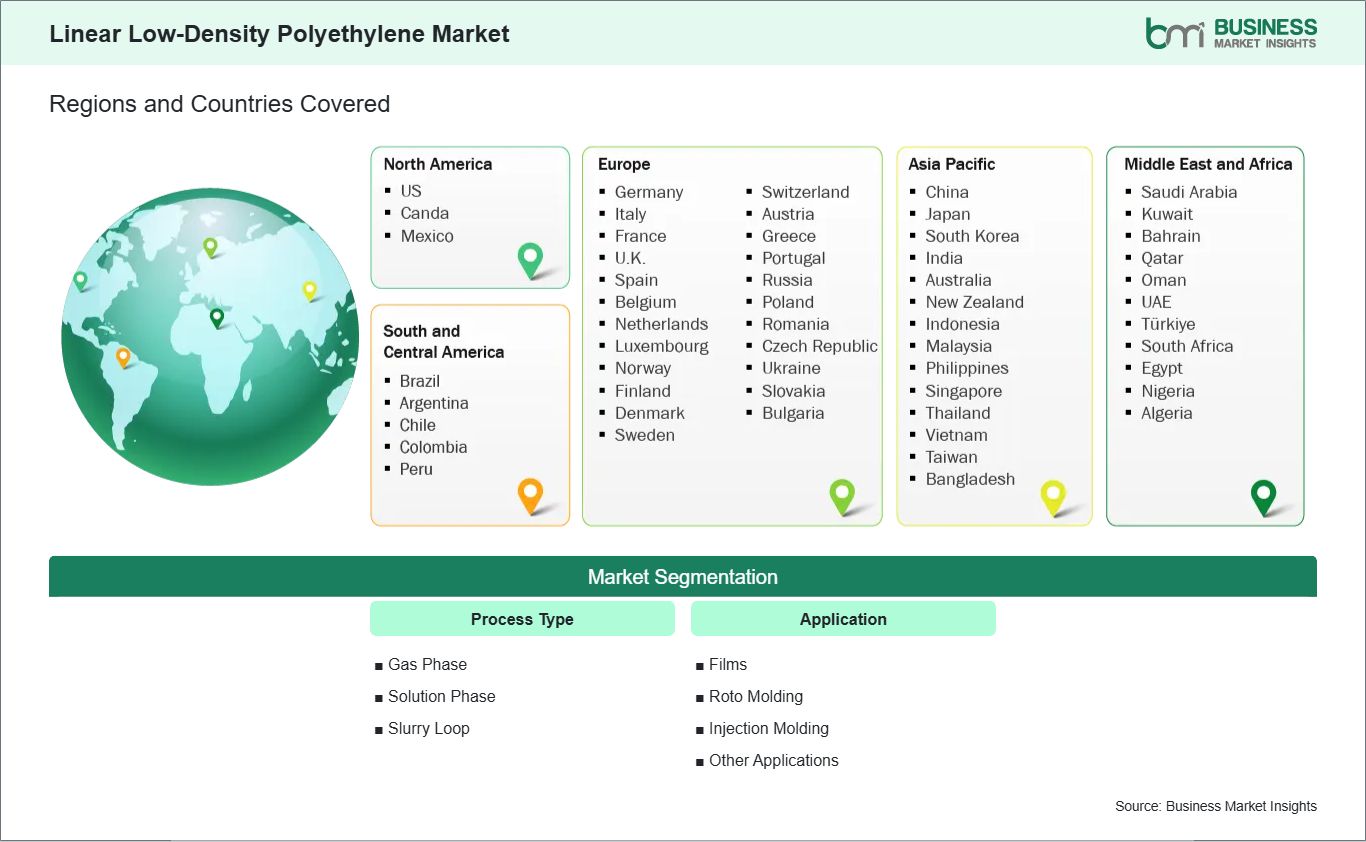
Key segments that contributed to the derivation of the Linear Low-Density Polyethylene market analysis are process type and application.
- By process type, the linear low-density polyethylene market is segmented into Gas Phase, Solution Phase, and Slurry Loop. The Gas Phase segment dominated the market in 2025.
- By application, the linear low-density polyethylene market is segmented into Films, Roto Molding, Injection Molding, and Other Applications. The Films segment dominated the market in 2025.
Market Forces
Linear Low-Density Polyethylene Market Drivers and Opportunities
Rising demand for flexible packaging in the e-commerce sector
The recent rise in the popularity of online shopping worldwide has redefined the need for shipping services, making linear low-density polyethylene an essential packaging material. The packaging required for electronic commerce needs to be resistant to high mechanical stress during the entire shipping process. This material possesses the required puncture resistance and tear strength to ensure mailing bags, air pillows, or bubble wrap do not compromise the quality of the items during shipping. The capacity to make very thin yet strong films enables shipping companies to reduce the weight of the packaging, which directly results in reduced emissions and shipping costs.
Furthermore, the retail sector is increasingly moving away from rigid formats toward flexible pouches and stand-up bags. These formats rely on the excellent sealability and hot-tack properties of specialized resins to maintain package integrity and extend the shelf life of perishable goods. As consumer behavior continues to favor convenience and home delivery, the volume of protective and primary packaging required remains on a steep upward trajectory. This sustained demand is forcing manufacturers to innovate in film clarity and gloss, allowing brands to maintain premium aesthetic appeal while benefiting from the superior mechanical protection of advanced polyethylene grades.
Expansion of bio-based linear low-density polyethylene production
The shift toward a circular economy has created a massive opportunity for the integration of renewable feedstocks into the polyethylene supply chain. Bio-based resins, derived from resources such as sugar cane or used cooking oils, offer an identical molecular structure to their petroleum-based counterparts, allowing them to be processed on existing machinery without modification. This "drop-in" compatibility is highly attractive to multinational brand owners who have made public commitments to reduce their reliance on fossil fuels. By utilizing bio-derived monomers, companies can significantly lower the carbon footprint of their packaging while maintaining the high performance and recyclability that industrial users expect.
This opportunity is particularly relevant in the high-end consumer goods and organic food markets, where the packaging's environmental profile is a key part of the product's value proposition. As production technology for bio-ethylene matures, the economies of scale are beginning to improve, making these sustainable alternatives more accessible to a broader range of applications. Governments in several regions are also providing incentives or tax breaks for the use of renewable content, further accelerating the commercial viability of these resins. Investing in bio-based technology not only mitigates the risks associated with volatile crude oil prices but also positions producers as leaders in the transition toward a more sustainable and carbon-neutral chemical industry.
Size and Share Analysis
Linear Low-Density Polyethylene Market Size and Share Analysis
The global Linear Low-Density Polyethylene market is experiencing steady growth, with market size and share analysis reflecting evolving treatment preferences and competitive dynamics among key players. The report evaluates important subsegments categorized within process type and application highlighting their respective contributions to overall market performance.
By process type, the Gas Phase subsegment dominated the market in 2025 due to its superior operational flexibility and cost-efficiency for large-scale production. This process allows for the creation of a wide range of molecular weight distributions, making it ideal for high-volume commodity resin manufacturing.
By application, the Films subsegment dominated the market in 2025 because of the massive global demand for flexible packaging and agricultural protection. The material’s high puncture resistance and tensile strength allow for significant downgauging, providing a more sustainable and cost-effective alternative to traditional thicker plastics.
Report Coverage
Linear Low-Density Polyethylene Market Report Coverage and Deliverables
The "Linear Low-Density Polyethylene Market Size and Forecast (2022 - 2033)" report provides a detailed analysis of the market covering below areas:
- Linear Low-Density Polyethylene market size and forecast at the regional and country levels for segments covered under the scope
- Linear Low-Density Polyethylene market trends, as well as drivers, restraints, and opportunities
- Linear Low-Density Polyethylene market analysis covering key trends, regional framework, major players, regulations, and recent developments
- Industry landscape and competition analysis covering market concentration, heat map analysis, prominent players, and recent developments for the Linear Low-Density Polyethylene market
- Detailed company profiles, including SWOT analysis
Geographic Insights
Linear Low-Density Polyethylene Market Geographic Insights
The geographical scope of the Linear Low-Density Polyethylene market report is divided into: North America, Asia Pacific, Europe, Middle East & Africa, and South & Central America. North America held the largest share in 2025.
North America maintains a dominant position in the linear low-density polyethylene market, largely due to its significant cost advantage in raw material procurement. The region benefits from an abundance of low-cost ethane derived from shale gas, which provides a stable and inexpensive feedstock for ethylene production. This has led to massive capital investments in integrated petrochemical complexes along the Gulf Coast, making the United States a global hub for polyethylene manufacturing and export. The presence of a highly developed infrastructure and a mature plastics processing industry allows North American producers to maintain high operating rates and serve both domestic and international markets with high-performance resins.
The dominance of the region is further supported by the advanced state of its packaging and e-commerce sectors. North American consumers have a high per-capita consumption of packaged goods, and the region’s retail giants are at the forefront of adopting thin-gauge, high-strength films for load stability and protection. Additionally, the region is a leader in technological innovation, with major industry players headquartered here focusing on the development of specialized grades for medical and industrial applications. While the Asia-Pacific region is growing rapidly in terms of total volume, North America’s combination of feedstock security, technical expertise, and a high-value end-user base ensures its continued leadership in the global market landscape.
Industry Activity
Recent Developments
The Linear Low-Density Polyethylene market is evaluated by gathering qualitative and quantitative data post primary and secondary research, which includes important corporate publications, association data, and databases. A few of the key developments in the Linear Low-Density Polyethylene market are:
- In March 2025, ExxonMobil, announced the start-up of a new linear low-density polyethylene (LLDPE) unit in Huizhou, China, aimed at strengthening supply of advanced metallocene polyethylene grades.
- In mid-2025, Dow, announced the startup of a new 600,000 tons per year LLDPE and HDPE swing unit in Freeport, Texas, expanding its polyethylene production capacity in North America.
- In May 2025, LyondellBasell Industries, announced the launch of Plexar PX3990, a high-performance LLDPE-based tie-layer resin designed for advanced flexible packaging applications.
Trust & Transparency
Research Methodology
The market analysis combines proprietary research with secondary data from government agencies, company disclosures, regulatory filings, industry databases and expert interviews. Market estimates are validated through data triangulation, cross-market benchmarking and analyst
review.
View Full Research Methodology
Key Sources Referred:
American Chemistry Council (ACC)International Council of Chemical Associations (ICCA)European Chemical Industry Council (Cefic)China National Building Materials Group (CNBM)Indian Minerals & Granite Exporters Association (IMGEA)Japan Mining Industry Association (JMIA)Brazilian Mining Association (IBRAM)Gulf Petrochemicals and Chemicals Association (GPCA)Company WebsitesCompany Annual ReportsCompany Investor Presentations