
Inboard Engines Market Outlook: Size, Share, Trends, Growth Analysis, Competitive Landscape & Forecast, 2026-2033

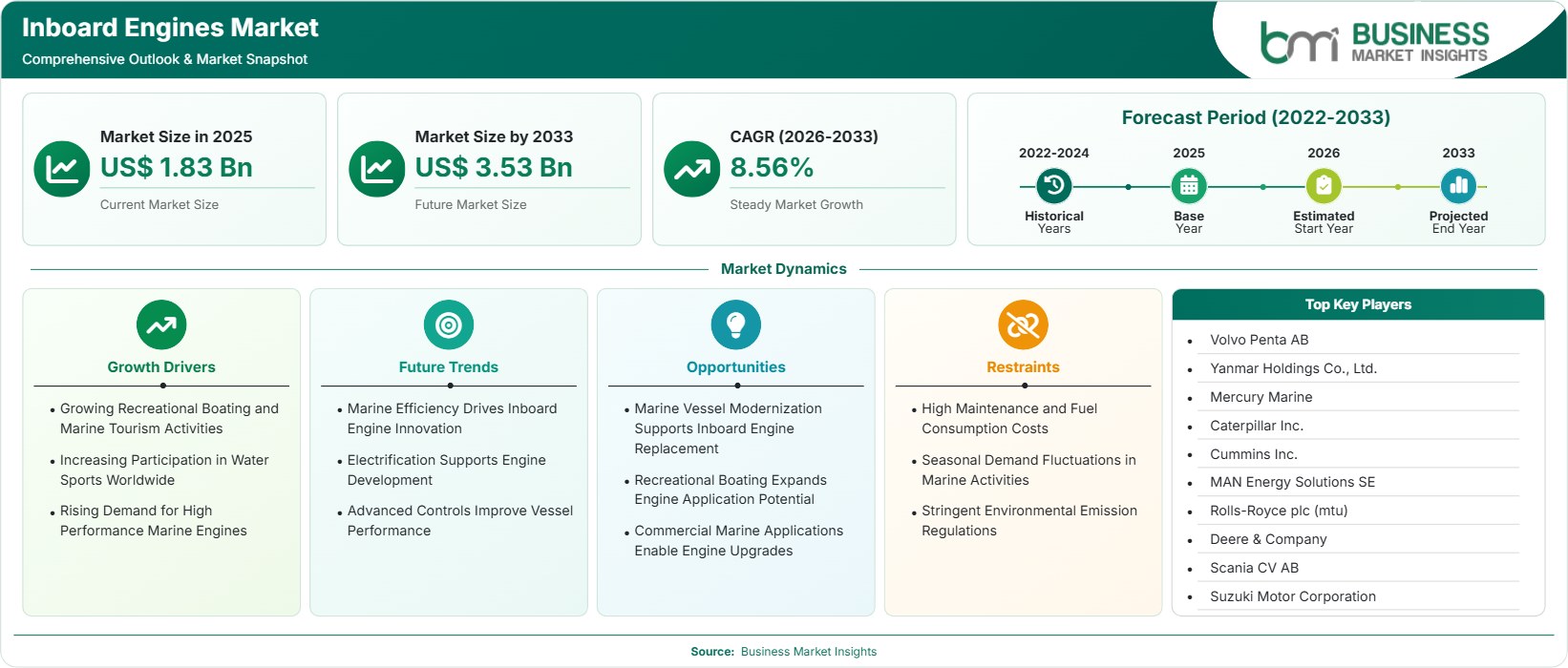
The Inboard Engines Market size was valued at US$ 1.83 Billion in 2025 and is projected to reach US$ 3.53 Billion by 2033, growing at a CAGR of 8.56% during 2026–2033. Rising recreational boating activity, commercial fleet modernization, naval vessel upgrades, digital engine management systems, and low-emission propulsion innovations continue creating strong investment opportunities worldwide.

Report Coverage
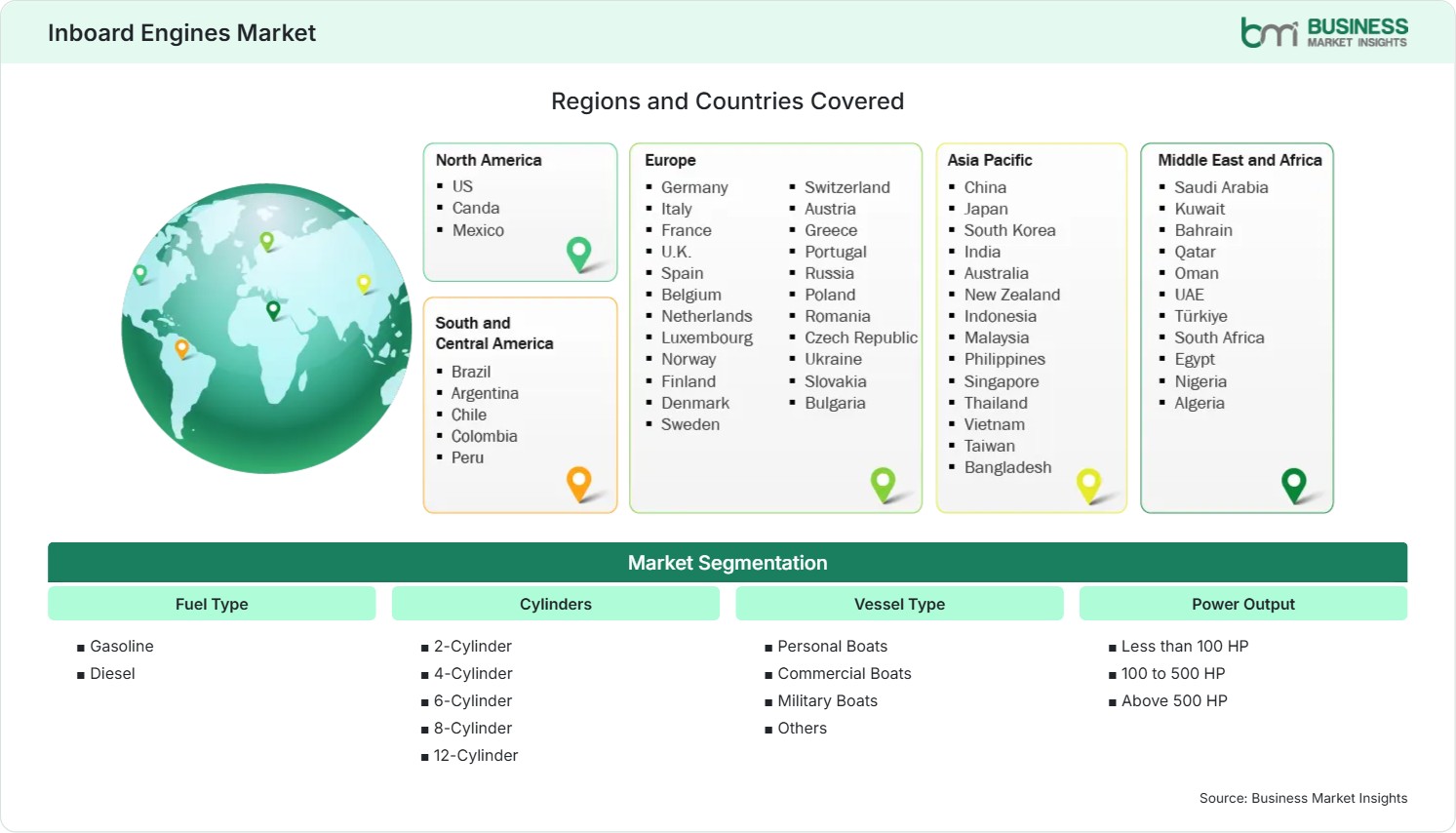
  • Fuel Type: Gasoline, Diesel
  • Cylinders: 2-Cylinder, 4-Cylinder, 6-Cylinder, 8-Cylinder, 12-Cylinder
  • Vessel Type: Personal Boats, Commercial Boats, Military Boats, Others
  • Power Output: Less than 100 HP, 100 to 500 HP, Above 500 HP
US$ 1.83 Bn Market size in 2025
US$ 3.53 Bn Market Size by 2033
8.56% CAGR, 2026 - 2033
2026-2033 Forecast Period

AI Overview

Inboard Engines Market Summary

  • North America Region: North America holds market share of 36%–39% in 2025, growing with a CAGR of 7.8%–8.3% during 2026–2033, supported by recreational boating demand, marina investments, premium vessel manufacturing, fleet replacement programs, fuel-efficient propulsion adoption, connected engine technologies, expanding marine tourism, coastal infrastructure spending, aftermarket expansion, and growing vessel ownership across major waterways and coastal regions. US market benefits from strong boat manufacturing and repowering demand, advancing at 7.9%–8.4% CAGR.
  • Fastest Growing Region: Asia Pacific holds Inboard Engines Market share of 25%–28% in 2025, growing with a CAGR of 10.2%–10.8% during 2026–2033, driven by expanding shipbuilding capacity, rising marine leisure spending, fisheries modernization, naval procurement programs, coastal tourism growth, port investments, domestic engine integration initiatives, fleet electrification readiness, improving incomes, and increasing ownership of recreational watercraft.
  • Leading Segment: Diesel holds market share of 58%–62% in 2025, expanding with a CAGR of 8.1%–8.7% through 2033, supported by durability, superior torque characteristics, commercial vessel preference, long-distance operations, lower operating costs, fishing fleet adoption, marine reliability requirements, regulatory compliance improvements, enhanced fuel systems, and continued demand across workboat applications.
  • High Growth Segment: Commercial Boats account for 37%–41% share of the Inboard Engines Market in 2025 and advance at a CAGR of 9.3%–9.9%, supported by fleet replacement cycles, offshore support operations, fisheries expansion, passenger transport demand, maritime logistics investment, digital monitoring adoption, efficiency upgrades, stricter emissions standards, engine retrofitting activities, and vessel modernization programs.
  • Key Market Opportunity: Growing demand for hybrid-compatible propulsion platforms, digital diagnostics, alternative marine fuels, and retrofit solutions enables manufacturers to capture value from fleet modernization, sustainability mandates, operational efficiency requirements, and lifecycle service revenues.
  • Major Market Players: Volvo Penta AB, Yanmar Holdings Co., Ltd., Mercury Marine, Caterpillar Inc., Cummins Inc., MAN Energy Solutions SE, Rolls-Royce plc (mtu), Deere & Company, Scania CV AB, Suzuki Motor Corporation.
Strategic Insights

Inboard Engines Market: Strategic Insights

Inboard Engines Market Strategic Framework
FREE PDF
Request your free sample
Request free sample
Stakeholder View

Key Takeaways

  • Marine propulsion value chains are becoming increasingly service-oriented, with engine monitoring, predictive maintenance, and aftermarket contracts contributing larger shares of supplier revenues.
  • Commercial vessel modernization and fleet replacement activities present the strongest medium-term demand potential, particularly across fishing, passenger transport, and workboat segments.
  • Engine manufacturers are prioritizing electronic control systems, fuel optimization software, and emissions-compliant combustion technologies to differentiate product portfolios.
  • Asia-Pacific offers the most compelling regional investment case due to expanding shipbuilding output, rising boating participation, and government-backed maritime development initiatives.
  • Industry consolidation increasingly focuses on propulsion integration, digital marine platforms, and service-network expansion to strengthen customer retention and recurring revenues.
  • Growing interest in hybrid propulsion architectures is creating partnership opportunities between engine manufacturers, battery providers, and marine technology developers.
Geographic Outlook

Inboard Engines Market Regional Highlights

North America Inboard Engines Market

North America accounted for 36%–39% of the Inboard Engines Market share in 2025 and is projected to grow at 7.8%–8.3% CAGR through 2033. Demand remains supported by recreational vessel ownership, marine tourism activity, and established boat manufacturing ecosystems. The regional aftermarket is highly developed, creating recurring revenue opportunities for engine suppliers. Investments in marina infrastructure and increasing repowering projects continue supporting demand. Commercial marine operators are also adopting more efficient propulsion systems to improve operational economics while addressing emissions compliance requirements.

  • Recreational boating participation remains among the highest globally, supporting replacement demand for premium gasoline and diesel propulsion platforms.
  • Repowering activity is accelerating as vessel owners seek fuel savings, digital connectivity, and enhanced reliability from modern propulsion technologies.
  • Marine tourism investments strengthen demand for passenger vessels equipped with efficient propulsion systems and advanced monitoring capabilities.
  • Defense procurement and coastal security vessel upgrades create stable opportunities for higher-powered engine installations.

US Inboard Engines Market

The United States represented approximately 78%–82% share within North America during 2025 and advances at 7.9%–8.4% CAGR through 2033. Strong recreational boating participation, established marine manufacturing facilities, and substantial aftermarket networks sustain market demand. Coast Guard, commercial, and leisure vessel modernization programs continue supporting propulsion upgrades. Fleet operators increasingly prioritize digital engine diagnostics and lifecycle service packages.

  • Strong boatbuilder presence supports continuous OEM demand for advanced propulsion systems.
  • Repower programs increasingly replace aging engines with lower-emission alternatives delivering higher fuel efficiency.
  • Marine service networks support customer retention through maintenance contracts and long-term lifecycle solutions.
  • Coastal tourism growth stimulates demand for passenger and charter vessels requiring reliable propulsion systems.

Europe Inboard Engines Market

Europe held a 27%–30% share in 2025 and is forecast to expand at 7.4%–8.0% CAGR of the Inboard Engines Market. Stringent environmental regulations encourage adoption of fuel-efficient propulsion technologies and hybrid-compatible configurations. Germany remains the leading market, while Norway demonstrates high-growth potential with 8.6%–9.2% CAGR due to maritime sustainability initiatives. Yacht manufacturing, inland waterways transportation, and premium marine equipment industries continue supporting demand. The region also benefits from advanced marine engineering capabilities.

  • Regulatory emphasis on emissions reduction encourages innovations in combustion efficiency and alternative-fuel compatibility.
  • Premium yacht production supports demand for sophisticated high-performance marine propulsion systems.
  • Northern European operators increasingly evaluate hybrid-ready vessel configurations.
  • Commercial marine modernization programs strengthen demand across passenger and utility vessel categories.
  • Established engineering ecosystems accelerate technology commercialization and product innovation.

Asia Pacific Inboard Engines Market

Asia Pacific accounted for a 25%–28% share in 2025 and records the fastest expansion at 10.2%–10.8% CAGR. China leads regional demand through extensive shipbuilding activities, while India demonstrates strong acceleration with 11.0%–11.6% CAGR. Rising disposable incomes, marine tourism development, fisheries modernization, and expanding coastal infrastructure support market expansion. Regional manufacturers increasingly invest in propulsion efficiency and localized production capabilities. The Inboard Engines Market share in Asia Pacific continues to increase as maritime industries scale operations.

  • China’s shipbuilding industry creates substantial OEM demand for propulsion systems across vessel categories.
  • India benefits from port development initiatives and growing marine transportation investments.
  • Rising recreational boating participation supports growth in personal marine craft applications.
  • Fisheries modernization promotes efficient engine replacement across commercial fleets.
  • Naval procurement programs contribute to sustained demand for specialized propulsion technologies.

Rest of World Inboard Engines Market

South & Central America, along with the Middle East & Africa, account for 10%-13 % market share in 2025 and are projected to grow at a CAGR of 8.5%-9.1% during 2033. Commercial fishing operations, offshore activities, tourism development, and maritime logistics drive demand for propulsion in these regions. Brazil is the leader in Latin America, while Saudi Arabia shows stronger growth dynamics, driven by the development of maritime infrastructure.

The Inboard Engines Market growth is driven by the development of maritime logistics and fleet renewal, as well as improvements in marine logistics capabilities. Governments start investing in port facilities, patrol ships, and transport infrastructure.

  • Brazil benefits from fishing activity, marine tourism, and expanding vessel modernization programs.
  • Saudi Arabia supports maritime investment through economic diversification initiatives.
  • Offshore energy operations sustain demand for workboats equipped with durable propulsion systems.
  • Passenger transportation modernization encourages adoption of efficient engine platforms.
  • Expanding coastal infrastructure improves long-term marine equipment demand prospects.
Global Market Geography
FREE PDF
Request your free sample
Request free sample
Segment Analysis

Inboard Engines Market Segmentation

Fuel Type

Fuel type was one of the main factors driving demand, with diesel occupying market shares of 58%-62% in 2025 and projected to grow at a CAGR of 8.1%-8.7%. The scope of the Inboard Engines Market in this category encompasses distinct demands from the recreational and commercial sectors. The diesel engine remains popular for its torque and durability, while the gasoline engine enjoys popularity for its low purchase cost. and responsive performance.

  • Gasoline: Preferred in recreational vessels due to lower upfront costs, smoother operation, widespread service availability, and suitability for personal boating applications requiring moderate power outputs.
  • Diesel: Dominates commercial and larger vessel operations thanks to fuel economy, durability, higher torque delivery, and strong reliability across demanding marine environments.

Cylinders

Cylinder arrangements affect power generation, efficiency, and suitability for applications. This segment caters to the varied needs of different classes of vessels and is growing at a CAGR of 8.3%-8.9%. Companies are constantly working to improve combustion efficiency and emissions performance, and power density to address evolving marine operational requirements and customer expectations.

  • 2-Cylinder: Used in compact vessels requiring lightweight propulsion, straightforward maintenance, and economical operation within low-power marine applications.
  • 4-Cylinder: Popular across recreational and light commercial vessels because of balanced fuel efficiency, reliability, and operational flexibility.
  • 6-Cylinder: Supports mid-sized boats demanding stronger torque delivery and improved cruising performance across extended marine operations.
  • 8-Cylinder: Preferred for premium recreational and commercial vessels requiring enhanced power output and superior acceleration characteristics.
  • 12-Cylinder: Serves high-performance, military, and heavy-duty marine applications where maximum propulsion capability and endurance are essential.

Vessel Type

Commercial Boats form the largest segment of vessels, accounting for 37% to 41% market share by 2025 and registering 9.3% to 9.9% CAGR growth. Upgrading initiatives, trading operations, and efficiency concerns continue to fuel investment. In the Inboard Engines Market trends, digitally enabled propulsive units that offer lifecycle optimization are increasingly preferred.

  • Personal Boats: Demand benefits from marine tourism, recreational boating participation, and increased consumer spending on water-based leisure activities.
  • Commercial Boats: Strong replacement demand arises from fisheries, transport, workboat operations, and marine logistics modernization initiatives.
  • Military Boats: Procurement programs prioritize reliability, endurance, and mission-ready propulsion systems supporting defense operations.

Power Output

The power ratings vary depending on the sizes and functions of the vessels. However, there is a clear trend toward higher power output ratings while maintaining the same fuel efficiency and emissions regulations. The manufacturers are adding more variety to the product line-ups across different horsepower ratings to address increasingly specialized marine operating requirements.

  • Less than 100 HP: Serves small recreational craft and utility boats emphasizing affordability, simplicity, and efficient operation.
  • 100 to 500 HP: Represents the most versatile category, supporting diverse commercial and recreational marine applications.
  • Above 500 HP: Gains traction in military, offshore, and premium vessel segments requiring high-speed, heavy-duty propulsion performance.
Market Forces

Inboard Engines Market Dynamics

Key Market Drivers

Expansion of Recreational Boating Participation

Recreational boating activities in North America and Europe continue to drive demand for propulsion solutions. According to industry associations, there is a trend in boat ownership and use that is likely to lead to repowering and replacement. Customers prefer fuel-efficient, technologically advanced propulsion systems with high reliability and minimal maintenance needs. Manufacturers can benefit from increased demand for advanced engines with electronic controls and smart diagnostic capabilities. Higher spending on coastal tourism and a growing boating culture provide a positive backdrop for buying new vessels. These developments strengthen replacement cycles and generate recurring service revenue streams, reinforcing long-term demand across recreational marine applications.

Commercial Fleet Modernization and Efficiency Targets

Operators seek new propulsion technologies to reduce fuel costs and improve efficiency. The fishing industry, passenger ships, and utility boats need robust engines capable of handling heavy workloads. New technologies improve the efficiency and effectiveness of combustion, resulting in lower operating costs and greater ship readiness. Also, predictive maintenance abilities are critical for commercial vessel owners. Regulations push companies toward cleaner propulsion technology, forcing them to buy new engine platforms. Increased marine transportation and port activity serve as additional catalysts for market growth, supporting modernization initiatives, creating durable growth drivers across commercial vessel categories.

Advances in Digital Marine Powertrain Technologies

Technologies such as integrated engine management systems, remote monitoring, and predictive software are revolutionizing marine propulsion operations. This is because these technologies offer data on performance, fuel management, and even predictive maintenance. Manufacturers now tend to differentiate their products through software rather than mechanical specifications. The shipowners want reliable ships that are safe and cost-effective throughout their entire life cycle. With increased connectivity in the shipping industry, advanced propulsion systems are expected to see higher adoption globally.

Key Market Opportunities

Hybrid-Ready and Alternative Fuel Integration

In recent years, there has been increasing focus on evaluating propulsion systems for hybrid systems using low-carbon fuels. Manufacturers of such adaptable systems that can accommodate battery technology, renewable fuel, and energy management software enjoy a competitive advantage. The regulatory environment and corporations' sustainability objectives drive investment in clean marine technology. Furthermore, ship manufacturers are exploring propulsion technologies to comply with future regulations. All these factors have helped the Long-Term Inboard Engines Market Forecasts maintain its position by accelerating interest in sustainable maritime operations and propulsion flexibility.

Growth of Maritime Infrastructure Investments

Projects involving port developments, marina expansions, and coastal transportation create demand for propulsion-powered craft. In emerging nations, efforts to develop maritime connections and tourism infrastructure receive major investment. This demand includes passenger ferries, patrol boats, fishing boats, and utility vessels. Engine manufacturers will be able to take advantage of OEM collaborations, localization, and increased service networks. With ongoing infrastructure construction, marine operations are increasingly focused on propulsion systems that reduce costs and improve efficiency. The resulting demand for equipment creates substantial long-term growth opportunities.

Repowering and Lifecycle Service Expansion

There are several opportunities for engine repower projects due to the aging of vessel fleets worldwide. Repowering enables you to increase efficiency, reduce emissions, and improve reliability without buying new ships. Companies that provide service contracts, diagnostics, and maintenance services have the opportunity for recurring revenue. Lifecycle services can assist with better management of expenses related to vessel ownership. Growth in the installed base and the business model with service components increases companies' profitability prospects and ensures market growth.

Market Restraints and Challenges

High Acquisition Costs and Slower Adoption

The use of advanced propulsion systems involves electronics, emissions control, and monitoring, which raise the cost of acquiring the system. High capital costs. Smaller firms might delay upgrading or replacing their vessels. Financial constraints could further delay the implementation of modernizations, especially in emerging markets. Even though the overall savings over time favor adopting such systems, some consumers prioritize lower upfront costs. This situation limits the diffusion rate of advanced propulsion systems and even causes delays in replacements. Manufacturers must balance technological advancement with cost competitiveness to maintain broad market accessibility.

Emissions Compliance Complexity and Development Burden

Regulations on marine emissions vary from one region to another, posing certification and engineering challenges. Diversification of regulation demands and compliance costs. More spending on research and development and a longer product development period with increased testing requirements. Optimizing engines to comply with different environmental laws without compromising performance is a challenge faced by manufacturers. Smaller companies can also face some constraints when modifying their product lines. Compliance costs can affect product pricing and customers' purchasing decisions. These pressures create strategic challenges throughout the value chain and affect industry competitiveness.

Company Analysis

Competitive Landscape

The competitive environment reflects ongoing innovation, product differentiation, and service-network expansion. Current Inboard Engines Market analysis indicates competition increasingly centers on emissions compliance, digital technologies, fuel efficiency, and lifecycle support capabilities.

Company Name

Overview

Products and Services relevant to this market

Volvo Penta AB

Global marine propulsion specialist serving recreational, commercial, and industrial maritime sectors.

Inboard engines, IPS propulsion systems, marine electronics, connectivity solutions, and aftermarket services.

Yanmar Holdings Co., Ltd.

Leading manufacturer recognized for diesel marine propulsion reliability and efficiency.

Marine diesel engines, propulsion systems, vessel integration support, and maintenance services.

Mercury Marine

Major marine propulsion supplier with broad recreational boating presence.

MerCruiser inboard engines, sterndrives, digital controls, and marine support services.

Caterpillar Inc.

Supplies heavy-duty propulsion solutions for commercial and specialized vessels.

High-power marine diesel engines, monitoring systems, and lifecycle maintenance services.

Cummins Inc.

Global power solutions company serving marine and industrial customers.

Marine propulsion engines, generator systems, emissions technologies, and support services.

MAN Energy Solutions SE

Engineering leader focused on efficient maritime propulsion technologies.

Marine engines, digital optimization tools, and powertrain integration solutions.

Rolls-Royce plc (mtu)

Premium provider of advanced marine propulsion and power solutions.

mtu marine engines, automation systems, and vessel performance technologies.

Deere & Company

Marine engine supplier through established industrial power expertise.

Marine diesel platforms, propulsion solutions, and technical support services.

Scania CV AB

Expanding presence in efficient marine propulsion applications.

Marine engines, engine management systems, and service support offerings.

Suzuki Motor Corporation

Active marine propulsion participant supporting selected vessel applications.

Marine power technologies, engineering support, and propulsion-related solutions.

Trust & Transparency

Research Methodology

The market analysis combines proprietary research with secondary data from government agencies, company disclosures, regulatory filings, industry databases and expert interviews. Market estimates are validated through data triangulation, cross-market benchmarking and analyst review.

View Full Research Methodology

Questions Answered

Frequently Asked Questions

Which region is expected to expand the fastest through 2033?

Asia Pacific is forecast to record the highest growth owing to shipbuilding activity, maritime infrastructure spending, naval procurement, and rising recreational boating participation.

What does the Inboard Engines Market Report indicate about technological development?

The industry is increasingly focused on connected propulsion systems, predictive maintenance, hybrid compatibility, electronic controls, and emissions-compliant engine architectures.

Why are diesel inboard engines still widely used?

Diesel engines provide strong torque, long operating life, superior fuel economy, and reliability, making them particularly suitable for commercial and heavy-duty marine applications.

Which vessel category presents the highest growth potential?

Commercial boats are expected to deliver the strongest growth momentum due to fisheries modernization, passenger transport requirements, and marine logistics investments across developing economies.

What factors are influencing demand for modern marine propulsion systems?

Fuel efficiency requirements, vessel modernization projects, digital monitoring adoption, and stricter emissions standards are driving the replacement of aging marine engines across recreational and commercial fleets.

Access the Full Inboard Engines Market Report

Get segment-level forecasts, regional estimates, competitive benchmarking, company profiles and downloadable Excel datasets.

Access the full Inboard Engines Market Report
350 pages PDF & Excel | 2026-09-04