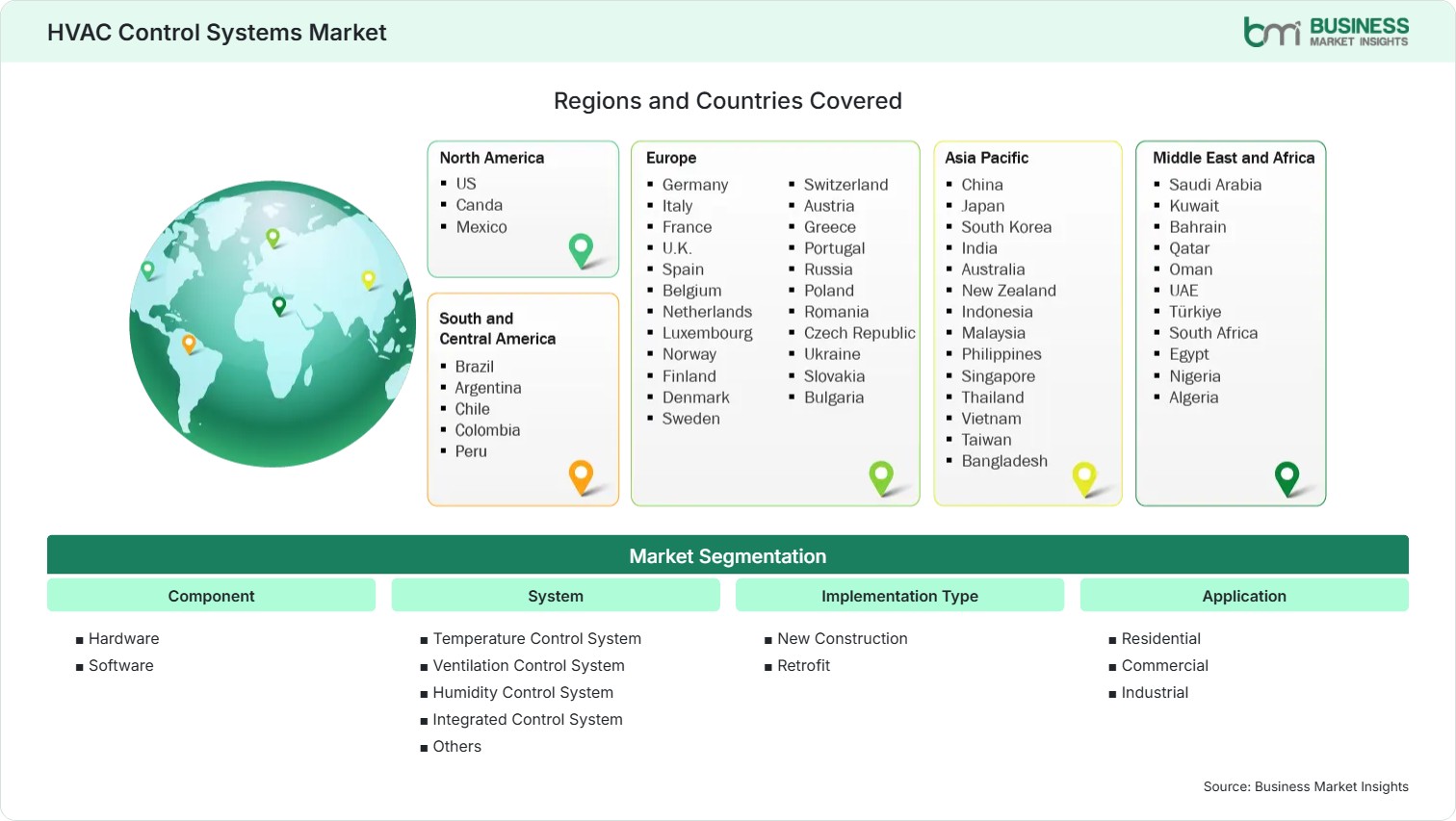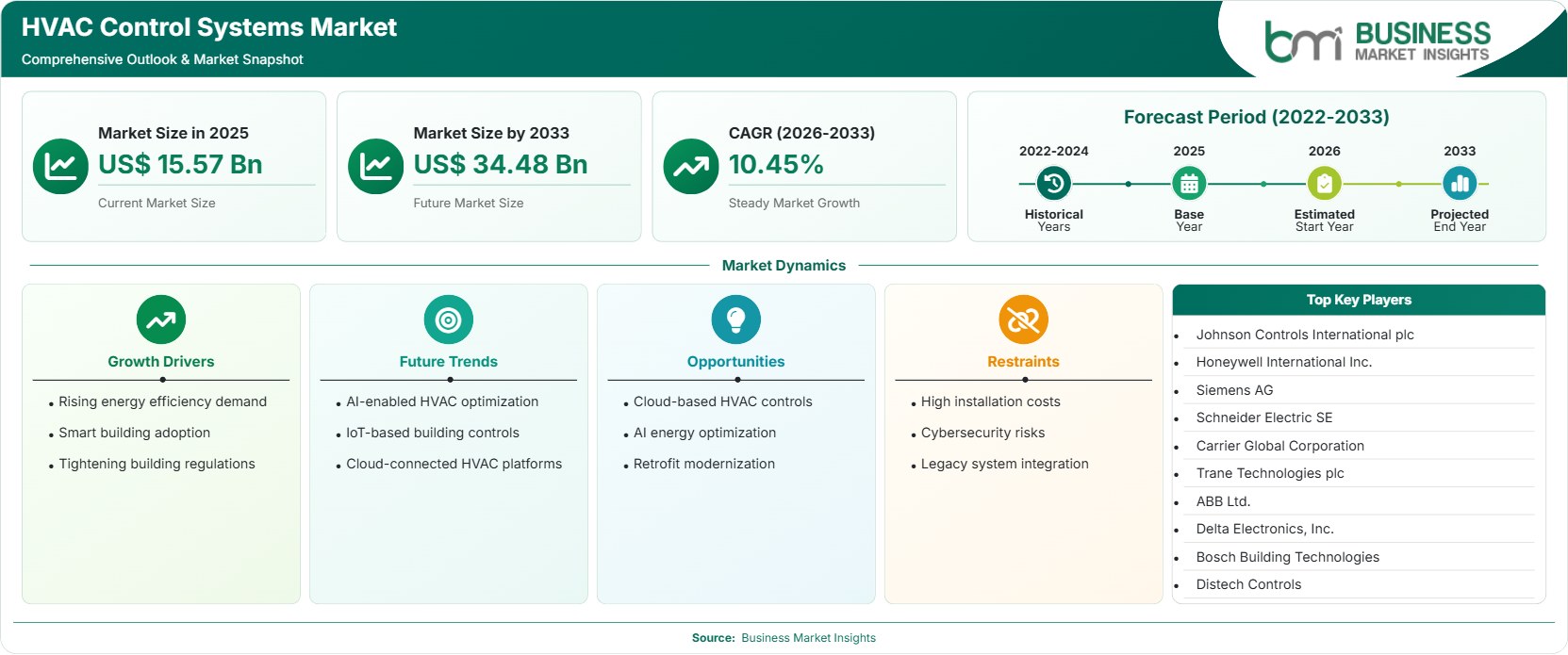
HVAC Control Systems Market Regional Highlights
North America HVAC Control Systems Market
North America accounts for approximately 35%–38% of the global market in 2025 and is projected to expand at a CAGR of 9.8%–10.3% during 2026–2033. Strong adoption of smart buildings, favorable energy-efficiency regulations, and increasing investments in digital building infrastructure continue supporting regional leadership. HVAC Control Systems Market share remains the highest globally owing to widespread deployment of intelligent building automation systems across commercial, healthcare, industrial, and institutional facilities.
- Growing investments in intelligent commercial buildings continue driving adoption of connected HVAC controllers, occupancy sensors, and cloud-based building management platforms.
- Increasing implementation of ASHRAE energy standards and green building certifications encourages deployment of advanced HVAC automation technologies across new construction and retrofit projects.
- Rising demand for predictive maintenance and remote monitoring solutions supports broader integration of artificial intelligence and IoT-enabled HVAC systems.
- Commercial property owners increasingly prioritize operational efficiency, indoor air quality, and sustainability, strengthening investments in digital HVAC control technologies.
- Integration of HVAC controls with broader building automation systems continues improving energy optimization and facility management capabilities.
US HVAC Control Systems Market
The United States represents approximately 29%–32% of the global market in 2025 and is expected to register a CAGR of 9.9%–10.4% through 2033. Strong commercial construction activity, modernization of existing buildings, and continued investment in energy-efficient infrastructure continue accelerating market growth.
- Commercial office buildings, hospitals, educational institutions, and industrial facilities continue upgrading to intelligent HVAC control platforms supporting predictive maintenance and energy optimization.
- Federal and state energy-efficiency programs encourage adoption of smart HVAC technologies capable of reducing building operating costs and emissions.
- Expansion of data centers and advanced manufacturing facilities creates additional demand for precision environmental control systems.
- Growing integration of AI-driven building analytics strengthens adoption of connected HVAC solutions across enterprise facilities.
Europe HVAC Control Systems Market
Europe accounts for approximately 28%–31% of global revenue in 2025 and is forecast to expand at a CAGR of 10.4%–10.9% through 2033. Ambitious carbon reduction targets, energy performance regulations, and widespread adoption of intelligent building technologies continue supporting regional growth. Germany leads market revenue, while the United Kingdom records the fastest growth among major European economies with a CAGR of 10.9%–11.4%.
- European Green Deal initiatives continue encouraging modernization of commercial and residential buildings through intelligent HVAC control technologies.
- Demand for smart energy management platforms supports increasing integration of HVAC systems with renewable energy and smart grids.
- Building owners increasingly adopt connected sensors and cloud-based controls to comply with evolving environmental regulations.
- Growth in retrofit modernization projects creates sustained demand for intelligent controllers, advanced sensors, and integrated building automation platforms.
- Expansion of digital facility management solutions strengthens long-term adoption across commercial infrastructure.
Asia Pacific HVAC Control Systems Market
Asia Pacific represents approximately 27%–30% of the global market in 2025 and is expected to register the fastest CAGR of 11.5%–12.0% during 2026–2033. Rapid urbanization, infrastructure expansion, commercial real estate development, and smart city initiatives continue driving regional demand. China leads the regional HVAC Control Systems Market, while India records the fastest growth with a CAGR of 12.2%–12.8%.
- Rapid construction of commercial complexes, airports, hospitals, and mixed-use developments increases deployment of intelligent HVAC control systems.
- Government initiatives promoting energy-efficient buildings continue supporting investments in smart building technologies and automation platforms.
- Growing industrialization and manufacturing expansion drive adoption of advanced environmental control systems across production facilities.
- Rising demand for green buildings encourages deployment of AI-enabled HVAC optimization and predictive maintenance technologies.
- Cloud-based building management systems continue gaining popularity among large commercial property developers.
Rest of World HVAC Control Systems Market
The Rest of World region accounts for approximately 7%–9% of global revenue in 2025 and is projected to expand at a CAGR of 10.2%–10.7% during the forecast period. Increasing commercial infrastructure investments, energy-efficiency initiatives, and modernization of building facilities continue to support HVAC Control Systems Market growth across Latin America, the Middle East, and Africa.
Brazil leads regional adoption through expanding commercial construction and industrial modernization, while the United Arab Emirates records the fastest growth with a CAGR of 10.8%–11.3% driven by smart city projects and sustainable infrastructure investments.
- Brazil continues investing in intelligent building technologies across commercial and industrial sectors to improve operational efficiency and reduce energy consumption.
- Gulf countries increasingly deploy advanced HVAC control systems in airports, hospitality, healthcare, and mixed-use developments supporting smart city initiatives.
- Rising awareness regarding building energy efficiency encourages greater adoption of cloud-connected building automation platforms.
- Industrial expansion across emerging economies continues increasing demand for integrated environmental control systems.
- Growth in green building certifications supports wider deployment of intelligent HVAC management technologies.