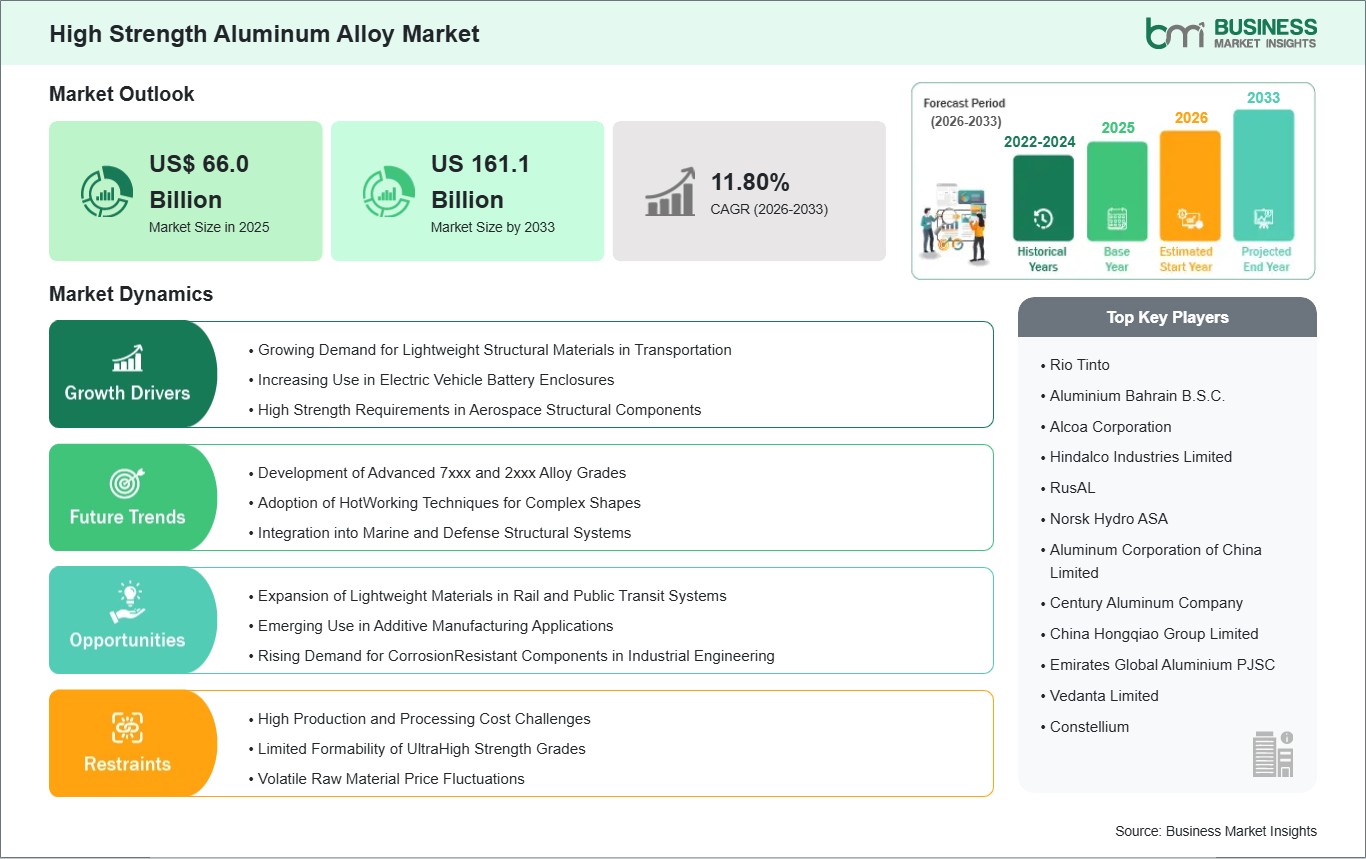
Growing Demand for Lightweight Structural Materials in Transportation
The global demand for high strength aluminum alloys is being driven by the transportation industry’s ongoing focus on reducing vehicle weight while improving performance and fuel efficiency. Automakers worldwide are increasingly integrating aluminum alloys into chassis, body panels, and engine components, as these materials provide a favorable strength-to-weight ratio without compromising durability. In addition to passenger vehicles, commercial trucks and specialty vehicles are adopting aluminum alloys to enhance payload efficiency and reduce fuel consumption, reflecting a broader push toward sustainability and regulatory compliance in transportation design.
Advances in aluminum alloy processing and manufacturing have further expanded their applicability in transportation. Techniques such as extrusion, rolling, and heat treatment allow engineers to create complex structural components that can withstand high stress while maintaining lightness. This versatility enables designers to optimize vehicle aerodynamics, enhance safety features, and meet increasingly stringent emissions regulations. Beyond weight reduction, high strength aluminum alloys offer corrosion resistance, improved thermal conductivity, and longer service life, making them attractive for both conventional and electric vehicles, where efficiency and performance are critical.
In addition, the shift toward electrification in the automotive sector has amplified demand for lightweight materials. Electric vehicles (EVs) require battery enclosures and structural components that balance strength with minimal weight to extend driving range and ensure safety. High strength aluminum alloys fulfill this role, providing a solution that accommodates high-voltage battery systems while maintaining structural integrity during collisions. Globally, the convergence of environmental regulations, technological innovation, and consumer demand for efficient vehicles has established high strength aluminum alloys as a strategic material for next-generation transportation solutions.
Expansion of Lightweight Materials in Rail and Public Transit Systems
High strength aluminum alloys are also being used in rail and transit operations, as operators look for ways to improve efficiency, reduce energy consumption, and provide a more comfortable ride for passengers. The use of lightweight train carriages, subways, and light rail transit can all benefit from the properties of aluminum alloys, which can be used to construct the structural frames, panels, and interior components of the vehicles, reducing weight to improve operational savings and speed, as well as improving vibration damping and noise reduction for a more comfortable ride for passengers.
The adoption of aluminum alloys in rail infrastructure extends to both urban and long-distance transit networks. High-speed rail systems leverage aluminum components to achieve aerodynamic designs without compromising structural strength, while commuter rail systems utilize alloys to reduce track wear and energy requirements. The corrosion resistance of high strength aluminum alloys is particularly valuable in exposed rail applications, where weathering and moisture can impact longevity. Manufacturers of rolling stock are increasingly specifying aluminum-based solutions to meet sustainability goals while maintaining safety and regulatory compliance across global rail networks.
Moreover, public transit authorities are exploring aluminum alloys for modular and customizable designs, allowing rapid assembly and maintenance of train cars while minimizing downtime. These materials facilitate innovative interior configurations, lightweight doors, and energy-efficient components, supporting urban transit expansion in growing cities worldwide. As urban populations continue to rise and public transportation demand intensifies, high strength aluminum alloys are becoming a cornerstone material in designing modern, efficient, and durable rail systems, driving their global adoption across mass transit and infrastructure projects.