
Hereditary Angioedema Treatment Market Outlook: Size, Share, Trends, Growth Analysis, Competitive Landscape & Forecast, 2026-2033

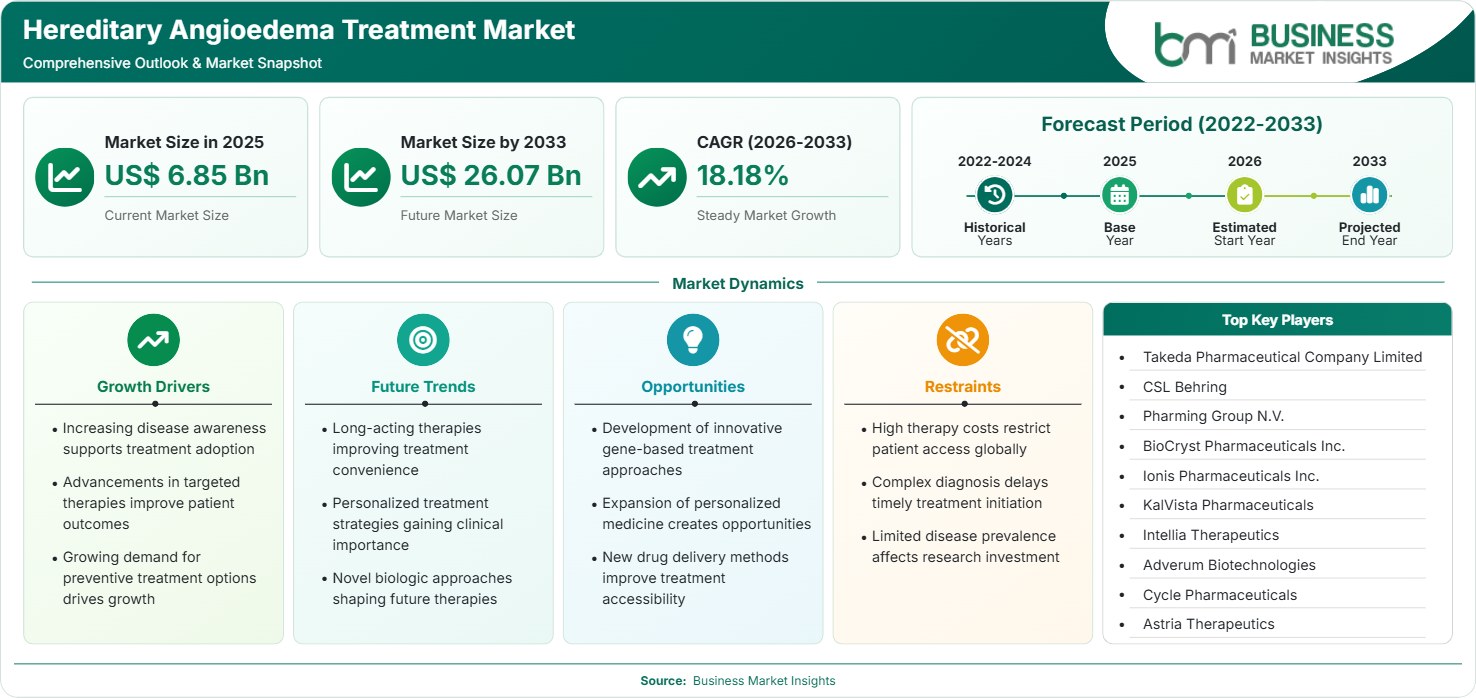
The Hereditary Angioedema Treatment Market size was valued at US$ 6.85 billion in 2025 and is projected to reach US$ 26.07 billion by 2033, growing at a CAGR of 18.18% during 2026–2033. Increasing disease awareness, expanding access to targeted biologics, and rising adoption of preventive therapies continue accelerating treatment demand across developed and emerging healthcare systems.

Report Coverage
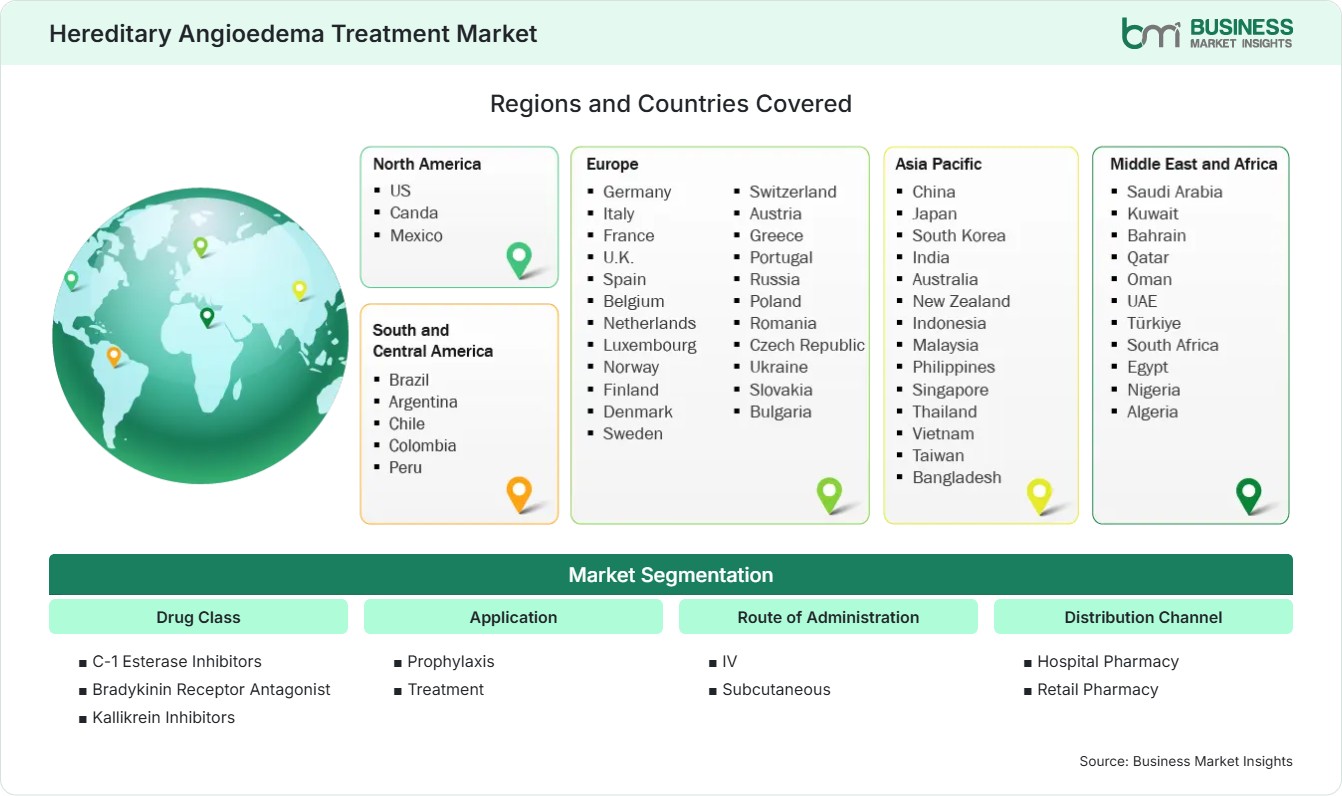
  • Drug Class: C-1 Esterase Inhibitors, Bradykinin Receptor Antagonist, Kallikrein Inhibitors
  • Application: Prophylaxis, Treatment
  • Route of Administration: IV, Subcutaneous
  • Distribution Channel: Hospital Pharmacy, Retail Pharmacy
US$ 6.85 Bn Market size in 2025
US$ 26.07 Bn Market Size by 2033
18.18% CAGR, 2026 - 2033
2026-2033 Forecast Period

01 AI Overview

Hereditary Angioedema Treatment Market Summary

  • North America Region: North America holds 42%–45% market share in 2025 and is projected to register a CAGR of 17.6%–18.2% during 2026–2033. Strong reimbursement systems, higher diagnosis rates, and rapid uptake of novel biologics continue supporting regional leadership. The U.S. remains the largest contributor with a CAGR of 17.8%–18.4%, driven by early adoption of innovative therapies, established specialty care centers, and continuous clinical research.
  • Fastest Growing Region: Asia Pacific accounts for 20%–23% market share in 2025 and is expected to expand at a CAGR of 19.6%–20.4%, supported by improving rare disease awareness, expanding healthcare infrastructure, and increasing availability of specialty medicines.
  • Leading Segment: C-1 Esterase Inhibitors represent 46%–49% market share in 2025 and are projected to grow at a CAGR of 17.9%–18.5%, supported by established clinical efficacy and widespread use for both acute treatment and long-term prophylaxis.
  • High Growth Segment: Prophylaxis accounts for 57%–60% market share in 2025 and is anticipated to register a CAGR of 18.9%–19.6%, driven by increasing preference for preventive treatment strategies that reduce attack frequency and improve quality of life.
  • Key Market Opportunity: Advances in gene-based therapies, personalized medicine, and long-acting biologics are creating new opportunities to improve disease management while reducing treatment burden for hereditary angioedema patients.
  • Major Market Players: Takeda Pharmaceutical Company Limited, CSL Behring, Pharming Group N.V., BioCryst Pharmaceuticals, Inc., Ionis Pharmaceuticals, Inc., KalVista Pharmaceuticals, Inc., Intellia Therapeutics, Inc., Adverum Biotechnologies, Inc., Cycle Pharmaceuticals Ltd., and Astria Therapeutics, Inc.
02 Strategic Insights

Hereditary Angioedema Treatment Market: Strategic Insights

Hereditary Angioedema Treatment Market Strategic Framework
FREE PDF
Request your free sample
Request free sample
03 Stakeholder View

Key Takeaways

  • The use of preventive drugs in the hereditary angioedema space has become a trend that will have a tremendous effect on the disease management landscape in terms of decreased attacks of the condition, improvement in quality of life, minimized visits to hospitals, and the cost-effectiveness of long-term health care.
  • Continuous innovation in the fields of targeted biologics, therapies not dependent on plasma, kallikrein inhibitors, and new medications provides excellent business opportunities for pharmaceutical companies and biotech firms developing drugs for rare genetic conditions.
  • Developments in fields of gene editing, RNA medicines, precision medicine, extended release biologics, and personalized HAE therapy will shape the future of HAE management in the coming years.
  • Asia Pacific offers strong long-term growth potential due to increasing healthcare expenditure, improving diagnostic capabilities, expanding access to rare disease therapies, supportive government healthcare initiatives, and rising awareness regarding hereditary angioedema among healthcare professionals and patients.
  • Strategic licensing agreements, orphan drug approvals, biotechnology collaborations, research partnerships, and investments in clinical development remain key competitive strategies supporting product innovation, accelerating commercialization, expanding global market presence, and strengthening long-term competitive positioning.
  • Expanded patient support programs, favorable reimbursement policies, improved access to specialized healthcare services, and increasing availability of advanced diagnostic tools are expected to enhance treatment accessibility, encourage earlier diagnosis, improve patient adherence, and increase the adoption of innovative hereditary angioedema therapies worldwide.
04 Geographic Outlook

Hereditary Angioedema Treatment Market Regional Highlights

North America Hereditary Angioedema Treatment Market

North America accounts for 42%–45% Hereditary Angioedema Treatment Market share in 2025 and is projected to register a CAGR of 17.6%–18.2% during 2026–2033. Strong orphan drug regulations, advanced healthcare infrastructure, established reimbursement systems, and widespread availability of specialty medicines continue supporting regional leadership. Ongoing clinical trials and increasing physician awareness further strengthen treatment adoption across the United States and Canada.

  • Favorable reimbursement policies continue improving patient access to high-cost biologics and preventive therapies.
  • Active biotechnology research supports continuous development of next-generation hereditary angioedema treatments.
  • Rare disease advocacy organizations strengthen physician education and patient awareness initiatives.
  • Regulatory support accelerates approvals for innovative therapies targeting complement and kallikrein pathways.

US Hereditary Angioedema Treatment Market

The United States contributes 84%–87% of North American revenue and is projected to expand at a CAGR of 17.8%–18.4% during the forecast period. Advanced specialty healthcare infrastructure, leading biotechnology innovation, and strong orphan drug commercialization continue supporting sustained market expansion.

  • Comprehensive insurance coverage and favorable reimbursement policies improve patient access to preventive therapies, long-term disease management, and advanced hereditary angioedema treatment options.
  • Pharmaceutical and biotechnology companies continue investing in advanced biologics, plasma-independent therapies, gene-based medicines, and precision treatment approaches to improve clinical outcomes and expand therapeutic options.
  • Expanding global clinical trial activity is accelerating the development, regulatory approval, and commercialization of innovative hereditary angioedema treatment candidates across multiple therapeutic classes.
  • Specialized treatment centers, improved diagnostic capabilities, multidisciplinary care teams, and patient support programs are strengthening early diagnosis, personalized treatment planning, and long-term disease management.

Europe Hereditary Angioedema Treatment Market

Europe represents 28%–31% Hereditary Angioedema Treatment Market share in 2025 and is projected to register a CAGR of 17.2%–17.8% through 2026–2033. Strong rare disease policies, expanding orphan drug availability, and collaborative healthcare networks continue supporting market growth. Germany remains the leading regional market, while Spain records the fastest expansion through improving diagnosis and increasing biologic adoption.

  • Government initiatives supporting rare disease management, orphan drug development, and reimbursement programs are improving treatment availability and patient access to advanced hereditary angioedema therapies.
  • Expanding genetic testing capabilities, improved diagnostic technologies, and greater physician awareness are enhancing diagnostic accuracy and enabling earlier identification of hereditary angioedema across healthcare systems.
  • Hospital specialists and immunologists are increasingly recommending preventive therapies for high-risk patients to reduce attack frequency, improve quality of life, and support long-term disease management.
  • Continued clinical research, biotechnology innovation, and expanding therapeutic pipelines are broadening treatment options and advancing the future management of hereditary angioedema worldwide.

Asia Pacific Hereditary Angioedema Treatment Market

Asia Pacific accounts for 20%–23% Hereditary Angioedema Treatment Market share in 2025 and is projected to record the fastest 19.6%–20.4% CAGR during 2026–2033. Rising healthcare investments, improving awareness of rare diseases, expanding biotechnology research, and increasing access to specialty medicines continue driving regional expansion. Japan remains the leading market, while China records the fastest growth through healthcare modernization and expanding biologic availability.

  • Growing physician education and continuous medical training are improving the early recognition of hereditary angioedema symptoms, enabling timely diagnosis and appropriate therapeutic intervention.
  • Expanding healthcare expenditure and improvements in healthcare infrastructure are supporting wider access to specialty pharmaceuticals, advanced biologics, and comprehensive rare disease treatment services.
  • Rising biotechnology investments, research funding, and international collaborations are accelerating regional participation in global clinical trials and the development of innovative hereditary angioedema therapies.
  • Expanding rare disease awareness programs, patient advocacy initiatives, and genetic counseling services are strengthening early diagnosis, improving treatment adherence, and supporting long-term patient management.

Rest of World Hereditary Angioedema Treatment Market

The Rest of World region accounts for 5%–8% Hereditary Angioedema Treatment Market share in 2025 and is projected to expand at a CAGR of 17.4%–18.0% through 2026–2033. Improving healthcare infrastructure, increasing orphan drug availability, and greater physician awareness continue supporting market development across Latin America, the Middle East, and Africa.

  • Brazil leads regional demand through expanding access to specialty healthcare services, improving rare disease diagnosis, and increasing availability of advanced biologic therapies across major healthcare institutions.
  • GCC countries continue strengthening rare disease treatment infrastructure, expanding reimbursement programs, and investing in specialized healthcare facilities to improve patient access to innovative hereditary angioedema therapies.
  • International healthcare partnerships, biotechnology collaborations, and orphan drug initiatives are improving patient access to advanced biologic therapies while supporting knowledge sharing and clinical research.
  • Growing diagnostic capabilities, expanding genetic testing services, and increasing physician awareness are enabling earlier disease identification, timely treatment initiation, and improved long-term management of hereditary angioedema.
Global Market Geography
FREE PDF
Request your free sample
Request free sample
05 Segment Analysis

Hereditary Angioedema Treatment Market Segmentation

Drug Class

The drug class segment determines therapeutic choice through mechanism, attack control, dosing frequency, and treatment purpose. It represents a modeled 39%–42% share in 2025 with a CAGR of 17.4%–18.1% during 2026–2034. Established C1 inhibitor therapies remain important, while kallikrein-focused medicines and pathway-specific innovations are broadening options. The Hereditary Angioedema Treatment Market scope increasingly encompasses preventive, acute, and patient-centered therapeutic strategies.

  • C-1 Esterase Inhibitors: C1 inhibitor therapies remain established options for replacing deficient or dysfunctional inhibitor activity, supporting acute management and prophylaxis where clinically appropriate.
  • Bradykynin Receptor Antagonist: Bradykinin receptor antagonists directly address downstream signaling involved in swelling, supporting rapid attack management and continued demand for mechanism-specific acute therapies.
  • Kallikrein Inhibitors: Kallikrein inhibitors target a central component of the bradykinin pathway, supporting prophylaxis and acute treatment development while creating opportunities for oral and longer-acting formulations.

Application

Application segmentation reflects the shift from episodic attack treatment toward planned disease control. It represents a modeled 43%–46% share in 2025 with a CAGR of 18.0%–18.8% during 2026–2034. Prophylaxis is gaining strategic relevance because reducing attack frequency can lower treatment disruption and improve patient confidence. Acute treatment remains essential because breakthrough episodes require rapid, accessible intervention and appropriate emergency planning.

  • Prophylaxis: Prophylactic therapy aims to reduce recurrent attack burden, supporting long-term disease control, improved daily functioning, treatment planning, and greater patient confidence.
  • Treatment: Acute treatment focuses on rapid intervention during attacks, emphasizing accessible administration, appropriate mechanism targeting, reliable symptom control, and timely patient action.

Route of Administration

Route of administration is becoming an increasingly important competitive variable as patients and clinicians evaluate treatment convenience alongside efficacy. The segment represents a modeled 34%–37% share in 2025 and is projected to grow at a CAGR of 18.3%–19.1% during 2026–2034. Subcutaneous and emerging non-intravenous approaches can reduce treatment burden, while intravenous therapy remains relevant for specific clinical requirements.

  • IV: Intravenous administration remains important where rapid systemic delivery, clinical supervision, and established treatment protocols make infusion-based therapy appropriate for acute or replacement-focused care.
  • Subcutaneous: Subcutaneous administration supports home treatment and preventive care, with growing interest in self-administration, prefilled devices, extended dosing intervals, and reduced dependence on infusion settings.

Distribution Channel

Distribution channels influence access because hereditary angioedema therapies require specialized handling, reimbursement coordination, patient education, and continuity of supply. The segment represents a modeled 31%–34% share in 2025 and is projected to grow at a CAGR of 17.8%–18.6% during 2026–2034. Specialty-oriented pharmacy services increasingly connect manufacturers, physicians, patients, payers, and treatment-support programs.

  • Hospital Pharmacy: Hospital pharmacies remain important for diagnosis-linked treatment, acute episodes, specialist prescribing, infusion-based therapies, and management of complex cases requiring institutional oversight.
  • Retail Pharmacy: Retail channels can improve convenience for eligible outpatient therapies and support continuity where products are suitable for community dispensing and patient self-management.
06 Market Forces

Hereditary Angioedema Treatment Market Dynamics

Key Market Drivers

Increasing disease awareness supports treatment adoption

The rising awareness of hereditary angioedema among healthcare professionals, patients' associations, and public health organizations is leading to early diagnosis and proper medical management. Through education campaigns, genetic testing, and medical education, diagnostic delays have been significantly cut down. More patients are being referred to specialists and prescribed appropriate treatments, leading to an increase in the use of the available medications. As more awareness is being created within both the developed and developing healthcare settings, more pharma companies are engaging in patient education and support programs. These developments continue strengthening Hereditary Angioedema Treatment Market growth by improving diagnosis rates and encouraging wider treatment adoption.

Advancements in targeted therapies improve patient outcomes

Continuous innovation in targeted therapeutics has transformed the management of hereditary angioedema by addressing the biological pathways responsible for disease progression. Modern therapeutic interventions allow for better symptom control, fewer flare-ups, and enhanced quality of life compared with traditional methods of therapy. Currently, pharmaceutical firms are developing highly selective biologics, plasma- free therapies, and new generation drugs that would be more effective and convenient for patients. Furthermore, a range of targeted therapies will allow doctors to use personalized approaches in treating patients.

Growing demand for preventive treatment options drives growth

Patients and physicians are increasingly favoring preventive therapies that reduce the occurrence of hereditary angioedema attacks instead of relying solely on emergency treatment. Long-term prophylactic medications aim to prevent disease complications, enhance function, and reduce hospital visits. With improved convenience in administering treatment and improved reimbursement systems, more preventive approaches are being adopted. With the continued evidence of long-term benefits of prevention from clinical trials, there is an increased preference of preventive treatment among eligible patients.

Key Market Opportunities

Development of innovative gene-based treatment approaches

The development of gene-editing and gene-silencing technologies provides opportunities to treat HAE not only based on symptoms but also on their causes. Currently, biotech firms spend millions of dollars on the clinical research of such treatments that will help to alleviate or even stop the attacks. The successful marketing of these products will greatly change the approach to treatment. Hereditary Angioedema Treatment Market Forecasts indicate that continued progress in gene-based medicine will create attractive growth opportunities for companies developing next-generation rare disease therapies.

Expansion of personalized medicine creates opportunities

Personalized medicine is becoming increasingly important as physicians seek treatment strategies based on patient genetics, disease severity, treatment response, and clinical history. Precision diagnostics allow health professionals to administer treatments that are most effective in a manner that causes minimum harm. This marks a key Hereditary Angioedema Treatment market trend, where there is a rising tendency by the pharmaceutical industry to use research on biomarkers, genetic tests, and precision medicine in the development of medicines to help in improving treatment success and developing personalized treatment programs. This trend will further foster collaboration between biotech companies, diagnostic companies, research agencies, and health professionals.

New drug delivery methods improve treatment accessibility

Manufacturers are developing more convenient drug delivery systems that simplify administration and improve patient adherence. Self-administered therapies, long-acting formulations, and advanced injectable technologies reduce dependence on hospital-based treatment while supporting better disease management at home. Improved delivery options also benefit patients living in regions with limited access to specialized healthcare facilities. Continued innovation in administration technologies is expected to enhance treatment accessibility and strengthen patient satisfaction throughout the care pathway.

Market Restraints and Challenges

High therapy costs restrict patient access globally

Factor: Advanced biologics and specialty therapies used to manage hereditary angioedema involve high development, manufacturing, and distribution costs, resulting in expensive treatment regimens. Limited reimbursement in several countries further increases financial pressure on healthcare systems and patients. Impact: High treatment costs may delay therapy initiation, reduce long-term adherence, and limit access in lower-income regions, creating disparities in disease management despite continued advances in therapeutic innovation.

Complex diagnosis delays timely treatment initiation

Factor: Hereditary angioedema is a rare disorder whose symptoms often resemble those of allergic reactions and other medical conditions, making accurate diagnosis challenging for non-specialist physicians. Limited awareness and insufficient access to genetic testing further contribute to delayed diagnosis. Impact: Patients may experience prolonged periods without appropriate treatment, increasing the likelihood of recurrent attacks, avoidable complications, and reduced quality of life while delaying access to effective disease management strategies.

07 Company Analysis

Competitive Landscape

The competitive landscape is characterized by continuous innovation in biologics, plasma-independent therapies, gene-editing technologies, and targeted medicines for rare diseases. Hereditary Angioedema Treatment Market analysis indicates that leading pharmaceutical and biotechnology companies are prioritizing clinical research, strategic collaborations, orphan drug development, and regulatory approvals to strengthen their product portfolios while expanding global access to advanced hereditary angioedema therapies.

Company Name

Overview

Products and Services Relevant to this Market

Takeda Pharmaceutical Company Limited

Global biopharmaceutical company with a leading portfolio of rare disease therapies and strong presence in hereditary angioedema treatment.

Plasma-derived therapies, recombinant medicines, prophylactic treatments, specialty pharmaceuticals, and patient support programs.

CSL Behring

Global biotechnology company specializing in plasma-derived and recombinant therapies for rare and serious diseases.

C1 esterase inhibitor therapies, biologics, plasma products, specialty medicines, and rare disease treatment solutions.

Pharming Group N.V.

Commercial-stage biotechnology company focused on innovative therapies for rare genetic disorders.

Recombinant protein therapies, hereditary angioedema treatments, orphan drug development, and specialty pharmaceutical products.

BioCryst Pharmaceuticals, Inc.

Biotechnology company developing oral and targeted medicines for rare diseases and complement-mediated disorders.

Oral kallikrein inhibitors, rare disease therapeutics, specialty pharmaceuticals, and pipeline drug candidates.

Ionis Pharmaceuticals, Inc.

Biotechnology company recognized for RNA-targeted medicines addressing serious genetic and rare diseases.

RNA-based therapeutics, antisense technology platforms, rare disease drug development, and precision medicine solutions.

KalVista Pharmaceuticals, Inc.

Clinical-stage pharmaceutical company dedicated to developing oral therapies for hereditary angioedema.

Oral kallikrein inhibitors, investigational medicines, rare disease drug development, and specialty therapeutics.

Intellia Therapeutics, Inc.

Gene-editing biotechnology company advancing CRISPR-based medicines for inherited diseases.

CRISPR gene-editing therapies, precision medicine platforms, clinical-stage genetic treatments, and rare disease research.

Adverum Biotechnologies, Inc.

Biotechnology company focused on gene therapy platforms for chronic and rare diseases.

Gene therapy candidates, viral vector technologies, ophthalmology programs, and genetic medicine research.

Cycle Pharmaceuticals

Specialty pharmaceutical company focused on improving access to medicines for rare diseases worldwide.

Rare disease medicines, specialty pharmaceutical distribution, patient access programs, and commercial healthcare services.

Astria Therapeutics, Inc.

Clinical-stage biotechnology company developing next-generation therapies for allergic and rare diseases.

Monoclonal antibodies, hereditary angioedema pipeline therapies, biologics, and precision therapeutic development.

10 Trust & Transparency

Research Methodology

The market analysis combines proprietary research with secondary data from government agencies, company disclosures, regulatory filings, industry databases and expert interviews. Market estimates are validated through data triangulation, cross-market benchmarking and analyst review.

View Full Research Methodology

11 Questions Answered

Frequently Asked Questions

What does the Hereditary Angioedema Treatment Market Report cover?

The Market Report provides detailed insights into market dynamics, competitive landscape, segmentation, technological developments, regional opportunities, emerging therapies, and future industry outlook.

Which region is expected to witness the fastest expansion?

Asia Pacific is expected to record the strongest growth due to improving healthcare infrastructure, expanding rare disease awareness, greater biologic availability, and increasing investments in specialty healthcare services.

Why is prophylactic therapy becoming increasingly important?

Preventive treatment reduces the frequency and severity of hereditary angioedema attacks, improves quality of life, lowers hospitalization risk, and enables better long-term disease management for eligible patients.

Which drug class holds the largest market share?

C-1 esterase inhibitors remain the leading drug class because of their established efficacy, extensive clinical use for both acute attacks and prophylaxis, and broad physician confidence.

What factors are supporting the growth of the Hereditary Angioedema Treatment Market?

Growing disease awareness, improved diagnosis, increasing availability of targeted biologics, expanding preventive treatment adoption, and continued investment in rare disease drug development are supporting long-term market expansion.

Access the Full Hereditary Angioedema Treatment Market Report

Get segment-level forecasts, regional estimates, competitive benchmarking, company profiles and downloadable Excel datasets.

Access the full Hereditary Angioedema Treatment Market Report
350 pages PDF & Excel | 2026-08-19