Heparin Market Regional Highlights
North America Heparin Market
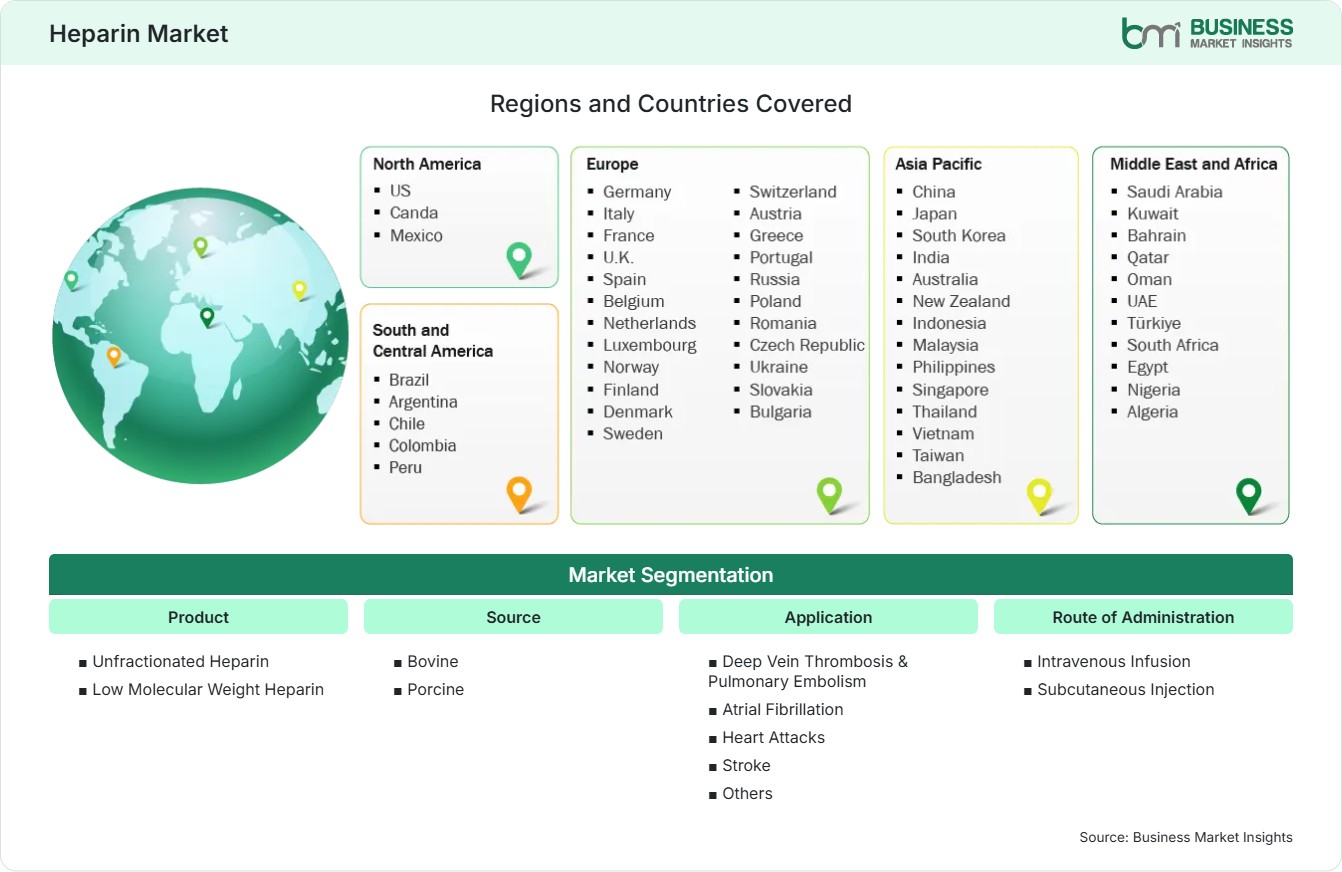
North America accounts for 48%–52% of the heparin market share in 2025 and is expected to register a 4.8%–5.2% CAGR through 2033. Regional leadership reflects advanced healthcare infrastructure, substantial cardiovascular treatment volumes, strong reimbursement mechanisms, and extensive use across hospitals. Demand also benefits from dialysis procedures and surgical interventions. Manufacturers prioritize supply security, regulatory compliance, and quality assurance initiatives. The region remains a major center for pharmaceutical innovation, advanced anticoagulation protocols, and adoption of newer treatment pathways.
- High cardiovascular disease prevalence supports sustained anticoagulant utilization throughout acute-care and specialty-care settings.
- Hospitals remain primary purchasers due to extensive surgical and interventional procedure volumes.
- Regulatory oversight encourages manufacturing quality improvements and supply-chain transparency.
- Growing emphasis on thrombosis prevention strengthens long-term consumption across chronic-care populations.
US Heparin Market
The United States represents approximately 80%–85% of North American share and is projected to grow at 4.9%–5.3% CAGR. Extensive healthcare spending, advanced treatment access, and significant cardiovascular disease burden support demand. Strong procurement systems, robust clinical guidelines, and widespread anticoagulant adoption contribute to market stability. Pharmaceutical companies continue investing in manufacturing reliability and quality-control programs to address supply continuity needs.
- Rising venous thromboembolism awareness supports preventative anticoagulation use.
- Large dialysis patient populations generate recurring demand.
- Strong hospital networks accelerate treatment adoption.
- Continued investment in injectable manufacturing enhances supply security.
Europe Heparin Market
Europe holds a 22%–26% share in 2025 and is expected to achieve 4.9%–5.4% CAGR. Demand is supported by aging demographics, cardiovascular disease prevalence, and extensive public healthcare coverage. Germany remains the leading country, while Eastern European markets demonstrate faster expansion. Regulatory standards emphasizing product quality and pharmacovigilance continue influencing procurement decisions. Clinical preference for established anticoagulants supports stable utilization across hospitals and specialty facilities.
- Germany leads regional consumption through advanced healthcare infrastructure.
- Poland and selected Eastern European countries show stronger growth potential at 5.5%–6.0%.
- Established reimbursement policies encourage treatment accessibility.
- Biopharmaceutical innovation supports product refinement and lifecycle management.
Asia Pacific Heparin Market
Asia Pacific region accounts for the highest market share between 24% and 28% and is expected to grow at a CAGR of 6.5% to 7.1%. This makes it the fastest-growing region in the market. Factors driving the high demand include the expansion of healthcare facilities, rising patient numbers, and increased awareness of thrombosis management. The largest market in this region is China, while India is experiencing rapid growth. Manufacturing capacity expansion and government healthcare investments continue to strengthen regional competitiveness and production capability.
- China leads regional demand and manufacturing activity.
- India is forecast among the fastest-growing national markets with 7.0%–7.5% growth.
- Healthcare infrastructure modernization expands treatment accessibility.
- Rising surgical volumes increase anticoagulant utilization.
- Domestic pharmaceutical production investments strengthen supply resilience.
Rest of World Heparin Market
The Rest of World region accounts for a 6%–10% share and is expected to grow at 5.5%–6.1% CAGR. South and Central America benefit from healthcare expansion and growing chronic disease management programs. The Middle East and Africa are supported by hospital development projects and increasing investment in specialty medical services. Brazil remains the leading Latin American market, while Saudi Arabia represents a high-growth Middle Eastern opportunity.
- Brazil leads regional demand through expanding healthcare services.
- Saudi Arabia demonstrates accelerated adoption linked to healthcare transformation programs.
- Increased specialty-care investment supports anticoagulant utilization.
- Improving diagnostic capabilities enhances thrombosis treatment rates.