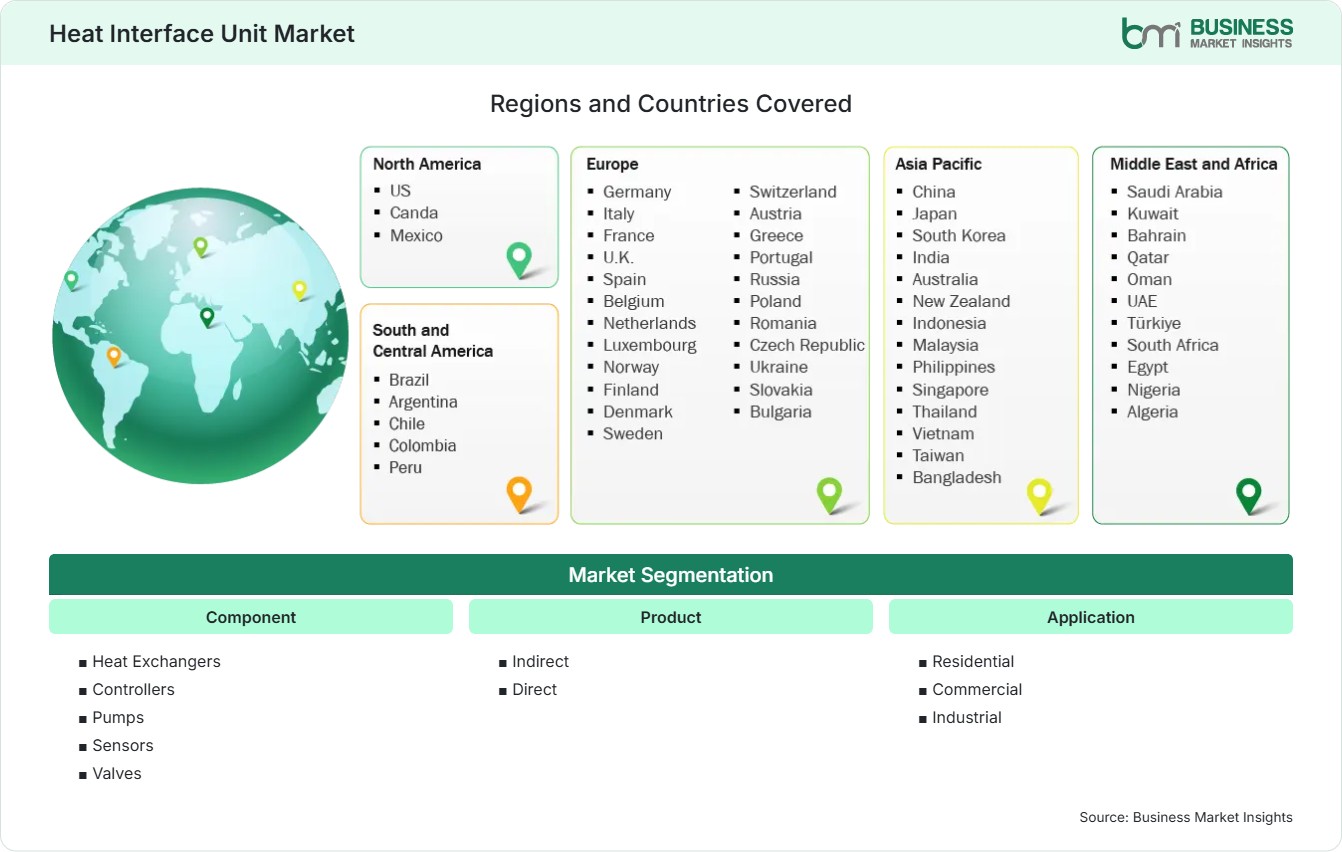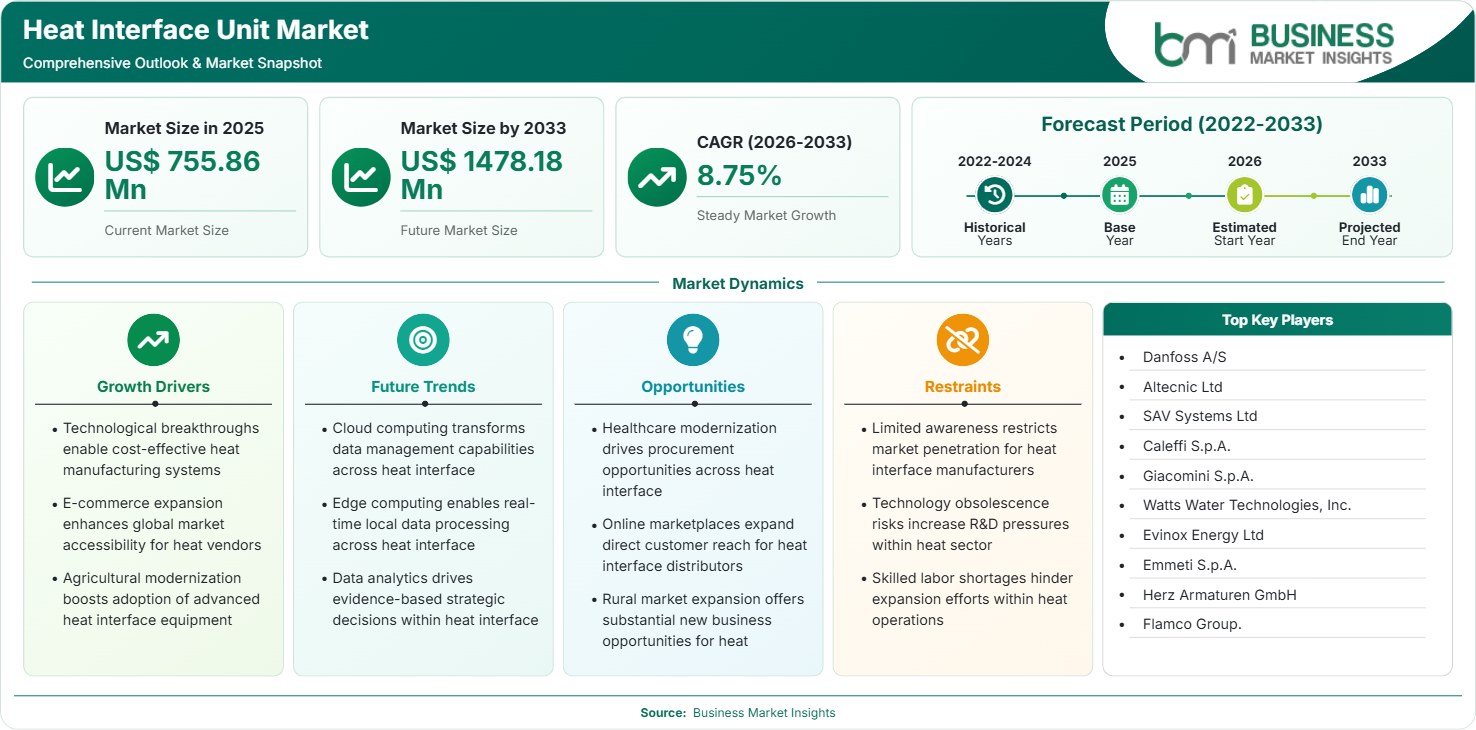
Heat Interface Unit Market Regional Highlights
North America Heat Interface Unit Market
North America accounts for 32%–35% of global demand in 2025 and is forecast to expand at 7.8%–8.3% CAGR through 2033. The region benefits from mature district-energy infrastructure, sustainability targets, and extensive multifamily housing stock. Utilities and city authorities are investing in energy-efficient thermal distribution. Heat Interface Unit Market share remains concentrated in major urban centers where decarbonization strategies support district heating modernization and building electrification initiatives.
- District-energy upgrades across major cities increase demand for intelligent thermal transfer equipment and metering systems.
- Multifamily residential retrofits improve energy efficiency while supporting lower operating costs and emissions objectives.
- Building-performance regulations encourage adoption of digitally controlled thermal management technologies.
- Utility modernization programs strengthen long-term procurement opportunities across institutional and commercial facilities.
US Heat Interface Unit Market
The United States represents approximately 72%–76% of North American demand and records a 7.9%–8.4% CAGR. Deployment remains strongest in mixed-use developments, universities, healthcare campuses, and district-energy systems. Developers increasingly prioritize operational efficiency and monitoring capabilities. Adoption benefits from sustainability commitments and long-term carbon-reduction strategies supporting advanced thermal distribution technologies.
- Campus district-energy networks continue upgrading legacy heat-transfer infrastructure to improve performance.
- Smart-building investments accelerate integration of remotely monitored energy-management systems.
- Commercial real-estate redevelopment projects support installation of compact and digitally enabled units.
- Energy-efficiency incentives improve financial viability for modernization initiatives.
Europe Heat Interface Unit Market
Europe holds 34%–37% market share in 2025 and advances at 8.1%–8.8% CAGR. Strong district heating penetration and ambitious climate objectives support regional leadership. The United Kingdom remains a leading adopter, while Poland and several Nordic markets demonstrate elevated expansion rates. Regulatory emphasis on energy performance, renewable heating integration, and low-temperature networks strengthens demand for efficient thermal interface solutions.
- Low-temperature district heating deployment supports higher-efficiency system architectures.
- UK market leadership is reinforced through multifamily housing and heat network expansion.
- Poland records one of the strongest regional growth trajectories, exceeding many mature markets.
- Smart metering requirements encourage integration of intelligent control technologies.
- Retrofit activity supports replacement of older generation equipment.
Asia Pacific Heat Interface Unit Market
Asia Pacific captures 24%–27% share in 2025 and records the fastest expansion at 10.4%–11.2% CAGR. China remains the largest regional market due to extensive urban housing projects and district heating investment. India represents a high-growth opportunity supported by sustainable infrastructure development. Heat Interface Unit Market growth across the region reflects urbanization, energy-efficiency mandates, and smart-city initiatives.
- China leads installation volumes through large-scale residential development programs.
- India demonstrates rapid growth driven by modern urban infrastructure investment.
- Smart-city projects incorporate centralized thermal management as part of sustainability planning.
- Commercial real-estate expansion strengthens demand for advanced heating solutions.
- Digital monitoring platforms gain traction across newly developed properties.
Rest of World Heat Interface Unit Market
Rest of World represents 8%–10% share during 2025 and is projected to grow at 8.6%–9.3% CAGR. Middle Eastern developments increasingly incorporate district cooling and heating infrastructure. South and Central American demand remains comparatively smaller but benefits from modernization investments. The UAE leads regional adoption, while Saudi Arabia demonstrates notable growth momentum through large-scale development projects.
- Smart-city investments support deployment across mixed-use and residential projects.
- UAE remains a regional leader due to advanced infrastructure initiatives.
- Saudi Arabia records strong demand linked to large development programs.
- Institutional projects create opportunities for centralized thermal solutions.
- Operational efficiency goals encourage adoption of digitally monitored systems.