Market Summary
Executive Summary and Global Market Analysis
The Hazardous Area Equipment market focuses on environmentally conscious mining practices that reduce ecological pressure during extraction and processing activities. The industry integrates cleaner technologies, resource management systems, and operational methods designed to improve energy efficiency and reduce waste generation. Mining operators are adopting sustainable practices to align production activities with environmental standards and long-term resource conservation goals.
Mining companies are adjusting operational models to address fuel consumption, water scarcity, and land rehabilitation concerns. Regulatory frameworks promoting lower emissions and responsible extraction practices continue influencing investment priorities across mining operations. In parallel, industry participants are evaluating technologies that support efficient mineral recovery while limiting environmental disruption. Sustainability targets are increasingly incorporated into project planning and mine development strategies.
Technology segmentation includes Renewable Energy Mining, Waste Reduction, and Water Recovery solutions. Renewable Energy Mining attracts attention through lower dependency on conventional fuel sources at mining sites. Waste Reduction technologies support material optimization and operational efficiency. Water Recovery systems are becoming relevant in regions facing water management challenges. By application, both surface and underground mining operations are integrating cleaner operational systems. End-use adoption spans coal, metal, and mineral extraction activities.
Operational modernization continues shaping technology integration across mining environments. Surface mining facilities are incorporating energy-efficient machinery and resource monitoring systems to improve environmental performance. Underground mining operations are emphasizing ventilation efficiency and water reuse systems to maintain sustainable production conditions. Digital monitoring tools are also supporting environmental compliance and resource tracking across extraction activities.
The competitive environment reflects continuous efforts toward operational sustainability and process improvement. Industry participants are focusing on partnerships, technology integration, and infrastructure upgrades to strengthen environmental performance. Market competition is also influenced by the ability to balance productivity targets with responsible mining practices across different extraction environments.
Segment Analysis
Hazardous Area Equipment Market Segmentation
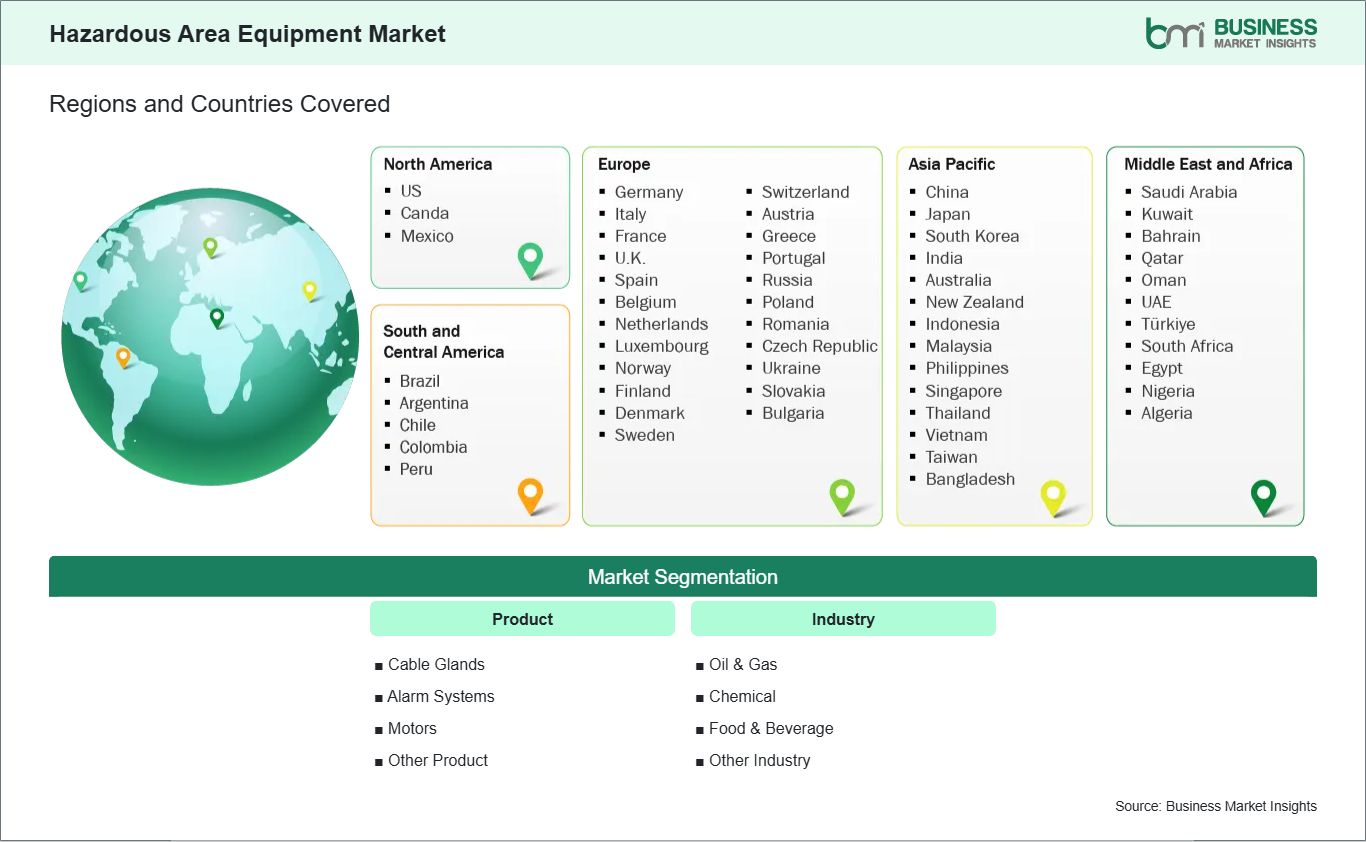
The Hazardous Area Equipment market is segmented based on product and industry, reflecting the increasing demand for safety-focused solutions such as explosion-proof equipment, reliable cable systems, and advanced monitoring technologies across high-risk industrial environments like oil & gas and chemicals.
By Product
- Cable Glands: Includes secure cable entry and sealing solutions designed for hazardous industrial environments, ensuring reliable electrical connections, explosion protection, and operational safety across industries such as oil & gas, chemical, and manufacturing.
- Alarm Systems: Covers safety and monitoring systems used in hazardous areas to detect gas leaks, fire, smoke, and other emergencies, enabling rapid response and compliance with industrial safety standards.
- Motors: Encompasses explosion-proof and flameproof motors specifically designed for operation in hazardous environments, offering safe and efficient performance in industries with combustible gases, vapors, or dust.
- Others: Includes additional hazardous area equipment such as lighting systems, control panels, sensors, junction boxes, and communication devices used to enhance safety and operational reliability.
By End-Use Industry
- Oil & Gas: Includes exploration, drilling, refining, transportation, and storage operations that require hazardous area equipment to ensure worker safety and prevent explosions in high-risk environments.
- Chemical: Covers chemical manufacturing and processing facilities where hazardous area equipment is utilized to manage flammable substances, ensure process safety, and comply with strict industrial regulations.
- Food & Beverage: Encompasses food processing and beverage production facilities that use hazardous area equipment in environments with combustible dust and stringent hygiene and safety requirements.
- Other Industry: Includes industries such as pharmaceuticals, mining, power generation, marine, and wastewater treatment that deploy hazardous area equipment to maintain operational safety and regulatory compliance in potentially explosive environments.
Market Forces
Hazardous Area Equipment Market Drivers and Opportunities
Industrial Safety Compliance Expansion
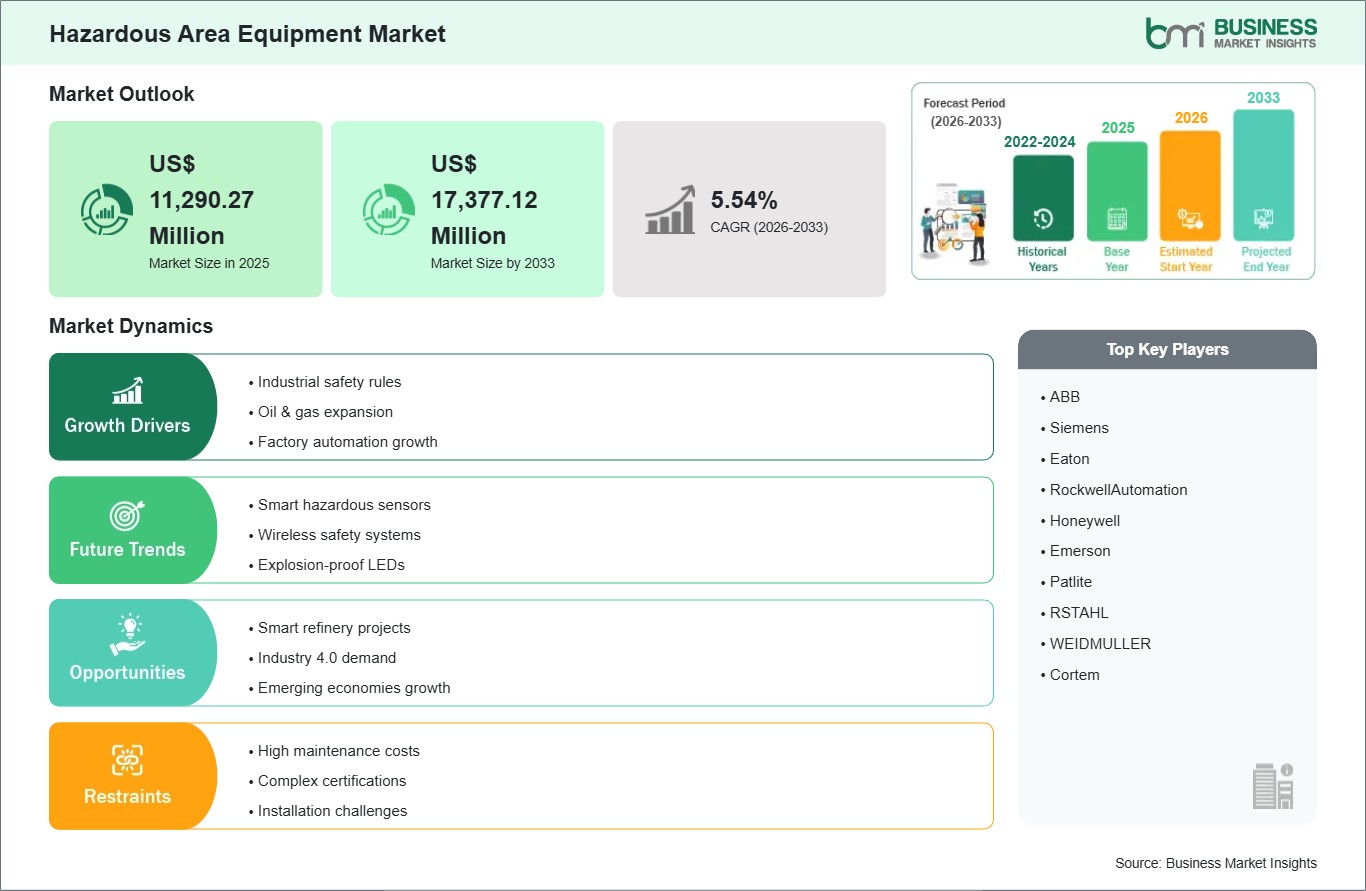
Industrial operators are strengthening safety frameworks to reduce operational hazards across high-risk facilities. Hazardous area equipment deployment supports compliance with industrial protection standards while maintaining uninterrupted production activities. Industries handling combustible materials increasingly require specialized electrical and mechanical systems capable of operating safely under controlled conditions. This requirement continues influencing procurement decisions across oil & gas, chemical, and manufacturing environments.
Regulatory oversight surrounding workplace safety and equipment certification remains an important market influence. Industrial facilities are implementing modern protection systems to improve monitoring accuracy and operational control. Equipment suppliers are responding with certified solutions designed for hazardous operating conditions and long-term reliability. These developments continue reinforcing the relevance of hazardous area equipment across industries requiring strict environmental and personnel protection measures.
Industrial Automation Integration
Industrial automation trends are creating opportunities for hazardous area equipment manufacturers to expand intelligent product capabilities. Facilities operating in hazardous environments increasingly seek integrated systems supporting remote monitoring, predictive maintenance, and operational visibility. Advanced alarm systems and connected motor technologies are becoming more relevant within digitally managed industrial plants requiring continuous performance tracking.
Future industrial modernization projects are expected to broaden deployment opportunities across established and developing markets. Expanding infrastructure investments within energy processing and industrial manufacturing facilities may strengthen long-term equipment demand. Product innovation focused on durability, connectivity, and operational efficiency could support wider adoption across industries managing combustible materials and hazardous operational environments.
Hazardous Area Equipment Market Size and Share Analysis
Cable glands maintain a significant market position due to their importance in electrical protection and secure equipment connectivity. Alarm systems continue gaining attention as industrial facilities strengthen monitoring capabilities and emergency preparedness infrastructure. Hazardous area motors also remain widely deployed across industrial operations requiring durable equipment performance under controlled safety conditions.
Oil & gas applications continue representing a major share of market deployment because of complex operational environments and strict safety requirements. Chemical processing facilities also contribute substantial equipment utilization across production and storage operations. Food & beverage manufacturers are increasingly adopting specialized safety equipment to address combustible dust management and workplace protection objectives.
Size and Share Analysis
Hazardous Area Equipment Market Size and Share Analysis
The Hazardous Area Equipment Market is projected to grow from US$ 11,290.27 Million in 2025 to US$ 17,377.12 Million by 2033 , registering a CAGR of 5.54% from 2026 to 2033.
Cable glands maintain a significant market position due to their importance in electrical protection and secure equipment connectivity. Alarm systems continue gaining attention as industrial facilities strengthen monitoring capabilities and emergency preparedness infrastructure. Hazardous area motors also remain widely deployed across industrial operations requiring durable equipment performance under controlled safety conditions.
Oil & gas applications continue representing a major share of market deployment because of complex operational environments and strict safety requirements. Chemical processing facilities also contribute substantial equipment utilization across production and storage operations. Food & beverage manufacturers are increasingly adopting specialized safety equipment to address combustible dust management and workplace protection objectives.
Report Coverage
Hazardous Area Equipment Market Report Coverage and Deliverables
The "Hazardous Area Equipment Market Size and Forecast (2022–2033)" report provides a detailed analysis of the market covering below areas:
- Hazardous Area Equipment market size and forecast at global, regional, and country levels for all the key market segments covered under the scope
- Hazardous Area Equipment market trends, as well as market dynamics such as drivers, restraints, and key opportunities
- Hazardous Area Equipment market analysis covering key market trends, global and regional framework, major players, regulations, and recent market developments
- Industry landscape and competition analysis covering market concentration, heat map analysis, prominent players, and recent developments for the Hazardous Area Equipment market
- Detailed company profiles, including SWOT analysis
Geographic Insights
Hazardous Area Equipment Market Geographic Insights
The Hazardous Area Equipment market shows diverse regional adoption patterns influenced by industrial safety regulations, infrastructure modernization, and sector-specific operational requirements. Demand patterns vary according to industrial concentration, hazardous material handling practices, and investment in process automation technologies. Countries with extensive energy, manufacturing, and chemical processing operations continue maintaining stable deployment of hazardous area systems.
North America maintains a strong position due to established oil & gas infrastructure and industrial safety compliance practices. The United States continues investing in refinery modernization, process safety systems, and hazardous facility management technologies. Canada also supports equipment utilization through energy production activities and industrial operational standards requiring certified protection systems across hazardous environments.
Asia Pacific demonstrates expanding industrial utilization supported by manufacturing growth and infrastructure development activities. China and India continue strengthening industrial production capabilities across chemicals, energy, and processing industries requiring specialized hazardous area equipment. Japan and South Korea also maintain consistent deployment through advanced manufacturing operations emphasizing operational precision and workplace safety management.
Europe maintains stable market activity supported by strict industrial protection standards and modernization initiatives. Germany, France, and the United Kingdom continue adopting certified equipment across manufacturing and chemical processing facilities. Emerging markets in the Middle East and Latin America are also strengthening industrial safety investments, particularly within energy production and industrial processing environments requiring durable hazardous area systems.
Industry Activity
Recent Developments
The Hazardous Area Equipment market is evaluated by gathering qualitative and quantitative data post primary and secondary research, which includes important corporate publications, association data, and databases. A few of the key developments in the Hazardous Area Equipment market are:
- In 2026, ABB launched a new IE6 ultra-high efficiency motor for hazardous oil & gas environments. It uses magnet-free SynRM technology, is certified for explosive areas (ATEX/IECEx), and delivers much higher efficiency—cutting energy losses by up to 60% compared to IE3 motors while reducing costs and emissions.
- In 2026, ABB launched a magnet-free IE6 hyper-efficiency motor for hazardous industrial areas like oil & gas, chemicals, and pharmaceuticals. It is certified for ATEX and IECEx safety standards and uses synchronous reluctance (SynRM) technology.
Trust & Transparency
Research Methodology
The market analysis combines proprietary research with secondary data from government agencies, company disclosures, regulatory filings, industry databases and expert interviews. Market estimates are validated through data triangulation, cross-market benchmarking and analyst
review.
View Full Research Methodology
Key Sources Referred:
Industry reports on sustainable tire manufacturing and automotive mobility Government transportation and environmental policy publications Automotive trade journals and tire technology periodicals Company annual reports and sustainability disclosures Academic studies on bio-based polymers and recycled materials International automotive production and mobility assessments Research publications covering tire material innovation and efficiency trends Company website Company annual reports Company investor presentations