Market Summary
Executive Summary and Global Market Analysis
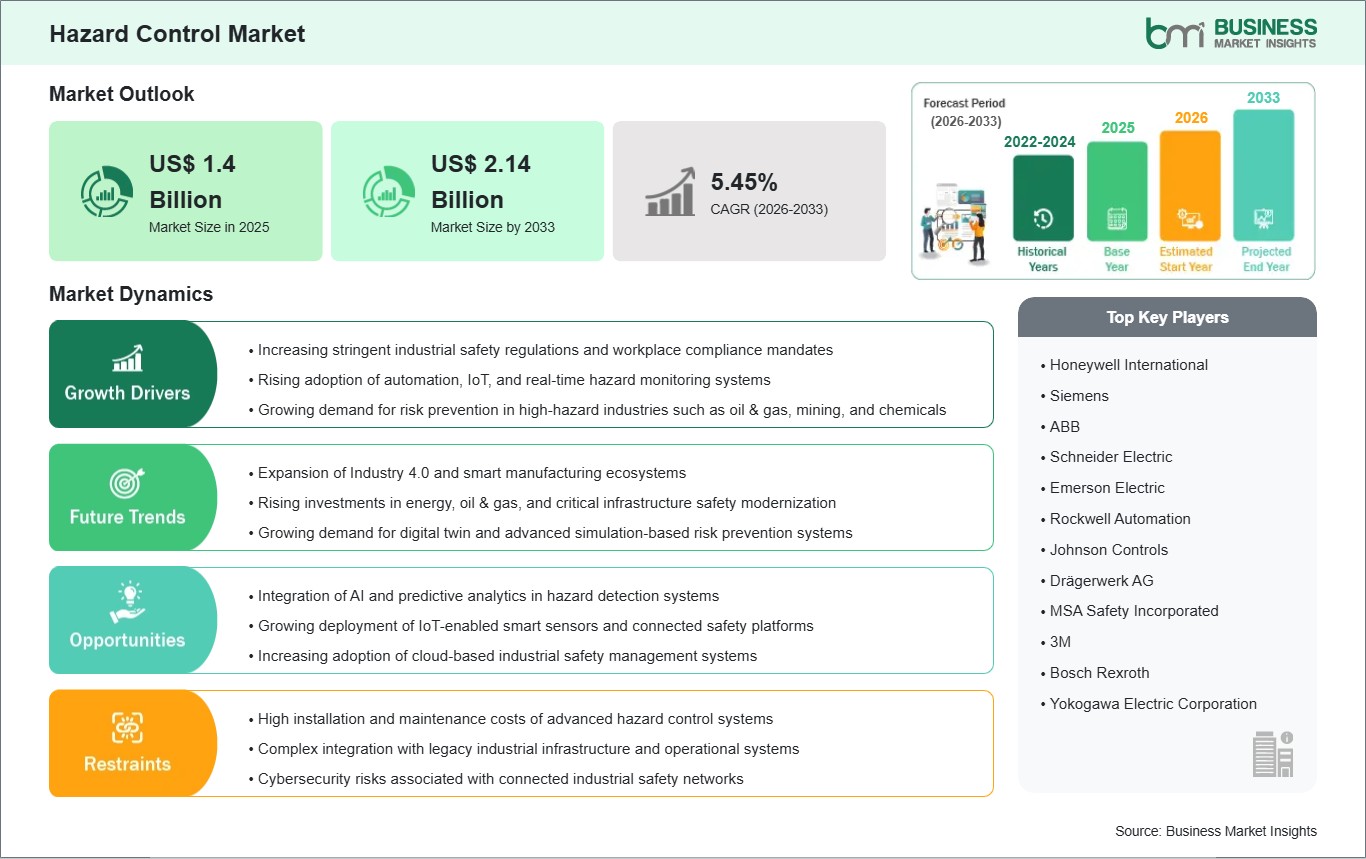
Hazard Control Market refers to the industry focused on technologies, systems, and solutions designed to identify, monitor, mitigate, and manage hazardous conditions across industrial, commercial, and infrastructure environments. These solutions include gas detection systems, fire and smoke detection systems, emergency shutdown systems, radiation detection systems, industrial safety controls, and integrated hazard management platforms. Modern hazard control systems increasingly leverage IoT-enabled sensors, AI-based predictive analytics, cloud-connected monitoring platforms, and real-time alert systems to ensure rapid detection and response to potential risks. The growing emphasis on workplace safety regulations, industrial automation, and critical infrastructure protection is driving widespread adoption across sectors such as oil & gas, manufacturing, mining, chemicals, energy, transportation, and construction. Additionally, increasing awareness of occupational safety standards and government mandates related to industrial risk management are significantly contributing to market growth.
However, the market faces several constraints that may limit widespread adoption in certain regions and industries. High installation and maintenance costs associated with advanced hazard detection and control systems remain a major barrier, particularly for small and medium-sized enterprises. The complexity of integrating hazard control systems with existing industrial automation infrastructure also presents operational challenges, especially in legacy plants. False alarms, sensor calibration issues, and system reliability under extreme environmental conditions can impact operational efficiency and user confidence. Additionally, cybersecurity risks associated with connected industrial safety systems pose growing concerns as digitalization increases across industrial environments. A shortage of skilled safety engineers and technical personnel further restricts optimal deployment and system management in developing regions.
Despite these challenges, the hazard control market is expected to witness strong growth driven by increasing industrial safety requirements and rapid digital transformation of industrial operations. Opportunities are emerging through the integration of AI-powered predictive hazard detection systems capable of identifying risks before they escalate into critical incidents. The expansion of Industry 4.0, smart factories, and connected industrial ecosystems is accelerating demand for real-time monitoring and automated emergency response systems. Additionally, rising investments in renewable energy infrastructure, oil & gas safety modernization, and smart city projects are creating new application areas for advanced hazard control technologies. The growing adoption of wireless sensor networks, edge computing, and cloud-based safety platforms is further enhancing system scalability and responsiveness. Collectively, these advancements position the hazard control market for sustained long-term growth as a critical enabler of industrial safety and risk management worldwide.
Segment Analysis
Hazard Control Market Segmentation
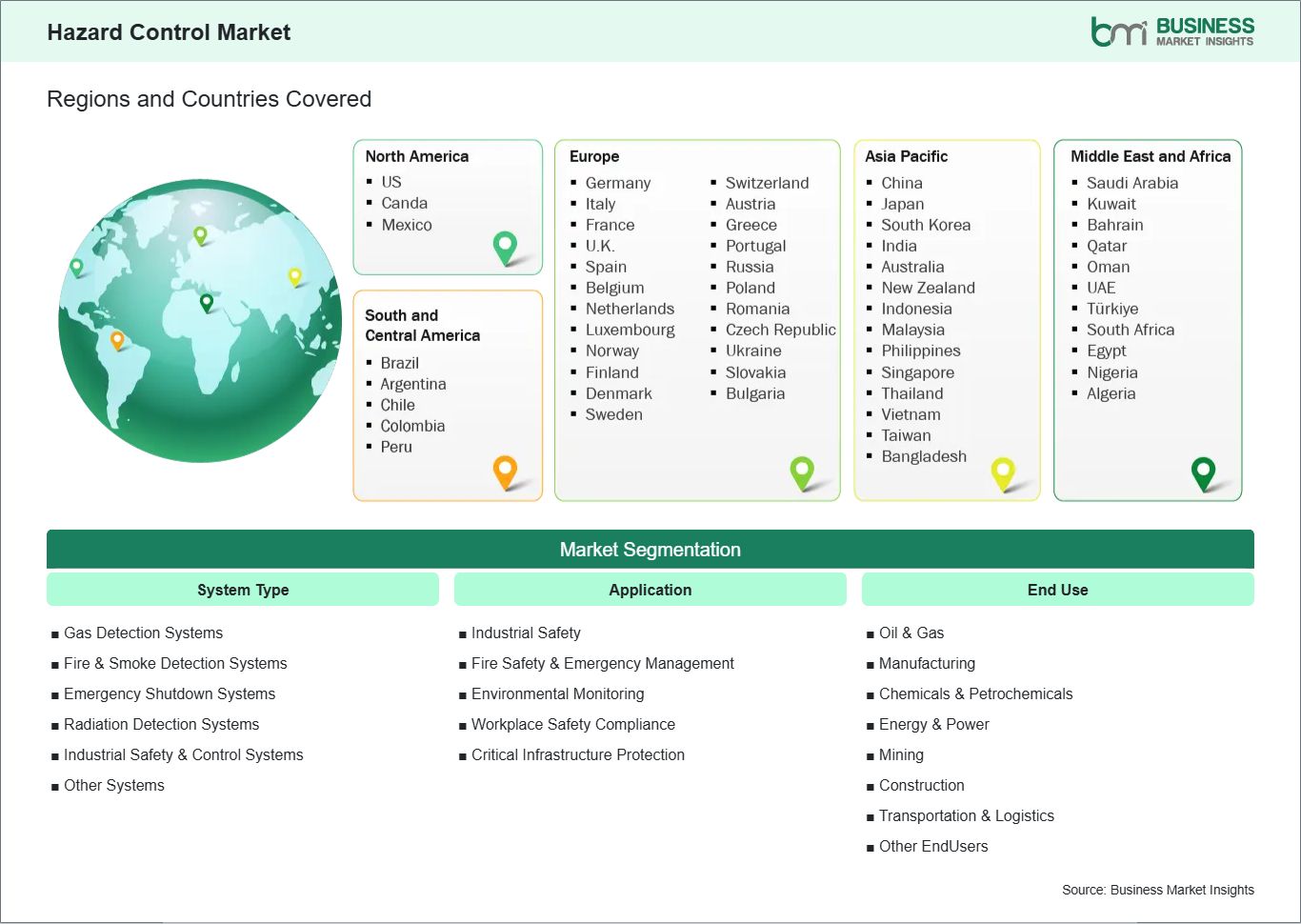
The hazard control market is segmented based on component, system type, application, and end use, reflecting the growing deployment of advanced safety technologies, real-time monitoring systems, and automated risk mitigation solutions across industrial and infrastructure environments.
By Component
- Hardware: Includes sensors, detectors, control panels, alarm systems, actuators, emergency shutdown devices, and monitoring equipment used for hazard identification and response
- Software: Covers hazard management platforms, predictive analytics systems, real-time monitoring dashboards, and AI-based risk detection applications for safety optimization
- Services: Encompasses installation, maintenance, system integration, consulting, training, and managed safety services supporting continuous hazard control operations
By System Type
- Gas Detection Systems: Includes fixed and portable gas detectors used to identify toxic, flammable, and hazardous gas leaks in industrial environments
- Fire & Smoke Detection Systems: Covers advanced fire alarms, smoke sensors, heat detectors, and automated suppression systems for early fire hazard identification
- Emergency Shutdown Systems (ESD): Includes automated systems designed to safely shut down industrial operations during hazardous conditions to prevent escalation
- Radiation Detection Systems: Used in nuclear facilities, healthcare, and industrial applications to monitor and control exposure to harmful radiation levels
- Industrial Safety & Control Systems: Encompasses integrated platforms that manage machine safety, process control, and operational risk mitigation
- Others: Includes additional hazard monitoring systems such as chemical spill detection, explosion prevention systems, and environmental hazard monitoring solutions
By Application
- Industrial Safety: Focuses on ensuring worker safety and operational risk management across manufacturing, processing, and heavy industries
- Fire Safety & Emergency Management: Covers early hazard detection, fire prevention, and emergency response coordination systems
- Environmental Monitoring: Includes detection and control of air, water, and soil contamination hazards in industrial and public environments
- Workplace Safety Compliance: Focuses on adherence to occupational health and safety regulations and standards across industries
- Critical Infrastructure Protection: Covers hazard control in sensitive facilities such as power plants, airports, refineries, and transportation systems
By Application
- Airside: Focuses on runway operations, aircraft movement management, air traffic coordination, apron monitoring, and ground handling activities within secured airport operational zones
- Terminal Side: Covers passenger movement, baggage processing, security screening, boarding operations, and terminal facility management to optimize traveler experience and operational efficiency
- Landside: Includes airport access management, parking systems, transportation coordination, public safety systems, and external airport infrastructure management
By End Use
- Oil & Gas: Includes upstream, midstream, and downstream operations requiring advanced hazard detection and explosion prevention systems
- Manufacturing: Covers automotive, electronics, metal, and heavy manufacturing facilities implementing safety and process control systems
- Chemicals & Petrochemicals: Includes facilities handling hazardous substances requiring continuous monitoring and emergency response systems
- Energy & Power: Covers thermal, nuclear, and renewable energy plants focused on operational safety and hazard mitigation
- Mining: Includes underground and surface mining operations requiring gas detection, structural safety, and emergency systems
- Construction: Focuses on site safety monitoring, equipment hazard control, and worker safety systems in infrastructure projects
- Transportation & Logistics: Includes ports, railways, and warehouses implementing hazard monitoring and fire safety systems
- Others: Includes healthcare, government facilities, and commercial buildings requiring integrated safety and emergency management systems
Market Forces
Hazard Control Market Drivers and Opportunities
Increasing Industrial Safety Regulations, Automation Adoption, and Demand for Risk Mitigation Solutions
The Hazard Control Market is primarily driven by the rising emphasis on industrial safety regulations, stringent government compliance standards, and the growing need to prevent workplace accidents across high-risk industries. Sectors such as oil & gas, chemicals, mining, energy, and manufacturing are increasingly deploying advanced hazard control systems including gas detection, fire and smoke detection, emergency shutdown systems, and integrated industrial safety platforms to minimize operational risks and ensure workforce protection. Unlike traditional safety mechanisms, modern hazard control solutions leverage IoT-enabled sensors, real-time monitoring systems, and AI-powered analytics to detect potential hazards at an early stage and trigger automated responses. The rapid expansion of industrial automation and smart manufacturing is further accelerating the demand for intelligent safety systems that can operate seamlessly within connected industrial ecosystems. Additionally, increasing awareness of occupational health and safety standards, along with regulatory penalties for non-compliance, is compelling industries to adopt advanced hazard control technologies.
Rising Adoption of Industry 4.0, Predictive Safety Analytics, and Smart Industrial Ecosystems
Opportunities in the Hazard Control Market are expanding significantly due to the ongoing transformation toward Industry 4.0 and the development of smart factories and connected industrial environments. The integration of artificial intelligence, machine learning, and predictive analytics is enabling next-generation hazard control systems capable of identifying potential risks before they escalate into critical incidents. The increasing deployment of IoT-based sensor networks and cloud-connected safety platforms is enhancing real-time hazard visibility and improving decision-making across industrial operations. Growing investments in oil & gas infrastructure modernization, renewable energy projects, and large-scale industrial expansion are creating strong demand for advanced safety and monitoring solutions. Furthermore, the emergence of autonomous industrial systems and digital twin technologies is opening new possibilities for simulation-based hazard prediction and proactive risk management. The rising focus on sustainable industrial operations and workforce safety is also encouraging organizations to invest in scalable, intelligent, and integrated hazard control ecosystems, positioning the market for strong long-term growth.
Size and Share Analysis
Hazard Control Market Size and Share Analysis
The Hazard Control Market is projected to grow from US$ 1.4 Billion in 2025 to US$ 2.14 Billion by 2033 , registering a CAGR of 5.45% from 2026 to 2033.
By component, hardware holds a significant share of the market due to the widespread deployment of gas detectors, fire and smoke sensors, emergency shutdown devices, control panels, and industrial safety equipment across high-risk industries. Software is witnessing strong growth as industries increasingly adopt AI-powered hazard monitoring platforms, predictive analytics systems, and real-time safety management dashboards to enhance risk detection and operational visibility. Services are also expanding steadily, driven by rising demand for installation, system integration, maintenance, compliance auditing, and managed safety solutions across industrial facilities.
By system type, gas detection systems account for a major market share owing to their critical role in identifying toxic, flammable, and hazardous gas leaks in oil & gas, chemical, and mining industries. Fire and smoke detection systems continue to grow significantly due to increasing industrial fire safety regulations and the need for early warning systems in high-risk environments. Emergency shutdown systems (ESD) are also widely adopted as industries prioritize automated operational shutdown mechanisms to prevent catastrophic failures and ensure worker safety. Industrial safety and control systems are gaining traction as organizations move toward integrated safety architectures that combine multiple hazard detection functions into centralized platforms.
Report Coverage
Hazard Control Market Report Coverage and Deliverables
The "Hazard Control Market Size and Forecast (2022–2033)" report provides a detailed analysis of the market covering below areas:
- hazard control market size and forecast at global, regional, and country levels for all market segments covered under the scope
- hazard control market trends, as well as drivers, restraints, and opportunities
- hazard control market analysis covering key trends, global and regional framework, major players, regulations, and recent developments
- Industry landscape and competition analysis covering market concentration, heat map analysis, prominent players, and recent developments for the hazard control market
- Detailed company profiles, including SWOT analysis
Geographic Insights
Hazard Control Market Geographic Insights
The Hazard Control Market shows strong regional variation driven by differences in industrialization levels, safety regulations, infrastructure development, and adoption of advanced automation and monitoring technologies across key economies.
North America holds a significant share of the hazard control market due to its highly developed industrial base, strict occupational safety regulations, and early adoption of advanced safety technologies. The United States and Canada are witnessing strong deployment of gas detection systems, fire and smoke detection solutions, emergency shutdown systems, and integrated industrial safety platforms across oil & gas, chemical processing, and manufacturing industries. The region is also characterized by high adoption of IoT-enabled monitoring systems, AI-based predictive safety analytics, and cloud-connected industrial control platforms. Increasing investments in industrial automation, aging infrastructure upgrades, and stringent regulatory frameworks such as OSHA compliance requirements are further driving market growth across North America..
Asia Pacific is the fastest-growing region in the hazard control market, driven by rapid industrialization, expanding manufacturing activities, and increasing investments in infrastructure and energy projects. Countries such as China, India, Japan, South Korea, and Southeast Asian nations are witnessing rising demand for industrial safety systems across oil & gas, mining, construction, and manufacturing sectors. The region benefits from large-scale industrial expansion, cost-effective manufacturing ecosystems, and increasing government emphasis on workplace safety regulations. Growing adoption of Industry 4.0 technologies, smart factories, and IoT-enabled industrial monitoring systems is further accelerating market growth in Asia Pacific.
Overall, all regions are contributing to the expansion of the Hazard Control Market, with growth strongly influenced by industrial safety regulations, automation adoption, and increasing focus on risk prevention across critical industries.
Industry Activity
Recent Developments
The hazard control marketis evaluated by gathering qualitative and quantitative data post primary and secondary research, which includes important corporate publications, association data, and databases. A few of the key developments in the hazard control marketare:
- In May 2026, ASRock Industrial, announces the launch of the iEP-5010G-DCN, a fanless industrial controller engineered for deployment in hazardous and safety-regulated environments. Powered by the Intel Atom x6425RE processor (Elkhart Lake) and supporting In-band ECC memory, the iEP-5010G-DCN delivers robust performance, flexible IOs, and expansion optimized for industrial automation and distributed edge control.
- In October 2025, Wolters Kluwer today announced the launch of Enablon Process Hazard Analysis (PHA), a new, cloud-native SaaS application designed to revolutionize how organizations manage operational risk, safety, and compliance across industrial sites.
Trust & Transparency
Research Methodology
The market analysis combines proprietary research with secondary data from government agencies, company disclosures, regulatory filings, industry databases and expert interviews. Market estimates are validated through data triangulation, cross-market benchmarking and analyst
review.
View Full Research Methodology
Key Sources Referred:
World Bank – Global Trade Indicators World Trade Organization (WTO) (International Monetary Fund )IMF International Trade Administration (ITA) Company website Company annual reports Company investor presentations