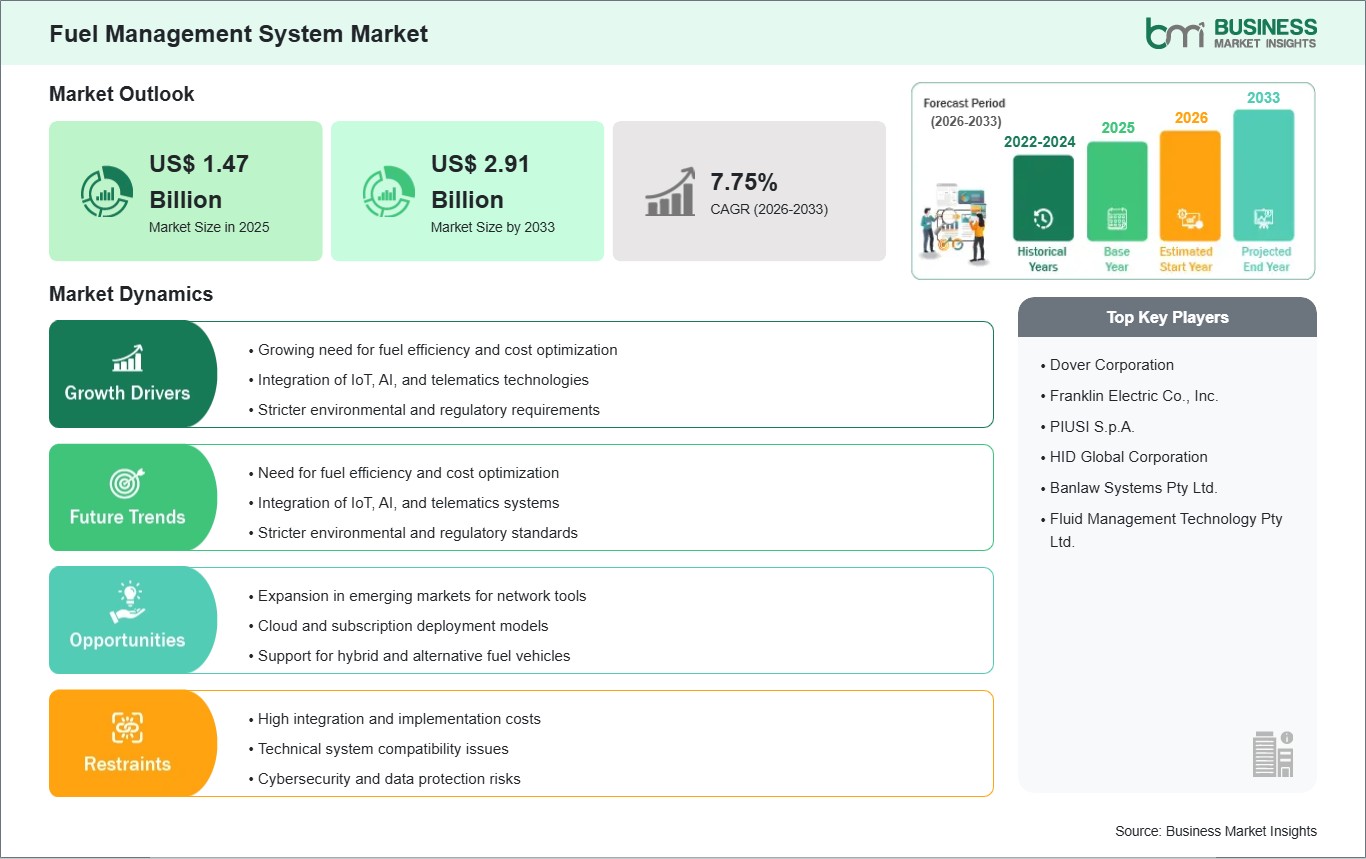
The Fuel management system market size is expected to reach US$2.91 billion by 2033 from US$1.47 billion in 2025. The market is estimated to record a CAGR of 7.75% from 2026 to 2033.
The global fuel management system market is experiencing steady adoption driven largely by the imperative to optimize fuel usage, reduce operational costs, and comply with tightening environmental regulations. Fuel remains one of the highest variable costs for industries such as transportation, logistics, oil & gas, mining, and construction, prompting businesses to deploy integrated solutions that offer real‑time monitoring, inventory tracking, and theft detection capabilities. Technological advances like IoT connectivity, cloud‑based analytics, and automated dispensing systems are enhancing system performance and making fuel management more intelligent and data‑driven. With sustainability and emissions reduction increasingly prioritized by regulators and corporate strategies alike, the market is evolving toward comprehensive energy management platforms rather than standalone fuel‑tracking tools.
From a global perspective, the market’s growth is supported by expanding transportation networks, digital fleet management adoption, and the broader trend of operational efficiency across regions. North America holds a significant share due to advanced infrastructure, stringent emissions policies, and widespread fleet telematics integration, while Europe is also investing heavily in smart monitoring driven by environmental goals. Meanwhile, the Asia Pacific region is forecast to grow fastest, led by rapid industrialization, logistics expansion, and increasing adoption of modern fuel monitoring technologies in countries such as China, India, and Japan. Emerging markets in South America, the Middle East, and Africa are also gaining traction as investment in oil & gas exploration and logistics modernization rises. Future opportunities are expected in enhanced analytics, AI‑driven predictive tools, and hybrid fuel solutions that can address evolving energy portfolios and sustainability requirements.

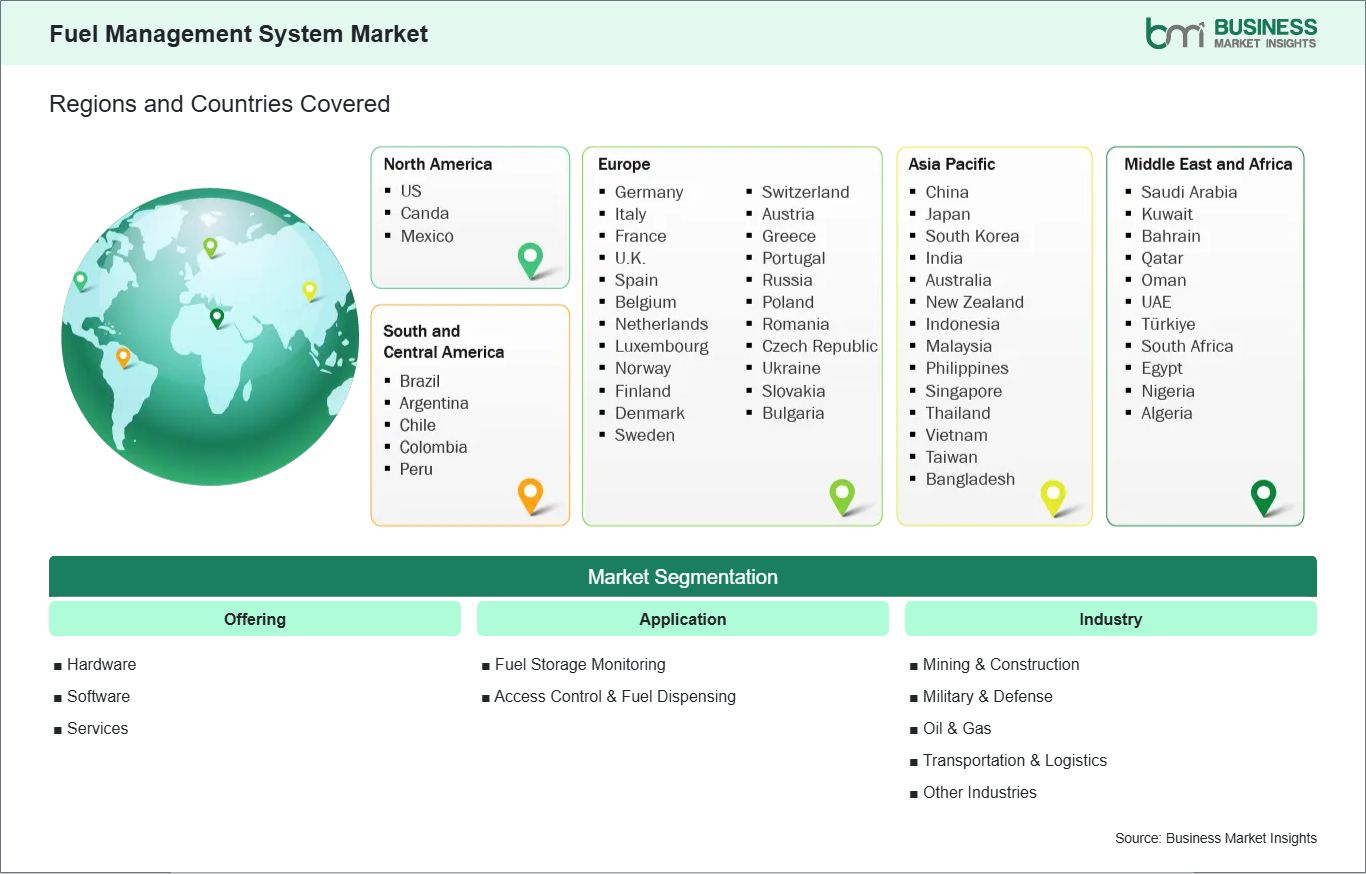
Key segments that contributed to the derivation of the Fuel management system market analysis are Type, Deployment, and Application.
One of the strongest drivers of the Fuel Management System Market is the need to control escalating fuel expenses and improve operational efficiency. Fuel constitutes a significant portion of operating costs for industries like transportation, logistics, mining, and construction. Companies are adopting fuel management systems to track real-time fuel consumption, prevent theft or unauthorized usage, and optimize fuel allocation across vehicles and equipment. By leveraging accurate data and automated monitoring, organizations can identify inefficiencies, implement cost-saving measures, and enhance fleet productivity. Additionally, integrating fuel monitoring with fleet management systems allows operators to plan routes efficiently, schedule refueling, and reduce idle time, directly impacting profitability. As fuel prices fluctuate globally, this driver remains a critical factor pushing widespread adoption of advanced fuel management solutions.
A major opportunity lies in the rapid growth of emerging markets, particularly in the Asia Pacific, South America, and Africa. Industrialization, infrastructure development, and expanding logistics networks in these regions are driving demand for commercial fleets and heavy machinery, which require efficient fuel management solutions. Adoption is fueled by increasing awareness of operational cost control, regulatory compliance, and sustainability practices. Additionally, government investments in energy and transportation infrastructure encourage organizations to implement fuel monitoring systems to optimize resources. Emerging markets also present a chance for solution providers to introduce affordable, scalable, and IoT-enabled fuel management systems tailored to local needs, creating long-term growth potential.
By Offering, the market is segmented into Hardware, Software, and Services. The Hardwaresegment dominated the market in 2025. This segment leads because hardware components — such as fuel sensors, dispensers, flow meters, control units, and probes — are essential for capturing accurate, real‑time data on fuel levels, flow, and consumption across vehicles and storage tanks. Hardware accounts for the largest share of revenues (around half of the total market) due to its foundational role in fuel monitoring systems; without these physical devices, neither software analytics nor services can operate effectively. The demand for rugged and reliable hardware is especially strong in industries with heavy machinery and large equipment fleets, such as transportation, mining, and oil & gas, where precise fuel measurement directly affects financial outcomes.
By Application, the market is segmented into Fuel Storage Monitoring, Access Control & Fuel Dispensing. The Access Control & Fuel Dispensing segment held the largest share of the market in 2025. It represents the largest share of the market (about 30 - 38%) and is a leading driver of adoption. This is because commercial fleets, delivery carriers, freight operators, and logistics companies use fuel management systems extensively to control fuel costs - one of their biggest variable expenses. With millions of trucks, vans, and heavy vehicles worldwide, fuel tracking and optimization are essential for managing operating costs, reducing unauthorized usage, and improving route efficiency. Growing e‑commerce activity and expanding freight networks are further accelerating investment in fuel management across transportation & logistics.
By Industry, the market is segmented into Mining & Construction, Military & Defense, Oil & Gas, Transportation & Logistics, and Other Industries. The Transportation & Logistics segment held the largest share of the market in 2025. It represents the largest share of the market and is a leading driver of adoption. This is because commercial fleets, delivery carriers, freight operators, and logistics companies use fuel management systems extensively to control fuel costs — one of their biggest variable expenses. With millions of trucks, vans, and heavy vehicles worldwide, fuel tracking and optimization are essential for managing operating costs, reducing unauthorized usage, and improving route efficiency.

| Report Attribute | Details |
|---|---|
| Market size in 2025 | US$ 1.47 Billion |
| Market Size by 2033 | US$ 2.91 Billion |
| Global CAGR (2026 - 2033) | 7.75% |
| Historical Data | 2022-2024 |
| Forecast period | 2026-2033 |
| Segments Covered | By Offering
|
|
Regions and Countries Covered
| |
| North America | US, Canada, Mexico |
| Europe | Belgium, Austria, Finland, Denmark, Greece, Poland, Romania, Russia, Ukraine, Czech Republic, Slovakia, Bulgaria, Italy, Luxembourg, Germany, Switzerland, France, Netherlands, Norway, Portugal, Spain, Sweden, United Kingdom |
| Asia-Pacific | Australia, China, India, Japan, South Korea, Indonesia, Malaysia, Philippines, Singapore, Thailand, Vietnam, Bangladesh, New Zealand, Taiwan |
| South and Central America | Brazil, Argentina, Peru, Chile, Colombia |
| Middle East and Africa | Bahrain, Kuwait, Oman, Qatar, Saudi Arabia, United Arab Emirates, Turkiye, South Africa, Egypt, Algeria, Nigeria |
| Market leaders and key company profiles |
|
The "Fuel Management System Market Size and Forecast (2022 - 2033)" report provides a detailed analysis of the market covering below areas:
The geographical scope of the Fuel management system market report is divided into five regions: North America, Asia Pacific, Europe, Middle East & Africa, and South & Central America. The Fuel management system market in Asia Pacific is expected to grow significantly during the forecast period.
The Asia Pacific region is emerging as the fastest-growing market for fuel management systems, driven by rapid industrialization, expanding transportation networks, and increasing commercial fleet operations. Countries such as China, India, and Japan are witnessing growing demand for efficient fuel monitoring solutions in logistics, mining, construction, and oil & gas sectors. The rise of e-commerce, infrastructure development, and government initiatives to enhance operational efficiency further fuel adoption. Additionally, companies in the region are increasingly integrating IoT-enabled sensors, cloud-based software, and telematics solutions to optimize fuel consumption, reduce operational costs, and prevent theft. With a combination of rising fuel costs, environmental regulations, and modernization of fleet management practices, the Asia Pacific offers significant growth potential for fuel management system providers.

The Fuel management system market is evaluated by gathering qualitative and quantitative data post primary and secondary research, which includes important corporate publications, association data, and databases. A few of the key developments in the DIY Home Automation market are:
The Fuel Management System Market is valued at US$ 1.47 Billion in 2025, it is projected to reach US$ 2.91 Billion by 2033.
As per our report Fuel Management System Market, the market size is valued at US$ 1.47 Billion in 2025, projecting it to reach US$ 2.91 Billion by 2033. This translates to a CAGR of approximately 7.75% during the forecast period.
The Fuel Management System Market report typically cover these key segments-
The historic period, base year, and forecast period can vary slightly depending on the specific market research report. However, for the Fuel Management System Market report:
The Fuel Management System Market is populated by several key players, each contributing to its growth and innovation. Some of the major players include:
The Fuel Management System Market report is valuable for diverse stakeholders, including:
Essentially, anyone involved in or considering involvement in the Fuel Management System Market value chain can benefit from the information contained in a comprehensive market report.
Please tell us your area of interest
(Market Segments/ Regions and Countries/ Companies)