Market Summary
Executive Summary and Global Market Analysis
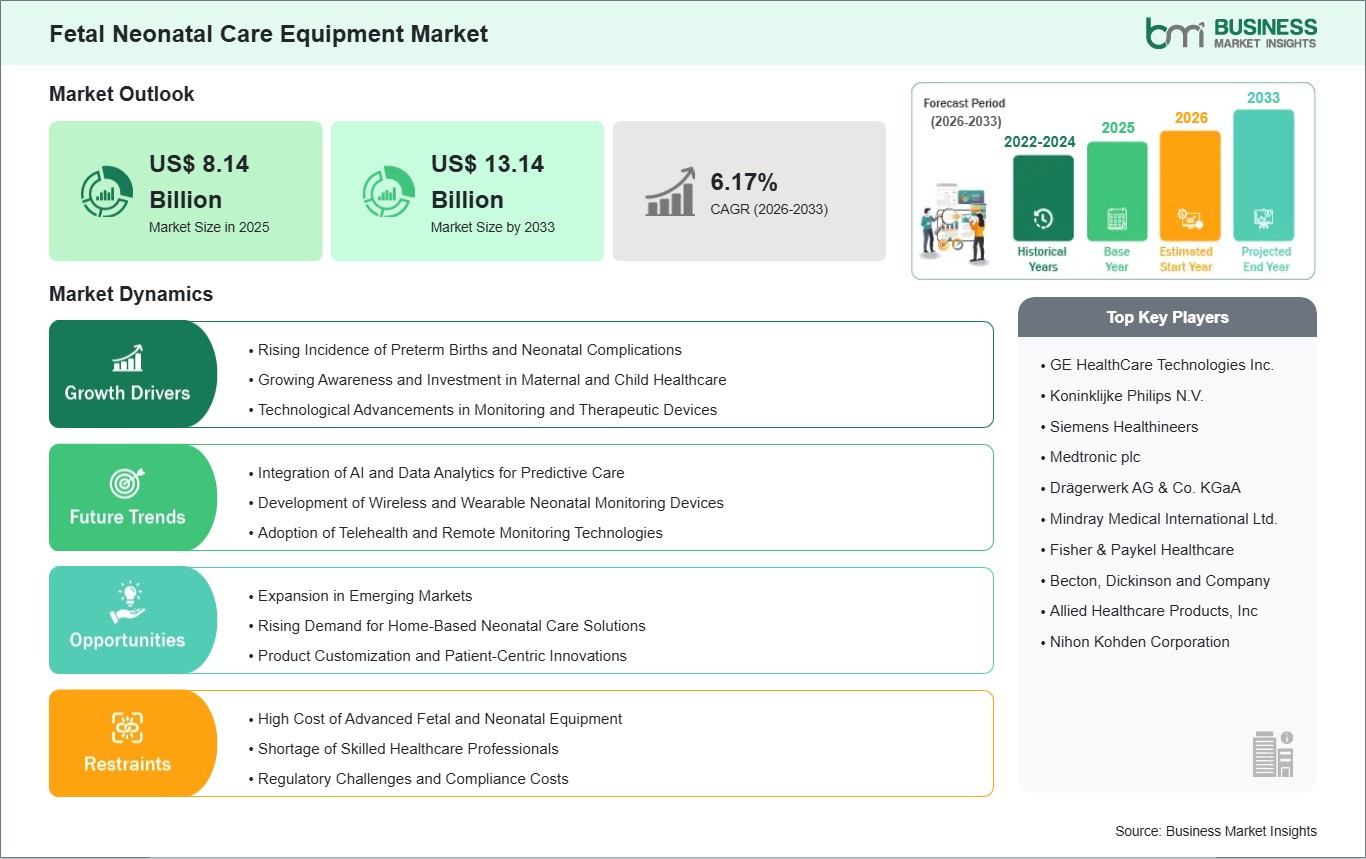
Global sales of equipment used for fetal and newborn care are expected to increase significantly as more babies are born before the end of 20 weeks and awareness of maternal and newborn health increases, as will the number of hospitals and birthing centers using advanced neonatal technology. The equipment used to monitor fetal development such as electronic obstetric monitors and Doppler devices, along with neonatal intensive care equipment such as incubators, ventilators and phototherapy cages; all help hospitals and birthing facilities improve their outcomes for pregnant women and decrease the risk of newborn deaths from malnutrition or other causes. Through the development of new technologies such as Wi-Fi-enabled and portable monitors, telemedicine-enabled devices, artificial intelligence (AI)-powered predictive analytics, medical professionals can diagnose and treat more accurately, operate more efficiently, and provide better quality care, thereby fostering growth in the fetal and neonatal equipment markets.
Regionally, North America and Europe have advanced healthcare systems providing access to technological advances and supportive reimbursement programs for providers, while Asia Pacific will have the greatest market growth due to changes in the birthrate and government support for maternal/child services, increased investment in maternal/child services, an increasing number of NICU's and increased medical tourism in this area. Additionally, the demand for remote/neonatal monitoring services for new mothers and infants, including continuous postnatal monitoring and the ability to identify complications in advance of delivery, is increasing. The global fetal/neonatal care equipment market will continue to experience growth based upon increased technology development, a growing focus on maternal/child health, and increasing health care infrastructure in both developed and developing countries.
Segment Analysis
Fetal Neonatal Care Equipment Market Segmentation
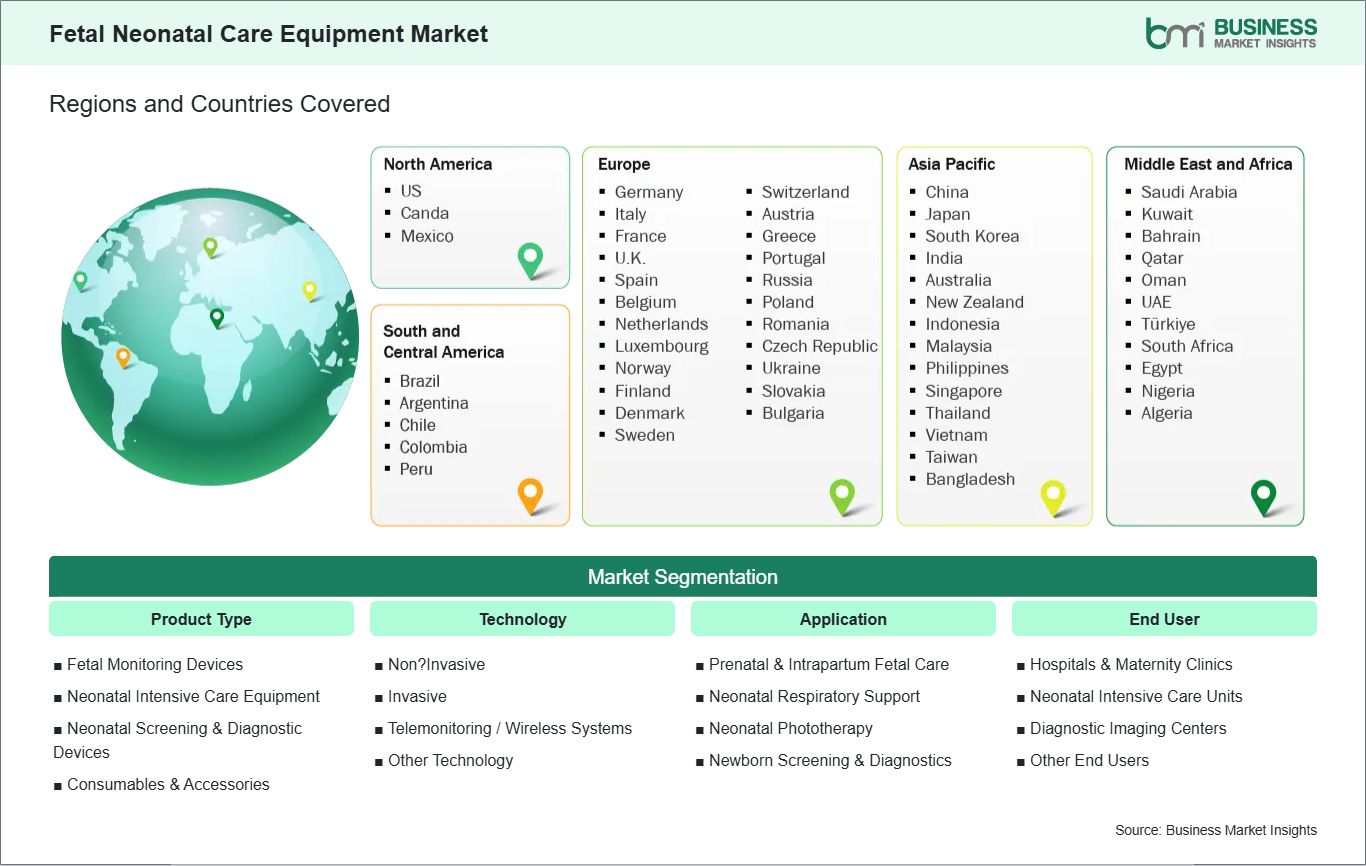
Key segments that contributed to the derivation of the Fetal Neonatal Care Equipment market analysis are product type, technology, application, end user.
- By product type, the fetal neonatal care equipment market is segmented fetal monitoring devices, neonatal intensive care equipment, neonatal screening & diagnostic devices, consumables & accessories. The fetal monitoring devices segment dominated the market in 2025.
- By technology, the market is segmented into non‑invasive, invasive, telemonitoring / wireless systems, others. The non‑invasive segment held the largest share of the market in 2025.
- By application, the market is segmented into prenatal & intrapartum fetal care, neonatal respiratory support, neonatal phototherapy, newborn screening & diagnostics. The prenatal & intrapartum fetal care segment held the largest share of the market in 2025.
- By end user, the fetal neonatal care equipment market is segmented into hospitals & maternity clinics, neonatal intensive care units (NICUS), diagnostic imaging centers, others. The hospitals & maternity clinics segment dominated the market in 2025.
Market Forces
Fetal Neonatal Care Equipment Market Drivers and Opportunities
Rising Incidence of Preterm Births and Neonatal Complications
Growing incidence of neonatal complications and Preterm births are driving the Global Fetal and Neonatal Care Equipment Market. According to The World Health Organization (WHO), globally, around 15 million babies are born prematurely each year, many of whom will return home with medical conditions that will require specific care during their early development stages. Neonates with medical issues require advanced Trans-dermal oxygenation devices such as Incubators, Ventilators, and Phototherapy Devices to survive and do well when they go home. Another major factor contributing to these complications during a pregnancy or labor is fetal distress or hypoxia; thus, the need for continuous fetal monitoring devices to facilitate timely intervention for the best possible pregnancy outcome. The growing number of hospitals and maternity clinics investing in high precision monitoring and treatment technology to decrease the number of premature births and deaths are just a few examples of how these technologies are saving lives. Other examples include AI-assisted predictive analysis and portable breathing devices that allow for better clinical effectiveness, increased safety for patients, and improved operational effectiveness. Current trends are encouraging expectant mothers to become aware of the value of early detection and timely action, as well as the importance of establishing a supportive environment for mothers and newborns. The increasing occurrence of premature births and complications in newborns illustrates the continued demand for fetal and newborn care equipment. This trend highlights the need for fetal and newborn care equipment as it relates to the growing incidence of complications in newborns.
Expansion of Home-Based and Remote Neonatal Care Solutions
The increasing acceptance of home and remote neonatal care options is a key opportunity in the fetal and neonatal care market. The increasing use of telemedicine, wearable technology and wireless telemetry has made it possible for parents and caregivers to monitor the health of their newborns remotely from their homes as well as in hospitals. These types of solutions offer a way to support the monitoring of neonatal patients following discharge from a hospital stay for many newborns including those that are born premature, have low birth weights, or have minor health concerns that don’t require hospital care on a continual basis. The availability of portable neonatal monitoring devices (e.g., compact pulse monitors, thermometers, and wireless ventilators) enables doctors access to a patient’s data in real-time, enabling them to take swift action and minimize the number of days a baby remains in a hospital environment. Not only does this model benefit the infant and family; also, it lessens the burden on NICUs, especially in areas that experience high volume births or that don’t have adequate resources (e.g., beds, equipment, staff) to provide needed care for these newborn population segments. Several developing nations across the Asia Pacific, Latin America, and Africa contain ecosystems with potential for substantial growth due to improving access to the Internet, a growing consumer awareness of remote healthcare, and national governmental support for maternal and child health. The rise of telemedicine and increasing demand will provide continued opportunities for both manufacturers of home health equipment and healthcare providers to generate and sustain revenue throughout a global economy. Manufacturers of home health equipment will continue to see continued growth opportunities with telehealth. For instance, as telehealth increases in popularity, manufacturers of home health equipment will have a unique opportunity to develop and produce new home health products that will provide a sustainable path for manufacturers to respond to the rise of telemedicine, as well as the demand for home health equipment.
Size and Share Analysis
Fetal Neonatal Care Equipment Market Size and Share Analysis
By product type, the fetal neonatal care equipment market is segmented into fetal monitoring devices, neonatal intensive care equipment, neonatal screening & diagnostic devices, consumables & accessories. The fetal monitoring devices segment dominated the market in 2025. The growth is attributed to rising demand for real-time fetal health monitoring during pregnancy and labor.
By technology, the market is segmented into non‑invasive, invasive, telemonitoring / wireless systems, others. The non‑invasive segment held the largest share of the market in 2025. The growth of segment is driven by the preference for safer, risk-free monitoring methods in sensitive neonatal care.
By application, the market is segmented into prenatal & intrapartum fetal care, neonatal respiratory support, neonatal phototherapy, newborn screening & diagnostics. The prenatal & intrapartum fetal care segment held the largest share of the market in 2025. The segmental growth is driven by the increasing focus on early detection and management of fetal complications.
By end user, the market is segmented into hospitals & maternity clinics, neonatal intensive care units (NICUS), diagnostic imaging centers, others. The hospitals & maternity clinics segment held the largest share of the market in 2025. The segmental growth is driven by their central role in providing comprehensive prenatal and neonatal care services.
Report Coverage
Fetal Neonatal Care Equipment Market Report Coverage and Deliverables
The "Fetal Neonatal Care Equipment Market Size and Forecast (2022 - 2033)" report provides a detailed analysis of the market covering below areas:
- Fetal Neonatal Care Equipment market size and forecast at global, regional, and country levels for all the key market segments covered under the scope
- Fetal Neonatal Care Equipment market trends, as well as market dynamics such as drivers, restraints, and key opportunities
- Fetal Neonatal Care Equipment market analysis covering key market trends, global and regional framework, major players, regulations, and recent market developments
- Industry landscape and competition analysis covering market concentration, heat map analysis, prominent players, and recent developments for the Fetal Neonatal Care Equipment market
- Detailed company profiles, including SWOT analysis
Geographic Insights
Fetal Neonatal Care Equipment Market Geographic Insights
The geographical scope of the Fetal Neonatal Care Equipment market report is divided into five regions: North America, Asia Pacific, Europe, Middle East & Africa, and South & Central America. The Fetal Neonatal Care Equipment market in Asia Pacific is expected to grow significantly during the forecast period.
The Asia-Pacific Fetal Neonatal Care Equipment market is segmented into China, Japan, South Korea, India, Australia, New Zealand, Indonesia, Malaysia, the Philippines, Singapore, Thailand, Vietnam, Taiwan, Bangladesh, and the Rest of Asia. Several dynamic factors drive the rapid growth of the fetal neonatal care equipment market in the Asia Pacific region and will become increasingly important as the region continues to grow and mature as a global market. An increase in birth rates and an increase in awareness about maternal and neonatal health is driving demand for technologically advanced fetal and neonatal monitoring devices in both high-population and lower-population countries such as China, India, Japan, South Korea, and Southeast Asian countries. To support these emerging markets, governments have made large investments in improving healthcare infrastructure, including increasing the number of state-of-the-art neonatal intensive care units (NICUs) and diagnostic centers, as well as increasing awareness and decreasing infant mortality. Urbanization is also increasing as a result of the growth of cities and counties across Asia. Urbanization is allowing more people to utilize the health care system and have access to health care services, and therefore is helping to drive the adoption of fetal monitoring devices, neonatal respiratory support equipment and screening technologies in urban and semi-urban areas.
With the rise of wireless monitoring and non-invasive methods, technological development is growing rapidly in the Asia-Pacific area. Healthcare providers and patients prefer this new technology because of its safety and simplicity and how easy it is for them to use. Telemonitoring and remote diagnostics are becoming increasingly applicable to rural and low-resource environments, allowing for long-term fetal and newborn monitoring without needing multiple visits to hospitals. In addition, large medical device manufacturers are establishing collaborations with local and global companies to facilitate innovation and make their products more readily available. The growth of the fetus neonatal care equipment market will be aided by a growing number of patients, increased spending on healthcare, and regulatory policies supporting the improvement of neonatal outcomes and enhancing the standard of care for mothers in addition to the increased number of companies providing technologies digital.
Industry Activity
Recent Developments
The Fetal Neonatal Care Equipment market is evaluated by gathering qualitative and quantitative data post primary and secondary research, which includes important corporate publications, association data, and databases. A few of the key developments in the fetal neonatal care equipment market are:
- In June 2023, Dräger has launched the FDA-cleared Babyroo TN300, a new open warmer that offers supportive lung protection and temperature stability from the moment of birth through discharge home. It is designed to give clinicians the access they need for regular care, emergencies and procedures throughout the baby’s stay in the hospital, while also supporting family-centered care, which is critical to healthy outcomes.
- In September 2023, GE HealthCare launched its Giraffe OmniBed Carestation, an advanced neonatal incubator and warmer designed to support critically ill and premature infants. The system integrates precise thermal regulation, humidity control, and monitoring capabilities to promote infant stability and reduce caregiver workload. Its ergonomic design allows improved clinical access while supporting developmental and family-centered care in neonatal intensive care units (NICUs).
Trust & Transparency
Research Methodology
The market analysis combines proprietary research with secondary data from government agencies, company disclosures, regulatory filings, industry databases and expert interviews. Market estimates are validated through data triangulation, cross-market benchmarking and analyst
review.
View Full Research Methodology
Key Sources Referred:
World Bank - Global Trade Indicators World Trade Organization (WTO) International Monetary Fund (IMF) International Trade Administration (ITA) Company website Company annual reports Company investor presentations