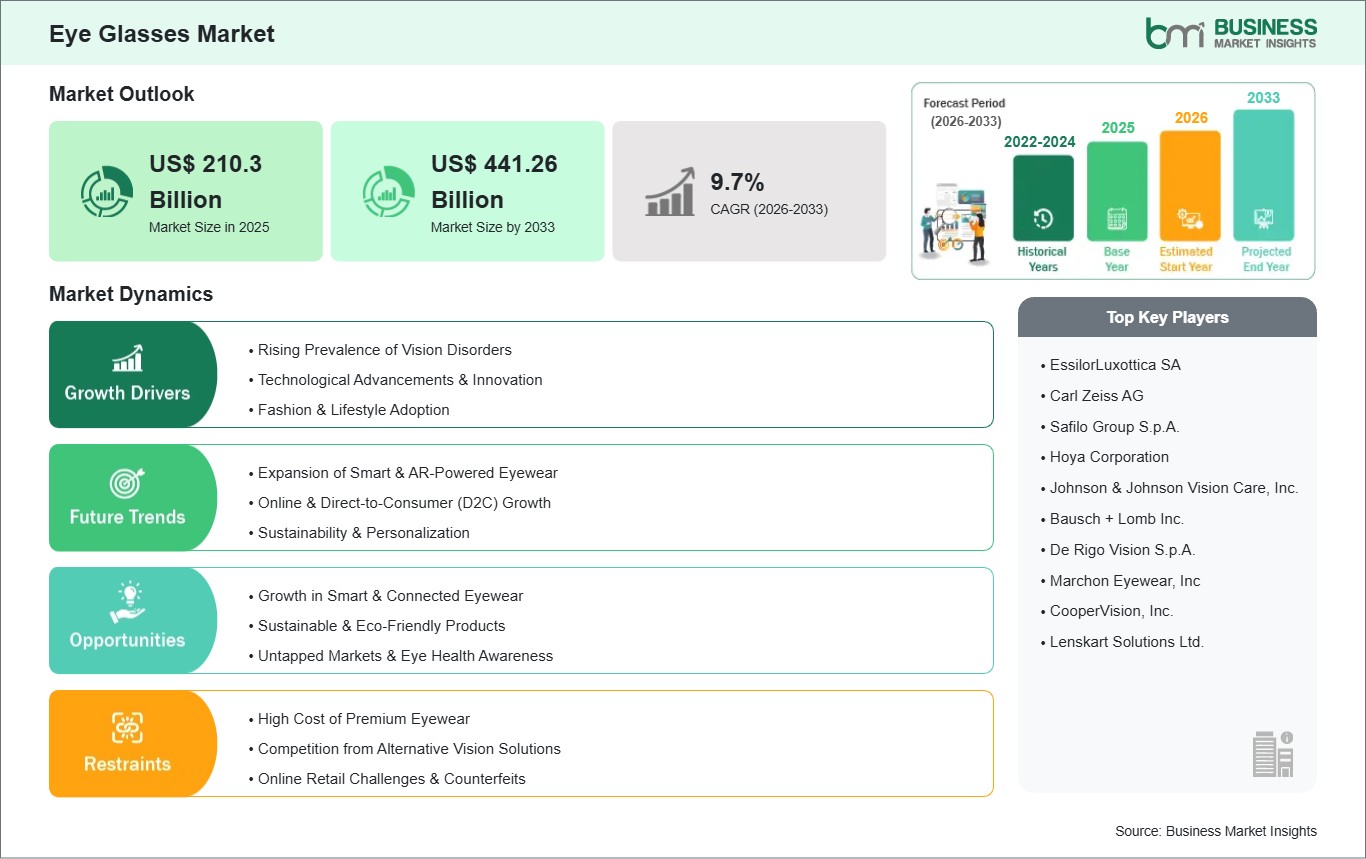
The Eye Glasses Market size is expected to reach US$ 441.26 Billion in 2033 from US$ 210.3 Billion in 2025. The market is estimated to record a CAGR of 9.7% from 2026 to 2033.
The eyeglasses market is a globally developed and maturing marketplace driven by an ever-increasing number of people suffering from vision impairment; more exposure (time spent in front of screens) and rising awareness concerning eye care and the need for corrective vision at all ages. The eyeglass remains the most economically accessible method of vision correction, as it serves many users (medical and social) at a low price point. As well, eyewear is also a fashion accessory and has been incorporated by many consumers into the concept of self-expression; therefore, consumers are purchasing eyewear more frequently and have more interest in it as compared to ever before. The technologies behind eyeglass lenses, coatings, and frames (including lightweight frame technology and 'blue light' filters) have further increased consumer interest and comfort level, as well as supporting sustained demand for eyeglasses.
Overall, developed markets have the advantage of having well-established systems of reimbursement, high levels of prescription eyeglass usage (high penetration), adoption of higher-quality products, while emerging markets are experiencing higher levels of opportunity due to urbanization, increased disposable income, and increasing levels of access to vision care (optometry) services. The eyeglass market has undergone a major transition to become digitally-based and direct-to-consumer through e-commerce platforms, virtual try-on technologies, and home vision screener kits. However, in-person, brick-and-mortar stores will continue to play an essential role in providing in-office eye exams and personalized fittings. The eyewear industry's competitive environment is constantly changing due to rapid technological advancement and increased consumer desire for smart, connected glasses incorporating new digital technologies like audio capability, embedded sensors, and augmented reality applications. Sustainability is becoming more prominent in the eyeglass industry as more companies develop products using eco-friendly raw materials and ethically manufactured goods. The eyeglass industry is being shaped in a unique way by having all four influences — medical need, fashion, technology, and digital transformation — work together equally. Therefore the eyeglass industry is well positioned for continued strong growth and will see growth across all parts of the world

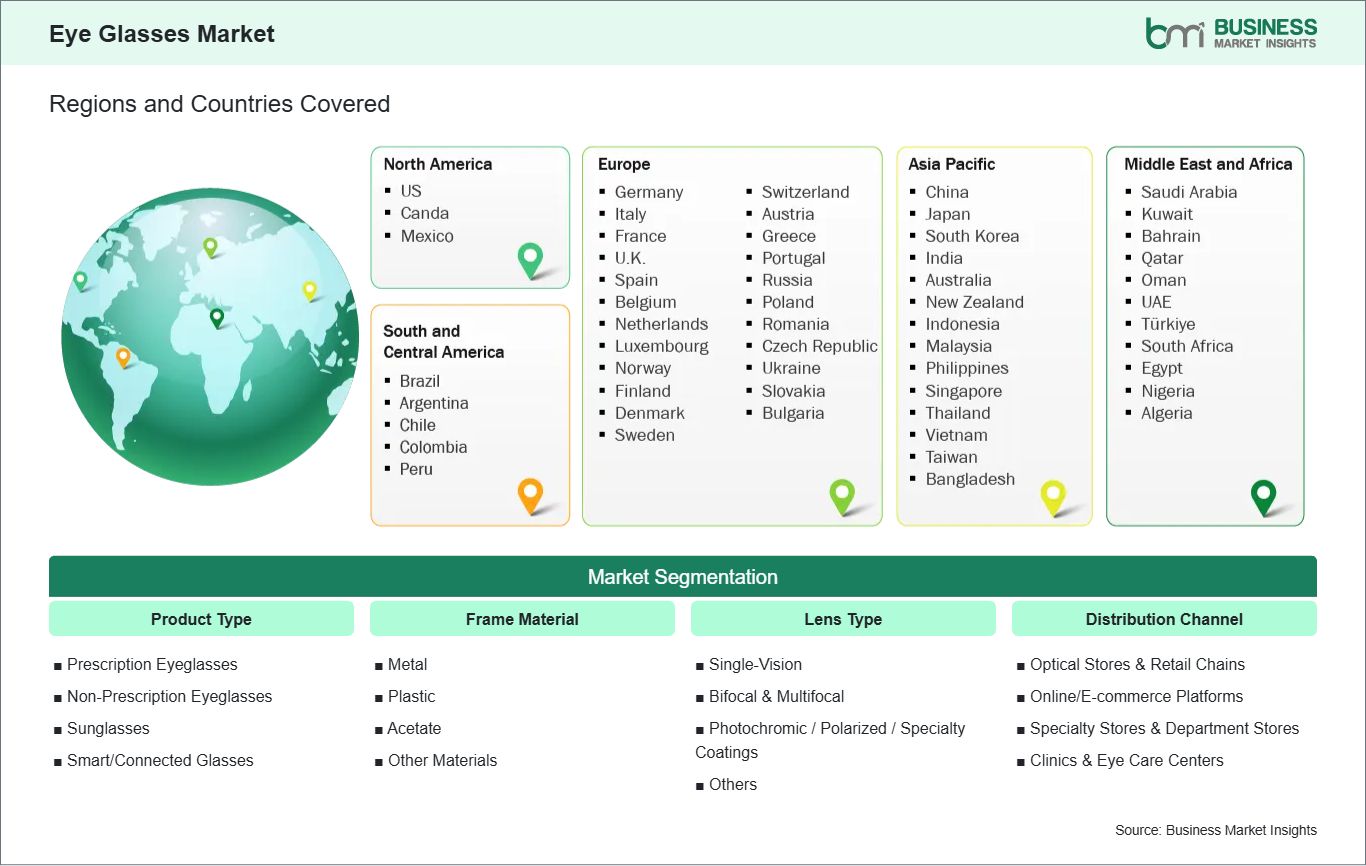
Key segments that contributed to the derivation of the Eye Glasses market analysis are product type, frame material, lens type, and distribution channel.
The eyeglasses market is being propelled forward by an ever-greater prevalence of vision disorders around the world. Worldwide, many people are developing vision disorders, such as myopia (near-sightedness), hyperopia (far-sightedness), astigmatism, and presbyopia (old age blindness). With technology now being an everyday part of life, people are using digital devices such as smartphones, computers, and touch-screen tablets, causing increased levels of eye strain and premature vision-related problems, especially in young children, teenagers, and working adults. The worldwide rising ages of the population are also causing more individuals to experience age-related vision-related problems, including presbyopia, which usually requires the individual to begin wearing eyeglasses. The market for eyeglasses continues to receive strong growth as they remain the most accessible, non-invasive, and affordable method of vision correction; these reasons make eyeglasses the most popular method of vision correction among a high percentage of the global population. Eyeglasses are further supported by regular eye examinations and growing interest in preventive care, which leads to many consumers seeking early intervention and treatment. In addition, eyeglasses allow for the most customization regarding the style of eyewear and the lenses used, making it easy for individuals to look after their medical requirements while also enjoying comfort and style. This combination of medical need, changing demographics, and increasing visual problems associated with lifestyles continues to create steady, ongoing demand, thus establishing the prevalence of vision disorders as the primary engine behind the growth of the eyeglasses industry worldwide.
Rapid growth and adoption of digitally enabled, smart eyewear is an important opportunity within the eyeglasses marketplace. Advances in sensor technology, augmented reality, AI, and other connectivity technologies have changed traditional eyeglasses from a simple visual aid into multifunctional wearable devices that utilize multiple features including audio assistance, fitness tracking, navigation support, hands-free communication and real-time notifications. The convergence of health care, consumer electronics and lifestyle applications will attract younger, tech-savvy consumers and create premium price segments for manufacturers. Furthermore, the growing number of digital tools, such as virtual try-on platforms, AI-based vision assessments and personalized lens recommendations will improve the experience for consumers who purchase eyeglasses online while also allowing for direct-to-consumer sales models. The growth of these innovations reduces a customer's reliance on physical retail locations, improves accessibility and convenience. In addition, there are many professional and industrial opportunities for smart eyewear, such as the use of smart eyewear in industries such as health care, logistics and remote collaboration. In time, these new technologies will become lighter, cheaper and more fashionable, moving smart eyewear from a niche offering into a mainstream category and creating significant long-term growth opportunities for the global eyeglasses market.

By product type, the eye glasses market is segmented into prescription eyeglasses, non-prescription eyeglasses, sunglasses, smart/connected glasses. The prescription eyeglasses segment dominated the market in 2024. The growth is attributed to the rising prevalence of vision disorders such as myopia and presbyopia across all age groups.
By frame material, the market is segmented into metal, plastic, acetate, and other materials. The plastic segment held the largest share of the market in 2024. The growth of segment is driven by lightweight design, affordability, wide style variety, and suitability for mass-market consumers.
By lens type, the market is segmented into single-vision, bifocal & multifocal, photochromic / polarized / specialty coatings, and others. The single-vision segment held the largest share of the market in 2024. The segmental growth is driven by the high demand for basic vision correction and lower cost compared to multifocal alternatives.
By distribution channel, the market is segmented into optical stores & retail chains, online/e-commerce platforms, specialty stores & department stores, clinics & eye care centers. The optical stores & retail chains segment held the largest share of the market in 2024. The segmental growth is driven by the need for professional eye examinations, accurate fitting, and personalized consultation.
| Report Attribute | Details |
|---|---|
| Market size in 2025 | US$ 210.3 Billion |
| Market Size by 2033 | US$ 441.26 Billion |
| Global CAGR (2026 - 2033) | 9.7% |
| Historical Data | 2022-2024 |
| Forecast period | 2026-2033 |
| Segments Covered | By Product Type
|
|
Regions and Countries Covered
| |
| North America | US, Canada, Mexico |
| Europe | Belgium, Austria, Finland, Denmark, Greece, Poland, Romania, Russia, Ukraine, Czech Republic, Slovakia, Bulgaria, Italy, Luxembourg, Germany, Switzerland, France, Netherlands, Norway, Portugal, Spain, Sweden, United Kingdom |
| Asia-Pacific | Australia, China, India, Japan, South Korea, Indonesia, Malaysia, Philippines, Singapore, Thailand, Vietnam, Bangladesh, New Zealand, Taiwan |
| South and Central America | Brazil, Argentina, Peru, Chile, Colombia |
| Middle East and Africa | Bahrain, Kuwait, Oman, Qatar, Saudi Arabia, United Arab Emirates, Turkiye, South Africa, Egypt, Algeria, Nigeria |
| Market leaders and key company profiles |
|
The "Eye Glasses Market Size and Forecast (2022 - 2033)" report provides a detailed analysis of the market covering below areas:
The geographical scope of the Eye Glasses market report is divided into five regions: North America, Asia Pacific, Europe, Middle East & Africa, and South & Central America. The Eye Glasses market in Asia Pacific is expected to grow significantly during the forecast period.
The Asia-Pacific Eye Glasses market is segmented into China, Japan, South Korea, India, Australia, New Zealand, Indonesia, Malaysia, the Philippines, Singapore, Thailand, Vietnam, Taiwan, Bangladesh, and the Rest of Asia. A large population base, increased incidence of eye diseases and better access to eyecare services make the Asia Pacific region one of the fastest growing markets in the world for spectacles. The increasing rates of myopia among children, adolescents and young adults in China, Japan, South Korea and Singapore is a significant driver of ongoing demand for corrective vision products. As the population becomes increasingly urbanized, uses more screens and adopts more modern lifestyles, these pressures have led to increased incidence of vision problems. In addition, a growing middle class with higher disposable incomes creates increased demand for better quality products, including brand name frames and advanced lens solutions. The Optical Retail sector has also benefited from a broader network of optical retail stores, enhanced access to general eye health services and a higher level of awareness regarding the importance of routine eye exams among urban and semi-urban populations. E-commerce is a key component of the Optical Retail industry in Asia Pacific, with an increasing level of interest in both pure e-commerce and omnichannel distribution models as a result of competitive pricing, convenience and virtual fitting technologies.
Locally or regionally based companies are increasingly aggressive against established global names by providing lower-priced and more tailored solutions, thereby increasing competition amongst the players in this sector. At the same time, governments and various NGO's continue to build upon their efforts to establish awareness of vision problems to further promote early detection and use of corrective eyewear. As such, the Asia Pacific eyeglass markets have a high volume of demand driven primarily by price sensitivity, digital strategy adoption, and overall growth potential for the various consumer segments.

The Eye Glasses market is evaluated by gathering qualitative and quantitative data post primary and secondary research, which includes important corporate publications, association data, and databases. A few of the key developments in the eye glasses market are:
The Eye Glasses Market is valued at US$ 210.3 Billion in 2025, it is projected to reach US$ 441.26 Billion by 2033.
As per our report Eye Glasses Market, the market size is valued at US$ 210.3 Billion in 2025, projecting it to reach US$ 441.26 Billion by 2033. This translates to a CAGR of approximately 9.7% during the forecast period.
The Eye Glasses Market report typically cover these key segments-
The historic period, base year, and forecast period can vary slightly depending on the specific market research report. However, for the Eye Glasses Market report:
The Eye Glasses Market is populated by several key players, each contributing to its growth and innovation. Some of the major players include:
The Eye Glasses Market report is valuable for diverse stakeholders, including:
Essentially, anyone involved in or considering involvement in the Eye Glasses Market value chain can benefit from the information contained in a comprehensive market report.
Please tell us your area of interest
(Market Segments/ Regions and Countries/ Companies)