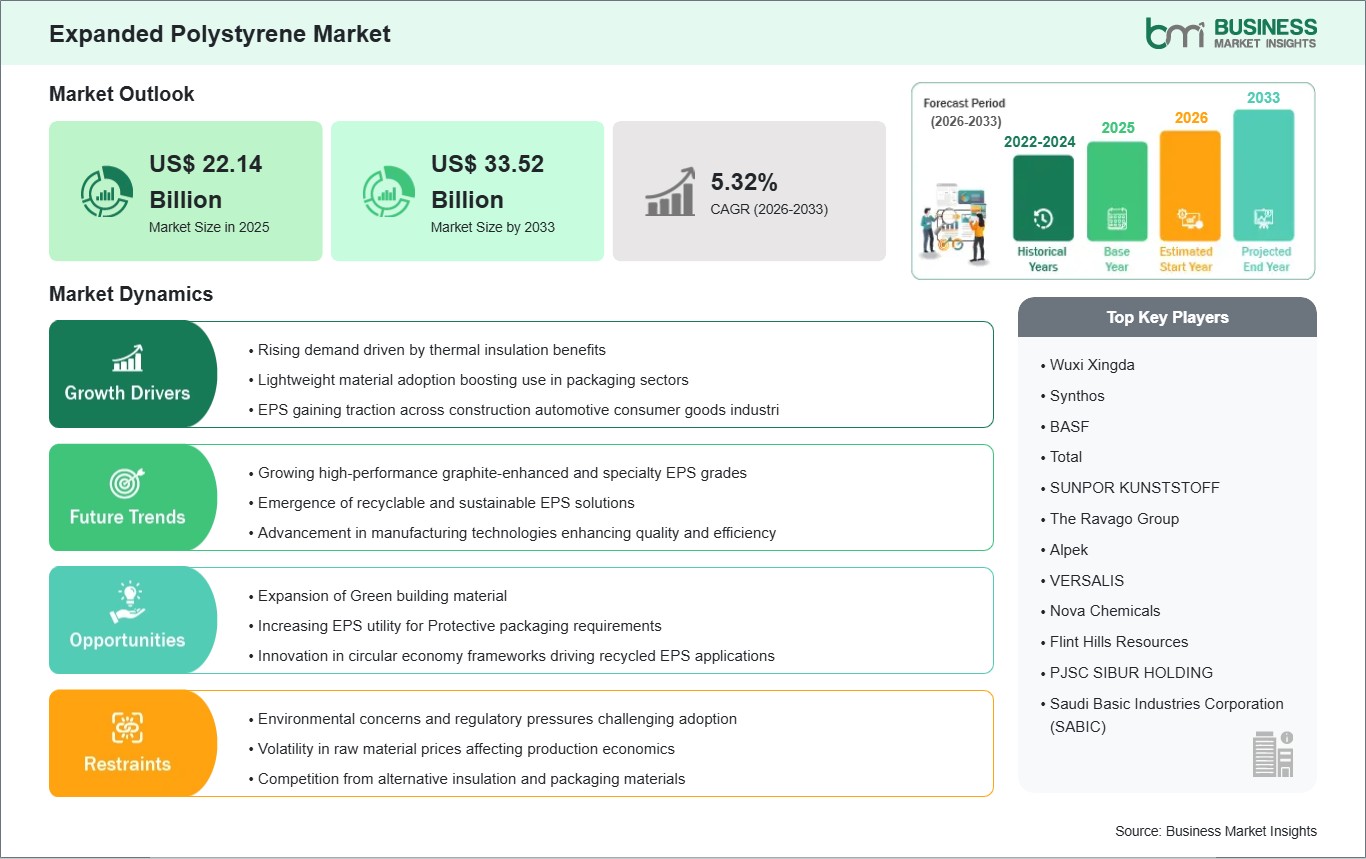
The Expanded Polystyrene Market size is expected to reach US$ 33.52 Billion by 2033 from US$ 22.14 Billion in 2025. The market is estimated to record a CAGR of 5.32% from 2026 to 2033.
The global market for expanded polystyrene (EPS) is influenced by various factors, including the material's versatility, light structure, and insulating properties. As a result, EPS has become a critical component within various industries. The material's main application is within the construction industry as a thermal insulator. This ensures that buildings are energy-efficient, thereby requiring less energy to heat or cool. The light structure, on the other hand, makes EPS applicable as a protective material. This ensures that sensitive materials are protected during transportation. Apart from these two industries, EPS has various applications within the manufacturing sector, especially in car components, home appliances, and other industrial components. One of the main reasons for the increased demand for EPS is that it is cost-effective as well as functionally viable. EPS can be molded into various shapes and sizes. This provides the manufacturer with the opportunity to mold the EPS according to the specific demands of the application. On the other hand, environmental concerns have created a problem for EPS. EPS is non-biodegradable in nature. It may pollute the environment if not recycled properly. The increased need to adopt sustainable options for EPS recycling is another important factor that has been considered. Despite these problems, the versatility of EPS, as well as its protective and insulating capabilities, has made it a necessity for many industries across the globe. The development of innovative techniques for EPS recycling is ensuring that it does not lose its importance in the market.

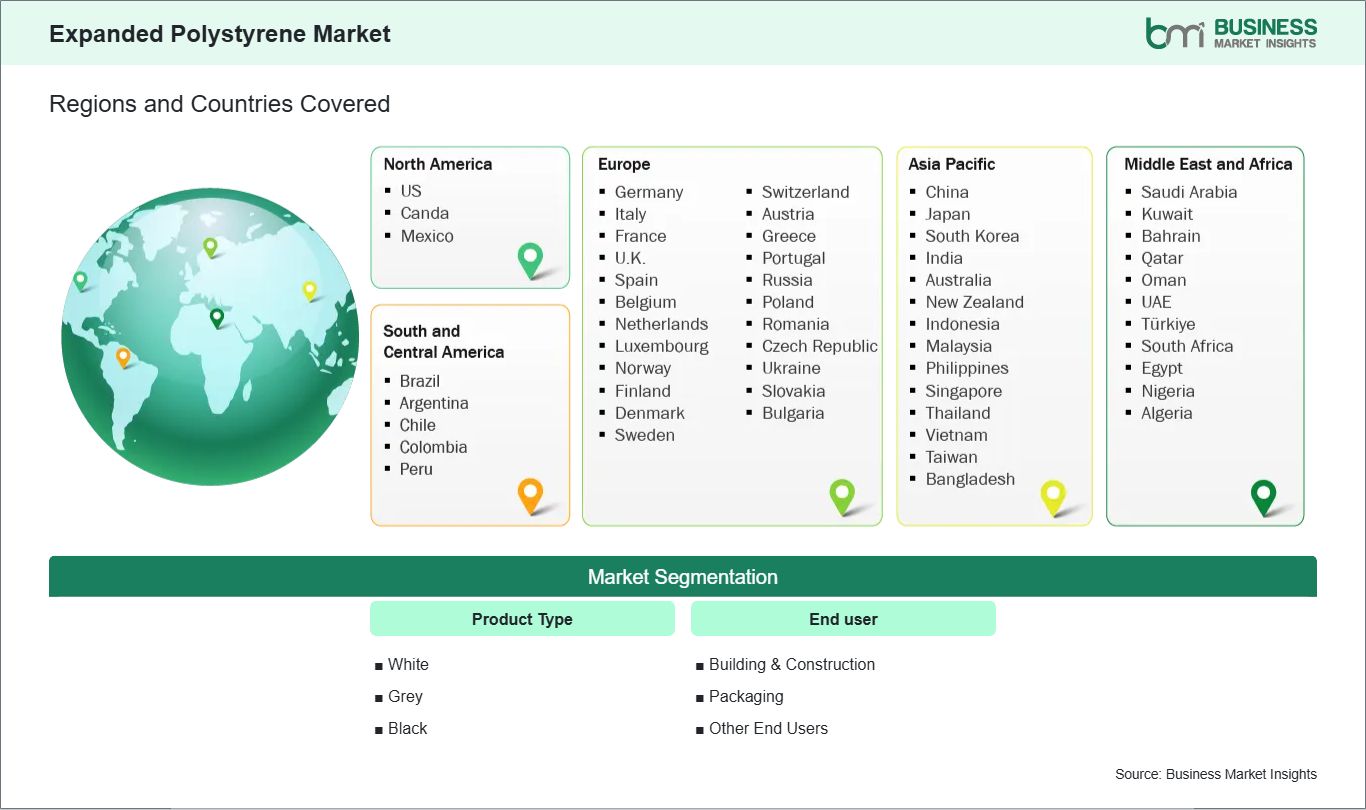
Key segments that contributed to the derivation of the expanded polystyrene market analysis are product type and end user.
The demand for expanded polystyrene has grown steadily due to its exceptional thermal insulation properties. Industries are increasingly relying on materials that reduce energy consumption while maintaining comfort and safety in buildings and industrial applications. EPS provides lightweight, durable, and cost-effective insulation, making it a practical choice for walls, roofing, and refrigerated transport. Its ability to retain temperature efficiently not only improves energy efficiency but also contributes to long-term operational savings, which is especially important in projects that prioritize sustainability and cost management.
Beyond building applications, EPS is used in packaging for temperature-sensitive goods, such as electronics, perishable food, and medical supplies. Its protective qualities help prevent damage while maintaining internal conditions, combining physical cushioning with thermal stability. This versatility has made EPS a material that can serve multiple roles in manufacturing and logistics, reducing the need for multiple materials while enhancing overall efficiency and reliability.
In addition to functional benefits, EPS aligns with evolving performance expectations in construction and industrial sectors. The material`s moisture resistance, durability, and lightweight nature simplify handling, installation, and long-term maintenance. Its combination of insulation efficiency, strength, and versatility continues to make it a widely adopted choice for projects that require reliable, long-lasting performance in both energy and protection applications.
The push toward environmentally friendly construction is creating new possibilities for EPS applications. Modern building designs increasingly emphasize sustainable materials that minimize energy use and reduce the environmental impact of structures. EPS contributes to these goals by improving insulation efficiency, which lowers energy requirements for heating and cooling. At the same time, its long lifespan and recyclability make it a material that supports circular economy principles while maintaining the performance needed for safe and comfortable living or working spaces.
Innovation in EPS formulations and designs is also paving the way for increased involvement in green construction. New variations of EPS are designed to emphasize their environmentally friendly characteristics during manufacturing, their fire resistance, and their compressive strength. This helps to ensure that EPS can be used to meet more stringent construction standards without compromising performance. This opens doors for increased involvement in areas such as architectural designs that require the involvement of EPS in the design of facades, roofs, floors, etc.
The sustainability trends are paving the way for increased involvement in other areas. EPS is still being utilized in various applications that emphasize the importance of being environmentally friendly. For instance, there is increased involvement of EPS in packaging, shipping materials, etc. EPS is still being considered to be a viable alternative for meeting the demands of being lightweight and having increased thermal insulation capabilities.

The expanded polystyrene market is experiencing steady growth, with market size and share analysis reflecting evolving treatment preferences and competitive dynamics among key players. The report evaluates important subsegments categorized within product type and end user, highlighting their respective contributions to overall market performance.
By product type, the White subsegment dominated the Expanded Polystyrene market in 2025. White EPS offers excellent insulation, lightweight properties, and cost-effectiveness, making it highly suitable for a wide range of construction and packaging applications, which drives its widespread adoption.
Based on end user, the Building & Construction subsegment dominated the Expanded Polystyrene market in 2025. Construction applications require high thermal insulation, durability, and energy efficiency, reinforcing the dominance of this segment in the market.
| Report Attribute | Details |
|---|---|
| Market size in 2025 | US$ 22.14 Billion |
| Market Size by 2033 | US$ 33.52 Billion |
| Global CAGR (2026 - 2033) | 5.32% |
| Historical Data | 2022-2024 |
| Forecast period | 2026-2033 |
| Segments Covered | By Product Type
|
|
Regions and Countries Covered
| |
| North America | US, Canada, Mexico |
| Europe | Belgium, Austria, Finland, Denmark, Greece, Poland, Romania, Russia, Ukraine, Czech Republic, Slovakia, Bulgaria, Italy, Luxembourg, Germany, Switzerland, France, Netherlands, Norway, Portugal, Spain, Sweden, United Kingdom |
| Asia-Pacific | Australia, China, India, Japan, South Korea, Indonesia, Malaysia, Philippines, Singapore, Thailand, Vietnam, Bangladesh, New Zealand, Taiwan |
| South and Central America | Brazil, Argentina, Peru, Chile, Colombia |
| Middle East and Africa | Bahrain, Kuwait, Oman, Qatar, Saudi Arabia, United Arab Emirates, Turkiye, South Africa, Egypt, Algeria, Nigeria |
| Market leaders and key company profiles |
|
The "Expanded Polystyrene Market Size and Forecast (2022 - 2033)" report provides a detailed analysis of the market covering below areas:
The geographical scope of the Expanded Polystyrene market report is divided into five regions: North America, Asia Pacific, Europe, Middle East & Africa, and South & Central America. The Expanded Polystyrene market in North America is expected to grow during the forecast period.
North America leads in the expanded polystyrene market. This is because the region presents a mature market with diverse uses. The construction sector is one such sector. This sector uses EPS considerably to insulate residential, commercial, and industrial buildings. This is because EPS can help meet thermal performance objectives. Additionally, EPS is lightweight; therefore, handling is easy. Protective packaging is also a significant contributor to the expanded polystyrene market in North America. This is particularly true in the e-commerce sector. This sector uses EPS to protect sensitive electronic gadgets and household appliances.
The automotive sector also uses EPS in various parts. This includes energy-absorbing parts, light-weight parts, and interior parts. This shows that EPS is flexible and resistant to impact. This has led to increased sustainability in the North American sector. This is particularly true in light of the recent environmental regulations. This has led to the development of recycled EPS. This has encouraged innovation in handling EPS. While there have been occasional issues with raw material costs and regulation, the established infrastructure of North America, along with strong demand from industry, guarantees continued adoption of EPS. The partnership between manufacturers, designers, and industry players has helped create solutions that are tailored towards the industry, further reinforcing their position as trendsetters for EPS performance, longevity, and eco-friendliness.

The expanded polystyrene market is evaluated by gathering qualitative and quantitative data post primary and secondary research, which includes important corporate publications, association data, and databases. A few of the key developments in the expanded polystyrene market are:
The Expanded Polystyrene Market is valued at US$ 22.14 Billion in 2025, it is projected to reach US$ 33.52 Billion by 2033.
As per our report Expanded Polystyrene Market, the market size is valued at US$ 22.14 Billion in 2025, projecting it to reach US$ 33.52 Billion by 2033. This translates to a CAGR of approximately 5.32% during the forecast period.
The Expanded Polystyrene Market report typically cover these key segments-
The historic period, base year, and forecast period can vary slightly depending on the specific market research report. However, for the Expanded Polystyrene Market report:
The Expanded Polystyrene Market is populated by several key players, each contributing to its growth and innovation. Some of the major players include:
The Expanded Polystyrene Market report is valuable for diverse stakeholders, including:
Essentially, anyone involved in or considering involvement in the Expanded Polystyrene Market value chain can benefit from the information contained in a comprehensive market report.
Please tell us your area of interest
(Market Segments/ Regions and Countries/ Companies)