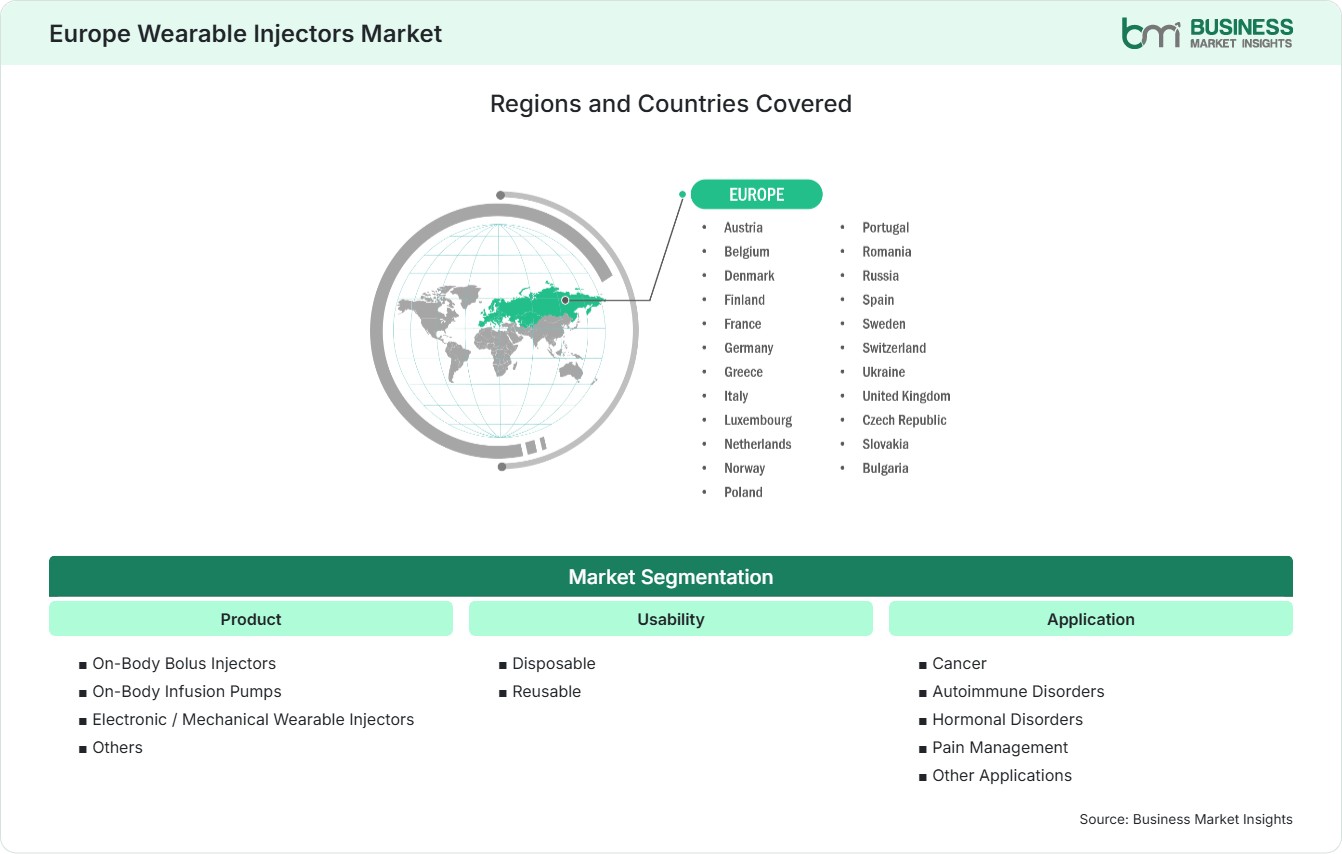
The geographical scope of the Europe Wearable Injectors Market report is divided into Belgium, Austria, Finland, Denmark, Greece, Poland, Romania, Russia, Ukraine, the Czech Republic, Slovakia, Bulgaria, Italy, Luxembourg, Germany, Switzerland, France, the Netherlands, Norway, Portugal, Spain, Sweden, and the UK. Germany held the largest share in 2025.
Country-level dynamics in Europe highlight substantial variation in adoption patterns driven by healthcare infrastructure, regulatory environments, and patient behavior. Germany represents one of the most mature markets, with widespread adoption of wearable injectors in specialty clinics and hospital-based chronic care programs. Strong regulatory frameworks, well-structured reimbursement schemes, and high patient awareness facilitate integration of devices with connected monitoring features, supporting remote adherence tracking and therapy optimization. France demonstrates robust adoption in oncology and autoimmune care programs. Urban hospitals and private clinics in Paris, Lyon, and Marseille actively deploy wearable injectors, while national reimbursement policies encourage accessibility. Physician-led patient education programs further enhance uptake and support long-term adherence. The UK is characterized by the integration of wearable injectors into telehealth-supported homecare programs, particularly for chronic diseases requiring frequent dosing. NHS initiatives, coupled with digital health infrastructure, support remote patient monitoring and adherence tracking, making the UK a strategic market for next-generation devices. Italy and Spain exhibit steady adoption, primarily in urban centers, though fragmented reimbursement and regional regulatory requirements create localized adoption patterns. Hospitals and specialty clinics drive early uptake, often supported by private insurance programs. Emerging Eastern European markets, including Poland, the Czech Republic, and Bulgaria, show nascent but growing adoption. Urban hospital networks and specialty clinics are beginning to integrate wearable injectors, with digital health integration gradually facilitating patient monitoring and remote engagement. Across Europe, Germany, France, and the UK dominate adoption, while Italy, Spain, and Eastern European markets represent growing opportunities. Companies must adopt country-specific strategies addressing regulatory compliance, reimbursement, clinician training, patient education, and digital connectivity to maximize market penetration and sustainable growth across the region.