Increasing prevalence of chronic skin conditions
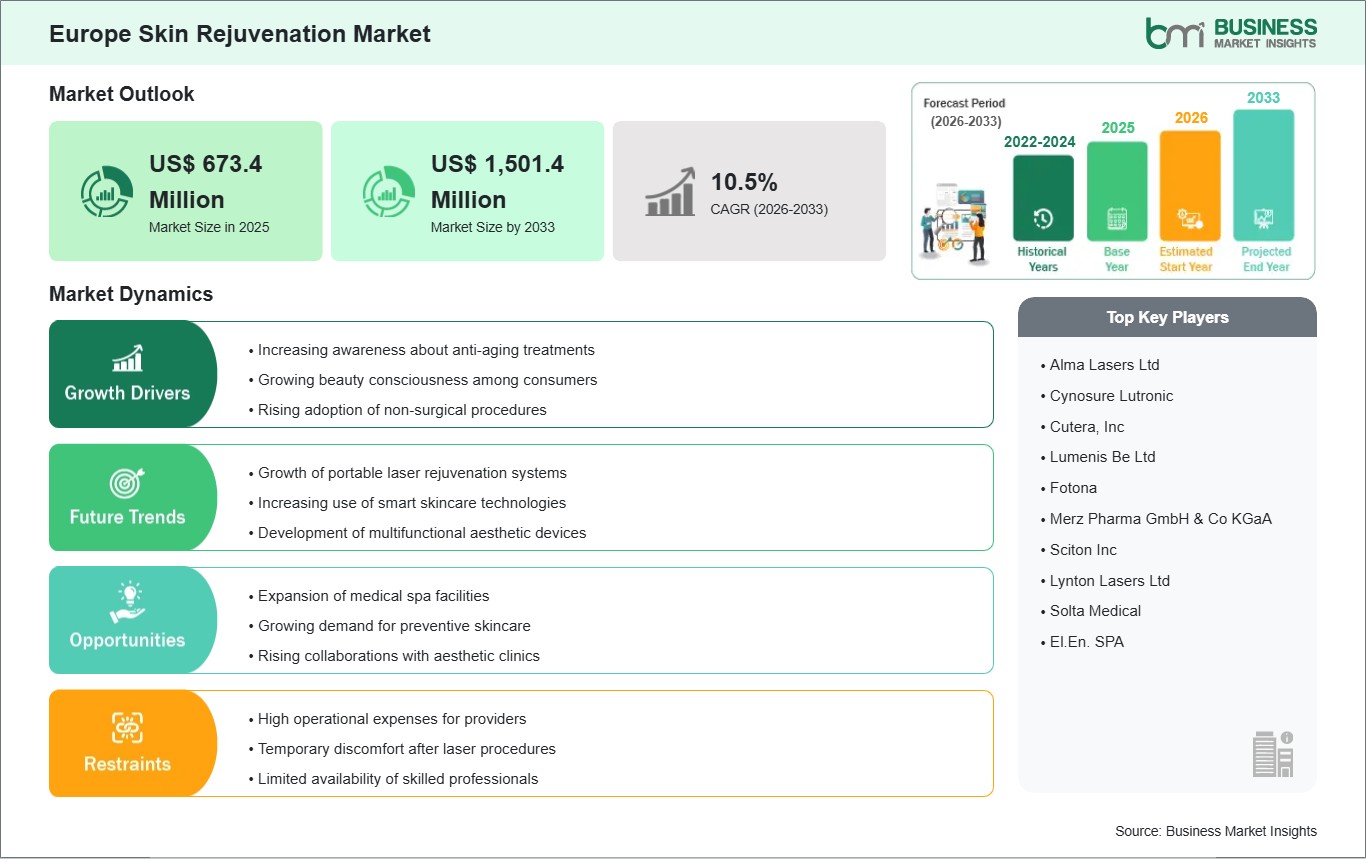
The Europe skin rejuvenation market is significantly influenced by the growing prevalence of chronic skin conditions across the region. For instance, nations like Germany, France, Italy, Spain, and the United Kingdom record a steady prevalence of dermato-cosmetic problems, which include acne, eczema, psoriasis, and hyperpigmentation. Not only is there a medical aspect to these issues, but there is also an aesthetic element to consider, which results in the need for treatment that will help restore the health and beauty of one’s skin. Therefore, skin renewal procedures are now considered part of the dermatologist’s practice rather than mere aesthetic interventions.
One of the important factors responsible for this phenomenon is the aging of the European population, who become more prone to developing problems with their skin, including dryness, loss of elasticity, and photoaging. Alongside these biological reasons, environmental reasons also exist, namely the high levels of pollution in such large cities as Paris, London, and Milan, resulting in increased skin sensitivity and rapid signs of aging. Due to this, people have increasingly started relying on professional help provided by dermatologists, especially when it comes to non-surgical methods of skin rejuvenation.
Improved health education and awareness about the symptoms of various diseases, along with enhanced early diagnosis and reporting, have increased the frequency of treatments for different skin problems in the region. The role of dermatologists in providing the treatment and solution to the problem by integrating medical and cosmetic methods of treatment is becoming very important, and there is an increase in the use of advanced medical techniques including the use of lasers for the rejuvenation of skin.
Growth in customized anti-aging treatment programs
The Europe skin rejuvenation market is also being driven by strong growth in customized anti-aging treatment programs, reflecting a broader shift toward personalized aesthetic medicine. European consumers are increasingly looking for products and services that meet their specific needs related to skin type, aging patterns, and personal lifestyles. Such demands are very prevalent in countries like Germany, France, and Nordic countries, where the focus is on accuracy in clinical treatment and customized services.
With the developments in dermatology diagnostics and treatment planning, it has become possible for clinics to develop customized anti-aging protocols. These anti-aging treatments may involve several techniques, including injection therapy, laser therapy, skin boosters, and regeneration treatments. The use of data analytics techniques, which include skin analysis and biometrics, is helping physicians develop personalized treatment protocols that can be modified according to patients’ changing requirements.
In addition, changing consumer behavior in Europe is moving from short-term cosmetics correction to long-term skin management. There is an increase in patients participating in treatment programs aimed at maintaining and improving their skin condition through prevention and enhancement measures. This change is backed by the development of the aesthetic industry, coupled with high knowledge about non-invasive treatments, especially in nations with a developed dermatology system. The customization of anti-aging regimens has become a major driver of the skin rejuvenation market in Europe as part of the region’s advancements.