Analysis By Device Type (Fluorescein Angiography, Fundus Camera, and Optical Coherence Tomography) and End User (Hospitals & Clinics, Ambulatory Surgical Centers, Specialized Eye Care Centers, and Other End Users)
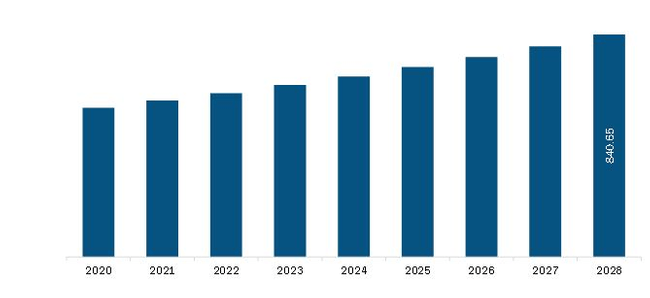
The Europe retinal imaging devices market is expected to reach US$ 840.7 million by 2028 from US$ 590.9 million in 2021. The market is estimated to proliferate at a CAGR of 5.2% from 2021 to 2028.
The rise in healthcare expenditure across the region has resulted in rapid technological advancement in ophthalmology. The innovation has combined digital technology with clinical diagnostics and imaging for eye diseases. It has provided several advantages, such as non-invasive, quick, and safe imaging. It has also provided detailed images of the retina and sub-surface of eyes, instant, direct imaging of the eye form and structure, high-quality imaging through the use of eye-safe near-infra-red light.
A few techniques, such as providing digital retinal imaging & OCT scans, are the latest advancement and widely used imaging technologies in OCT. The technology is similar to an ultrasound that utilizes sound waves and light without radiation to obtain high-resolution images of the structural layers at the back of the eye. OCT is necessary for the early diagnosis of macular degeneration, glaucoma, and diabetic retinopathy. It provides color-coded, cross-sectional images of the retina, which assists in preventing vision impairment or blindness.
The COVID-19 outbreak caused severe disruption in the Europe retinal imaging devices market. For instance, according to Optomed's financial 2020, the devices segment's revenue decreased by 30.3%. The decrease resulted from the COVID-19 pandemic causing a decline in OEM sales.
Additionally, appointments and operations were delayed in many clinics worldwide due to increasing cases, as approximately 40% of the diagnosed COVID-19 cases required hospitalization, and some critical patients were admitted to intensive care units (ICU). According to an article in Vascular News, in the first week of the pandemic outbreak, there was an 80% reduction in beds and an 84% reduction in operating rooms for elective procedures, with 43% of hospitals in Italy not doing any elective surgery.
With the number of rising cases, there was a significant decrease in procedures due to a lack of healthcare resources. It also affected the new product launches, impacting sales and growth of the market in the region. However, with the European Commission's proper guidelines and protocols to reduce SARS-CoV-2 exposure and easing restrictions on movement due to large-scale COVID-19 vaccine drives, the market is expected to grow in the forecast period.
With the new features and technologies, vendors can attract new customers and expand their footprints in emerging markets. This factor is likely to drive the Europe retinal imaging devices market at an attractive CAGR during the forecast period.
Europe Retinal Imaging Devices Market Revenue and Forecast to 2028 (US$ Million)
Europe Retinal Imaging Devices Market Segmentation
ByDevice Type
Fluorescein Angiography
Fundus Camera
Optical Coherence Tomography
By End User
Hospitals & Clinics
Ambulatory Surgical Centers
Specialized Eye Care Centers
Other End Users
By Country
Europe
Germany
UK
France
Spain
Italy
Rest of Europe
Companies Mentioned
Carl Zeiss Meditec
Revenio Group Oyj
Nikon Corporation
Optomed
Topcon Corporation
Imagine Eyes
Epipole Ltd
Forus Health Pvt Ltd
Eyenuk Inc.
Europe Retinal Imaging Devices Market Strategic Insights
Get more information on this report
Europe Retinal Imaging Devices Market Segmentation Analysis
Europe Retinal Imaging Devices Market Report Highlights
Europe Retinal Imaging Devices Report Scope
Report Attribute
Details
Market size in 2021
US$ 590.9 Million
Market Size by 2028
US$ 840.7 Million
CAGR (2021 - 2028)
5.2%
Historical Data
2019-2020
Forecast period
2022-2028
Segments Covered
By Device Type
Fluorescein Angiography
Fundus Camera
Optical Coherence Tomography
By End User
Hospitals & Clinics
Ambulatory Surgical Centers
Specialized Eye Care Centers
Other End Users
Regions and Countries Covered
Europe
UK, Germany, France, Russia, Italy, Rest of Europe
Market leaders and key company profiles
Carl Zeiss Meditec
Revenio Group Oyj
Nikon Corporation
Optomed
Topcon Corporation
Imagine Eyes
Epipole Ltd
Forus Health Pvt Ltd
Eyenuk Inc.
Get more information on this report
Europe Retinal Imaging Devices Market Country and Regional Insights
Get more information on this report
Identical Market Reports with other Region/Countries
The List of Companies - Europe Retinal Imaging Devices Market
Carl Zeiss MeditecRevenio Group OyjNikon CorporationOptomedTopcon CorporationImagine EyesEpipole LtdForus Health Pvt LtdEyenuk Inc.
Frequently Asked Questions
How big is the Europe Retinal Imaging Devices Market?
The Europe Retinal Imaging Devices Market is valued at US$ 590.9 Million in 2021, it is projected to reach US$ 840.7 Million by 2028.
What is the CAGR for Europe Retinal Imaging Devices Market by (2021 - 2028)?
As per our report Europe Retinal Imaging Devices Market, the market size is valued at US$ 590.9 Million in 2021, projecting it to reach US$ 840.7 Million by 2028. This translates to a CAGR of approximately 5.2% during the forecast period.
What segments are covered in this report?
The Europe Retinal Imaging Devices Market report typically cover these key segments-
Device Type (Fluorescein Angiography, Fundus Camera, Optical Coherence Tomography)
End User (Hospitals & Clinics, Ambulatory Surgical Centers, Specialized Eye Care Centers, Other End Users)
What is the historic period, base year, and forecast period taken for Europe Retinal Imaging Devices Market?
The historic period, base year, and forecast period can vary slightly depending on the specific market research report. However, for the Europe Retinal Imaging Devices Market report:
Historic Period : 2019-2020
Base Year : 2021
Forecast Period : 2022-2028
Who are the major players in Europe Retinal Imaging Devices Market?
The Europe Retinal Imaging Devices Market is populated by several key players, each contributing to its growth and innovation. Some of the major players include:
Carl Zeiss Meditec
Revenio Group Oyj
Nikon Corporation
Optomed
Topcon Corporation
Imagine Eyes
Epipole Ltd
Forus Health Pvt Ltd
Eyenuk Inc.
Who should buy this report?
The Europe Retinal Imaging Devices Market report is valuable for diverse stakeholders, including:
Investors: Provides insights for investment decisions pertaining to market growth, companies, or industry insights. Helps assess market attractiveness and potential returns.
Industry Players: Offers competitive intelligence, market sizing, and trend analysis to inform strategic planning, product development, and sales strategies.
Suppliers and Manufacturers: Helps understand market demand for components, materials, and services related to concerned industry.
Researchers and Consultants: Provides data and analysis for academic research, consulting projects, and market studies.
Financial Institutions: Helps assess risks and opportunities associated with financing or investing in the concerned market.
Essentially, anyone involved in or considering involvement in the Europe Retinal Imaging Devices Market value chain can benefit from the information contained in a comprehensive market report.




 Get Free Sample For Europe Retinal Imaging Devices Market