Analysis - by Type (Functional Brain MRI, Cardiac MRI, 4D MRI, and Others), Application (Neurology, Orthopedics, Cardiology, Oncology, and Others), Product Type [Equipment and Coil Design (Pediatric Head/Neck/Spine MRI Coil, Interchangeable Pediatric Brain Coil, Pediatric Blanket Coil, and Others)], Age Group [Adolescent (11-18 Years), Child (2-11 Years), Infants and Toddlers (28 Days-23 Months), Neonatal Stage (0-27 Days), and Fetal Stage], and End User (Hospitals, Pediatric Clinics, Diagnostic Centers, and Others)
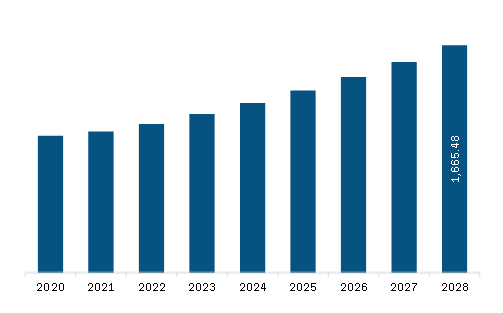
The Europe pediatric MRI market was valued at US$ 1,086.96 million in 2022 and is expected to reach US$ 1,665.48 million by 2028; it is estimated to grow at a CAGR of 7.4% from 2022 to 2028.
Use of MRI Simulators to Adapt Children to MRI Scanners Fueling the Europe Pediatric MRI Market
The experience of undergoing magnetic resonance imaging (MRI) can lead to anxiety, particularly for pediatric patients and their families. As a result, children are often sedated to complete the exam. However, sedation increases the cost of the procedure and requires an anesthesiologist to be present during the exam. Alternative methods to improve success and ensure non-sedation experience can be implemented with the adoption of new technologies and simulations that reduce the number of procedures requiring anesthesia. An MRI simulator can be used on children to scan and assess if they need sedation; it is available in various forms. Virtual reality, a computer-generated simulation of a 3D environment that can be experienced using a head-mounted display (HMD), has emerged as an effective solution for reducing anxiety in various pediatric psychological applications, including fear of the procedure.
For instance, the Ambient Experience program by Philips Healthcare incorporates architecture, design, and other technologies for lighting and sound to create a relaxed environment for the scan. For MRI scans, Philips offers the Ambient Experience in-bore Connect, which projects videos inside the bore to calm and instruct patients. The children can select a theme, which can be played in the room before the scan and inside the bore during the scan. In March 2021, Philips and The Walt Disney Company collaborated to test the effects of custom-made animation, such as specially made Disney stories, in the Philips Ambient Experience. A few of Disney animation stories featured Mickey Mouse, Ariel, Marvel’s Avengers, Star Wars’ Yoda, and other Disney characters. Philips began the clinical research project program in six European hospitals and received the pilot project’s results by the end of 2021. The goal of the program was to help alleviate children's anxiety and improve staff’s ability to carry out tasks in MRI scanning rooms across six European hospitals.
Therefore, the implementation of such technologies and play-based simulators to help children adapt to MRI scans is expected to boost the market growth during the forecast period.
Europe Pediatric MRI Market Overview
Europe consists of five major countries namely Germany, France, UK, Italy, and Spain. The market is also evaluated for the rest of countries in Europe. The market is driven by the factors such as increasing chronic diseases, innovative technology and products, and growing healthcare expenditure in this region. The medical device market in Germany is the largest market in Europe and the third largest globally, after the US and Japan. The demand for advanced, innovative technologies and diagnostic, therapeutic, and minimally invasive equipment remains high across the region. Medical device manufacturers in Germany can also seek government funding for a variety of research projects and receive grants from the Kreditanstalt für Wiederaufbau (KfW). The increasing focus of manufacturers on new product development and strategic collaborations to develop advanced diagnostic devices such as pediatric MRI is expected to propel the market growth during the forecast period.
Europe Pediatric MRI Market Revenue and Forecast to 2028 (US$ Million)
Europe Pediatric MRI Market Segmentation
The Europe pediatric MRI market is segmented based on type, application, product type, age group, end user, and country. Based on type, the Europe pediatric MRI market is segmented into functional brain MRI, cardiac MRI, 4D MRI, and others. The functional brain MRI segment held the largest market share in 2022.
Based on application, the Europe pediatric MRI market is segmented into neurology, orthopedics, cardiology, oncology, and others. The neurology segment held the largest market share in 2022.
Based on product type, the Europe pediatric MRI market is bifurcated into equipment and coil design. The equipment segment held a larger market share in 2022.
Based on age group, the Europe pediatric MRI market is segmented into adolescent (11-18 Years), child (2-11 Years), infants and toddlers (28 Days-23 Months), neonatal stage (0-27 Days), and fetal stage. The adolescent (11-18 Years) segment held the largest market share in 2022.
Based on end user, the Europe pediatric MRI market is segmented into hospitals, pediatric clinics, diagnostic centers, and others. The hospitals segment held the largest market share in 2022.
Based on country, the Europe pediatric MRI market is segmented into Germany, the UK, France, Italy, Spain, and the Rest of Europe. Germany dominated the Europe pediatric MRI market share in 2022.
GE HealthCare Technologies Inc, Hyperfine Inc, Koninklijke Philips NV, LMT Medical Systems GmbH, Neoscan Solutions GmbH, NORAS MRI products GmbH, and Siemens Healthineers AG are some of the leading companies operating in the Europe pediatric MRI market.
Europe Pediatric MRI Market Strategic Insights
Get more information on this report
Europe Pediatric MRI Market Segmentation Analysis
Europe Pediatric MRI Market Report Highlights
Europe Pediatric MRI Report Scope
Report Attribute
Details
Market size in 2022
US$ 1,086.96 Million
Market Size by 2028
US$ 1,665.48 Million
CAGR (2022 - 2028)
7.4%
Historical Data
2020-2021
Forecast period
2023-2028
Segments Covered
By Type
Functional Brain MRI
Cardiac MRI
4D MRI
By Application
Neurology
Orthopedics
Cardiology
Oncology
By Product Type
Equipment and Coil Design
By Age Group
Adolescent
Child
Infants and Toddlers
Neonatal Stage
Fetal Stage
Regions and Countries Covered
Europe
UK, Germany, France, Russia, Italy, Rest of Europe
Market leaders and key company profiles
GE HealthCare Technologies Inc
Hyperfine Inc
Koninklijke Philips NV
LMT Medical Systems GmbH
Neoscan Solutions GmbH
NORAS MRI products GmbH
Siemens Healthineers AG
Get more information on this report
Europe Pediatric MRI Market Country and Regional Insights
Get more information on this report
Identical Market Reports with other Region/Countries
The List of Companies - Europe Pediatric MRI Market
GE HealthCare Technologies IncHyperfine IncKoninklijke Philips NVLMT Medical Systems GmbHNeoscan Solutions GmbHNORAS MRI products GmbHSiemens Healthineers AG
Krishna is a Market Research Analyst with over 4 years of experience across Life Sciences and Materials & Chemicals industries. He holds a Bachelor's degree in Pharmacy (B.Pharm.) and a Master's degree in Pharmaceutical Medicinal Chemistry (M.Pharm.). His expertise spans market intelligence, competitive benchmarking, market sizing and forecasting, primary and secondary research, and strategic consulting.
Krishna has successfully contributed to numerous syndicated and custom research engagements, delivering industry reports, market assessments, competitive analyses, and business proposals for clients across diverse sectors. With ..
Show More
Frequently Asked Questions
How big is the Europe Pediatric MRI Market?
The Europe Pediatric MRI Market is valued at US$ 1,086.96 Million in 2022, it is projected to reach US$ 1,665.48 Million by 2028.
What is the CAGR for Europe Pediatric MRI Market by (2022 - 2028)?
As per our report Europe Pediatric MRI Market, the market size is valued at US$ 1,086.96 Million in 2022, projecting it to reach US$ 1,665.48 Million by 2028. This translates to a CAGR of approximately 7.4% during the forecast period.
What segments are covered in this report?
The Europe Pediatric MRI Market report typically cover these key segments-
Age Group (Adolescent, Child, Infants and Toddlers, Neonatal Stage, Fetal Stage)
End User (Hospitals, Pediatric Clinics, Diagnostic Centers)
What is the historic period, base year, and forecast period taken for Europe Pediatric MRI Market?
The historic period, base year, and forecast period can vary slightly depending on the specific market research report. However, for the Europe Pediatric MRI Market report:
Historic Period : 2020-2021
Base Year : 2022
Forecast Period : 2023-2028
Who are the major players in Europe Pediatric MRI Market?
The Europe Pediatric MRI Market is populated by several key players, each contributing to its growth and innovation. Some of the major players include:
GE HealthCare Technologies Inc
Hyperfine Inc
Koninklijke Philips NV
LMT Medical Systems GmbH
Neoscan Solutions GmbH
NORAS MRI products GmbH
Siemens Healthineers AG
Who should buy this report?
The Europe Pediatric MRI Market report is valuable for diverse stakeholders, including:
Investors: Provides insights for investment decisions pertaining to market growth, companies, or industry insights. Helps assess market attractiveness and potential returns.
Industry Players: Offers competitive intelligence, market sizing, and trend analysis to inform strategic planning, product development, and sales strategies.
Suppliers and Manufacturers: Helps understand market demand for components, materials, and services related to concerned industry.
Researchers and Consultants: Provides data and analysis for academic research, consulting projects, and market studies.
Financial Institutions: Helps assess risks and opportunities associated with financing or investing in the concerned market.
Essentially, anyone involved in or considering involvement in the Europe Pediatric MRI Market value chain can benefit from the information contained in a comprehensive market report.







 Get Free Sample For Europe Pediatric MRI Market