Analysis by Type (Carbonated Soft Drinks, Juices & Nectars, Bottled Waters, Dairy-Based Beverages, Dairy Alternative Beverages, RTD Tea and Coffee, and Others), Packaging Type (Bottles, Cartons, Cans, and Pouches), Category (Sugar-Free and Conventional), and Distribution Channel (Supermarkets and Hypermarkets, Convenience Stores, Online Retail, and Others)
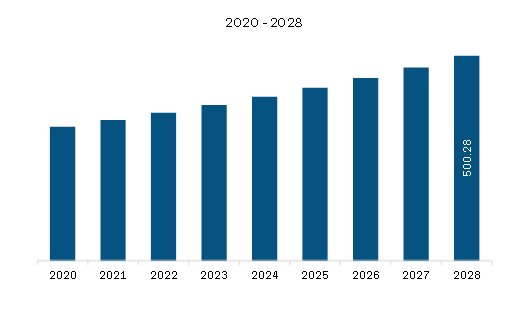
The non-alcoholic beverages market in Europe is expected to grow from US$ 360.55 million in 2022 to US$ 500.28 million by 2028. It is estimated to grow at a CAGR of 5.6% from 2022 to 2028.
Rising Popularity of Plant-Based Beverages
The vegan population has grown significantly over the past few years. People are readily switching to a vegan diet due to increased health and sustainability concerns. According to the International Food Information Council's 2021 Food and Health Survey, more than 4 out of 10 buyers believe plant-based food and beverages are healthier than conventional ones even when two products have similar ingredients and provide similar nutritional benefits. The demand for dairy alternatives is increasing promisingly due to the growing influence of veganism and the increasing lactose-intolerant population. Therefore, beverage manufacturers are increasingly launching products with plant-based claims to meet the growing demand. The products are made with oat milk and are certified vegan. For instance, in February 2021, Minor Figures, a UK-based beverage brand, launched a range of barista-quality canned tea and coffee with four variants—latte, matcha latte, chai latte, and mocha. Thus, the rising number of product launches under the plant-based beverage category is expected to drive the demand for non-alcoholic beverages in the coming years.
Market Overview
Germany, France, Italy, UK, Russia, and the Rest of Europe are the key contributors to the non-alcoholic beverages market in the Europe. Consumers are increasingly attracted to the health benefits of non-alcoholic beverages, increasing the demand for non-alcoholic beverages. Various manufacturers are introducing energy drinks which are a natural source of guarana extracts, vitamins B, and lack taurine. For instance, in April 2019, the first energy drink under the Coca-Cola brand was launched in Europe. Coca-Cola energy, which debuted in Spain and Hungary, features caffeine from naturally derived sources, guarana extracts, vitamins B, and lacks taurine. Moreover, the rise in fitness enthusiasts and growing consumer inclination toward a healthy lifestyle are the key drivers of the growth of non-alcoholic beverages. The younger generation in the region is engaging in physical fitness activities, thus, increasing the sales of non-alcoholic beverages, energy drinks, and sports drinks. Also, manufacturers are promoting these beverages on social media platforms. The younger generation in the region who are active on social & mass media platforms made the product category one of the most prominent beverage categories. Thus, these factors are driving the sales of non-alcoholic beverages in Europe. The growing participation of people in sports at the national and international level is likely to increase the number of athletes, which will boost the growth of the Europe non-alcoholic beverages market during the forecast period.
Europe Non-Alcoholic Beverages Market Revenue and Forecast to 2028 (US$ Million)
Europe Non-Alcoholic Beverages Market Segmentation
Based on type, the market is segmented into carbonated soft drinks, juices & nectars, bottled waters, dairy-based beverages, dairy alternative beverages, RTD tea & coffee, and others. The carbonated soft drinks segment registered the largest market share in 2022.
Based on packaging type, the market is segmented into bottles, cartons, cans, and pouches. The bottles segment held the largest market share in 2022.
Based on category, the market is bifurcated into sugar-free and conventional. The conventional segment held a larger market share in 2022.
Based on distribution channel, the market is segmented into supermarkets & hypermarkets, convenience stores, online retail, and others. The supermarkets & hypermarkets segment held the largest market share in 2022.
Based on country, the market is segmented into Germany, France, Italy, the UK, Russia, and the Rest of Europe. The rest of Europe dominated the market share in 2022.
The Coca-Cola Company; Nestle S.A; Red Bull; Califia Farms, LLC; Keurig Dr Pepper, Inc; Asahi Group Holdings, Ltd; Danone S.A; SUNTORY HOLDINGS LIMITED; Bolthouse Farms, Inc; and PepsiCo Inc are the leading companies operating in the non-alcoholic beverages market in the Europe region.
Europe Non-Alcoholic Beverages Market Strategic Insights
Get more information on this report
Europe Non-Alcoholic Beverages Market Segmentation Analysis
Europe Non-Alcoholic Beverages Market Report Highlights
Europe Non-Alcoholic Beverages Report Scope
Report Attribute
Details
Market size in 2022
US$ 360.55 Million
Market Size by 2028
US$ 500.28 Million
CAGR (2022 - 2028)
5.6%
Historical Data
2020-2021
Forecast period
2023-2028
Segments Covered
By Type
Carbonated Soft Drinks
Juices & Nectars
Bottled Waters
Dairy-Based Beverages
Dairy Alternative Beverages
RTD Tea and Coffee
By Packaging Type
Bottles
Cartons
Cans
Pouches
By Category
Sugar-Free
Conventional
By Distribution Channel
Supermarkets and Hypermarkets
Convenience Stores
Online Retail
Regions and Countries Covered
Europe
UK, Germany, France, Russia, Italy, Rest of Europe
Market leaders and key company profiles
Asahi Group Holdings, Ltd.
Bolthouse Farms, Inc.
Califia Farms, LLC
Danone S.A.
Keurig Dr Pepper, Inc.
Nestlé S.A.
PepsiCo Inc.
Red Bull
SUNTORY HOLDINGS LIMITED.
The Coca-Cola Company
Get more information on this report
Europe Non-Alcoholic Beverages Market Country and Regional Insights
Get more information on this report
Identical Market Reports with other Region/Countries
The List of Companies - Europe Non-Alcoholic Beverages Market
Asahi Group Holdings, Ltd.Bolthouse Farms, Inc.Califia Farms, LLCDanone S.A.Keurig Dr Pepper, Inc.Nestlé S.A.PepsiCo Inc.Red BullSUNTORY HOLDINGS LIMITED.The Coca-Cola Company
Frequently Asked Questions
How big is the Europe Non-Alcoholic Beverages Market?
The Europe Non-Alcoholic Beverages Market is valued at US$ 360.55 Million in 2022, it is projected to reach US$ 500.28 Million by 2028.
What is the CAGR for Europe Non-Alcoholic Beverages Market by (2022 - 2028)?
As per our report Europe Non-Alcoholic Beverages Market, the market size is valued at US$ 360.55 Million in 2022, projecting it to reach US$ 500.28 Million by 2028. This translates to a CAGR of approximately 5.6% during the forecast period.
What segments are covered in this report?
The Europe Non-Alcoholic Beverages Market report typically cover these key segments-
Type (Carbonated Soft Drinks, Juices & Nectars, Bottled Waters, Dairy-Based Beverages, Dairy Alternative Beverages, RTD Tea and Coffee)
Packaging Type (Bottles, Cartons, Cans, Pouches)
Category (Sugar-Free, Conventional)
Distribution Channel (Supermarkets and Hypermarkets, Convenience Stores, Online Retail)
What is the historic period, base year, and forecast period taken for Europe Non-Alcoholic Beverages Market?
The historic period, base year, and forecast period can vary slightly depending on the specific market research report. However, for the Europe Non-Alcoholic Beverages Market report:
Historic Period : 2020-2021
Base Year : 2022
Forecast Period : 2023-2028
Who are the major players in Europe Non-Alcoholic Beverages Market?
The Europe Non-Alcoholic Beverages Market is populated by several key players, each contributing to its growth and innovation. Some of the major players include:
Asahi Group Holdings, Ltd.
Bolthouse Farms, Inc.
Califia Farms, LLC
Danone S.A.
Keurig Dr Pepper, Inc.
Nestlé S.A.
PepsiCo Inc.
Red Bull
SUNTORY HOLDINGS LIMITED.
The Coca-Cola Company
Who should buy this report?
The Europe Non-Alcoholic Beverages Market report is valuable for diverse stakeholders, including:
Investors: Provides insights for investment decisions pertaining to market growth, companies, or industry insights. Helps assess market attractiveness and potential returns.
Industry Players: Offers competitive intelligence, market sizing, and trend analysis to inform strategic planning, product development, and sales strategies.
Suppliers and Manufacturers: Helps understand market demand for components, materials, and services related to concerned industry.
Researchers and Consultants: Provides data and analysis for academic research, consulting projects, and market studies.
Financial Institutions: Helps assess risks and opportunities associated with financing or investing in the concerned market.
Essentially, anyone involved in or considering involvement in the Europe Non-Alcoholic Beverages Market value chain can benefit from the information contained in a comprehensive market report.





 Get Free Sample For Europe Non-Alcoholic Beverages Market