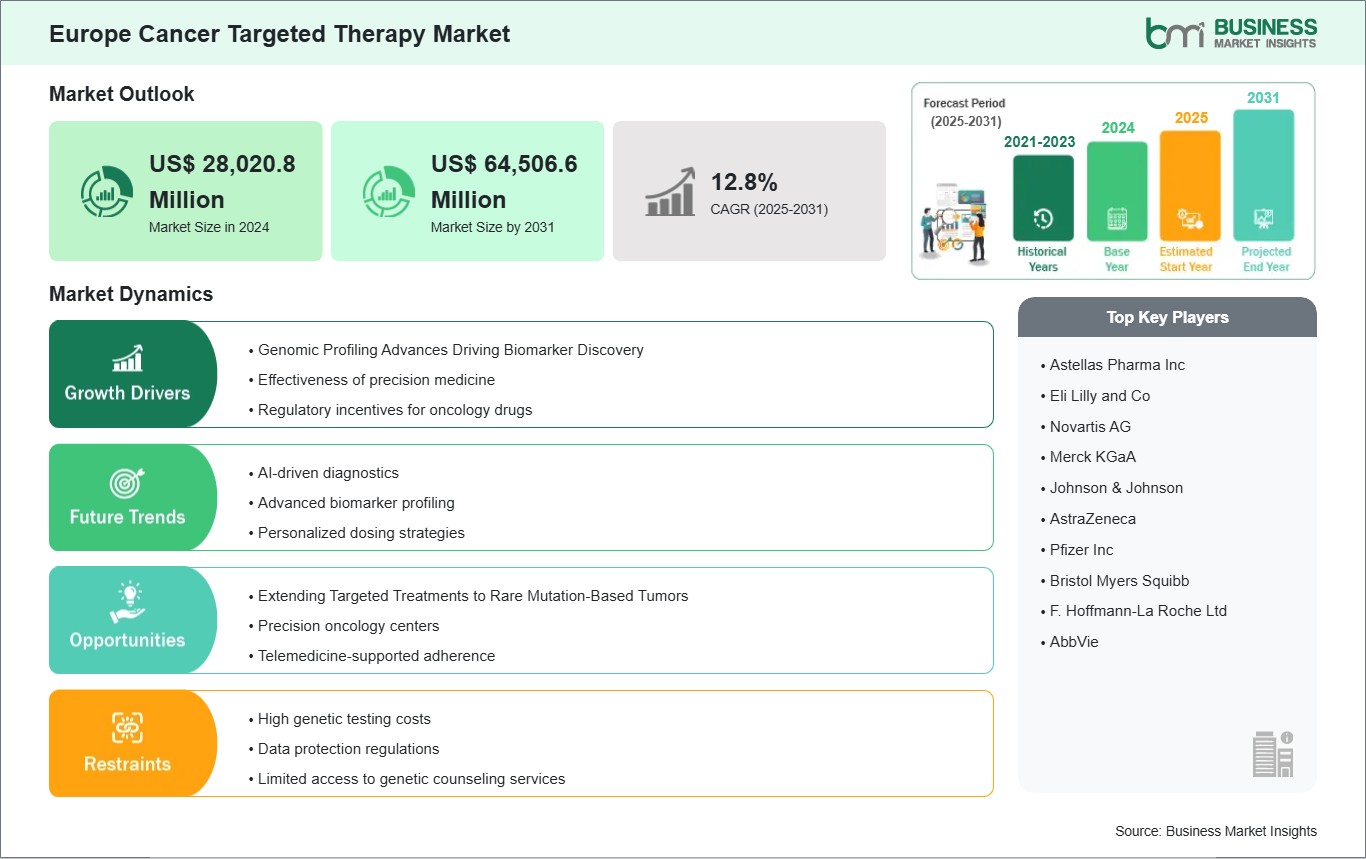
Genomic Profiling Advances Driving Biomarker Discovery
Europe has been at the forefront of integrating molecular diagnostics into routine oncology practice, supported by national genomic medicine initiatives, EU-funded research programs, and strong collaboration between academia and industry. Technologies such as next-generation sequencing (NGS), whole-genome sequencing, and liquid biopsy are widely adopted across major European cancer centers, enabling precise identification of actionable mutations, including EGFR, ALK, HER2, BRAF, BRCA, and PIK3CA.
The European Medicines Agency (EMA) actively supports biomarker-driven drug approvals and companion diagnostics, accelerating market entry for targeted therapies. Many European countries provide reimbursement for comprehensive genomic testing—particularly for lung, breast, colorectal, and hematological cancers—which has significantly expanded the eligible patient population for targeted treatments. Biomarker discovery has also enhanced clinical trial efficiency, with Europe serving as a key region for multinational precision oncology trials.
Additionally, the use of real-world evidence (RWE), national cancer registries, and pan-European genomic databases has strengthened biomarker validation and post-marketing surveillance. Liquid biopsy adoption for disease monitoring and resistance detection is further increasing therapy duration and improving clinical outcomes. Collectively, these factors continue to drive sustained demand for cancer-targeted therapies across Europe.
Extending Targeted Treatments to Rare Mutation-Based Tumors
The expansion of targeted therapies into rare cancers and genetically defined tumor subtypes represents a significant market opportunity. Europe's strong regulatory framework—combined with incentives such as orphan drug designation, accelerated assessment pathways, and extended market exclusivity—has encouraged pharmaceutical companies to invest in therapies for rare and ultra-rare cancers.
Tumor-agnostic therapies targeting biomarkers such as NTRK fusions, RET alterations, MSI-H/dMMR status, and FGFR mutations have gained increasing traction across Europe. These therapies allow treatment to be guided by genetic alterations rather than tumor origin, expanding clinical applicability across multiple rare cancer types. European oncology guidelines increasingly incorporate molecular profiling for rare tumors, improving diagnosis rates and treatment access.
Innovative clinical trial designs—including basket and umbrella trials—are widely used across European research networks, reducing development timelines and costs for rare cancer therapies. From a payer perspective, targeted therapies for rare cancers often demonstrate strong cost-effectiveness due to improved survival outcomes and reduced toxicity compared to conventional chemotherapy. As precision oncology continues to advance, expanding targeted therapies into rare, mutation-driven cancers is expected to unlock new revenue streams, strengthen oncology pipelines, and reinforce Europe's position as a global leader in innovation.