Analysis By Type (Biodegradable and Non-Biodegradable) and Application (Packaging, Agriculture, Consumer Goods, Automotive & Transportation, Textiles, Building & Construction, and Others)
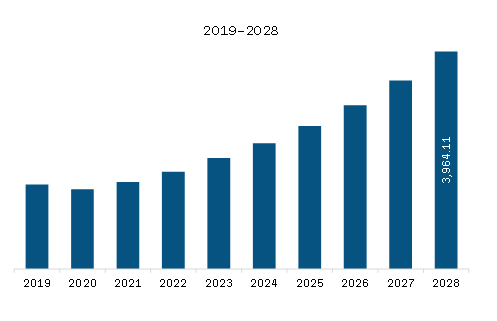
The bioplastics market in Europe is expected to grow from US$ 1,585.92 million in 2021 to US$ 3,964.11 million by 2028; it is estimated to grow at a CAGR of 14.0% from 2021 to 2028.
Bioplastics are plastics produced from plants or other biological materials, unlike conventional plastic produced using crude oil and natural gas. These are usually made by extracting sugar starch from sugarcane and corn to facilitate their conversion into polybioplastics (PLAs); they can also be produced from polyhydroxyalkanoates (PHAs) engineered from microorganisms. The PLA is the most typical bioplastics used in food packaging, while PHA is often utilized in medical devices, including sutures and cardiovascular patches. PLA has properties similar to polyethylene and polypropylene, and its important features include high rigidity, transparency, stability, and superior performance, which make it suitable for food packaging applications. PLA plastic production saves two-thirds of the energy required for fabricating fossil fuel-based plastics. Further, the production process The PLA plastics emit ~70% fewer greenhouse gases than conventional plastics during the degradation in a landfill.
Packaging products made from bioplastics include bags for agricultural use, compost, nursery products, horticultural products, toys, and textiles. They are also used in the production of disposable cups, plates, salad bowls, clingfilm, and food containers. The development of sophisticated bioplastic packaging for food products has notably enhanced the shelf life of the food. Its use helps brands connect with their customers by showing they are conscious of their environmental footprint. Bioplastics offer an alternative approach to packaging and are a real solution to the need to reduce traditional plastic use and waste. Growing environmental concerns are driving the demand for biodegradable plastics in the packaging sector across Europe. In addition, the demand for bioplastics in the packaging industry is expected to grow due to the rising need for different healthcare products to combat the COVID-19 pandemic. Further, it’s relatively easy for manufacturers to manufacture bioplastic packaging because the production process involves the use of standard plastics processing technology. Thus, the growing demand for eco-friendly plastics in the packaging sector is a major factor boosting the growth of the bioplastics market in Europe.
With the new features and technologies, vendors can attract new customers and expand their footprints in emerging markets. This factor is likely to drive the Europe bioplastics market at a notable CAGR during the forecast period.
Europe BioplasticsMarket Revenue and Forecast to 2028 (US$ Million)
Europe Bioplastics Market Segmentation
Europe bioplastics market is segmented into type, application, and country. Based on type, the market is segmented into biodegradable and non-biodegradable. The biodegradable segment held the larger market share in 2020. Based on application, the Europe bioplastics market has been divided into packaging, agriculture, consumer goods, automotive & transportation, textiles, building & construction, and others. The packaging segment held the largest market share in 2020. Based on country, the Europe bioplastics market is segmented into France, Germany, Italy, UK, Russia, and rest of Europe.
Basf SE; Biome Bioplastics; Braskem S.A.; Mitsubishi Chemical Corporation; Novamont S.P.A.; Sabic; Teijin Limited; Toray Industries, Inc.; and Total Corbion PLA are among the leading companies in the Europe bioplastics market.
Europe Bioplastics Market Strategic Insights
Get more information on this report
Europe Bioplastics Market Segmentation Analysis
Europe Bioplastics Market Report Highlights
Europe Bioplastics Report Scope
Report Attribute
Details
Market size in 2021
US$ 1,585.92 Million
Market Size by 2028
US$ 3,964.11 Million
CAGR (2021 - 2028)
14.0%
Historical Data
2019-2020
Forecast period
2022-2028
Segments Covered
By Type
Biodegradable and Non-Biodegradable
By Application
Packaging
Agriculture
Consumer Goods
Automotive & Transportation
Textiles
Building & Construction
Regions and Countries Covered
Europe
UK, Germany, France, Russia, Italy, Rest of Europe
Market leaders and key company profiles
Basf SE
Biome Bioplastics
Braskem S.A.
Mitsubishi Chemical Corporation
Natureworks LLC
Sabic; Teijin Limited
Toray Industries, Inc.
Total Corbion PLA
Get more information on this report
Europe Bioplastics Market Country and Regional Insights
Get more information on this report
Identical Market Reports with other Region/Countries
The List of Companies - Europe Bioplastics Market
Basf SEBiome BioplasticsBraskem S.A.Mitsubishi Chemical CorporationNatureworks LLCSabic; Teijin LimitedToray Industries, Inc.Total Corbion PLA
Frequently Asked Questions
How big is the Europe Bioplastics Market?
The Europe Bioplastics Market is valued at US$ 1,585.92 Million in 2021, it is projected to reach US$ 3,964.11 Million by 2028.
What is the CAGR for Europe Bioplastics Market by (2021 - 2028)?
As per our report Europe Bioplastics Market, the market size is valued at US$ 1,585.92 Million in 2021, projecting it to reach US$ 3,964.11 Million by 2028. This translates to a CAGR of approximately 14.0% during the forecast period.
What segments are covered in this report?
The Europe Bioplastics Market report typically cover these key segments-
What is the historic period, base year, and forecast period taken for Europe Bioplastics Market?
The historic period, base year, and forecast period can vary slightly depending on the specific market research report. However, for the Europe Bioplastics Market report:
Historic Period : 2019-2020
Base Year : 2021
Forecast Period : 2022-2028
Who are the major players in Europe Bioplastics Market?
The Europe Bioplastics Market is populated by several key players, each contributing to its growth and innovation. Some of the major players include:
Basf SE
Biome Bioplastics
Braskem S.A.
Mitsubishi Chemical Corporation
Natureworks LLC
Sabic; Teijin Limited
Toray Industries, Inc.
Total Corbion PLA
Who should buy this report?
The Europe Bioplastics Market report is valuable for diverse stakeholders, including:
Investors: Provides insights for investment decisions pertaining to market growth, companies, or industry insights. Helps assess market attractiveness and potential returns.
Industry Players: Offers competitive intelligence, market sizing, and trend analysis to inform strategic planning, product development, and sales strategies.
Suppliers and Manufacturers: Helps understand market demand for components, materials, and services related to concerned industry.
Researchers and Consultants: Provides data and analysis for academic research, consulting projects, and market studies.
Financial Institutions: Helps assess risks and opportunities associated with financing or investing in the concerned market.
Essentially, anyone involved in or considering involvement in the Europe Bioplastics Market value chain can benefit from the information contained in a comprehensive market report.




 Get Free Sample For Europe Bioplastics Market