Analysis By Medication (Quick Relief Medications and Long-Term Control Medications), Route of Administration (Inhaled, Prefilled Syringe/Vials, and Others), and Distribution Channel (Online Pharmacies, Hospital Pharmacies, and Retail Pharmacies)
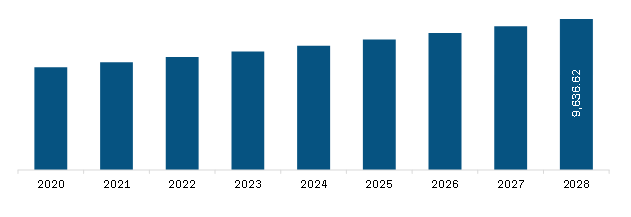
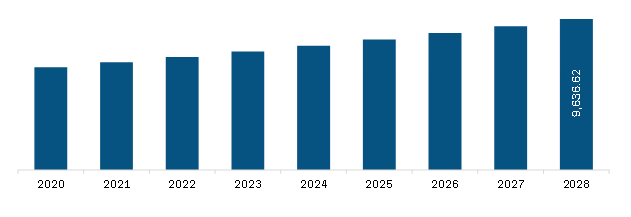
The Europe asthma drugs market is expected to reach US$ 9,636.62 million by 2028 from US$ 6,876.65 million in 2021; it is estimated to grow at a CAGR of 4.9% from 2021 to 2028.
The growth of the market is attributed to the rising prevalence of asthma and the growing exposure to coarse particulate matters. However, the unmet medical needs hamper the market growth.
Asthma is a disorder in which psychological elements have played a significant role since the 20th century. Clinicians understand that emotional stress can trigger or exacerbate asthma and that a patient's mental health can impair asthma control by influencing symptom presentation and treatment adherence. As a result, there is a bi-directional link between asthma and psychological issues.
Asthmatics and asthma exacerbations are associated with periods of heightened emotionality. Depressive disorders are more common among people with asthma than in the general population, according to various prevalence estimates, some of which reach 40%. Patients with bipolar affective disorders tend to have a higher chance of acquiring IgE-mediated allergy diseases, such as asthma, than the general population. Anxiety disorders also have an elevated prevalence in asthma, affecting up to one-third of asthmatic children and adolescents and 24% of asthmatic adults.
Ambiguous disease criteria, inconsistencies in nomenclature, limited samples, and an emphasis on outpatient or inpatient population rather than the community affects the research on the frequency of psychological and mental disorders in asthmatics. The World Mental Health Survey addresses a few of these methodological issues by providing standardized data for 17 nations across the world. Compared to individuals without asthma, the pooled estimates of age- and sex-adjusted odds of mental disorders were 1.6 (95% CI=1.4, 1.8) for depressive disorders and 1.5 (95% CI=1.4,1.7) for anxiety disorders. There was also a link between asthma and alcohol use disorders (OR 1.7 (95% CI=1.4, 2.1) in this study.
Although the frequency of mental disorders and asthma varies substantially between nations, there was much less cross-sectional heterogeneity in their connection. Given that the countries represented varied greatly in terms of culture, healthcare organization, and socioeconomic development, this constancy is remarkable. It suggests that practitioners in any environment should be aware of the extensive overlap between asthma and psychological and mental illnesses.
Early psychosomatic models suggested that psychological discomfort played a role in varying asthma morbidity among asthma patients. However, emerging knowledge of pathophysiological pathways indicated that psychological variables might also play a role in the genesis of asthma. The disruption of critical biological systems such as the neuroendocrine stress response, cytokines, and neuropeptides is similar to asthma and serious depressive disorders. Additional evidence of a genetic relationship between atopic and depressed symptoms comes from twin-pair studies.
Because of the link between asthma and psychological issues, psychological therapies are occasionally employed to supplement pharmaceutical asthma care. Behavioral therapies, cognitive therapies, cognitive-behavioral therapies (CBT), relaxation techniques, psycho-dynamic psychotherapies, and counseling (both for the person and the family) have all been tried. Unlike pharmacological asthma treatments, there is still a lack of evidence regarding the effectiveness of psychosocial therapy in children and adults. This is expected to boost the need for asthma treatments in the coming years, driving the European asthma drugs market.
Europe Asthma Drugs Market Revenue and Forecast to 2028 (US$ Mn)
Europe Asthma Drugs Market Segmentation
The Europe asthma drugs market, by medication, is segmented into quick relief medications and long-term control medications. Based on route of administration, the market is segmented into inhaled, prefilled syringe/vials, and others. Based on distribution channel, the Europe asthma drugs market is segmented into online pharmacies, hospital pharmacies, and retail pharmacies. By country, the market is segmented into the Germany, Spain, Italy, France, UK and Rest of Europe.
AstraZeneca; TEVA PHARMACEUTICAL INDUSTRIES LTD; Boehringer Ingelheim International GmbH; GlaxoSmithKline plc.; Merck & Co., Inc.; Koninklijke Philips N.V.; Sanofi; Pfizer Inc. (Arena Pharmaceutical GmbH); Novartis AG; and Abbott are among the leading companies operating in the Europe asthma drugs market.
Europe Asthma Drugs Market Strategic Insights
Get more information on this report
Europe Asthma Drugs Market Segmentation Analysis
Europe Asthma Drugs Market Report Highlights
Europe Asthma Drugs Report Scope
Report Attribute
Details
Market size in 2021
US$ 6,876.65 Million
Market Size by 2028
US$ 9,636.62 Million
CAGR (2021 - 2028)
4.9%
Historical Data
2019-2020
Forecast period
2022-2028
Segments Covered
By Medication
Quick Relief Medications
Long-Term Control Medications
By Route of Administration
Inhaled
Prefilled Syringe/Vials
By Distribution Channel
Online Pharmacies
Hospital Pharmacies
Retail Pharmacies
Regions and Countries Covered
Europe
UK, Germany, France, Russia, Italy, Rest of Europe
Market leaders and key company profiles
AstraZeneca
TEVA PHARMACEUTICAL INDUSTRIES LTD
GlaxoSmithKline plc.
Boehringer Ingelheim International GmbH
GlaxoSmithKline plc.
Merck & Co., Inc.
Koninklijke Philips N.V.
Sanofi
Pfizer Inc. (Arena Pharmaceutical GmbH)
Novartis AG
Abbott
Get more information on this report
Europe Asthma Drugs Market Country and Regional Insights
Get more information on this report
Identical Market Reports with other Region/Countries
The List of Companies - Europe Asthma Drugs Market
AstraZenecaTEVA PHARMACEUTICAL INDUSTRIES LTDGlaxoSmithKline plc.Boehringer Ingelheim International GmbHGlaxoSmithKline plc.Merck & Co., Inc.Koninklijke Philips N.V.SanofiPfizer Inc. (Arena Pharmaceutical GmbH)Novartis AGAbbott
Frequently Asked Questions
How big is the Europe Asthma Drugs Market?
The Europe Asthma Drugs Market is valued at US$ 6,876.65 Million in 2021, it is projected to reach US$ 9,636.62 Million by 2028.
What is the CAGR for Europe Asthma Drugs Market by (2021 - 2028)?
As per our report Europe Asthma Drugs Market, the market size is valued at US$ 6,876.65 Million in 2021, projecting it to reach US$ 9,636.62 Million by 2028. This translates to a CAGR of approximately 4.9% during the forecast period.
What segments are covered in this report?
The Europe Asthma Drugs Market report typically cover these key segments-
Medication (Quick Relief Medications, Long-Term Control Medications)
Route of Administration (Inhaled, Prefilled Syringe/Vials)
Distribution Channel (Online Pharmacies, Hospital Pharmacies, Retail Pharmacies)
What is the historic period, base year, and forecast period taken for Europe Asthma Drugs Market?
The historic period, base year, and forecast period can vary slightly depending on the specific market research report. However, for the Europe Asthma Drugs Market report:
Historic Period : 2019-2020
Base Year : 2021
Forecast Period : 2022-2028
Who are the major players in Europe Asthma Drugs Market?
The Europe Asthma Drugs Market is populated by several key players, each contributing to its growth and innovation. Some of the major players include:
AstraZeneca
TEVA PHARMACEUTICAL INDUSTRIES LTD
GlaxoSmithKline plc.
Boehringer Ingelheim International GmbH
GlaxoSmithKline plc.
Merck & Co., Inc.
Koninklijke Philips N.V.
Sanofi
Pfizer Inc. (Arena Pharmaceutical GmbH)
Novartis AG
Abbott
Who should buy this report?
The Europe Asthma Drugs Market report is valuable for diverse stakeholders, including:
Investors: Provides insights for investment decisions pertaining to market growth, companies, or industry insights. Helps assess market attractiveness and potential returns.
Industry Players: Offers competitive intelligence, market sizing, and trend analysis to inform strategic planning, product development, and sales strategies.
Suppliers and Manufacturers: Helps understand market demand for components, materials, and services related to concerned industry.
Researchers and Consultants: Provides data and analysis for academic research, consulting projects, and market studies.
Financial Institutions: Helps assess risks and opportunities associated with financing or investing in the concerned market.
Essentially, anyone involved in or considering involvement in the Europe Asthma Drugs Market value chain can benefit from the information contained in a comprehensive market report.




 Get Free Sample For Europe Asthma Drugs Market