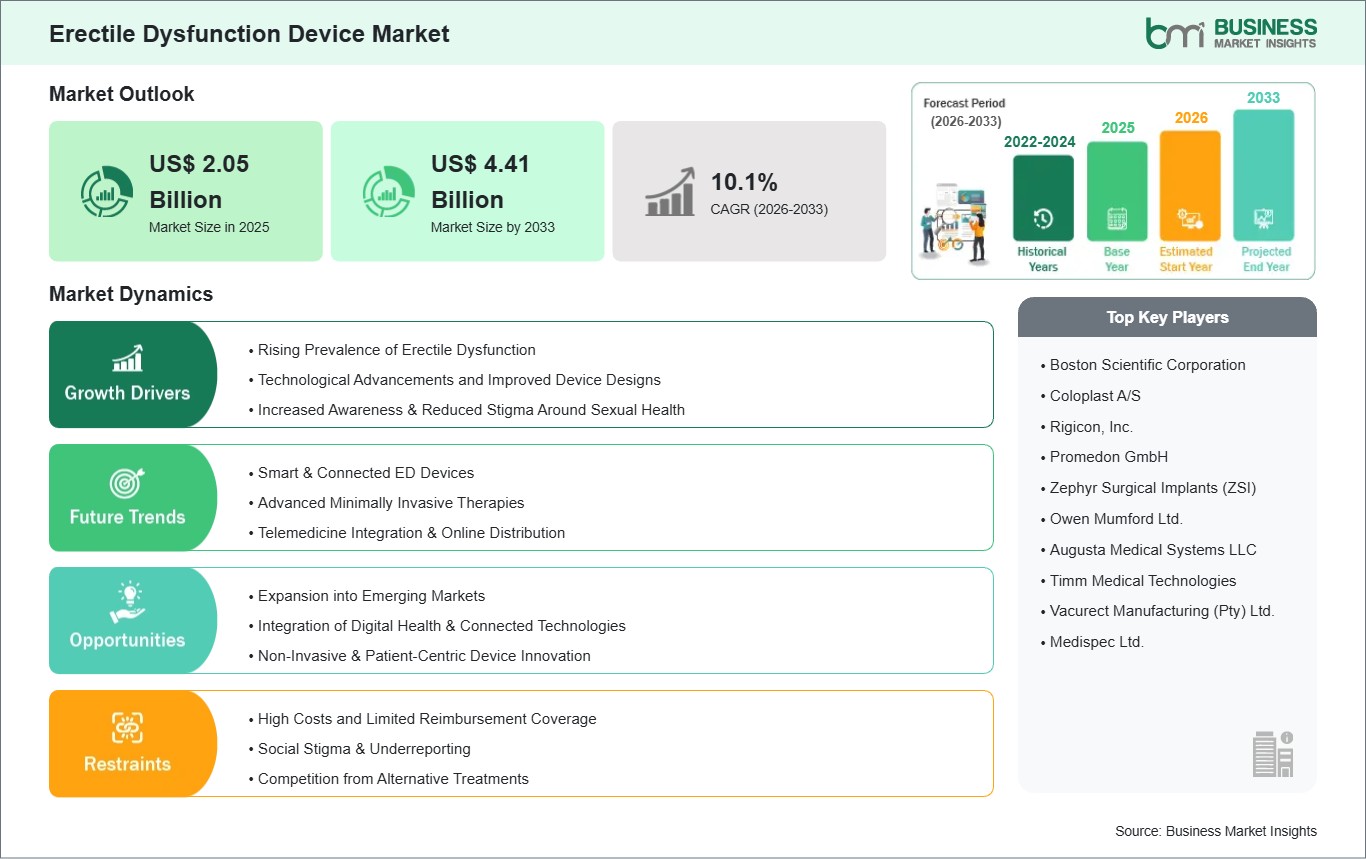
The Erectile Dysfunction Device Market size is expected to reach US$ 4.41 Billion in 2033 from US$ 2.05 Billion in 2025. The market is estimated to record a CAGR of 10.1% from 2026 to 2033.
The Erectile Dysfunction (ED) Device market is witnessing modest growth. This growth is driven by increased awareness of men's sexual health and growing demand for non-pharmacologic (i.e., non-drug) treatment methods for ED. The increased occurrence of ED among the ageing population, as well as among younger people who are living with chronic illnesses eg: diabetes, cardiovascular diseases, obesity and complications that arise post prostate cancer treatment, will support continued growth in the ED Device Market through the coming years. Devices used to treat Erectile Dysfunction are vacuum erection devices, penile implants and shockwave therapy machines. These types of devices produce successful results for patients under the supervision of a physician and provide long-term benefit for patients who may have received little or no benefit from traditional methods including oral medications.
North America remains the leading region producing devices for patients with ED due to its superior healthcare infrastructure and higher rates of diagnosing ED and a greater willingness for men to seek treatment for their erectile issues; the other regions which make up the Global ED Device Market. Marketplace include Europe (due to the acceptance of using devices/technology & growth in EU common market areas) and Asia/Pacific Region (which is a high growth marketplace opportunity) where the increase in healthcare access, increased awareness about erectile dysfunction and gradual decrease in social stigma associated with ED enhances the growing demand for ED treatment devices; continuous development of new, innovative types of less invasive implantable devices and home use devices/controller-type devices utilizing digital technology help patients achieve remarkable results and support additional global growth in the demand for erectile dysfunction devices through innovations in developing more efficient treatment options.

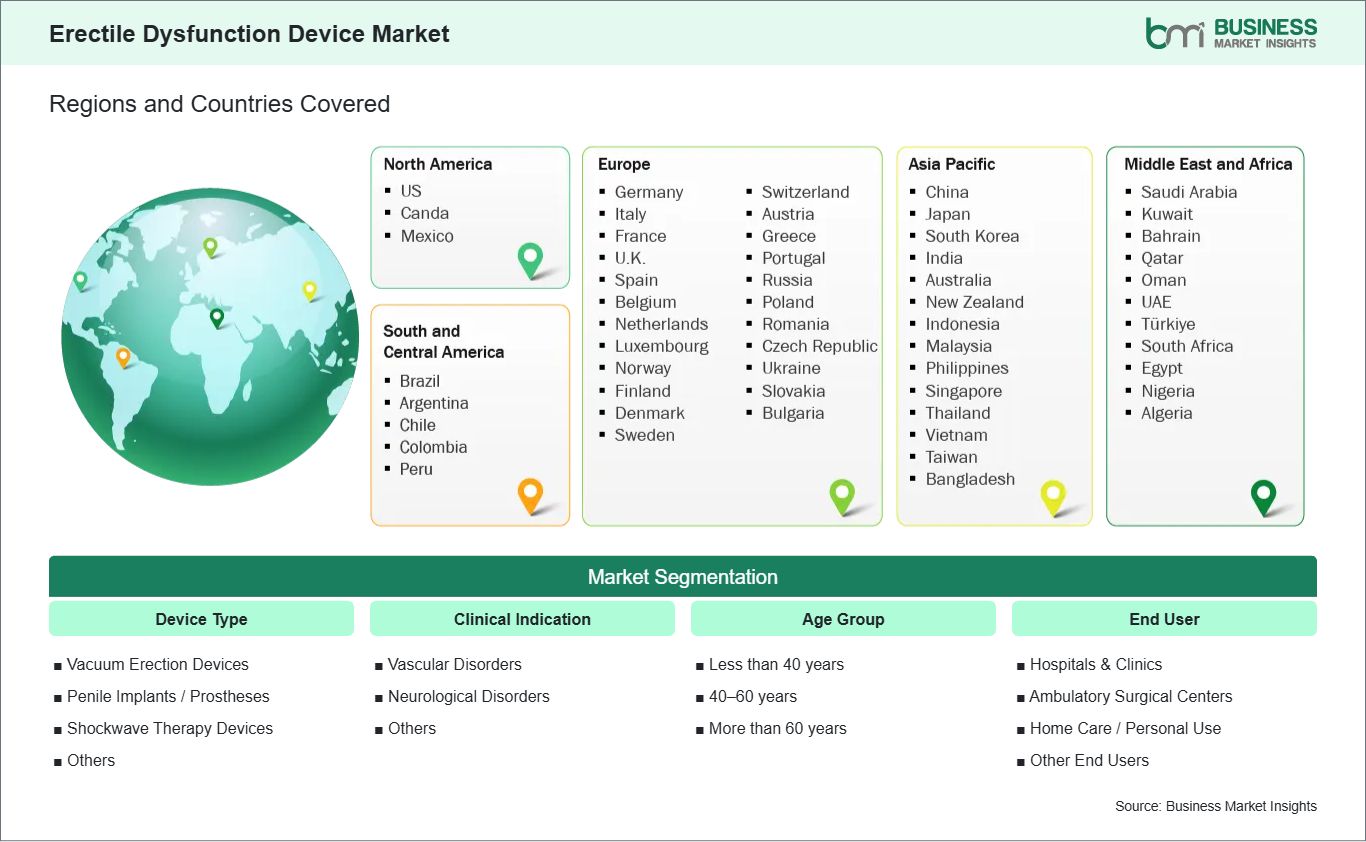
Key segments that contributed to the derivation of the Erectile Dysfunction Device market analysis are device type, clinical indication, age group, and end user.
The growth of the erectile dysfunction (ED) market will be driven by an increase in the number of older people with ED due to old age and the increased number of people diagnosed with chronic health conditions such as diabetes, cardiovascular disease, hypertension, obesity, or neurological disorders disrupting the blood and nerve systems required for a man to be able to achieve and maintain an erection. These conditions are some of the most common reasons why middle-aged and elderly men experience erectile dysfunction. Additionally, the rising prevalence of lifestyles associated with poor eating habits and the use of substances (e.g., tobacco and alcohol), as well as high levels of stress and a lack of physical activity, have been identified as contributing factors to the increases in ED across the globe. As the global average life expectancy lengthens, an increasing number of males are reaching advanced ages with many of these chronic health conditions, and thus a longer-term need for effective treatments is expected. Although the use of oral medications is currently considered the preferred treatment option for ED, there is a substantial number of males who do not respond adequately to oral medication or have contraindications or adverse side effects; consequently, demand for alternative device-based options is increasing in number. Vacuum erection devices and penile implants provide long-term, dependable solutions for ED and continue to be used increasingly in the treatment of patients who do not respond adequately to oral medications. Increased awareness of the need for more open discussions about men's sexual health, increased rates of diagnosis for ED, and increased numbers of patients pursuing treatment for ED all positively reinforce the future growth of the ED market due to continued clinical need.
There is great potential for growth from innovative technologies in the market for erectile dysfunction devices. People increasingly prefer to have their treatment done properly in the privacy of their own homes. Due to the development of new medical devices using innovative engineering technologies, there are now many types of devices such as minimally invasive penile implants, user-friendly vacuum erection devices, and low-intensity shockwave therapy devices, all of which aim to enhance the comfort and safety of patients while also helping to achieve better outcomes from treatment. There is also a significant consumer preference for privacy and convenience, which is driving demand for a range of home-use devices that patients can utilize without any form of clinical supervision. In addition, digital integration through apps and customizable settings will enhance the ability of patients to adhere to their treatment plans and feel satisfied with their experience. In emerging markets such as Asia-Pacific, Latin America and the Middle East, the need for awareness of healthcare, access to urology services and continued reduction of the stigma surrounding ED represents considerable potential for growth. Partnerships between device manufacturers, healthcare providers and telemedicine companies can help enhance outreach and education to patients. Manufacturers of these devices that offer innovative, affordable products and focus on local distribution strategies will be in the best position to capitalize on all of the opportunities and expand their presence in the global marketplace.
By device type, the erectile dysfunction device market is segmented into vacuum erection devices, penile implants / prostheses, shockwave therapy devices, others. The vacuum erection devices segment dominated the market in 2024. Their dominance is largely driven by their non-invasive characteristics and general acceptance as a first-line, effective treatment option.
By clinical indication, the market is segmented into vascular disorders, neurological disorders, others. The vascular disorders segment held the largest share of the market in 2024. The segment's expansion is attributed to the increased number of people who have diabetes, high blood pressure, and heart conditions, which cause erectile dysfunction (ED).
By age group, the erectile dysfunction device market is segmented into less than 40 years, 40–60 years, more than 60 years. The 40–60 years segment dominated the market in 2024. The incidence of ED in men aged between 40-60 has increased because of lifestyle and chronic health conditions that affect them.
By end user, the market is segmented into hospitals & clinics, ambulatory surgical centers, home care / personal use, other end users. The hospitals & clinics segment held the largest share of the market in 2024. This growth is supported by the high level of healthcare infrastructure and can treat the high volume of patients needing care from a trained health professional.
| Report Attribute | Details |
|---|---|
| Market size in 2025 | US$ 2.05 Billion |
| Market Size by 2033 | US$ 4.41 Billion |
| Global CAGR (2026 - 2033) | 10.1% |
| Historical Data | 2022-2024 |
| Forecast period | 2026-2033 |
| Segments Covered | By Device Type
|
|
Regions and Countries Covered
| |
| North America | US, Canada, Mexico |
| Europe | Belgium, Austria, Finland, Denmark, Greece, Poland, Romania, Russia, Ukraine, Czech Republic, Slovakia, Bulgaria, Italy, Luxembourg, Germany, Switzerland, France, Netherlands, Norway, Portugal, Spain, Sweden, United Kingdom |
| Asia-Pacific | Australia, China, India, Japan, South Korea, Indonesia, Malaysia, Philippines, Singapore, Thailand, Vietnam, Bangladesh, New Zealand, Taiwan |
| South and Central America | Brazil, Argentina, Peru, Chile, Colombia |
| Middle East and Africa | Bahrain, Kuwait, Oman, Qatar, Saudi Arabia, United Arab Emirates, Turkiye, South Africa, Egypt, Algeria, Nigeria |
| Market leaders and key company profiles |
|
The "Erectile Dysfunction Device Market Size and Forecast (2022 - 2033)" report provides a detailed analysis of the market covering below areas:
The geographical scope of the Erectile Dysfunction Device market report is divided into five regions: North America, Asia Pacific, Europe, Middle East & Africa, and South & Central America. The Erectile Dysfunction Device market in Asia Pacific is expected to grow significantly during the forecast period.
The Asia-Pacific Erectile Dysfunction Device market is segmented into China, Japan, South Korea, India, Australia, New Zealand, Indonesia, Malaysia, the Philippines, Singapore, Thailand, Vietnam, Taiwan, Bangladesh, and the Rest of Asia. The Asia Pacific (APAC) region is coming up as one of the fastest, growing markets for erectile dysfunction (ED) devices. The primary reasons behind this growth are expanding healthcare infrastructures, increasing disposable incomes, and growing awareness of men's sexual health in the region. Besides, China, India, Japan, South Korea, and Australia are among the countries where the incidence of erectile dysfunction is on the rise due to lifestyle changes, urbanization, and an increase in the number of people suffering from chronic conditions such as diabetes, heart disorders, and obesity. Also, the aging male population in the region contributes significantly to the demand for effective ED treatments, among which device, based therapies such as vacuum erection devices, penile implants, and shockwave therapy systems are highly sought.
Healthcare modernization, government initiatives for better access to urological care, and the proliferation of advanced medical devices are some of the factors leading to improved diagnosis and treatment rates. The use of telemedicine and digital health platforms is also playing a role in increasing patient outreach and providing remote monitoring facilities, especially for the rural and underserved areas. The cultural barriers and social stigma associated with erectile dysfunction, which used to be major deterrents in seeking treatment, are now on the decline due to increased public education and targeted awareness campaigns.
Young men and men in their middle age have increasingly adopted Non-invasive devices to treat Erectile Dysfunction, such as Vacuum Erection Devices and Home-use Shockwave Therapy Products, because they are less invasive and offer treatment solutions that are affordable and conveniently found. In addition, manufacturers in the local area and some international manufacturers are creating affordable devices specifically designed for the needs of the Asia Pacific Region. Furthermore, the trend for Home Health Care, along with an increase in the popularity of Minimally Invasive Treatments, has also positively affected the growth of the market. There is a strong growth opportunity for erectile dysfunction device manufacturers and healthcare providers in the Asia Pacific Region based on the demographic trends, technological development, and increased access to Health Care Services occurring in the Asia Pacific Region.

The Erectile Dysfunction Device market is evaluated by gathering qualitative and quantitative data post primary and secondary research, which includes important corporate publications, association data, and databases. A few of the key developments in the erectile dysfunction device market are:
The Erectile Dysfunction Device Market is valued at US$ 2.05 Billion in 2025, it is projected to reach US$ 4.41 Billion by 2033.
As per our report Erectile Dysfunction Device Market, the market size is valued at US$ 2.05 Billion in 2025, projecting it to reach US$ 4.41 Billion by 2033. This translates to a CAGR of approximately 10.1% during the forecast period.
The Erectile Dysfunction Device Market report typically cover these key segments-
The historic period, base year, and forecast period can vary slightly depending on the specific market research report. However, for the Erectile Dysfunction Device Market report:
The Erectile Dysfunction Device Market is populated by several key players, each contributing to its growth and innovation. Some of the major players include:
The Erectile Dysfunction Device Market report is valuable for diverse stakeholders, including:
Essentially, anyone involved in or considering involvement in the Erectile Dysfunction Device Market value chain can benefit from the information contained in a comprehensive market report.
Please tell us your area of interest
(Market Segments/ Regions and Countries/ Companies)