Embedded Security Market Regional Highlights
North America Embedded Security Market
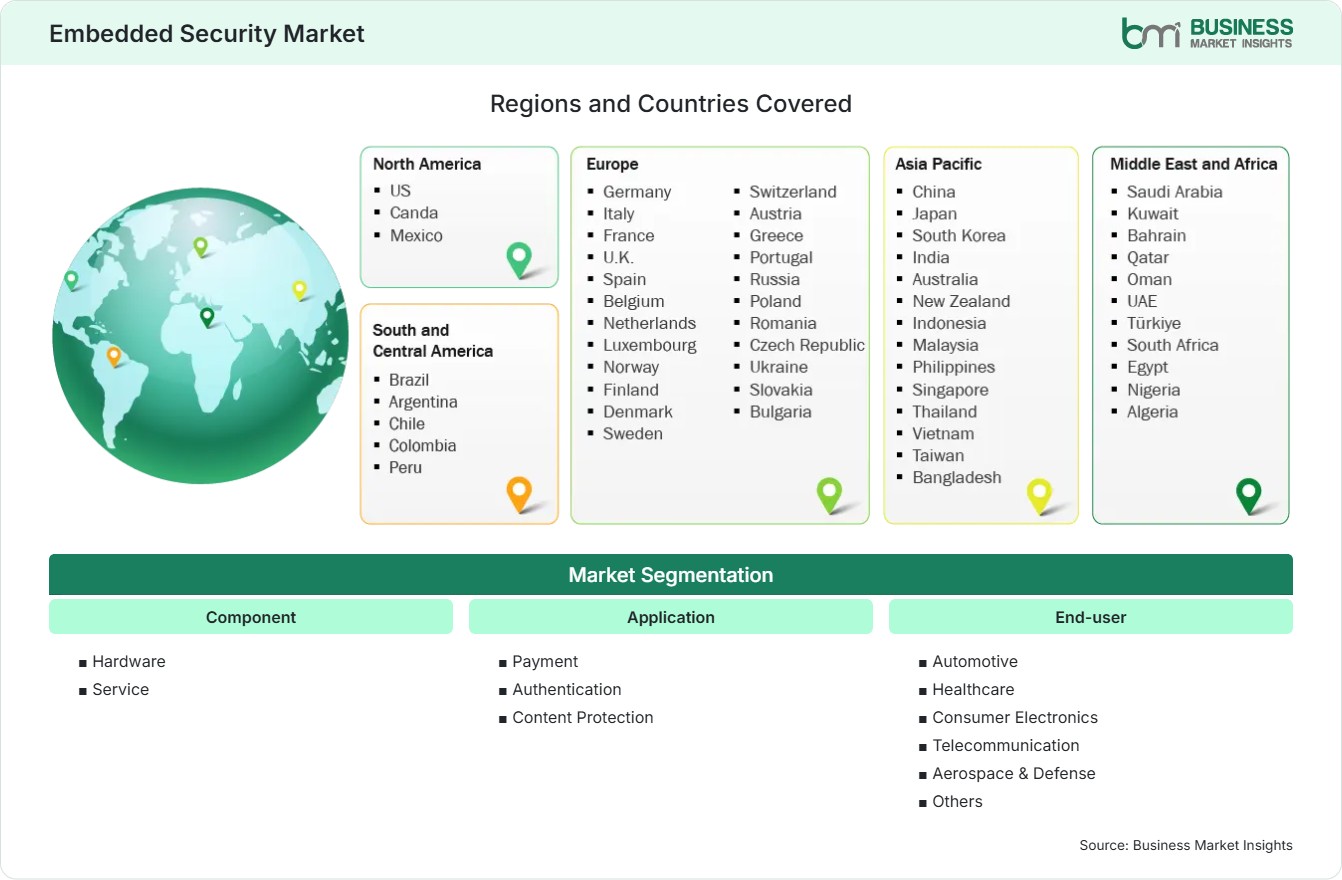
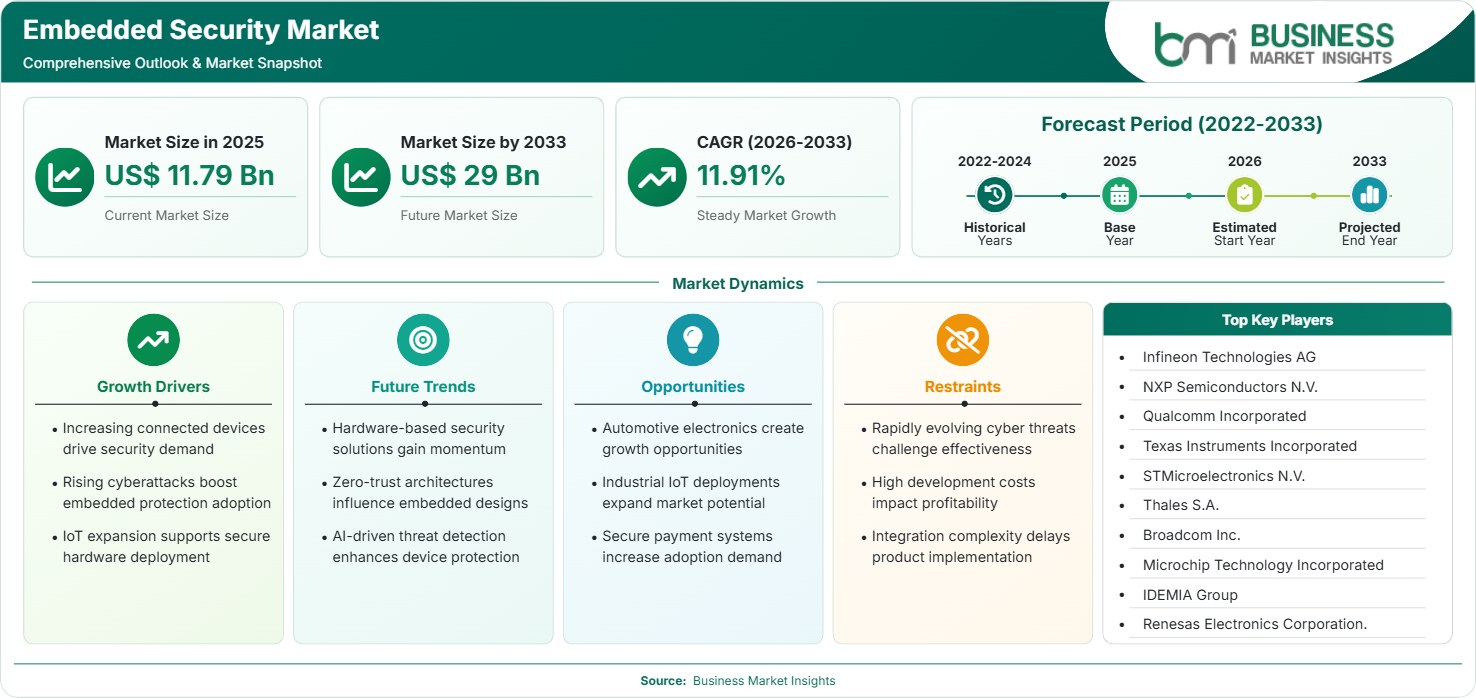
North America accounts for approximately 34%–37% of the Embedded Security Market share in 2025 and is projected to expand at a 10.5%–11.5% CAGR through 2033. Demand is driven by advanced semiconductor capabilities, high cybersecurity spending, defense modernization programs, and widespread deployment of connected devices. Enterprises increasingly implement hardware-rooted security architectures to strengthen device integrity and data protection. Regulatory requirements surrounding critical infrastructure cybersecurity, financial systems protection, and digital identity frameworks continue supporting adoption across commercial and public sector applications.
- The United States remains the largest contributor, supported by strong semiconductor ecosystems, cloud security investments, and widespread deployment of connected industrial infrastructure.
- Financial institutions increasingly deploy hardware security technologies to secure digital payments, tokenization services, identity credentials, and sensitive customer information.
- Defense agencies prioritize trusted hardware platforms and supply-chain assurance programs supporting adoption across mission-critical applications.
- Healthcare providers continue expanding connected medical device deployments, increasing focus on embedded authentication and secure firmware management.
US Embedded Security Market
The United States accounts for almost 78%–82% of the North American market share revenue and is anticipated to register a CAGR of 10.8%–11.8% from 2026 to 2033. Robust spending on cybersecurity modernization, digital identities, automation, and mobility ensures consistent demand. Leading technology companies, semiconductor manufacturers, and security vendors are the primary promoters of secure elements, trusted execution environments, and hardware security modules across diverse applications.
- Rising software-defined vehicle adoption is increasing integration of trusted hardware platforms and secure communication architectures.
- Federal cybersecurity initiatives continue strengthening requirements for device-level protection in critical infrastructure deployments.
- Large-scale cloud and edge computing deployments are creating demand for embedded cryptographic protection capabilities.
- Enterprise migration toward passwordless authentication strengthens security controller and identity-security deployments.
Europe Embedded Security Market
Europe holds a 24%–27% share of the Embedded Security Market in 2025 and is forecast to grow at a 11.0%–12.0% CAGR through 2033. Growth in the region is driven by cybersecurity regulations, manufacturing connectivity programs, and advanced automotive technology. Germany is the leading country in regional revenue generation, while Eastern European technology centers continue to increase cybersecurity expenditure. The Cyber Resilience Act and automotive cybersecurity requirements are accelerating the implementation of embedded protection across industrial, automotive, and public-sector networks.
- Germany remains the leading market, benefiting from advanced automotive manufacturing and industrial automation sectors.
- France demonstrates strong adoption driven by digital identity, smart card technologies, and aerospace security requirements.
- The United Kingdom records healthy expansion due to cybersecurity spending and connected infrastructure modernization.
- Poland and other emerging markets show faster growth trajectories supported by technology investment and manufacturing upgrades.
- Industrial IoT deployments increasingly integrate hardware-based authentication and secure provisioning capabilities.
Asia Pacific Embedded Security Market
The Asia-Pacific region accounts for 28%-31% in 2025 and is estimated to have the highest CAGR of 13.0%-14.0% until 2033. This growth will be facilitated by increased electronics production, IoT integration, national-level digitalization initiatives, and electric vehicle production. China leads the region in demand for security technology, while India shows the highest growth owing to the digital identity drive, fintech developments, and secure connectivity. The semiconductor manufacturing concentration further supports the deployment of security technology.
- China remains the dominant market because of consumer electronics production and large-scale connected device deployment.
- India records the strongest growth supported by digital public infrastructure and expanding secure payment ecosystems.
- Japan invests heavily in industrial automation, robotics, and advanced semiconductor security solutions.
- South Korea strengthens adoption through connected mobility, consumer electronics, and advanced connectivity programs.
- Southeast Asian economies continue expanding smart manufacturing and secure connectivity investments.
Rest of World Embedded Security Market
The Rest of World region accounts for 10%–13% market share in 2025 and is expected to expand at 11.5%–12.5% CAGR through 2033. South and Central America benefit from financial digitalization initiatives and secure payment deployments.
Middle East and Africa markets are picking up pace owing to smart-city investments, digital government initiatives, telecommunications upgrades, and cybersecurity for critical infrastructure. Growth opportunities remain strong in some emerging economies.
- Brazil leads Latin American adoption through fintech innovation and payment infrastructure expansion.
- Mexico benefits from manufacturing modernization and connected industrial deployments.
- GCC countries increase investments in smart cities, digital identity, and national cybersecurity capabilities.
- South Africa remains a notable growth market supported by telecommunications and enterprise digital transformation.
- Critical infrastructure modernization drives embedded security adoption across utilities and transportation sectors.