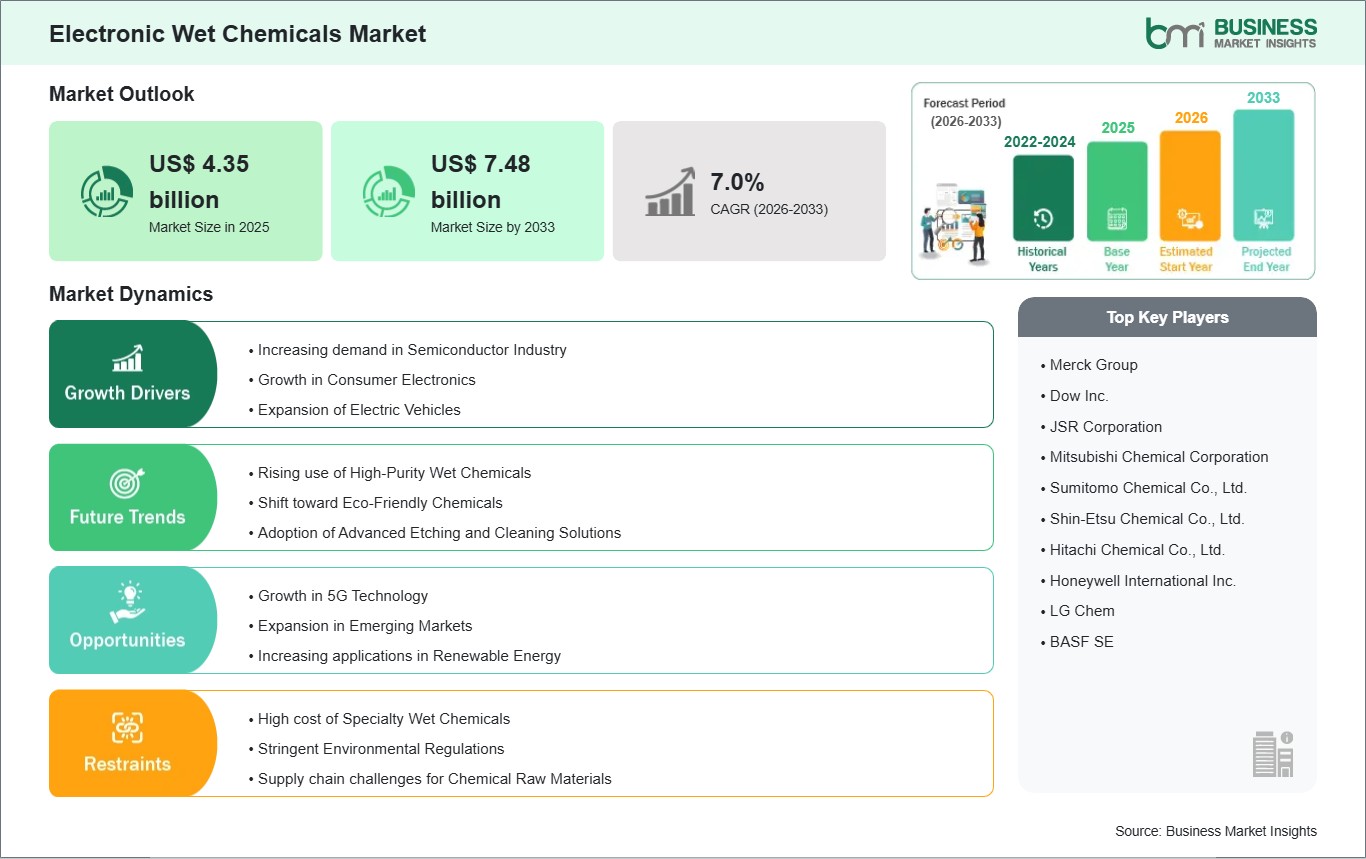
Electronic Wet Chemicals market size is expected to reach US$ 7.48 billion by 2033 from US$ 4.35 billion in 2025. The market is estimated to record a CAGR of 7.0% from 2026 to 2033.
The global market for electronic wet chemicals is an important part of the larger semiconductor and electronics manufacturing landscape. These chemicals are crucial in wafer processing and device fabrication, supporting vital tasks such as cleaning, etching, stripping, and surface preparation. Made with ultra-high purity, electronic wet chemicals prevent contamination and ensure the precision needed for advanced semiconductor nodes and miniaturized components. They are commonly used in integrated circuits, printed circuit boards, flat panel displays, and photovoltaic devices. As electronic devices get smaller and more powerful, the demand for high-quality wet chemicals has grown across various industries, including consumer electronics, automotive, telecommunications, healthcare, and renewable energy. Typical categories of electronic wet chemicals include acids, solvents, bases, and specialty cleaning solutions. Each type is designed for specific stages of semiconductor and electronics production, providing high selectivity, controlled reactivity, and residue-free processing, which are crucial for maintaining product integrity and yield. Manufacturing electronic wet chemicals requires sophisticated processes like purification, distillation, and strict quality control to achieve very low impurity levels. Precision formulation and the use of specialized additives allow for customization of properties such as concentration, volatility, and compatibility with sensitive materials. Innovations in this area increasingly focus on developing eco-friendly chemistries, reducing hazardous waste, and ensuring compatibility with next-generation technologies like extreme ultraviolet lithography and advanced packaging. These chemicals are essential for driving advancements in electronics manufacturing. In the semiconductor industry, they help produce smaller, faster, and more energy-efficient chips used in smartphones, computers, and data centers. In the automotive sector, especially with the growth of electric and autonomous vehicles, these chemicals are crucial for making sensors, microcontrollers, and power electronics. Telecommunications infrastructure, including high-speed networks and next-generation connectivity, relies heavily on semiconductor components processed with wet chemicals. Renewable energy systems, such as solar panels, depend on these materials for efficient production and long-term performance. Additionally, medical devices and industrial automation technologies need highly reliable electronic components, further boosting demand. Market growth comes from the rapid expansion of semiconductor manufacturing, increased use of advanced electronics, and the global trend toward digital transformation. New technologies like artificial intelligence, 5G, and the Internet of Things are greatly increasing the need for high-purity wet chemicals. At the same time, sustainability trends and regulatory pressures are pushing for greener formulations and more efficient manufacturing processes. Government initiatives that support domestic semiconductor production and supply chain resilience also encourage market growth. However, the industry faces challenges such as high production and purification costs, strict environmental and safety regulations, and the need for continual innovation. Supply chain disruptions and the difficulty of maintaining ultra-high purity standards can further affect growth. Despite these obstacles, advancements in chemical processing technologies, increased investment in research and development, and strong demand from key industries are expected to keep the market moving forward. Overall, the electronic wet chemicals market is well-positioned to support the future of electronics by providing essential materials for precise, reliable, and sustainable manufacturing processes across global industries.

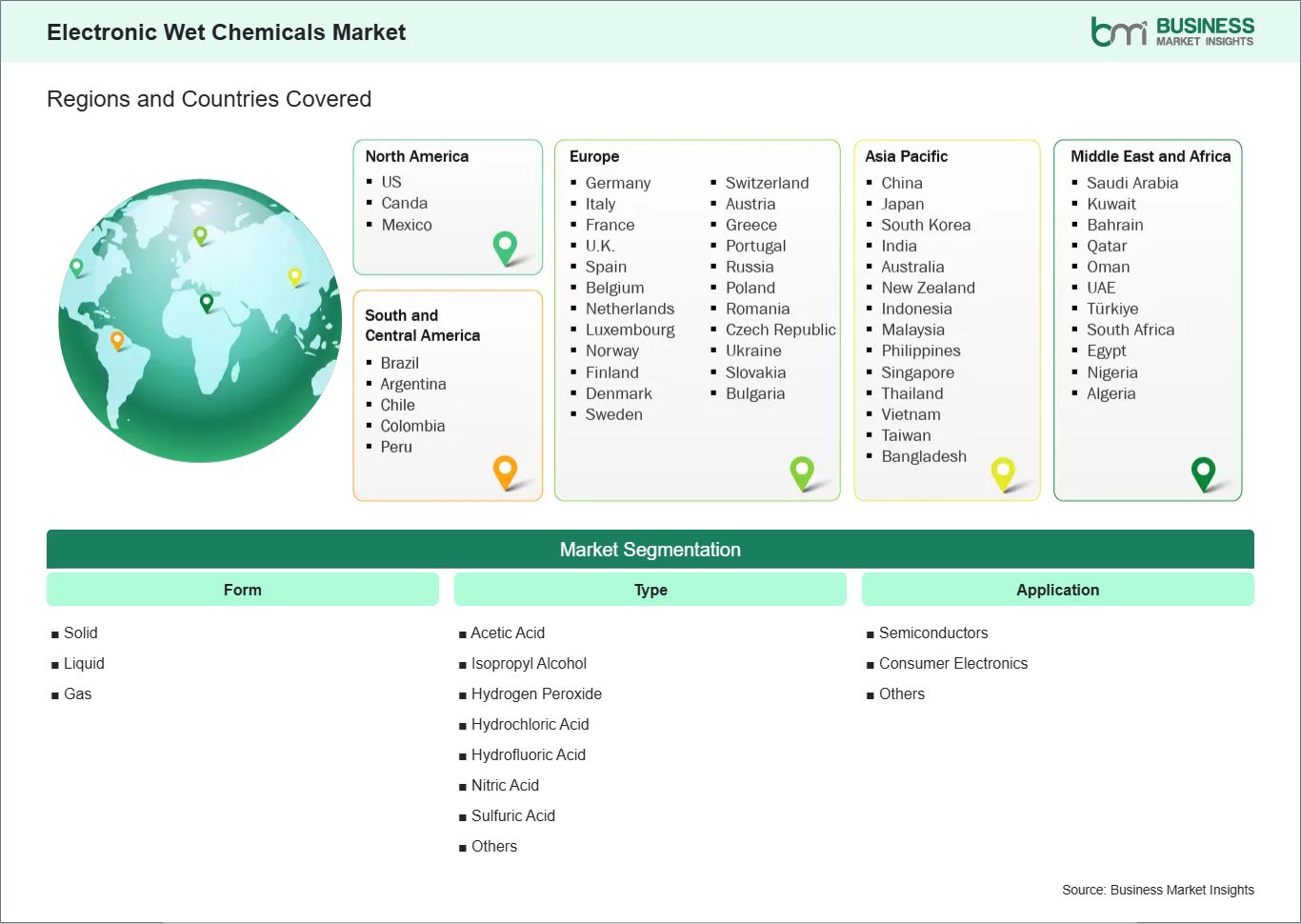
Key segments that contributed to the derivation of the Electronic Wet Chemicals market analysis are form, type, and application.
The global market for electronic wet chemicals is growing quickly due to increasing demand from semiconductor fabrication, advanced electronics, and the automotive sector. The widespread use of consumer electronics like smartphones, tablets, and wearable devices has greatly raised the need for ultra-high-purity wet chemicals used in wafer cleaning, etching, and surface preparation. These chemicals are vital for maintaining precision, removing contaminants, and ensuring optimal performance in smaller components. The rise of electric vehicles also plays a significant role, as wet chemicals are essential for making power semiconductors, sensors, and battery-related electronic systems. They help improve efficiency, reliability, and thermal management in automotive applications. In addition, the growth of data centers and high-performance computing infrastructure is driving semiconductor production, which increases the use of wet chemicals like acids, bases, and solvents. Industrial automation and smart manufacturing technologies depend on high-quality semiconductor devices, highlighting the importance of wet chemicals for ensuring consistency and durability. Government support for semiconductor manufacturing, localization strategies, and the development of digital infrastructure is speeding up market growth. As devices keep getting smaller, faster, and more interconnected, the demand for electronic wet chemicals is expected to rise steadily in both developed and emerging markets.
Technological progress is a major factor shaping the global electronic wet chemicals market. Ongoing innovation focuses on improving chemical purity, boosting process efficiency, and ensuring compatibility with advanced semiconductor technologies. The creation of ultra-high-purity acids, solvents, and cleaning solutions allows for precise processing needed for smaller and more complex semiconductor nodes. These advancements support new technologies like artificial intelligence, 5G networks, and the Internet of Things, which require high-performance electronic components. At the same time, the industry is shifting strongly toward environmentally friendly and low-toxicity wet chemical formulations due to stricter environmental regulations and corporate sustainability goals. Manufacturers are increasingly adopting green chemistry practices, cutting down hazardous waste, and using energy-efficient production methods to lessen environmental impact. Improvements in chemical engineering and materials science are increasing the selectivity, stability, and effectiveness of wet chemicals, leading to better yields and fewer defects in manufacturing. Additionally, innovations in chemical delivery systems and recycling processes help optimize usage and reduce operational costs without sacrificing quality. Ongoing research and development efforts are also working to ensure compatibility with next-generation semiconductor designs and enable further miniaturization. As industries focus on sustainability, operational efficiency, and high-performance materials, technological advancements will keep driving long-term growth in the electronic wet chemicals market.
The solid segment is the leader because of its stability, easy storage, and precise handling in controlled semiconductor environments. Solid wet chemicals are preferred for tasks that need accurate dosing and lower contamination risks, which support high-purity manufacturing processes.
Hydrogen peroxide is at the top of the market due to its strong oxidizing properties and effectiveness in cleaning wafers and preparing surfaces. It is commonly used in semiconductor fabrication to get rid of organic and metallic contaminants, ensuring the high performance and reliability of electronic components.
The semiconductor segment leads because of the widespread use of wet chemicals in cleaning wafers, etching, and processing steps. Rapid progress in chip manufacturing and the growing demand for smaller, more efficient devices keep increasing the need for high-purity wet chemicals in this segment.
| Report Attribute | Details |
|---|---|
| Market size in 2025 | US$ 4.35 billion |
| Market Size by 2033 | US$ 7.48 billion |
| Global CAGR (2026 - 2033) | 7.0% |
| Historical Data | 2022-2024 |
| Forecast period | 2026-2033 |
| Segments Covered | By Form
|
|
Regions and Countries Covered
| |
| North America | US, Canada, Mexico |
| Europe | Belgium, Austria, Finland, Denmark, Greece, Poland, Romania, Russia, Ukraine, Czech Republic, Slovakia, Bulgaria, Italy, Luxembourg, Germany, Switzerland, France, Netherlands, Norway, Portugal, Spain, Sweden, United Kingdom |
| Asia-Pacific | Australia, China, India, Japan, South Korea, Indonesia, Malaysia, Philippines, Singapore, Thailand, Vietnam, Bangladesh, New Zealand, Taiwan |
| South and Central America | Brazil, Argentina, Peru, Chile, Colombia |
| Middle East and Africa | Bahrain, Kuwait, Oman, Qatar, Saudi Arabia, United Arab Emirates, Turkiye, South Africa, Egypt, Algeria, Nigeria |
| Market leaders and key company profiles |
|
The "Electronic Wet Chemicals Market Size and Forecast (2022 - 2033)" report provides a detailed analysis of the market covering below areas:
The geographical scope of the Electronic Wet Chemicals market report is divided into five regions: North America, Asia Pacific, Europe, Middle East & Africa, and South & Central America. The Electronic Wet Chemicals market in the Asia Pacific is expected to grow significantly during the forecast period.
The Asia-Pacific Electronic Wet Chemicals market is segmented into China, Japan, South Korea, India, Australia, New Zealand, Indonesia, Malaysia, the Philippines, Singapore, Thailand, Vietnam, Taiwan, Bangladesh, and the Rest of Asia.
The Asia-Pacific region is the fastest-growing market for electronic wet chemicals. This growth comes from quick industrialization, strong semiconductor manufacturing, and a rising demand for high-purity process chemicals. China, Japan, India, South Korea, and Taiwan are experiencing significant growth in semiconductor fabrication, consumer electronics, and automotive electronics industries. These sectors depend on electronic wet chemicals like ultra-pure acids, bases, and solvents for key processes such as wafer cleaning, etching, and surface preparation. The increasing need for advanced chips and smaller components is driving the demand for ultra-high-purity wet chemicals across the region. The rise of electric vehicles also plays a role in market growth since these chemicals are crucial for making power semiconductors, sensors, and battery-related electronic systems that ensure efficiency, safety, and durability. Additionally, higher investments in semiconductor fabrication plants, electronics manufacturing, and advanced communication infrastructure are increasing the demand for wet chemicals as essential materials. Rapid urbanization, growing disposable incomes, and expanding digital ecosystems are boosting the need for smartphones, computers, and connected devices, which in turn raises the demand for enhanced semiconductor production. The growth of renewable energy technologies, especially solar panels, is also increasing the use of wet chemicals in wafer processing and cell manufacturing. The region benefits from a strong electronics manufacturing ecosystem, integrated supply chains, and cost-effective production capabilities, which support large-scale production and exports of electronic wet chemicals. Governments across Asia-Pacific are working to strengthen domestic semiconductor industries, encourage digital change, and promote better manufacturing technologies, which help drive market growth. Environmental regulations are leading manufacturers to adopt eco-friendly and low-toxicity wet chemical formulations, which reduce hazardous waste and emissions. Technological improvements, including the creation of ultra-high-purity chemicals, better purification methods, and precise chemical delivery systems, enhance process efficiency and product quality. The availability of skilled labor, access to raw materials, and increasing investments in research and development boost the region`s competitive edge. With ongoing industrial growth, supportive policies, and a strong focus on innovation and sustainability, Asia-Pacific is likely to remain a major center for production, consumption, and technological advancements in the global electronic wet chemicals market.

The Electronic Wet Chemicals market is evaluated by gathering qualitative and quantitative data post primary and secondary research, which includes important corporate publications, association data, and databases. A few of the key developments in the Electronic Wet Chemicals market are:
The Electronic Wet Chemicals Market is valued at US$ 4.35 billion in 2025, it is projected to reach US$ 7.48 billion by 2033.
As per our report Electronic Wet Chemicals Market, the market size is valued at US$ 4.35 billion in 2025, projecting it to reach US$ 7.48 billion by 2033. This translates to a CAGR of approximately 7.0% during the forecast period.
The Electronic Wet Chemicals Market report typically cover these key segments-
The historic period, base year, and forecast period can vary slightly depending on the specific market research report. However, for the Electronic Wet Chemicals Market report:
The Electronic Wet Chemicals Market is populated by several key players, each contributing to its growth and innovation. Some of the major players include:
The Electronic Wet Chemicals Market report is valuable for diverse stakeholders, including:
Essentially, anyone involved in or considering involvement in the Electronic Wet Chemicals Market value chain can benefit from the information contained in a comprehensive market report.
Please tell us your area of interest
(Market Segments/ Regions and Countries/ Companies)