Market Summary
Executive Summary and Global Market Analysis
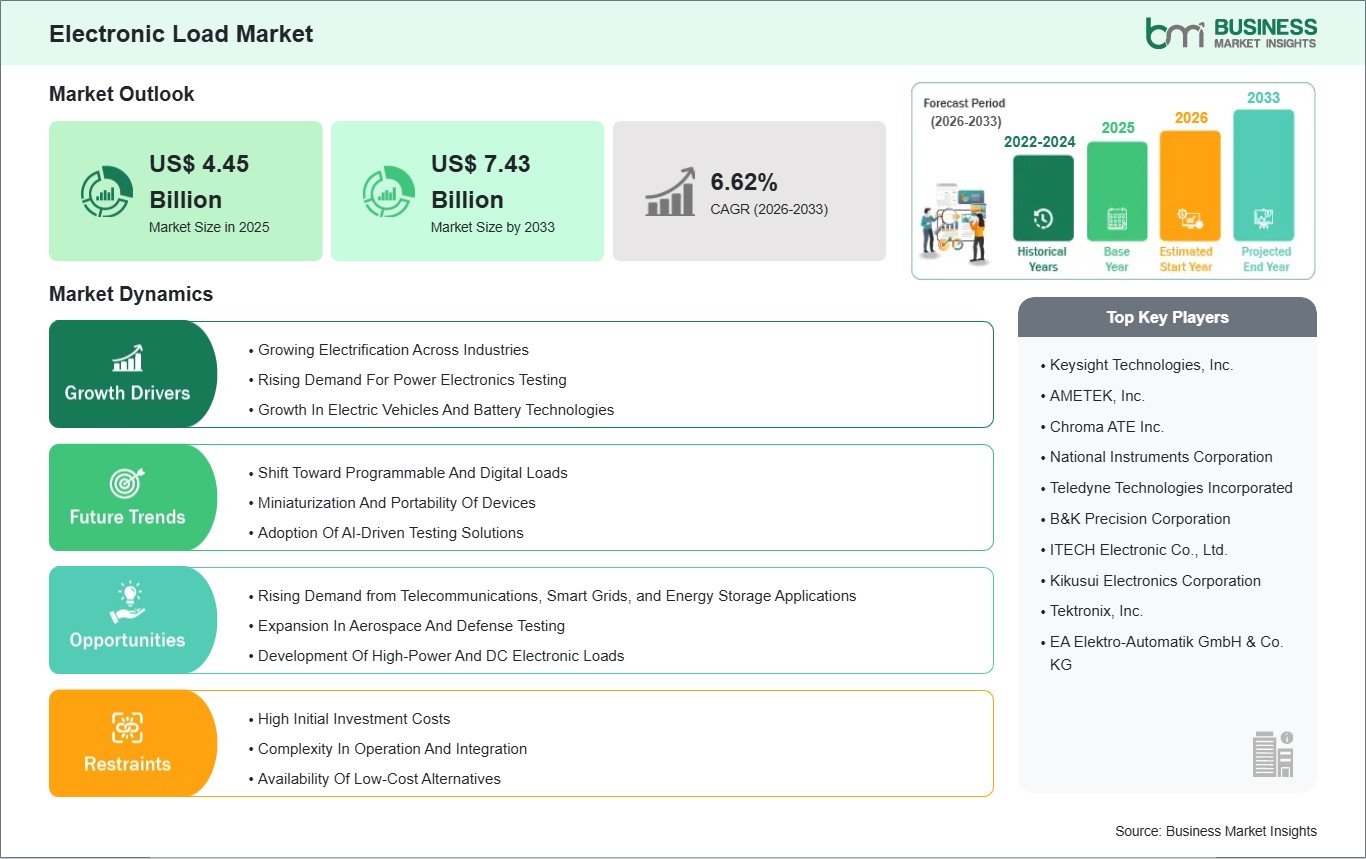
Electronic Load devices are specifically designed to mimic electrical loads in order to test, validate, and evaluate power sources such as batteries, power supplies, and energy systems. The Electronic Load market is witnessing a steady growth rate due to the increased demand for efficient power source testing equipment in various industries. The high growth rate of the electrification process in various industries, especially the automotive and energy sectors, is also contributing to the growth of the market for the Electronic Load devices. The increased focus on renewable energy resources is also contributing to the growth of the market for the Electronic Load devices, as the devices play an important role in the testing, validating, and evaluating processes of the renewable energy resources. In terms of the segmental analysis, the high-voltage electronic load devices are witnessing an increased demand due to their use in energy systems. The low-voltage electronic load devices are still in high demand in consumer electronics.
In terms of the current type, the DC electronic load devices are used for testing, validating, and evaluating processes of the batteries, as well as the renewable energy resources. The AC electronic load devices are used for testing, validating, and evaluating the processes of the power systems. In terms of the application type, the market is witnessing an increased demand for electronic load devices in the automotive as well as the energy sectors due to the high focus on electric vehicles as well as energy system upgrades. The aerospace as well as the defense sectors are also witnessing an increased demand for electronic load devices due to the high demand for high-end system tests in order to maintain the high-end system operation standards.
The competitive landscape for the electronic load devices is witnessing increased competition from the market players, especially the new market players. The market players are focusing on technological advancements in order to meet the high demand from various industries.
Market Forces
Electronic Load Market Drivers and Opportunities
Growing Electrification Across Industries
The high adoption rates of electric vehicles and renewable energy sources necessitate the need for power testing solutions. This is driving the demand for electronic load systems. Government policies supporting the adoption of clean and green technology, reducing emissions, and promoting the usage of renewable sources of energy further add impetus to the demand for testing solutions.
Innovations in the field of testing and simulation technologies using programmable and automated testing equipment have improved the efficiency and accuracy of the testing process. These innovations can effectively simulate real-world scenarios. Using digital tools to monitor the testing process can help the user to maximize the efficiency of the testing process.
Rising Demand from Telecommunications, Smart Grids, and Energy Storage Applications
The increased demand for electronic load systems in telecommunication and infrastructure projects is significantly contributing to the growth of the Electronic Load market. These areas demand high-reliability, continuous power performance, which is critical in ensuring continuous business operations. Electronic loads are used in these areas to efficiently test power systems, which are critical in these environments.
At the same time, the increased demand for smart grid infrastructure is creating a new opportunity for electronic loads in this area. Smart grid technologies are complex and include a number of interrelated systems, which demand high-quality, efficient, and precise tests in order to ensure high levels of stability and efficiency in these systems. Electronic loads are used in these areas to test power system performance under varying conditions, which is critical in these environments. Finally, the increased demand for energy storage technologies, such as batteries, is creating a new opportunity for electronic loads in this area. Electronic loads are critical in evaluating battery performance, which is critical in these environments.
Size and Share Analysis
Electronic Load Market Size and Share Analysis
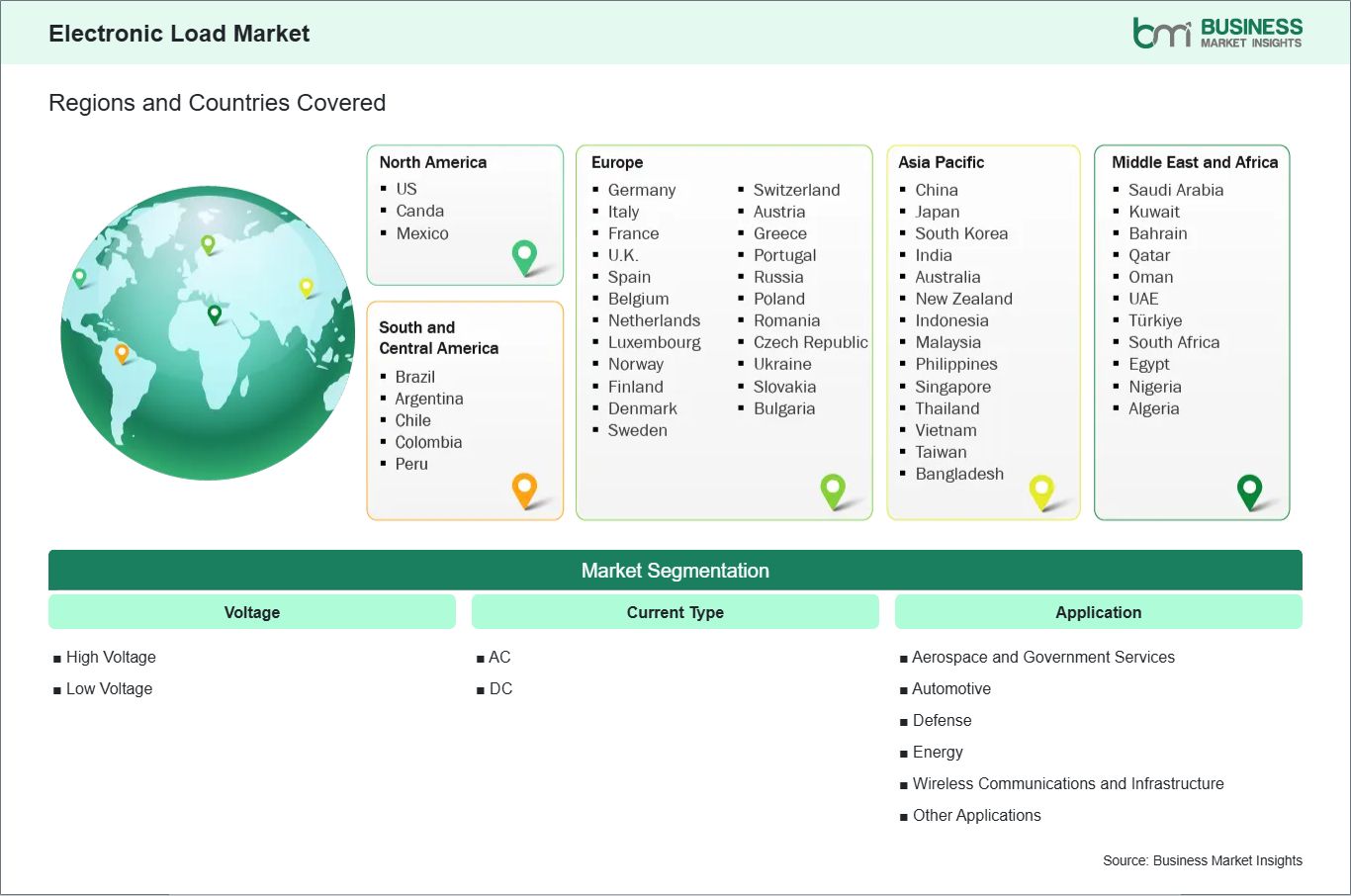
In terms of voltage, high voltage electronic loads are expected to gain a larger share due to their application in energy and industrial sectors. Low voltage loads maintain steady demand, particularly in consumer electronics and small-scale testing environments.
By current type, DC electronic loads hold a significant share driven by their widespread use in battery testing, electric vehicles, and renewable energy systems. AC electronic loads also contribute notably, particularly in power grid and infrastructure testing applications.
Based on application, automotive and energy sectors are anticipated to account for a substantial share due to increased electrification and infrastructure investments. Aerospace and defense sectors maintain consistent demand due to strict testing requirements, while wireless communications and infrastructure applications are expanding steadily with growing connectivity needs.
Geographic Insights
Electronic Load Market Geographic Insights
North America is an established market for electronic load systems, with well-established infrastructure and high adoption rates for testing technologies. The countries in the region, such as the United States and Canada, are examples of high demand for electronic load systems. This is due to the well-established industries in the region, such as the automotive, aerospace, and energy sectors. The region also boasts well-established research facilities, which increases the demand for electronic load systems. In addition, the region is an early adopter of electric vehicle technologies and renewable energy systems, further fueling the demand for electronic load systems.
Asia Pacific is an emerging market for electronic load systems, with the region witnessing high growth rates due to the growth in the energy and automotive sectors. The countries in the region, such as China, Japan, and India, are examples of high demand for electronic load systems. This is due to the growth in the region's infrastructure, as well as the growth in the energy and automotive sectors. The region is also witnessing the growth of electric vehicle technologies and renewable energy systems, further fueling the demand for electronic load systems. In addition, the region is improving its technical capabilities, as well as the awareness of testing technologies, further driving the demand for electronic load systems.
Industry Activity
Recent Developments
The Electronic Load market is analyzed using a combination of primary and secondary research sources, including corporate publications, industry associations, and verified databases. This approach ensures a balanced understanding of recent developments and technological advancements influencing the market.
- In November 2025, Keysight Technologies introduced an advanced electronic load solution designed for high-power battery testing applications. The innovation focuses on improved efficiency and precision, supporting the growing demand for electric vehicle and energy storage testing, thereby strengthening the overall market capability.
- In August 2025, Xi'an ActionPower Electric Co., Ltd. launched PLC series DC electronic load for advanced power testing. The PCL Series DC Electronic Load by ActionPower is designed as a high-performance test instrument for evaluating power supplies, energy storage devices, and other DC sources.
Trust & Transparency
Research Methodology
The market analysis combines proprietary research with secondary data from government agencies, company disclosures, regulatory filings, industry databases and expert interviews. Market estimates are validated through data triangulation, cross-market benchmarking and analyst
review.
View Full Research Methodology
Key Sources Referred:
International Energy Agency (IEA)Institute of Electrical and Electronics Engineers (IEEE)International Electrotechnical Commission (IEC)US Department of Energy (DOE)European Commission Energy DepartmentNational Renewable Energy Laboratory (NREL)Industry Trade Journals on Power ElectronicsCompany Annual Reports and Technical PublicationsGovernment Regulatory AgenciesEnergy and Automotive Industry Associations